Another tax hike? Mecklenburg County manager says it’s needed amid ‘significant’ shortfall
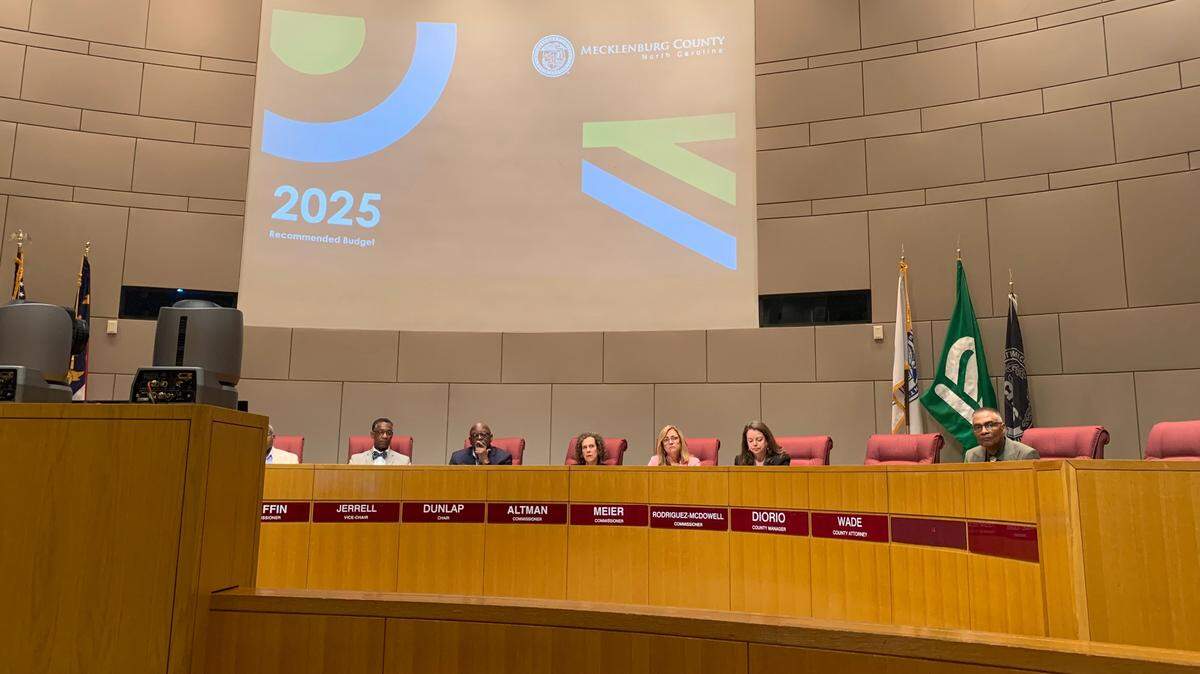
Mecklenburg County property owners would pay more in taxes to help make up a “significant revenue shortfall” under the $2.5 billion budget proposed Thursday by County Manager Dena Diorio.
Diorio is calling for a 1.5-cent property tax increase for fiscal year 2025, a 3.2% increase, which would cost the median homeowner an additional $57.45 per year, according to the county’s presentation. She said that’s necessary to maintain county services amid a revenue shortfall of $20.3 million.
“This is a lean budget, and there are no more cuts to be made,” she said of her proposal.
The county’s isn’t the only tax increase on the table for property owners. Charlotte City Manager Marcus Jones earlier this month recommended his own 1.5-cent property tax increase for fiscal year 2025, which he said would cost the median homeowner about an additional $1 a week.
Also in her budget presentation, Diorio said the county may have to dip into its $601.4 million “rainy day fund” in the next budget cycle. She recommended the county fully fund Charlotte-Mecklenburg Schools’ latest funding request and give raises to county employees.
How much would tax increase cost Mecklenburg County homeowners?
Much of the county’s shortfall stems from a loss of $12.3 million the county used to get for housing federal inmates. The county is also losing $2.3 million in Medicaid reimbursements and forecasting a $5.7 million decrease in revenue from Register of Deeds transactions “associated with a slowing real estate market and increasing interest rates.”
Diorio also attributed part of the need for higher taxes to slowing revenue growth for the county.
“The county’s main revenue source, property taxes, will grow modestly in fiscal year 2025 due to a slowdown in the county’s growth. At the same time, sales tax (revenue) is expected to grow only slightly after several years of double-digit increases,” she said.
Projected sales tax growth for fiscal year 2024 is 2.62%, down from 10.9% the previous year and 20.3% in fiscal year 2022, according to additional data provided by the county. It’s projected to be flat in fiscal year 2025.
Under the proposed budget, 0.5 cent of the tax increase would be used to pump $14.7 million into the county’s general fund. The other cent would fund debt service for schools and county facilities.
The increase would bring the county’s property tax rate up to 48.81 cents per $100 of value. Commissioners set the tax rate at 47.31 cents per $100 of value for fiscal year 2024, 1.6 cents higher than the revenue-neutral rate.
The county estimates that based on the current median home value in Mecklenburg County, $383,000, the median homeowner would pay an additional $4.79 per month. Someone with a home valued at $250,000 would pay an additional $3.13 per month, or $37.50 annually, and someone with a $600,000 home would pay an additional $7.50 per month or $90 annually.
County will dip into ‘rainy day fund’ under budget proposal
Diorio’s proposal also calls for the county to spend $105 million of its fund balance, known as the “rainy day fund,” to help cover “one-time expenses” such as land acquisition, affordable housing projects and part of the school district’s budget request.
“The county is fortunate to have substantial resources in its rainy day fund,” she said.
Diorio estimated the county currently has $149.5 million more than the minimum balance required by law in the fund.
County manager recommends fully funding CMS budget request
County commissioners should fully fund CMS’ operating and capital budget requests, Diorio recommended.
“This reflects the confidence I have in CMS leadership and the transparency and collaboration in our work together,” she said.
CMS board members unanimously approved Superintendent Crystal Hill’s 2024-25 budget April 30. The $2.1 billion plan calls for about $653 million in funding from the county, up about $56 million from this year’s allocation of $597 million. The district attributed much of its request to recurring needs, such as teacher pay supplements and day-to-day operations.
Some commissioners questioned last week during a presentation from Hill why her request didn’t include more money aimed directly at students.
“I think this is perhaps the worst budget that I have seen in 30 years from CMS as it relates to student achievement,” said Commissioner Arthur Griffin, a former school board chairman.
Others were more supportive of the pitch.
“Really my only concern is, how do we make the numbers work?” Commissioner Leigh Altman said. “... The problem is we have an A to Z menu of things that we and only we are responsible for delivering to the community, and the more we give to CMS is something we’ve got to cut from something else.”
County budget includes raises for employees, money for arts and culture
Diorio’s budget includes a 3% raise “across the board” for county employees and funding for performance-based raises up to 5%, something she said is necessary to maintain a quality staff in a competitive job market. “The first priority in my budget considerations will always be our employees,” she said.
She’s proposing an additional $5.4 million for the arts, to bring the total up to $10 million. That’s the equivalent of the $10 million in annual funding the Arts & Science Council, a longtime pass-through organization for arts grants, and the Foundation For The Carolinas said they wanted from the county during an April presentation to commissioners.
What’s next for Mecklenburg County budget?
County commissioners will host a budget workshop May 22 and a public hearing on the budget at 6 p.m. May 23 at the Charlotte-Mecklenburg Government Center in uptown. Residents can sign up to speak at the public hearing by calling 980-314-2912 or emailing clerk@mecknc.gov.
The commission plans to hold straw votes on the budget on May 30 and adopt a final budget June 4.
The new fiscal year starts July 1.
Correction: An earlier version of this story had an incorrect total for what the county manager was proposing for arts funding. Dena Diorio is proposing an additional $5.4 million for the arts, to bring the total up to $10 million.
This story was originally published May 16, 2024 at 1:37 PM.