Matthews wants bigger tax hike or no new trains. Will vote derail Mecklenburg plans?
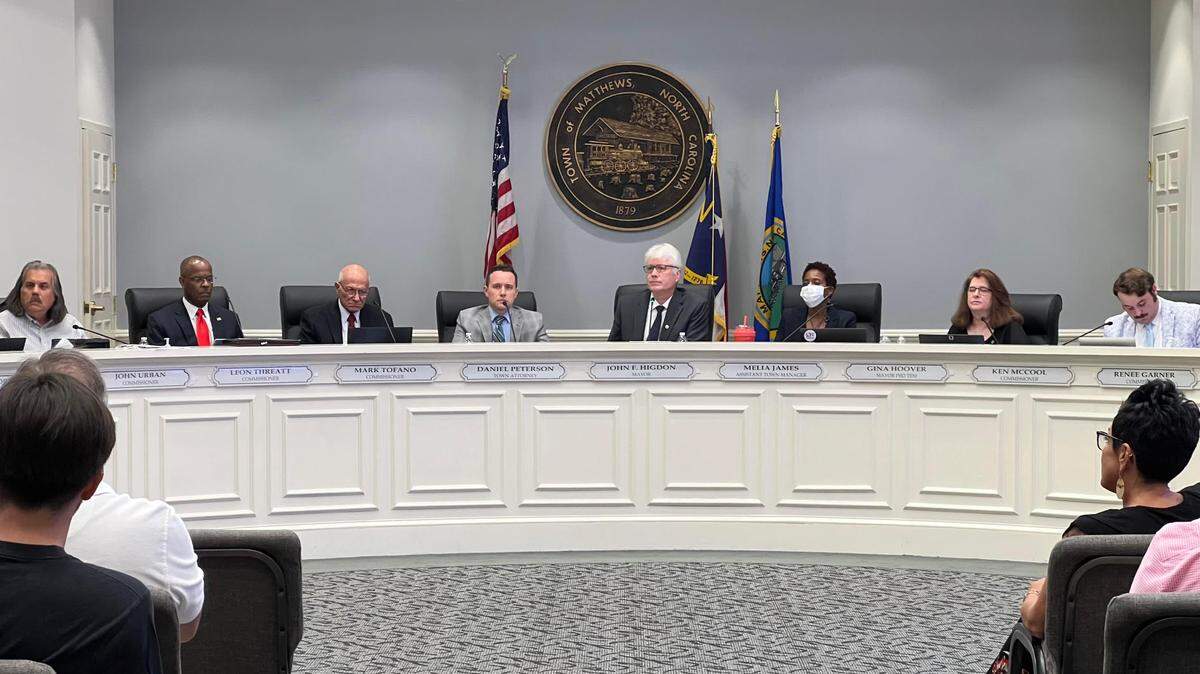
Matthews commissioners voted unanimously Monday to oppose a deal that could raise sales taxes to fund long-awaited transit plans and create a new regional authority.
Officials say they hope their actions will derail what they call an “underfunded” and “reprehensible” plan.
“Matthews is obviously not in favor at all, because we’re getting a deal that everybody in the county is getting but getting with light rail while we’ll be getting bus rapid transit,” Mayor John Higdon told The Charlotte Observer. “Buses don’t work like they are promising.”
It’s unclear if the Matthews vote will stall the plan, which aims to put a sales tax referendum on the ballot. Mecklenburg’s other municipalities also have to vote on whether they’re in favor of the draft transit legislation, and Matthews wasn’t listed in an announcement last week saying representatives from a majority of towns successfully negotiated a deal for further consideration from their elected officials. Besides Charlotte and Mecklenburg County, the announcement included the seals of Cornelius, Davidson, Huntersville, Mint Hill and Pineville.
Higdon isn’t hopeful his colleagues will support Matthews.
“We just hope to convince our colleagues across the area to support us in something that’s more equitable for everyone, not having winners and losers,” he said. “But, I’m not very hopeful.”
If approved, the plan will be formally submitted to the N.C. General Assembly, where legislators will decide the fate of a sales tax increase referendum before voters get to decide.
“Matthews residents are being asked to foot the bill without any true rail to Matthews,” Commissioner Ken McCool said at the meeting. “We’ve been consistently lied to that Matthews is getting what is equal and equitable as everyone else. That’s a lie.”
Transit deal on the table
Under the draft legislation, spending on light rail, commuter rail and streetcar projects would be capped at 40% of revenue generated by a 1-cent sales tax increase, according to a presentation to some Charlotte leaders in late July.
The presentation lists the Red Line and Silver Line, as well as expansions of the Gold Line and Blue Line, as rail projects. But, it notes “funding availability” will determine how those projects are prioritized and what the final mode of transport will be. Spending on buses — including bus rapid transit — would be capped at 20% of revenue, leaving 40% of the new money for roads. Money allocated for rail that goes unspent could be rolled into bus projects.
Road money would be distributed directly to the city of Charlotte and Mecklenburg’s towns, based on local road miles, population and “relative transit service,” according to the presentation.
The draft legislation would also shake up how the Charlotte Area Transit System is managed.
CATS is currently a city of Charlotte department and also governed by the Metropolitan Transit Commission. But the legislation would create a new transit authority with 27 members, with Charlotte, towns and state officials all having appointments.
The new authority could expand to include more communities, according to the presentation.
What Matthews resolution says
Some in east Mecklenburg spoke out earlier this summer when details of transit negotiations were first reported publicly, expressing concern a 40% cap on rail spending would spell the end of the eastern portion of the Silver Line.
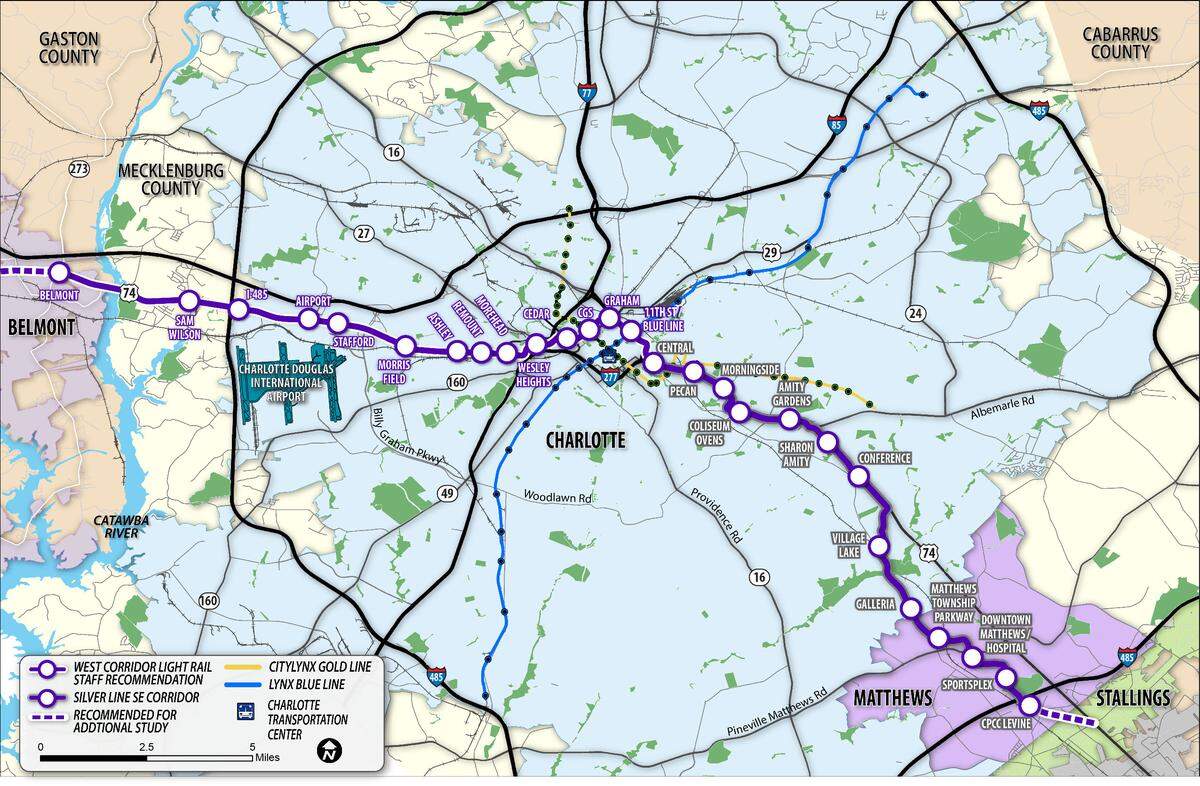
Matthews’ resolution says bus rapid transit, a proposed alternative for the corridor, has “failed to deliver” in other parts of the country. The resolution opposes the sales tax referendum because it’s not the “community consensus plan” requested by North Carolina General Assembly leadership.
“Most transit-oriented development around light rails is exponentially greater than around the bus stations,” Higdon said.
It calls for either a bigger sales tax increase — 1.4 cents — or for all rail projects to be converted to bus rapid transit.
“This was made somewhat facetiously, because we know this will never happen,” Higdon said. “It’s included to address all those that have suggested BRT is every bit as good as light rail. It isn’t. They know it. I know it, everybody knows it.”
Could Matthews vote derail transit deal?
Matthews’ decision comes after local leaders previously stressed the importance of sending a message of regional unity to the General Assembly on transportation.
Charlotte City Council member Ed Driggs told the Observer he’s talked to legislators about the potential impact of Matthews’ resolution.
“It appears to me that it does have a negative impact, but it doesn’t kill it,” said Driggs, who chairs the Charlotte council’s transportation committee.
Higdon told The Observer he’s been in regular conversations with mayors of surrounding municipalities but was not optimistic they would back Matthews’ plan. He said the city could move forward even without the support of Matthews.
“Apparently, in a dark room, in a non-discreet office, some elected leaders and some non-elected well-connected persons repeatedly met and decided who the winners or losers would be in this new scheme,” Higdon said. “Matthews wasn’t the winner.”
Other commissioners like Mark Tofano echoed that sentiment.
“When you’re asked to increase an individual’s tax and give something to get nothing, there’s something basically and morally wrong with that,” Tofano said.
What’s next for transit deal
Charlotte’s transportation committee will meet Tuesday to discuss the sales tax deal and the city’s purchase of railroad tracks from Norfolk Southern for the Red Line commuter rail project to the Lake Norman area.
“This is a big, complicated project ... My impression talking to council colleagues is that we can pass it, but I can’t say with certainty that there won’t be some dissent,” Driggs said of what to expect Tuesday.
Charlotte council members also are scheduled to get a closed session briefing Aug. 19 and discuss transit at its Aug. 26 meeting. The council is scheduled to vote to authorize the purchase of the Red Line and on a resolution in support of the sales tax increase Sept. 3, with Sept. 9 as a closing date for the Red Line purchase.
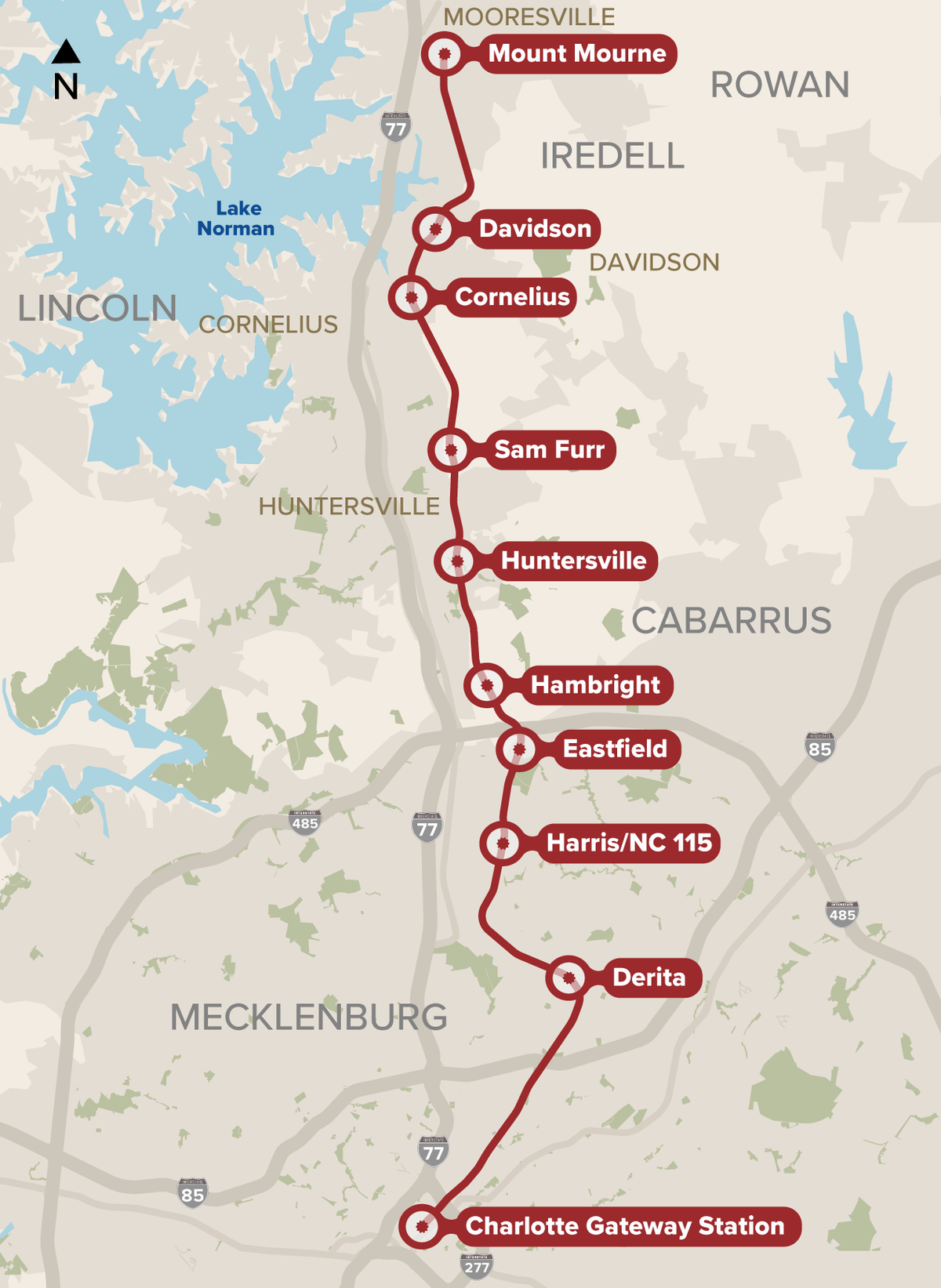
Getting the Red Line purchase finished is critical to getting the draft legislation approved locally, Driggs said.
“The Red Line is kind of a prerequisite for the legislation, because the northern towns have indicated they don’t want to proceed unless they can reasonably expect that the Red Line is going to get done this time,” he said.
Once the cities and towns have their say, the draft legislation will still have to be approved by the General Assembly.
State Sen. Vickie Sawyer, one of three Senate transportation chairs and a supporter of the Red Line, told the Observer in early August she doesn’t think legislation on a sales tax increase “will move at all” this year. It could get a look in the 2025 legislative session, the Iredell County Republican said, but she’s doubtful it could gain traction in the Republican caucus.
“I’m just not hearing a lot of great things about it,” she said. “... It’s just very difficult to get our caucus behind a tax increase.”
This story was originally published August 12, 2024 at 10:28 PM.