
After Helene, some want grant aid for small businesses. What will NC legislators do?
Pisgah Fish Camp Restaurant – a staple in the City of Brevard – has been in Mike Hawkins’ family for nearly 60 years. He and his siblings took over from their parents in the 1980s to keep it running as a destination that generations of families keep returning to.
But Helene’s ravaging rains filled the restaurant with water 3-feet-deep, damaging walls, wiring and their cooking equipment. While their landlords are fixing most damage, the expected cost to replace kitchen equipment and more ranges from $250,000-$300,000.
The restaurant, which normally would be full of patrons eating fish and devouring its beloved onion rings, still sits empty. Its entire staff was laid off, Hawkins said.
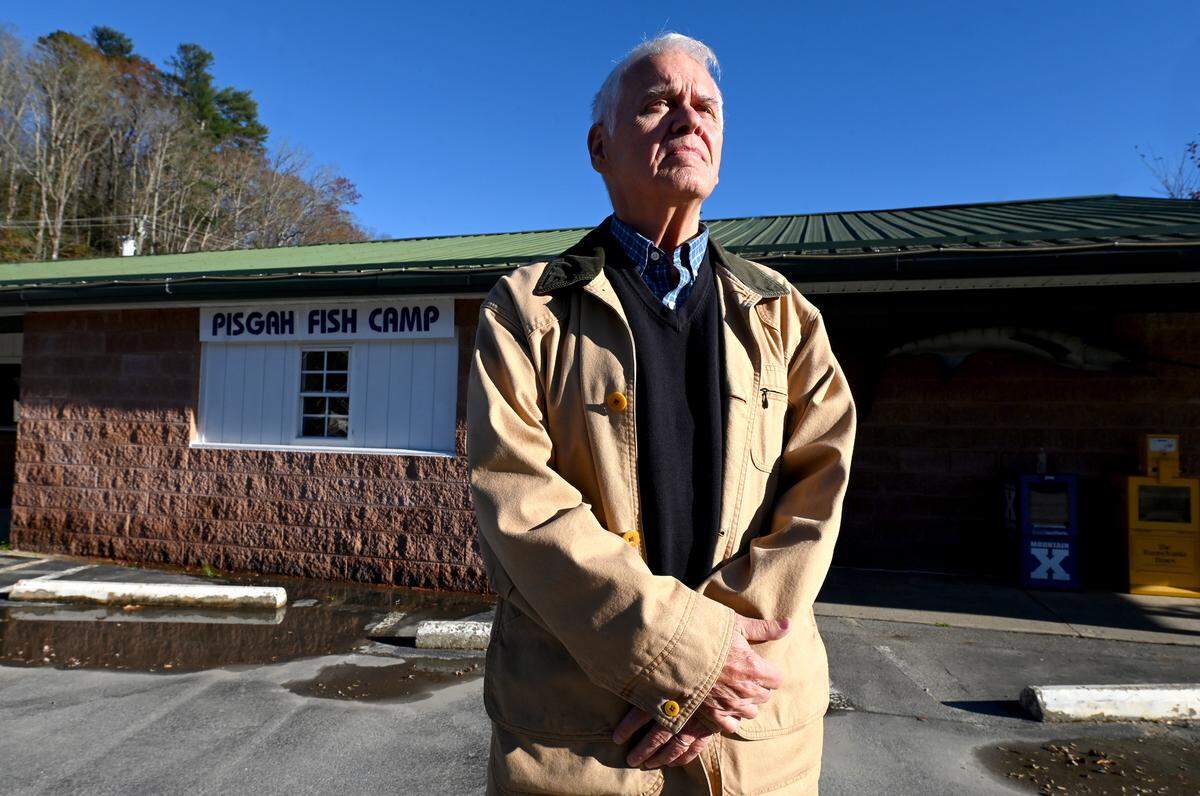
Without the state offering grants or forgivable loans for small businesses, Hawkins and his siblings are in a tough position navigating their path forward, he said.
At a different time in his life, taking on a loan to rebuild wouldn’t be as difficult a decision as it is now.
“That’s something that a 30-year-old wouldn’t think twice about,” Hawkins said. “But someone in their 60s, you do think about that. And does that make sense thinking about taking on that debt at that stage in your life?”
Some small business owners and elected officials in Western North Carolina have made a message resoundingly clear – they want grants, not just loans to help them reopen or stay in business. Coming out of the COVID-19 pandemic, many are hesitant to take on additional debt, business owners and their advocates say.
That’s true for some in tourism-reliant communities like Brevard that lost leaf season – a key time of year to make profit and payroll in Western North Carolina businesses. And it’s true for some in much harder hit communities such as Asheville, where damage to locally owned businesses was more severe and widespread.
Casey Gilbert, Vice President of Public Policy for the Asheville Chamber of Commerce said she gets the sense that state policy makers view grants as something that’s nice to have, but not a need.
To her mind, without them the region could face an economic disaster on top of the natural disaster they’ve already experienced.
“We really need something passed this week. It can’t wait any longer. We can’t wait for Congress,” Gilbert said Monday.
But as North Carolina’s General Assembly legislature heads into session this week to consider another round of Hurricane relief funding, it’s unclear if their wishes will be granted.
Grants skipped in first two rounds of state funding
Gov. Roy Cooper proposed a $475 million grant program on Oct. 23 to the state legislature to help bring small businesses back online. This was part of his $3.9 billion proposal to fund recovery across the region to the economy, housing, transportation and more.
The governor estimated a loss of nearly $13 billion in revenue for impacted businesses. This loss came during leaf season, a peak time for businesses in the region.
Under the proposal, businesses would be eligible for up to $50,000 of grants or up to 25% of their taxable sales from October to November 2023.
In the second round of funding legislators passed on Oct. 26 this request for grants, however, was met with $50 million in loans.
City managers, mayors and other elected officials from most of Western North Carolina’s cities hit by Helene gathered in Morganton on Nov. 8 to make their pleas to Gov. Cooper and state senators about their most urgent needs.
“Low interest, good term loans are nice. It ain’t enough for these small businesses.” Gov. Cooper said at the event, organized by the North Carolina League of Municipalities and the North Carolina Association of County Commissioners.
Mayor Maureen Copelof of Brevard, a Democrat, called for forgivable financial aid for small businesses in her community. Businesses need money quickly, she said when addressing Cooper at the conference.
“So many businesses are looking at whether or not they even bother trying to reopen or stay open,” she said that day. “That’s going to be devastating for our region,”
State Sen. Warren Daniel, a Republican who represents Buncombe, Burke and McDowell counties, in an interview that day said while he thinks grants for small businesses were something the state should consider, Gov. Cooper “wasn’t as prudent with his request as he should have been.”
Cooper’s proposal would have used up much of the state’s rainy day fund – a savings reserve states use after natural disasters, economic downturns or other disasters, he said.
Rep. Mark Pless, a Republican who represents Haywood and Madison counties, that same day said he didn’t see support for small business grants.
“The governor’s pushing to do a lot for these small businesses,” said Pless. “I understand his passion. But I don’t believe we should step in under every circumstance,” he said.
Republican U.S. Sen. Thom Tillis said that day he had been in talks with federal officials about replicating pandemic relief such as the Paycheck Protection Program or the Main Street Lending Program.
On Monday, the Office of Management and Budget requested $2 billion from Congress to fund Small Business Administration loans – funds for these loans have been previously exhausted. The request is part of a $100 billion OMB request to expand recovery from Hurricane Helene and Milton.
In a letter President Joe Biden, Tillis and fellow North Carolina U.S. Sen Ted Budd said more money is needed immediately.
Not a typical disaster
Mountains sprinkled with orange, green and red leaves can be seen in every direction in mid-November from Brevard’s picturesque downtown.
Its brick storefronts of one-of-a-kind mom and pop shops went largely unscathed by Helene, unlike Pisgah Fish Camp Restaurant, which is located 10 minutes down the road. But the lack of tourism this year has hurt.
Nicole Bentley, executive director of Heart Of Brevard, an organization dedicated to the promotion and maintenance of downtown said she estimates tourism this fall dropped 70% compared to last year.
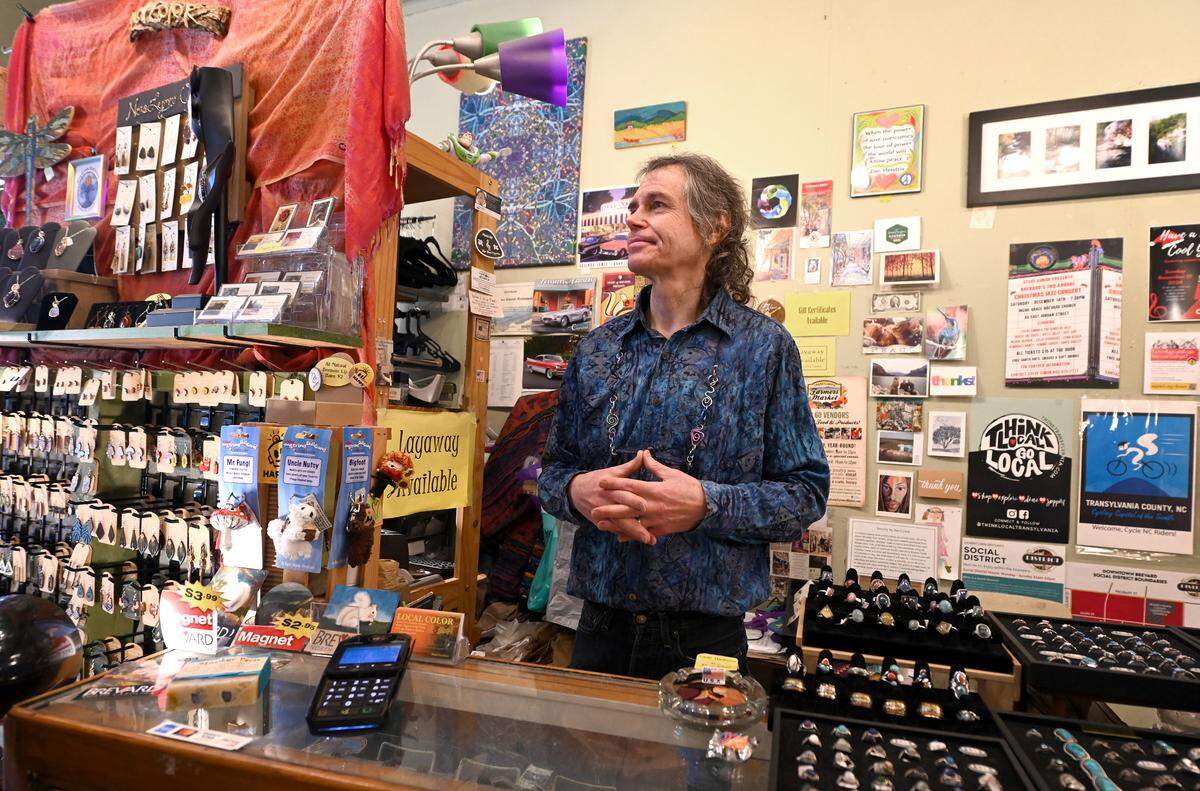
Paul Hawkins owns Local Color, which sells regional art, clothing and jewelry. His profits dipped 40% after Helene. On one weekend, when he usually would have brought in a few thousands dollars, he only sold one bar of soap.
Without knowing what sales will look like over the next few months, Hawkins, who is not related to Mike Hawkins, said he too is hesitant to take out any loans.
“It’s critical for small businesses to have some kind of safety net,” he said.
On the local level, nonprofit organizations and county governments are working to fill some of the gaps.
Bentley is working with county partners to renew the Transylvania Tomorrow fund – a grant program, originally created during the COVID-19 pandemic to help small businesses during times of crisis.
The goal is to raise half a million dollars to support the Transylvania Tomorrow fund. But applicants have already requested double that, Bentley said.
While helpful, these funds are only a drop in the bucket compared to the needs in the community, Bentley said.
Some businesses in town are dealing with flood damage they didn’t have insurance to cover, for instance. Sixty percent of Brevard’s downtown businesses took advantage of federal assistance like PPP and Economic Injury Disaster Loans, with some still owing money.
Helene was a storm of unprecedented magnitude, and the recovery efforts must match that, she said.
“Continued assistance from community focused financial programs is awesome. But it is essential for a more equitable and robust recovery to be implemented at the state and federal level,” she said. “I just don’t think we can rely on small businesses to take out more loans.”

Doug and Emma Miller, the owners of Newfound Artisan, a handcrafted goods shop in Brevard, said while they didn’t see the same level of devastation as places like Asheville, the impact had ripple effects on their business. In October, their business saw a nearly 30% decrease in sales compared to last year.
The couple is looking into available options for grants and loans, but time is of the essence, Doug Miller said. While small businesses are waiting for assistance to come through, bills and payroll are still due, he said.
With fewer tourists coming through cities like Brevard, quick investment is key to helping support Western North Carolina’s small businesses, Miller said.
“The state really should be investing in Western North Carolina recovery efforts. Because if they don’t, Western North Carolina, it’s not gonna be the same as it was,” he said. “The places that people love to come visit and want to come back to, aren’t gonna be there.”
At a crossroads
As cars whipped back and forth in each direction on Henderson Highway recently, the parking lot of the Pisgah Fish Camp Restaurant sat empty. Chairs that are usually full of guests hung upside down off tables so their legs didn’t touch the floor.
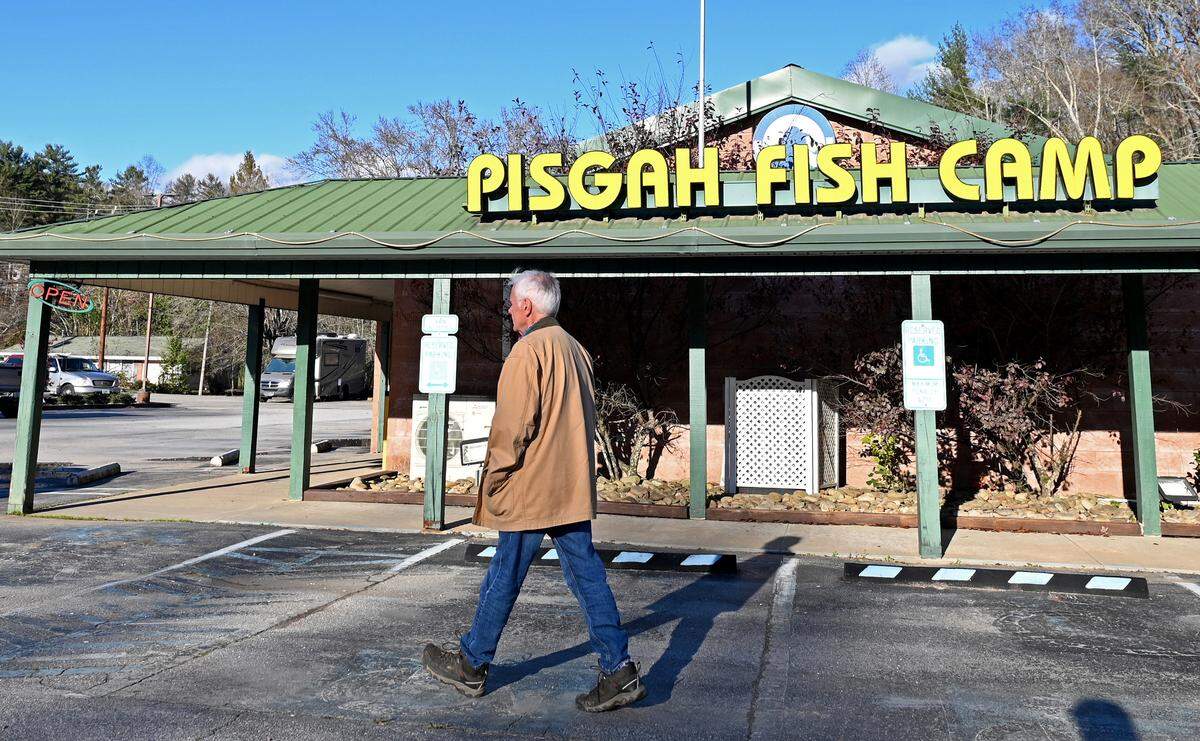
Mike Hawkins gets emotional as he remembers the non-stop rushing water that overcame the parking lot and seeped its way into his family business while stamping a massive question mark on the future.
They could keep the Fish Camp open by transferring the business over to someone who’s willing to incur debt, he said. But that would mean walking away from a business that’s been in his family for generations.
“It’s a difficult decision and an emotional decision,” Hawkins said. “ Unless you run a business yourself, the emotional connection that you have with your business is very different than working for IBM or working for Amazon. It’s part of who you are.”
Small businesses in Western North Carolina aren’t just economic drivers to the area, they contribute to the social and financial bedrock of their communities, he said.
Grants or forgivable loans are essential to helping many small businesses in the region thrive once again, Hawkins said.
“Many small businesses are still paying off PPP loans, other types of pandemic loans that they’ve gotten,” Hawkins said.
Hawkins said the option for grants or forgivable loans would make the decision much easier for him and his siblings to invest in replacing fryers, grills, ovens, dining room, furniture and more to reopen.
As the legislature reconvenes this week, he hopes legislators will push them through.
“It would be very poor public policy for some sort of grant program or forgivable loan program to not be enacted or instituted here,” he said.
Observer reporter Ames Alexander contributed to this story.
This story was originally published November 19, 2024 at 6:00 AM.