
Claims that Helene victims forced out of temporary housing draw rebuke from NC fire marshal
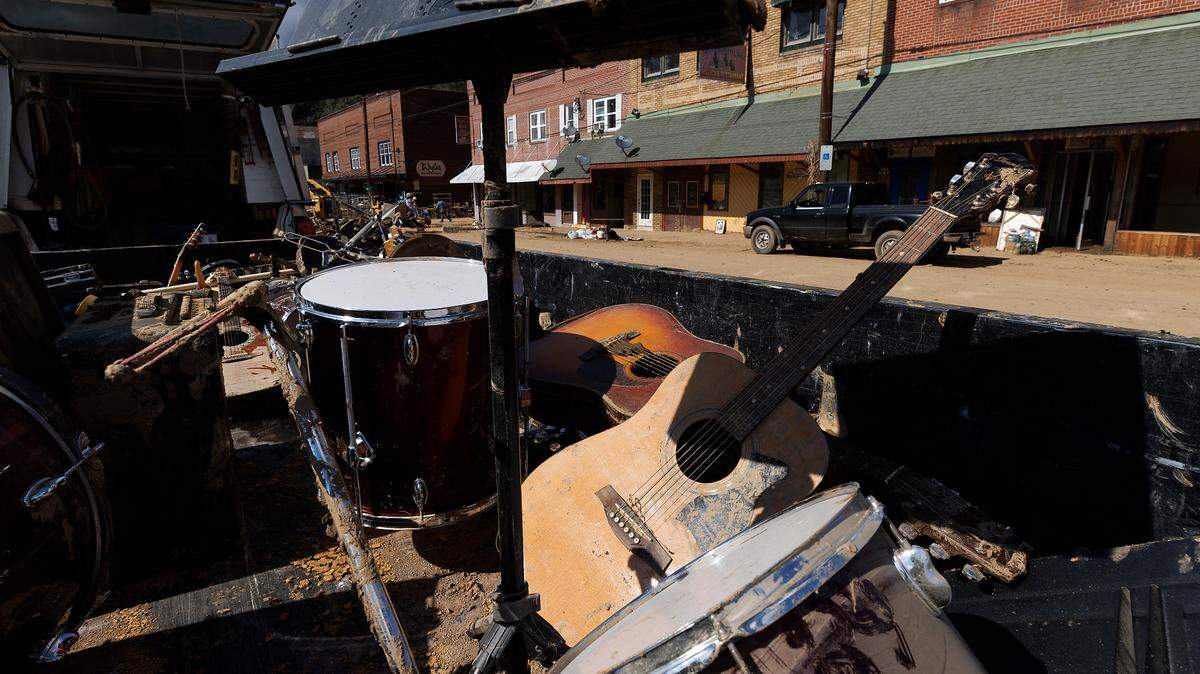
The North Carolina state fire marshal decried claims that local and state authorities are evicting people from temporary housing in storm-affected areas after misinformation sparked fierce backlash toward his office.
A Saturday X post by right-wing news website National File claimed state and local agencies kicked Hurricane Helene survivors out of tiny homes built by “the Amish” because they didn’t meet building code requirements. That’s not true, State Fire Marshal Bryan Taylor said in a letter issued Monday.
Taylor said his office contacted local inspections departments and “found no credible evidence that any code-enforcement official has forcibly evicted any citizen of the State from any temporary structure based on its noncompliance” with the state building code.
The National File post, which has nearly 3 million views, shares a screenshot of a Facebook post by authorities in Western North Carolina’s Mitchell County, giving notice to local volunteers that temporary housing should comply with North Carolina’s building and health codes “to ensure safety and well-being for all.” The county post prompted swift fury, racking up nearly 1,000 outraged comments. People claimed county inspectors were forcing storm survivors to sleep in the cold.
“This has to be the most cold-blooded act I have ever seen,” read one comment, which amassed hundreds of likes. “I wouldn’t want to be any of you who will eventually have to answer God as to why you did this!!!”
Temporary shelters that don’t meet building code requirements could threaten occupants’ lives, especially in adverse weather, the Mitchell County fire marshal said in response to uproar over the post.
“If you had a big snow and your roof caved in on you, for example,” said David Biddix, Mitchell County’s communications specialist, in a Nov. 7 podcast with Andrew Brewer, the county’s fire marshal. Or if “the way was blocked for you to get out of the bedroom and you had a fire. That’s the sort of stuff we’re talking about.”
Some Facebook commenters suggested county officials were enforcing the code to profit from permitting fees. In fact, the North Carolina General Assembly placed a moratorium on permit and inspection fees for projects related to storm damage as part of its first round of disaster relief, so those fees are waived through December.
Taylor, the state fire marshal, said his office has received threatening messages from people angered by the false information. So have members of the state council responsible for amending the building code, he said, even though they don’t play a role in its enforcement, which is done by local authorities.
In replies under National File’s initial post, a user posted the contact information for each member of the building code council and encouraged people to “feel free to let them know your thoughts.” National File shared the post.
One anonymous email sent to council members and shared with The N&O called the situation “absolutely shameful and sickening” and accused the council of letting storm survivors freeze to death.
In fact, the Office of the State Fire Marshal has worked with local inspections departments after Helene to give guidance on how to streamline the inspection process and ensure temporary housing meets safety requirements, Taylor said. The state legislature has also included provisions in its disaster relief packages to ease planning and permitting processes.
The latest Helene relief bill authorizes the state fire marshal’s office to develop emergency rules and guidance for localities to enforce the building code in temporary housing.
Local governments also can relax ordinances in response to disaster recovery needs, and some have done so. Last week, Buncombe County adopted zoning code changes to allow for emergency housing.
State officials reported 103 deaths through Nov. 19 caused by Helene’s destruction, including two in Mitchell County, The News & Observer reported.
This story was originally published November 27, 2024 at 6:00 AM with the headline "Claims that Helene victims forced out of temporary housing draw rebuke from NC fire marshal."