
How someone undocumented in North Carolina gets deported, from arrest to a flight

When Immigration and Customs Enforcement arrests someone undocumented, it’s rarely as simple as telling her to pack a bag and sending her home.
Most people found to be in the country without authorization get a date in immigration court, where a resolution can take years. Often, they appeal orders for removal and bring the process to a different court entirely.
Simply put: “You’re not going to see an immediate deportation,” said Jamilah Espinosa, an immigration attorney based in Matthews.
Even when a deportation is finalized and an appeal fails, ICE often has to coordinate with other countries to send people home. That can add more time to the process. Other logistics issues — people getting sick, for example — add time.
President-elect Donald Trump has said he wants to use the military and law enforcement to mass-deport every undocumented immigrant in the country — more than 11 million people. About 315,000 of those people live in North Carolina, and about 110,000 are in the Charlotte metro area that extends into South Carolina.

The caveat: Expedited removal
There is one path to “immediate” removal, said Charlotte immigration attorney Andrés López. That’s an expedited removal.
If someone gets detained within a certain limit of the border, a Customs and Border Protection officer or an ICE officer can say, “You have no right to be here, and we’re going to deport you back to your home country,” López said.
“That happens a lot with people crossing the border through Texas, Arizona, California,” he said.
Even then, someone can claim they fear for their safety, López said.
“By law, then they have to be taken in and allowed a credible fear interview. Basically, if they pass this credible fear interview, it will cancel the order of removal,” he said. Then they would be sent to where most noncitizens go: immigration court. That can be a yearslong process.

Arrests
There are a few ways a noncitizen might get caught and funneled into immigration court, said Jarvis McMillar, an ICE deputy field office director:
Fugitive operations teams find people who missed their date in immigration court, not unlike when citizens get an arrest warrant for a missed date in criminal court.
Some noncitizens get arrested by local police after they commit a crime.
Cases come in from the border, where people are apprehended by the border patrol.
People not deemed a risk can go free until their next court date. People who are deemed a public safety threat are kept in ICE detention facilities. There might be 1,500 people in one, McMillar said.
Even if someone has been arrested by ICE, has a criminal history, and a judge has told him he is going back home, there might be another delay.
Some people go on hunger strike and are not healthy enough to send back, McMillar said. Others might have medical problems and need a doctor.
Home countries’ governments might not be cooperative. “Different countries have their process,” he said, and that can add more time.
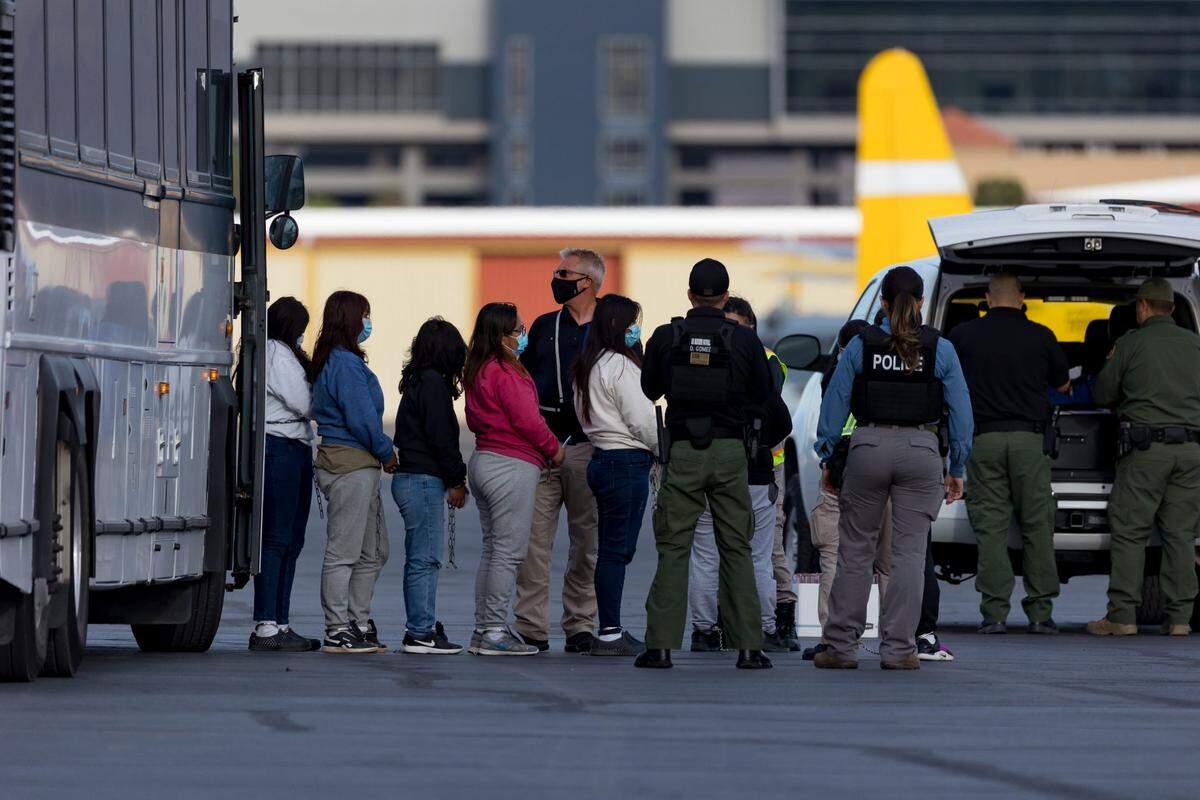
But once everything is finalized, undocumented immigrants can be sent back on commercial or charter flights.
Immigration court
Charlotte is home to an immigration court that hears cases from both North Carolina and South Carolina. It’s heavily backlogged and under-resourced, as are courts like it around the country. Immigration courts fall under the executive branch of the federal government.
Cases in Charlotte might take eight to 10 years to be resolved, said Espinosa, the immigration attorney in Matthews.
The court process starts with the Department of Homeland Security issuing a notice to appear.
“It basically lays out their name, their address, their date of birth and the charges against them,” she said. For most people, the form says their charge is not having lawful documentation to be in the United States — a violation of the Immigration and Nationality Act.
The person charged is entitled to a master calendar hearing — an initial appearance.
If someone were entered into the immigration court system today, their first hearing might be in 2027, Espinosa said. Without representation, a judge will continue their case — meaning there could be multiple “first” hearings.
In a “perfect world,” she said, they have an attorney and get scheduled for what is called an “individual hearing.” There, a judge takes note of whether they have applied for asylum or other protection.
Then the judge decides whether someone may stay or go home.
Even if a judge orders someone be sent to their home country, that person can appeal within 30 days of the decision.
“There’s been cases where they are then brought back into the United States at the expense of the government,” she said.
As local immigration attorneys previously told The Charlotte Observer, the system being under the executive branch means constant fluctuation. The rules change much easier than they do in, say, the Mecklenburg County courthouse or federal courthouses.
Ryan Oehrli covers criminal justice in the Charlotte region for The Charlotte Observer. His work is produced with financial support from the nonprofit The Just Trust. The Observer maintains full editorial control of its journalism.