Backlash to clemency for 15 on NC’s death row leads to GOP call to limit governor’s power
Republicans have taken away many of the powers of North Carolina’s governor, but the position still carries the power of life and death.
Now, some GOP lawmakers are proposing to ask voters whether to take that away as well.
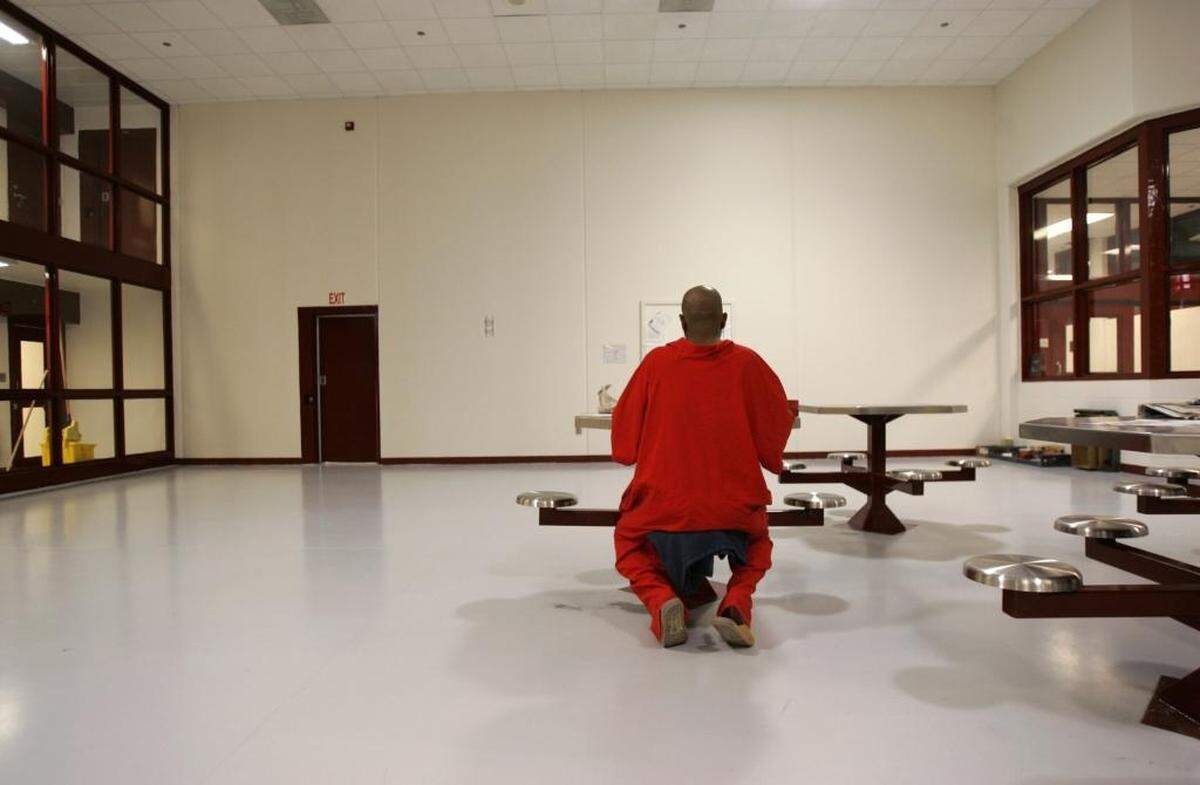
Governors have the power to reduce or eliminate a convicted criminal’s sentence. That’s what former Gov. Roy Cooper did on his last day in office in December when he removed 15 people from death row, commuting their sentences to life in prison without the possibility of parole.
But while Cooper’s decision to extend clemency to inmates on death row was applauded by anti-death penalty advocates who had been calling on the Democratic governor to commute death sentences for years, it also drew strong objections from some local prosecutors, like Trey Robison.
The Union County district attorney opposed Cooper’s clemency for Darrell Strickland, who was convicted of first degree murder for killing Henry Brown in Union County in 1995, and sentenced to death.
Robison is one of multiple district attorneys who spoke against the commutations and have since expressed frustrations with the review process conducted by the governor’s clemency office, which asked them to respond to proposed clemency petitions. They said they asked for more information about the petitions, but were denied. Robison also said he was in touch with family members of Strickland’s victim who wanted to respond, but were never contacted by the governor’s office.
A former aide to Cooper, meanwhile, said that the clemency office offered the chance to provide input to each district attorney with a case that was being considered, and made “extensive efforts” to seek perspectives from the families of victims.
“After thorough review, reflection, and prayer, I concluded that the death sentence imposed on these 15 people should be commuted, while ensuring they will spend the rest of their lives in prison,” Cooper said in a written statement Dec. 31 announcing his decision.

Legislation filed last month in the House proposes amending the state constitution to require that all reprieves, commutations, and pardons granted by the governor be approved by majorities in both chambers of the General Assembly.
If the bill were to pass by the required three-fifths majority votes in the House and Senate, it would be placed on the ballot in November 2026 as a constitutional amendment for approval by North Carolina voters.
One of the bill’s primary sponsors, Rep. Mark Brody, a Monroe Republican, told The News & Observer he filed the bill after speaking with Robison, one of the prosecutors in his district, and hearing Robison’s concerns about the process behind the commutations Cooper issued last year.
Brody said he viewed Cooper’s decisions to commute sentences of people on death row to life without parole as “a violation of what the citizens of North Carolina expect of their legislature, their governor, and their judicial system.”
“If the governor feels he has the right to take away that death sentence, then the General Assembly has the right to say, ‘Well, you can attempt to do it, but you’ve got to get it confirmed through us,’” Brody said. “’We may confirm what the governor did; we may not.’”
DA says victim’s family members weren’t notified
Like other district attorneys who have been critical of the commutations, Robison said in a statement he made a few days after Cooper issued them on Dec. 31 that while the governor’s authority to grant clemency wasn’t in question, his handling of the case was “troubling.”
Robison said the governor’s clemency office contacted him about the potential commutation for Strickland in early December, and said he told them during a conference call about a week later that he opposed the commutation and had contacted the next of kin for Brown, the man Strickland was convicted of killing. Robison said the family member of Brown’s he spoke with also opposed clemency, and wanted a chance to speak with Cooper’s staff before a decision was made.
Robison also said he asked for a copy of Strickland’s clemency petition, and when that request was denied, he asked what the “alleged grounds for the commutation” were, but that information wasn’t shared with him either.
Robison said he provided the clemency office with contact information for the family member of Brown’s he had been in touch with, who wanted to weigh in as well, but said that family member was never contacted.
State law requires the clemency office to notify a victim’s family if clemency is being considered, give the family a chance to provide their thoughts with a written statement, and inform the family of the ultimate decision. Robison said that the clemency office failed to fulfill any of these legal obligations when it came to the family members he had given them contact information for.
In an interview, Robison told The N&O he gave the clemency office one phone number and more than one name for Brown’s relatives. He said the family members he had been in touch only found out Strickland’s sentence had been commuted from him, when he called them after seeing the announcement from the governor’s office.
Robison said he waited a few days to make sure the family members he had been in touch with didn’t miss a call or hadn’t returned a message. He told The N&O multiple relatives of Brown’s assured him that no one had reached out to them.
“That upset me, because these were people that were reachable,” Robison said. “These were people that were expecting the call from the governor’s office.”
It was unclear if other members of Brown’s family were contacted. Former aides to Cooper did not respond to questions about family notifications in that case.
In a written statement, Cooper’s former chief of staff Julia White said that the review process included “extensive efforts to seek input from families of victims in each of the 15 cases that were granted and many others that were not granted, including outreach to hundreds of family members of victims, many of whom provided thoughtful, heartfelt responses, which were carefully considered, and family members were sent notification after clemency was granted.”
Prosecutors asked to see clemency petitions
Another prosecutor who was contacted by the clemency office, Randolph County District Attorney Andy Gregson, is also critical of the process.
Gregson, who is the incoming president of the N.C. Conference of District Attorneys, said multiple district attorneys who heard from the clemency office about commutations under consideration were denied access to the clemency petitions filed by inmates.
Gregson questioned why the governor’s office could not be more transparent about the petitions they were considering, and said that refusing to share the basis for the petition “seems to me to be counterproductive if you really want to make a fair decision.”
“I don’t know why you would not want the perspective of the lawyer who handled the matter for the state, why you would not want to know everything that they would want you to know about the case,” Gregson said.
Gregson, Robison and other district attorneys have also criticized Cooper for commuting sentences that were imposed by juries after lengthy trials.
“This is probably the hardest thing we ask citizens to do outside of serving in a time of war; you’re asking them to sit through very difficult presentations of evidence, that can take two, three months of their time,” Gregson said. “And I can tell you, from having tried quite a few of these cases personally, the jurors take their responsibilities very seriously, they agonize over this very difficult decision, and they’re the ones that have seen the trial evidence.”
Robison, meanwhile, noted in his statement in January that Strickland’s murder conviction and death sentence were upheld unanimously by the N.C. Supreme Court. Robison said Cooper’s commutation “showed no regard for the criminal justice process that led to Strickland’s rightful placement on death row.”
Other district attorneys who have criticized the clemency review process that led to these commutations include Sarah Kirkman, the top prosecutor in Iredell and Alexander counties, and Seth Banks, the current president of the N.C. Conference of District Attorneys.
Cooper’s office responds to DA criticism
In a statement, White said that in each of the 15 cases in which Cooper granted a commutation, district attorneys “had the opportunity to provide their perspective on potential clemency, with the discussions often including additional employees who had in-depth knowledge of the cases.”
White said that district attorneys “also provided input on dozens of other petitions that were not granted.”
When his office announced Cooper had commuted 15 death sentences, they noted that they had received a total of 89 petitions for clemency from inmates on death row.

The commutations Cooper granted came after a two-year campaign by advocates against the death penalty, who had been calling on the governor to grant clemency to every inmate on death row. Supporters of the campaign included former prisoners who were exonerated after serving time on death row, and people who had lost family members to murder.
One of those advocates, Gretchen Engel, said in response to the criticism by district attorneys that it’s one thing if prosecutors have specific concerns about a particular case, but if the concerns are more generally about how long juries spend hearing a case and delivering a verdict, the implication is that “the governor can’t grant clemency in capital cases.”
“That seems fundamentally inconsistent to me,” said Engel, the executive director of the Center for Death Penalty Litigation. “Either you accept the governor has this power, or you don’t.”
Could GOP lawmakers act on proposed constitutional amendment?
Right now, the bill filed by Brody and three other House Republicans has a total of nine sponsors. One of the other primary sponsors is House Speaker Pro Tempore Mitchell Setzer, a high-ranking member of House leadership.
A little over a month after this year’s long session began, lawmakers are busy filing bills as House and Senate leaders identify which issues to prioritize and move forward on, all while the budget process gets fully underway.
Brody said that while “there’s so much going on at once” at the moment, lawmakers will take a fresh look at which constitutional amendments to put on next year’s ballot toward the end of this year, or even during next year’s short session.
Asked about the bill last week, House Speaker Destin Hall said he hadn’t seen it yet and noted that it could be a challenge to pass a constitutional amendment, which can’t be vetoed by the governor but does require approval by supermajorities in both chambers, instead of simple majority votes.
Republicans currently control a supermajority in the Senate but are one seat short in the House.
Hall did say, however, that Cooper’s commutations left many people, including district attorneys and the families of victims “scratching their heads as to why.”
“Some of these cases are 30 and 40 years old, and (the families of victims) still live with the scars of those cases every day,” Hall said. “And many of them went through the court process, and have stayed in touch with DA’s offices over the years, and to have that sprung upon them at the last minute is a difficult pill to swallow.”
While on death row, Strickland had fought for release.
In 2006, attorneys who had taken Strickland’s case after his conviction accused one of the prosecutors in the case, Scott Brewer, of withholding evidence from the defense during the trial, according to the Associated Press.
A year later, a federal judge said in court documents denying Strickland’s request for release that the prosecution had in fact withheld witness statements.
The judge said he didn’t think Strickland should be freed, but added that he couldn’t “let this case pass without commenting on the behavior of the prosecutors,” the Charlotte Observer reported at the time.
The Center for Death Penalty Litigation’s attorneys worked on Strickland’s case. Engel said Strickland was suffering from cancer, and had only a few months to live when his family visited him in November.
Strickland died last month.
This story was originally published March 10, 2025 at 1:41 PM with the headline "Backlash to clemency for 15 on NC’s death row leads to GOP call to limit governor’s power."