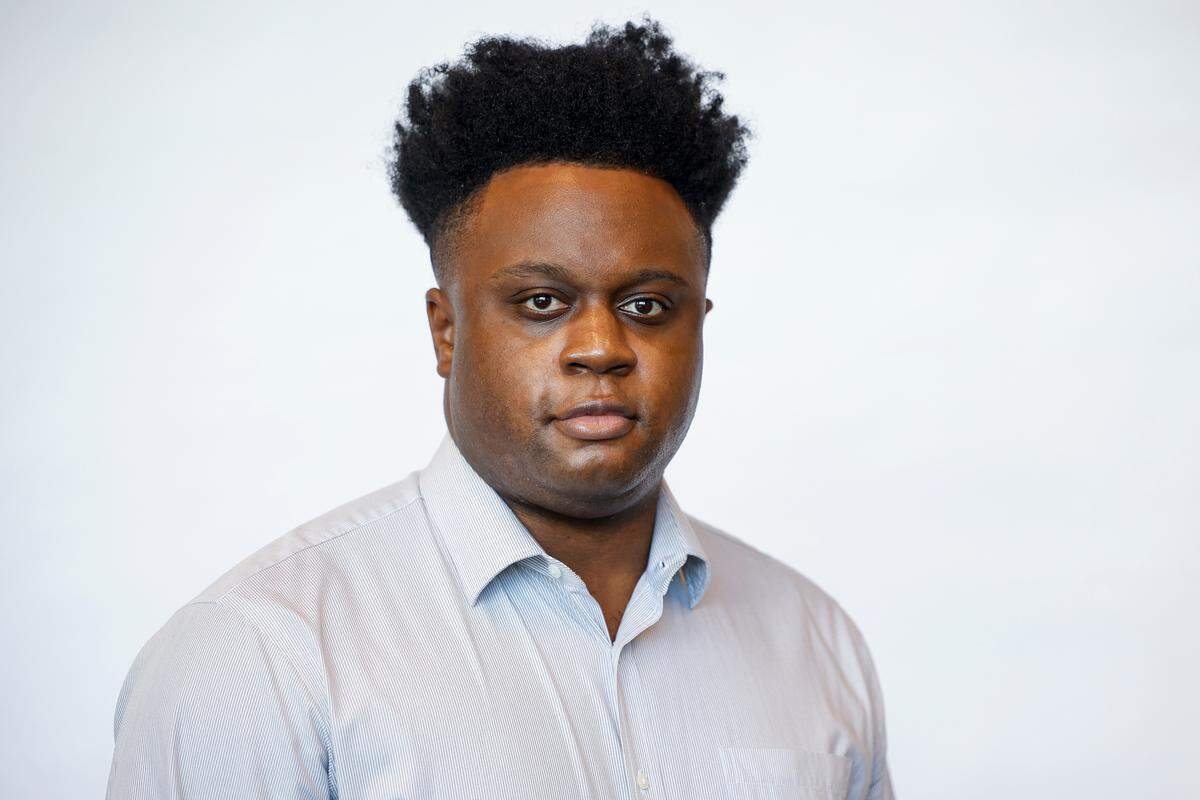
What to know about Tariq Bokhari, Charlotte councilman who’s resigning for Trump admin job
Charlotte City Council member Tariq Bokhari is leaving the board after accepting a position with the Trump administration.
Bokhari will resign his seat to become deputy administrator for the Federal Transit Administration, The Charlotte Observer reported. A Republican must fill his seat until the next election, according to state law.
In the past, Bokhari has been vocal about issues in the city concerning crime, transit and infrastructure.
Here’s what to know about him.
Who is Tariq Bokhari?
Bokhari, first elected in 2017, is one of two Republicans on the City Council and represents District 6 in south Charlotte.
Bokhari’s professional background is in fintech, or financial technology, including founding the Carolina Fintech Hub. A graduate of Radford University in Virginia, his family moved to Charlotte in 2003. A father of three, he’s served on the boards of the Greater Enrichment Program, Charlotte Area Fund, Charlotte Regional Business Alliance and Blumenthal Performing Arts.
He survived close reelection bids in 2022 and 2023 against a well-funded Democratic challenger, Stephanie Hand. Bokhari won by a margin of 50.66% to 49.30% in 2023.
His wife, Krista Bokhari, has also sought elected office. She lost a state House race in 2024 to incumbent Democrat Rep. Brandon Lofton, who represents state House District 104 in south Charlotte.

Law enforcement advocacy
Bokhari has been a vocal supporter of law enforcement. In 2023, when the Observer asked what the best thing the Charlotte City Council had done in the last four years, Bokhari said “supporting the police in several back-to-back pay raises.”
He also said the worst thing the council did was “throw (police) under the bus from 2020-22,” leading to low morale, recruitment and retention rates.
After four law enforcement officers died from bullet wounds and four more were shot in east Charlotte in April, Bokhari proposed that the city spend $750,000 on new bullet-proof vests, ballistic shields and “active shooter kits,” the Observer reported.
“This is a time to listen to the officers and listen to their wish lists on what they think will make them safe,” Bokhari said. ”If we don’t do this stuff now, we’ll never do it.”
He withdrew the proposal in May, Queen City News reported, but a CMPD policy change in August allowed patrol officers and patrol sergeants to request the vests. The first round of vests arrived last month.
In February 2024, Bokhari and six other council members voted to re-criminalize multiple city ordinances, giving police the authority to issue criminal citations for offenses like public masturbation and possession of open containers, the Observer reported. Council members Tiawana Brown, Renee Johnson and Lawana Mayfield voted against the measure.
Fixing transit
The Charlotte Area Transit System (CATS) faced significant turmoil in 2023, including a change in leadership and train derailment that raised questions about safety.
Bokhari blamed transit issues on “an unsalvageable CEO,” referencing the agency’s former leader, John Lewis, who resigned in November 2022.
As the council’s efforts to expand its transit offerings stalled, he said the City Council should focus on a “roads-first plan that unlocks a transformational investment,” but instead, “leaders continue to pander to those they promised the Silver Line to even though they know it is dead.” Bokhari’s comments at the time echoed state legislative leaders, who must give Charlotte permission to put a sales tax referendum on the ballot to pay for transit.
“We are not focusing on our core priority as a city government, which is things like roads and infrastructure … Our infrastructure is crumbling out from underneath us,” he said.
CATS revealed updates to the city’s transit plan in January, which laid out four scenarios affordable under draft legislation for a sales tax referendum approved by Charlotte, Mecklenburg County and most Mecklenburg towns last year. Most call for all or some of the Silver Line from the airport to southeast Mecklenburg County to be converted to bus rapid transit. Others stick to light rail but shorten the Silver Line with the hope that future funding could pay for extensions.
N.C. Senate Bill 145, filed in February, would allow Mecklenburg County to put a sales tax referendum on the ballot to decide whether to increase the county’s sales tax by a penny to pay for new rail lines, expanded bus service and road projects, including the Silver Line.
Bokhari was also the lone vote on the City Council against a draft transit deal and purchasing railroad tracks for the Red Line train from uptown to the Lake Norman area.
Controlling development
In response to a question on the Observer’s candidate survey about how the City Council should approach development decisions in 2023, Bokhari said he starts with “fighting for removing burdensome regulation and focusing on tailoring ordinances for the outcomes that we care about and are most important.”
“Predictability translates into a more business-friendly environment and greater affordability. When specific transactions arise pitting neighbors against developers, I find a very hands-on approach enables us to find middle ground where everyone can win,” he continued.
Bokhari was a key part in organizing the final proposal for the Eastland Yards project, a plan to transform the former Eastland Mall site into an entertainment complex.
He told the Observer that when he learned about proposals to build a tennis center, an aquatic center and a Target store at the site, he was concerned they weren’t the right fit for the site. When the council decided to extend the bidding process 60 days, Bokhari said he “immediately jumped into action to see if I could find the best concepts, with the most proven track records of raising capital and executing on big visions.”
The plan eventually selected by the City Council involves indoor and outdoor sports facilities, dining, a fieldhouse, a fitness center and a community learning center.
One portion of the 80-acre development, a senior living community, opened in November. The site will eventually be home to 270 units of workforce housing, 150 single-family homes and townhomes, a 5-acre park, retail space and restaurant offerings.
Reporters Mary Ramsey and Danielle Battaglia contributed to this story.
This story was originally published March 26, 2025 at 3:46 PM.