
NC Republicans welcome Gov. Josh Stein’s approach so far, but his first test is coming soon
A good start.
So far.
That’s what both Democrats and Republicans say, again and again, when it comes to describing the first few months of North Carolina Gov. Josh Stein’s term.
Unlike the maelstrom of Washington and the start of President Donald Trump’s second term, Stein is in a very different setting.
Stein hits a benchmark — 100 days on the job — on April 11. He’s a Democratic governor with a Republican-controlled legislature, as it has been for more than eight years, but he’s taking a different path to get what he wants than his predecessor.
Rather than fighting with the General Assembly, he’s finding things they agree on.
So far, anyway.
And 100 days isn’t very long. One lawmaker told The News & Observer he thinks six months on the job is a better time to judge how someone’s doing.
Republicans have welcomed Stein’s overtures, and Democrats are watching and waiting, knowing that Stein is still taking “the safe road.”
As governor, he’s the highest-profile politician in the state and leader of the executive branch. But he also leads a state that leans heavier on legislative-branch power, with a General Assembly near-totally controlled by Republicans who keep chipping away at executive power. Stein’s power to govern lies in his relationship with legislators.
They’ve yet to reach a major impasse, like a veto. Instead, when Republicans have an idea like regulating cellphones in schools, passing more Helene recovery and asking the federal government for more money, or looking for ways to be more fiscally conservative and efficient — Stein has embraced it all.
His strategy seems to be working.
He’s even co-leading a group of governors handpicked by Trump. And when Trump arrived at the Asheville airport for a Helene damage tour in January, Stein was there to greet him, and Trump, still on the tarmac, told reporters how he looked forward to working with Stein.
Stein told The N&O that he’s been pleased with the Trump administration’s focus on Western North Carolina.
“The fact that his first visit after inauguration out of D.C. was to Western North Carolina was a positive thing. Certainly it merited my appreciation,” Stein said Wednesday, adding that Trump’s attention on storm debris removal has also been good for the state.
Stein has regular meetings with Trump Cabinet members, too, saying that “we’re going to talk to anyone and everyone who can help us help the people of Western North Carolina.”
Battles to come
History suggests time will test Stein’s strategy.
In the 2021 legislative session, during the pandemic, lawmakers seemed to be getting along — at first. Then the tide turned, and as House Democratic Leader Robert Reives quipped then on the floor during a session, the “COVID kumbaya is over.”
With a different kind of disaster, Helene, the parties have come together, too, with Republicans praising Stein’s response.
The turning point for Stein could be the Senate’s budget bill expected to be released Monday.
Asked about differences with Stein’s budget proposal released last month, a top Republican budget writer said he wants to give Stein “space to work,” and the opportunity to work through any differences with Republicans before calling them out.
Stein called for a freeze on planned individual and corporate income tax cuts and a moratorium on private school vouchers — two leading GOP priorities.
Or the turning point could come when the legislature sends a ban on diversity, equity and inclusion efforts to his desk to sign or veto. Both the House and Senate are running bills eliminating DEI in state agencies, K-12 schools and universities, with two passing the Senate already.
That could be Stein’s first test, political science professor Jarvis Hall said.
“I’m not sure that he’s had the chance to put that Stein stamp on anything just yet,” Hall, who works at N.C. Central University, an historically Black university, told The News & Observer.
But with a DEI bill veto, Hall said, Stein “can become a voice to offer some resistance to what I see, as a college professor in a public institution, to be a threat to academic freedom.”
Stein told The N&O that he is against bills that would limit women’s reproductive freedoms, as well as a bill that would end the concealed carry handgun permit requirement, which passed the Senate.
“I think we should be passing laws that make us safer, not put us at greater risk of violence,” he said about the gun bill. On abortion, Republicans said this week they will not give a proposed near-total abortion ban a hearing.
Stein said that disagreement on certain issues are expected, “but what we have to be able to do is compartmentalize our disagreements and have vigorous debates about them, but we have to be able to find issues to work together (on).”
He said he wants to work together on economic development, education and housing, where he wants to increase the supply of homes.
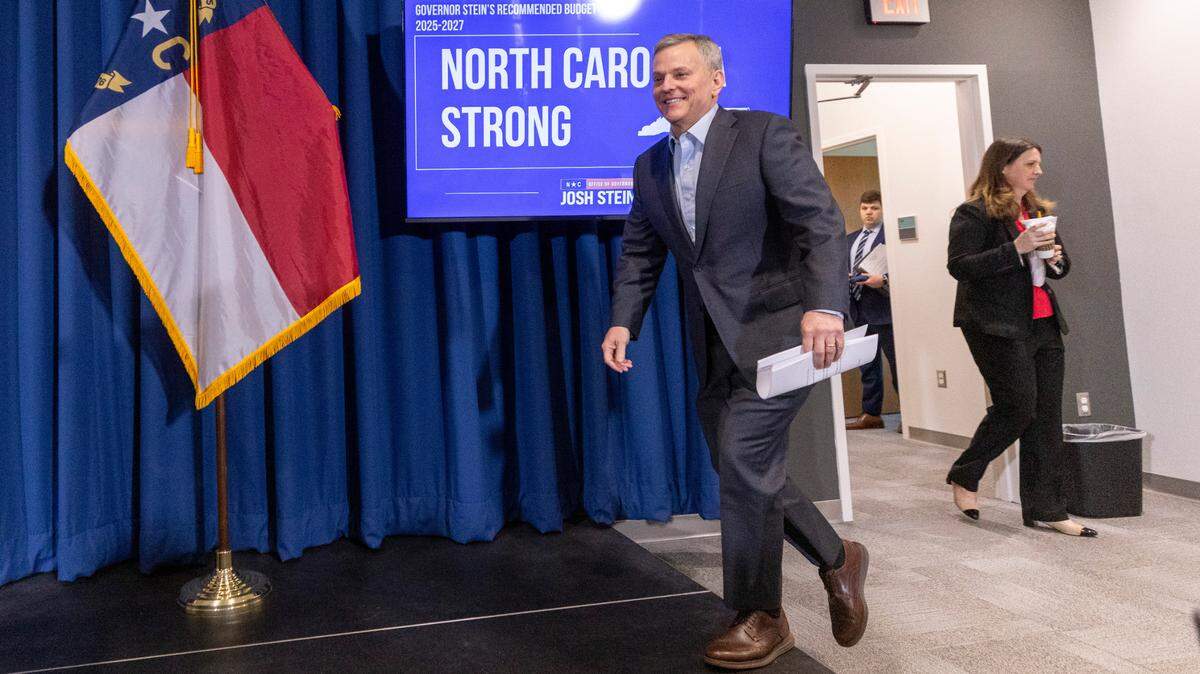
Stein’s pitch for the budget, unlike those of former Gov. Roy Cooper, didn’t make big, headline-grabbing requests like hefty raises. In fact, Stein’s proposed 2% raises for state employees are lower than even Republicans want. His pitch to raise starting teacher pay was met with support from Republicans.
Senate leader Phil Berger wouldn’t tell reporters if there is policy in the Senate budget expected to come out on Monday, but did say he thinks “budgets are about policy.”
In past years, budget bills have included policy that takes away power from the governor. To veto policy within a massive spending bill would also mean vetoing raises for thousands of state workers and teachers, among other spending.
Stein vs. Cooper
Stein followed in the footsteps of his friend and mentor, Cooper, but his governing so far has not been a carbon copy.
When Stein was a gubernatorial candidate in 2023, asked for examples of how he differs from Cooper, he said that Cooper likes to wear ties, but he doesn’t. That’s held true, and Stein is also taking a more hands-on approach to how he works with his legislative branch counterparts.
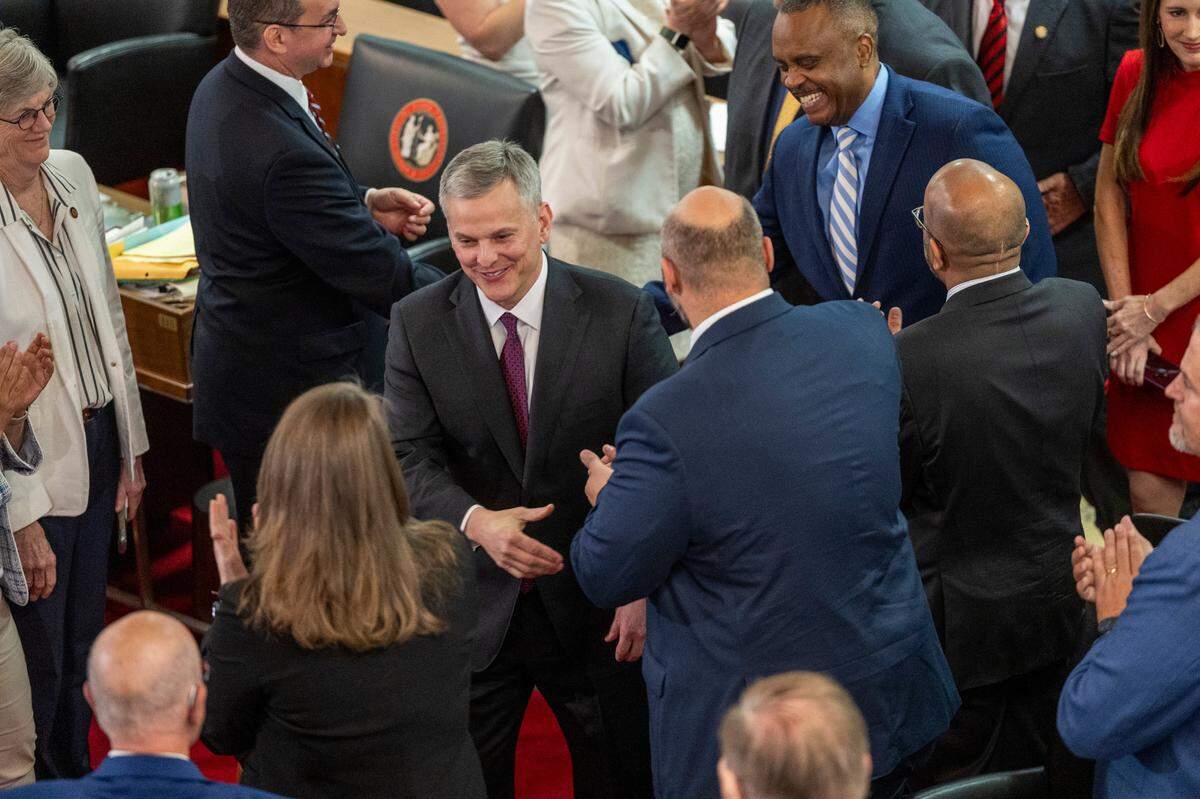
Rather than refusing to say if he’ll sign or veto legislation, like Cooper did, even when it was clear he didn’t like the policy, Stein used his State of the State address to tell legislators he was ready to sign their Helene recovery bill — “yesterday.” Then, just a few hours after it passed its final vote, Stein signed it in a short-notice ceremony at the mansion, with lawmakers, including House Speaker Destin Hall, looking over his shoulder.
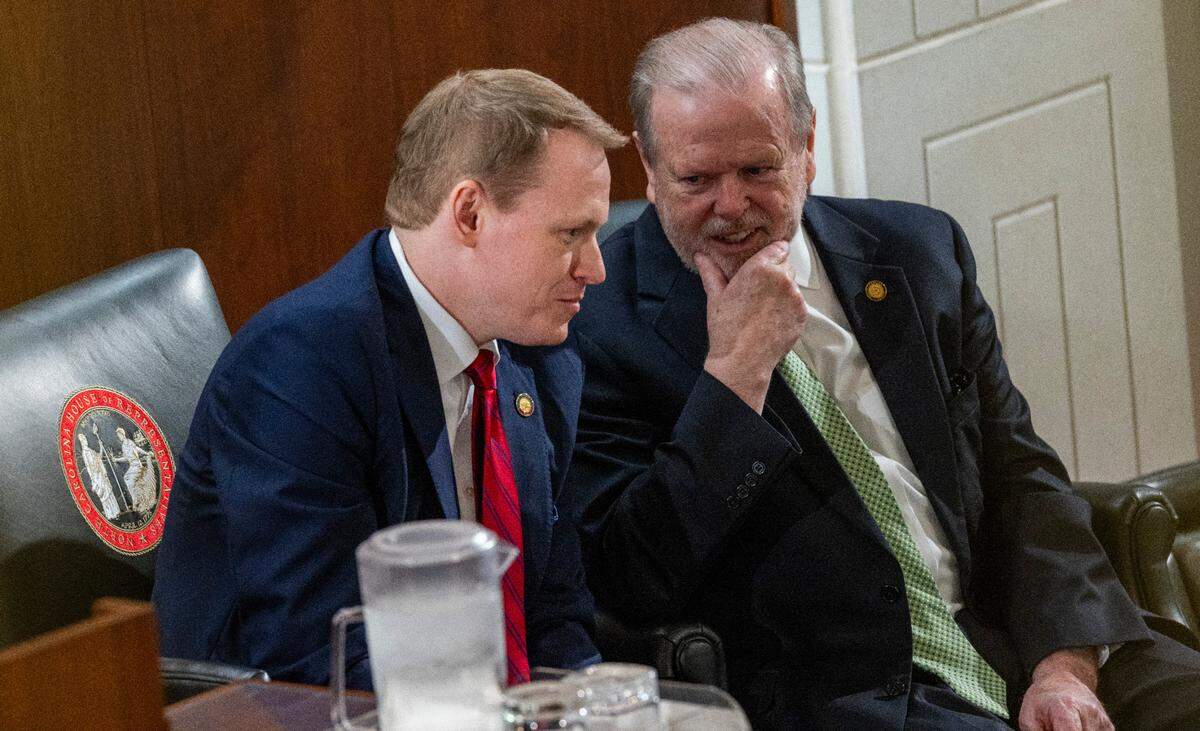
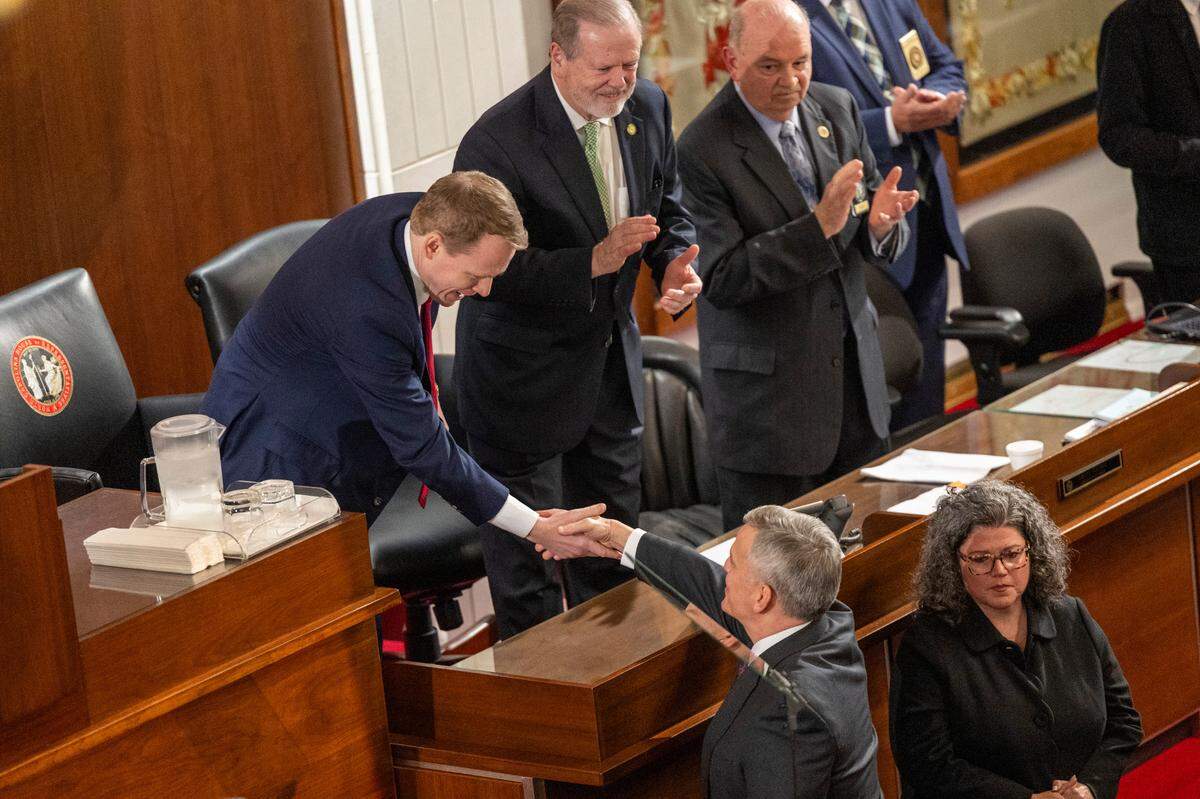
Like Stein, Hall is new to his role, but not to Raleigh politics. Hall told reporters he didn’t really know Stein when Hall was a lower-ranking House member and Stein was attorney general. That changed when Hall’s speakership became official in January, and he began talking regularly to Stein.
Stein said he’s been “very impressed” by Hall, already has a respectful relationship with Berger, and looks forward “to working with both of them, and both of their chambers on issues that can help North Carolinians have better lives. That’s why we do the work we do.”
It’s not just the GOP leadership who are getting calls from the governor. Stein is calling rank-and-file Republicans, rather than having a staffer do it for him, or not at all, like Cooper. Stein even called one Republican lawmaker during a committee meeting when the lawmaker was presenting a bill — to talk about that very bill.
Stein said he talks to so many of them because “that’s how you get things done,” and that “every legislator has an equal voice and an equal vote.”

Cooper achieved successes on signature issues, signing Medicaid expansion and the repeal of a bill that limited LGBTQ+ rights and drew boycotts. But Republicans also passed dozens of laws over his vetoes.
Cooper may run for U.S. Senate in 2026, and legislative Republicans are making sure that his name is still around, in a negative light, especially when it comes to hurricane response. One bill used his name as an acronym, the “Cooper Accountability Act,” contents of which were added to a Helene recovery bill.
Longtime Republican operative Dallas Woodhouse said it shouldn’t be news that a governor talks so much to lawmakers, it should just be a given. The difference with Stein, he said, is that he’s spent more time in elected office with Republicans having power, whereas Cooper only spent the last decade of his career with Republicans in control.
Stein, 58, won his first of four terms in the state Senate in 2008, just two years before Republicans took control from Democrats, who controlled the General Assembly for more than a century.
“When the legislature is of an opposite party, and they’re likely to have, at a minimum, a pretty healthy majority through his time ... If you want to beat up on the legislature, do a few liberal executive orders, veto a few things, and, (you’ll) basically accomplish very little to nothing,” Woodhouse said in an interview.
Woodhouse has worked for multiple Republican political groups, including the NCGOP, during the terms of several governors of both parties.
He thinks Stein has the potential to be the Democratic governor who, even though he’ll fight with Republicans sometimes, will “sort of accept that they’re going to be around, and that some of their ideas may not be bad, and maybe on these things we can find a way to work together.”
Stein’s approach to Trump
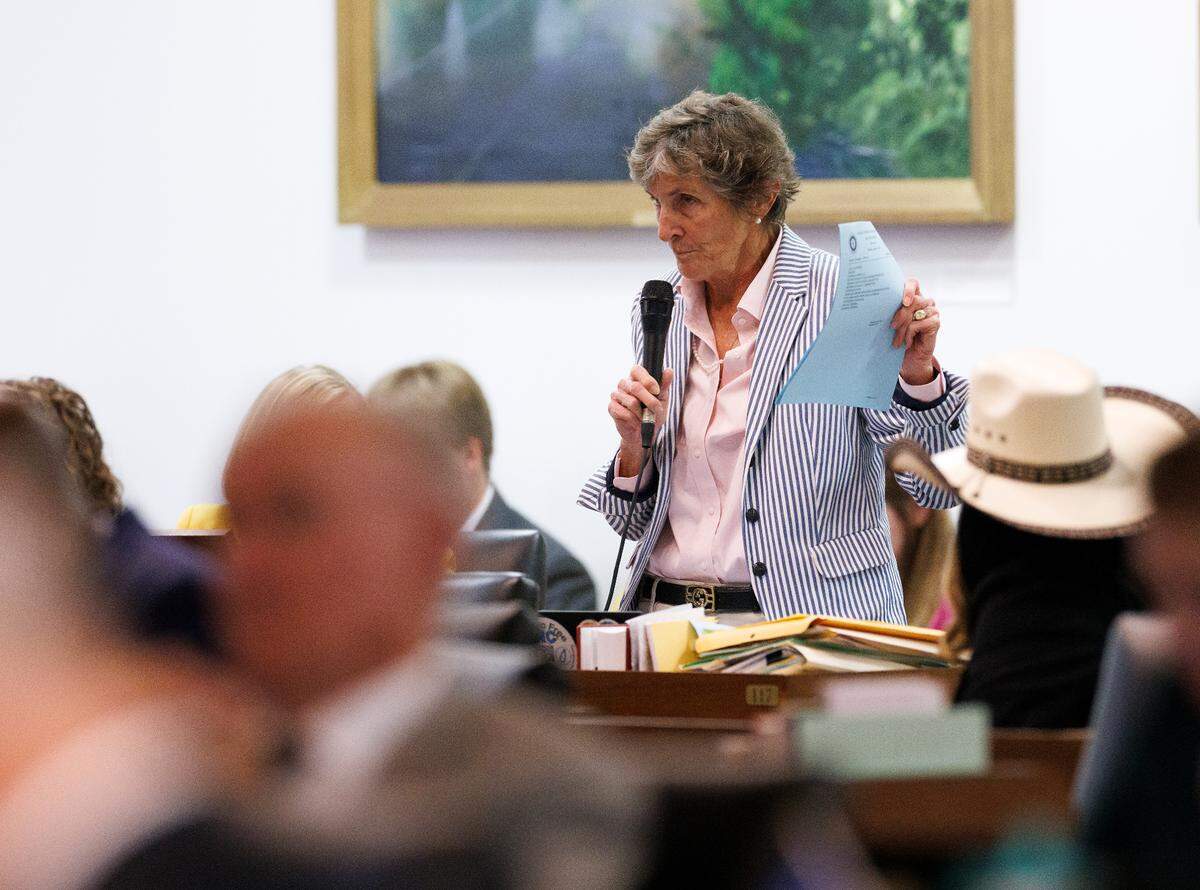
Rep. Pricey Harrison, a Guilford County Democrat, said that Stein’s more moderate than Democrats might think. She also said that Stein is avoiding the animosity Cooper had with Republican leaders.
“I don’t think it’s bad that he is not as liberal as people who elected him might have thought he might be, but he’s got to win in a purple state. He’s got to govern in a purple state, and I think he’s actually threaded that needle pretty well,” Harrison told The N&O.
Plus there’s the Trump factor.
Trump hasn’t even reached his own first 100 days, and he’s already instilled huge tariffs, put thousands of government employees out of work and stopped funding major public health aid overseas.
Harrison said that people are living in very different times, with Trump’s second term and a lack of guardrails on his retribution. Trump cut funding at Columbia University until its leaders bent to his will, and threatened the state of Maine after the governor told him she’d see him in court over his transgender policy.
“I think that anybody who has to work with (Trump) is trying to be a little bit more diplomatic or trying to work with what we have, because it’s pretty bad ... So he’s probably just doing what he needs to do to survive in this environment, and I’m kind of proud of him for being able to stand it,” she said.
“I can’t even imagine what it would be like, but we’re in trouble if we ever get on the bad side of the president,” Harrison said.
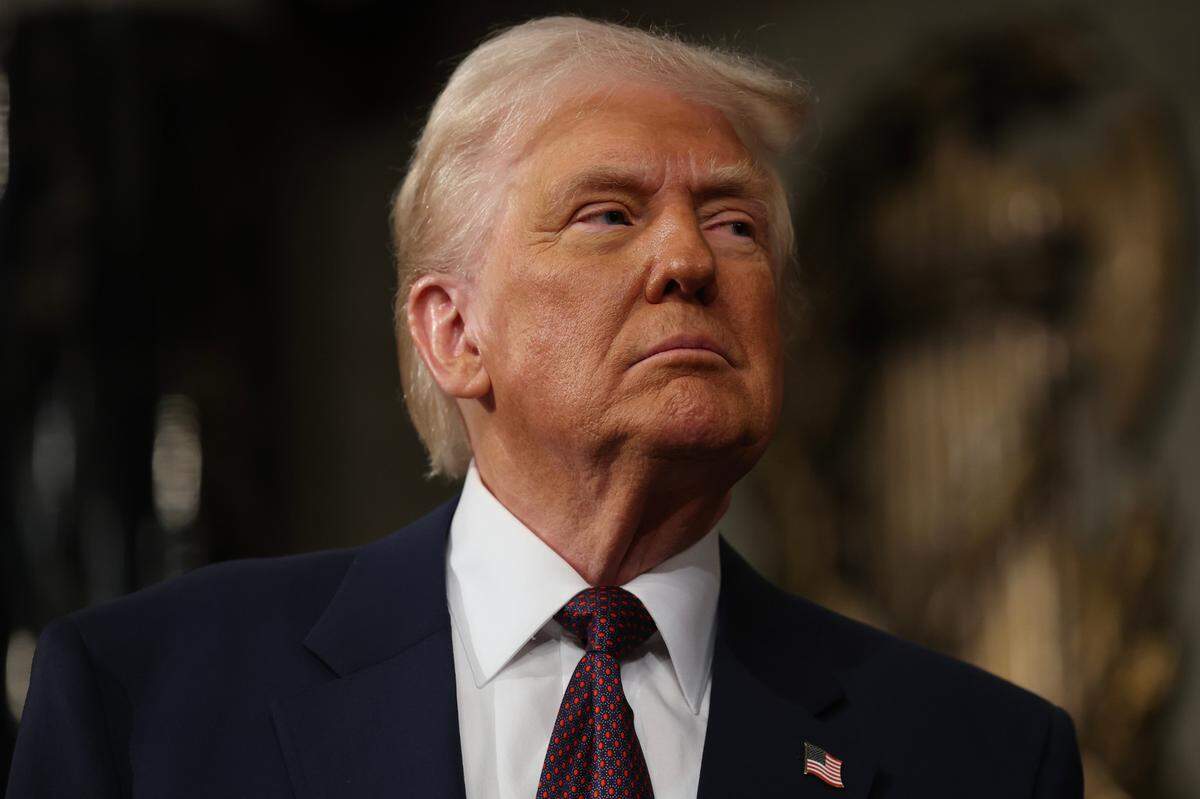
Asked about Trump’s punitive retribution, Stein said that “he shouldn’t do that. It’s wrong to try to exact revenge on people who have a different view on policy.”
“I have spoken out against his cuts to (National Institutes of Health funding). Those research dollars save lives,” he said, noting canceled studies targeting about diseases. Stein also called NIH a critical part of the state’s economy.
“It’s just so wrong on a number of levels, the arbitrariness of the cuts that have happened. And when they do things, the administration does things that hurt North Carolina, I will not hesitate to speak out.”
Finding common ground: Helene, school cellphone bans?
Sen. Woodson Bradley, a Mecklenburg County Democrat, took note of the unifying message she heard during Stein’s State of the State.
“I was watching to see who stood up and who sat down. And there were more of all of us standing up together than anything partisan that I saw ... So I think he really is trying to pull us together so that we can make progress. As a legislator, I think he’s doing everything he can to stop this polarizing world that we live in,” Bradley told The N&O.
Bradley, who describes herself as a moderate, said she’d like to hear a louder economic message from him about keeping North Carolina a top state for business and “what are we doing economically to make things good for all working North Carolina people.”

Sen. Bobby Hanig, a Currituck County Republican who was previously in the conservative House Freedom Caucus, is among those Republicans saying Stein is off to a great start.
“I’m optimistic,” Hanig told The N&O. He said Republicans and Stein were all in agreement on Helene, which Hanig described as “a great partnership so far. That’s how we get things done.”
Republican Rep. Jennifer Balkcom, who represents Henderson County in the Helene-hit region, also said that Stein has worked well with Republicans on Helene.
“I felt like we we worked as a team, which we, in my opinion, didn’t have that with Gov. Cooper — or I never had that with Gov. Cooper — but I felt like it started on a great foot, and I hope it continues,” she told the N&O.
Balkcom said she likes the energy Stein has put into his job. “So I have to say that’s been different, and good to see for North Carolina, for all of North Carolina.”

Another area of common ground is regulating the use of cellphones in schools. Stein talked about it again on Monday during a visit to Moore Square Magnet Elementary School, when he announced a new advisory council on student safety and well-being and said he wants to work with lawmakers.
“We have to take the harms of cellphones seriously. When students don’t have to choose between social studies and social media, real learning can happen,” Stein told reporters.
He also talked about school safety upgrades, including cameras, fences around playgrounds and other measures.
In his budget pitch, Stein called for funding school resource officers in middle schools, an idea that also has support from House Speaker Hall. Currently, high schools have SROs but not all middle schools.
“Keeping our kids safe also means protecting their mental health. North Carolina has under-invested in school social workers, school nurses, school counselors for far too long,” Stein said. Democrats have pushed for a full-time nurse in every school for several budget cycles now, but it hasn’t been included in the final budget.

Those two issues are leading GOP priorities. Hall said the vouchers moratorium is a non-starter for Republicans.
Rep. Dean Arp, one of the top Republican House budget writers, said that’s a major point of disagreement with the governor.
“That’s so popular, and it’s a fundamental policy thing to empower parents, to decide what’s best for their children,” Arp told The N&O about the vouchers.
He said he wanted to recognize that Stein asked for $1 billion less than Cooper had previously requested, which Arp called “at least a starter.”
Arp, like other Republican lawmakers, also noted how much more engaged Stein is with the legislature than Cooper was. He praised Stein’s work on Helene recovery and making sure that failures during the Cooper administration’s Eastern North Carolina hurricane recovery efforts are not repeated.
“We’re not kumbaya on some of the things, but it is a recognition that we have to move North Carolina forward and work together. And I think he’s certainly doing that,” Arp said.
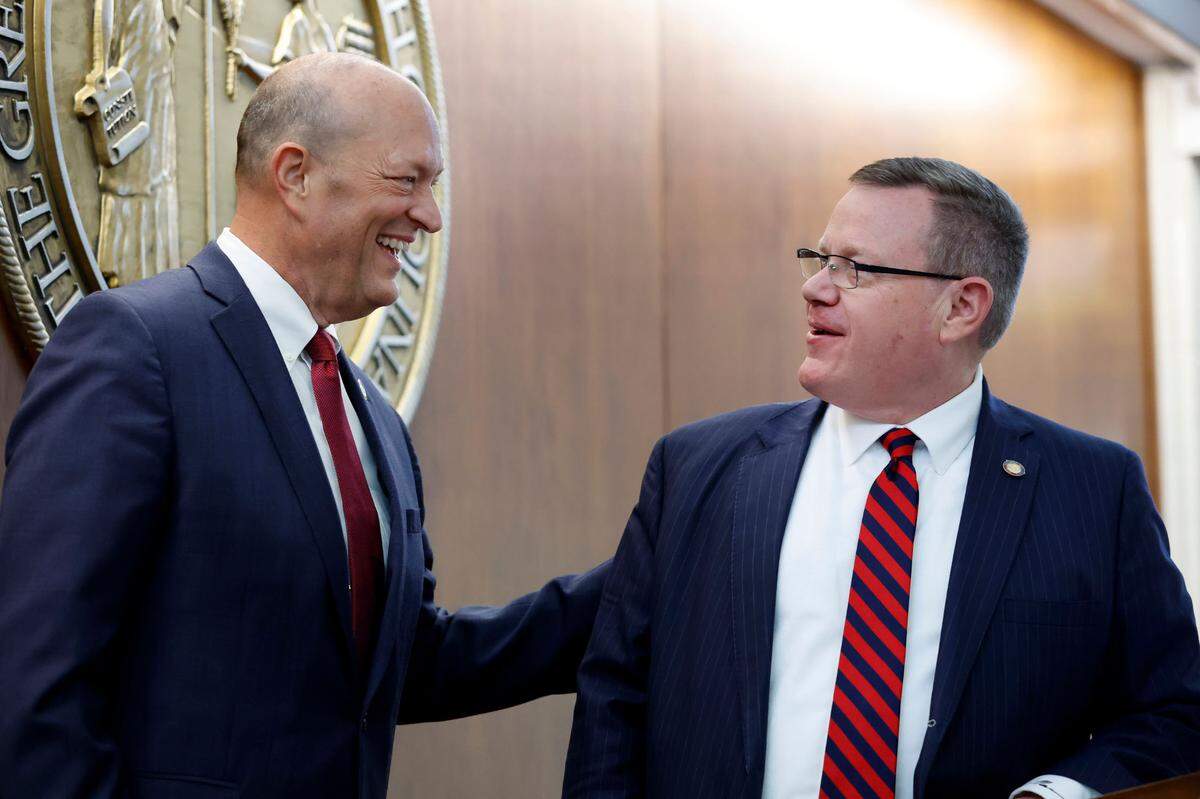
Stein has appointed Republicans to advisory positions, including naming Sen. Jim Burgin as co-chair of the new Task Force on Child Care and Early Education.
“I have enjoyed working with Josh when he was the attorney general. We worked on some issues that had to do with with hospital consolidation and opioids and all of that. I will continue to work with him on those issues, but I always say, you don’t evaluate somebody until they’ve been there at least six months,” Burgin told The N&O after a recent Senate session.
Burgin, an Angier Republican, said he’s been impressed with Stein’s staff, too, who have come to meet with him at the Legislative Building.
“Come back in six months and we’ll talk,” Burgin said.
Six months into Stein’s term will be July 1, the start of the new fiscal year, and the date the state budget is expected to become law, though it rarely has in recent history.
Berger, who was also Senate leader during both of Cooper’s terms as well as that of former Republican Gov. Pat McCrory, said Stein’s interaction with lawmakers has been helpful “for our ability to have conversations. I think the members appreciate that.”
“As far as substance is concerned, I just don’t know that — we haven’t sent him that much for him to sign or veto,” he said on Tuesday.
Berger said there are things they’ll disagree on, but he doesn’t “know that we’ve bumped into those yet.”
‘Taking the safe road’
Stein’s proposed raises for state workers are lower than some lawmakers want, including Wake County Rep. Cynthia Ball.
“I would have done a couple things differently. But anyway, it’s a good budget, better than the (Senate budget) that I think we’re getting ready to see here,” Ball said.
“I’m not mad at him,” she said, and agrees with Stein’s budget proposals to pause individual and corporate income tax cuts and a moratorium on private school vouchers.
Democratic Rep. Marcia Morey, of Durham, said Stein is doing what most new governors do: start conservatively. Helene relief, banning cellphones in classrooms and increasing pay for Highway Patrol officers were all examples of him “taking the safe road,” she said.
“I don’t see any new, bold actions that would upset really anything,” Morey told The N&O in an interview.
She said that Cooper, too, was cautious when he first took office in 2017.
Despite the lack of bold actions, Morey thinks Stein is doing a good job, and mentioned what several other lawmakers have as well, that’s he’s good at outreach.
Morey is in a new group of House Democrats started this year, the House Progressive Caucus, which includes Harrison and others. Their sponsored bills raise the minimum wage and address criminal sentencing parity, she said, but they haven’t heard Stein’s thoughts about any of it yet.
She’s in the “wait and see” camp.
“I think he’s hesitant to take any strong progressive stands right now, and that’s understandable, but we will still push them and hopefully get more and more support,” said Morey, a former judge.
Still, she said she’d give him an “A” grade.
“I think Gov. Stein takes a very calm approach to things. You know, he has a very level-headed demeanor, and I think he comes across that way, but time will tell.”
Jarvis Hall, the NCCU professor, said it will be up to Stein “to make sure that when the time comes for people to stand up” against Republican-written legislation, that Democrats are in lockstep to prevent a veto override. Republicans have a veto-proof supermajority in the Senate, and are one vote short of total control in the House.
As of Thursday, the General Assembly has not sent Stein any bills he plans to veto.
This story was originally published April 10, 2025 at 1:58 PM with the headline "NC Republicans welcome Gov. Josh Stein’s approach so far, but his first test is coming soon."
.jpg)