These NC Democrats hope they can influence the budget after voting with GOP
Senate Republicans completed the first step of this year’s budget process by advancing their $66 billion, two-year spending plan with the support of four Democrats.
After more than five hours of debate on Wednesday, Democratic Sens. Paul Lowe, Gladys Robinson, Joyce Waddell and Dan Blue — the former longtime party leader who stepped down from his position in December after his caucus chose a new leader — joined Republicans in voting to approve the budget.
Meanwhile, Sen. Bobby Hanig, a Currituck County Republican, voted against the proposal, joining most Democrats, after he failed to remove a provision that would end free rides on the state’s coastal ferries and charge a toll.
Lowe, who represents Winston-Salem and has served in the Senate since 2015, said after Thursday’s final vote that while there were “obviously many reasons to vote against that budget,” he ultimately decided to support it because of the chance of serving on the conference committee, the group of lawmakers appointed by GOP leaders to negotiate a final budget both chambers can agree on.
.JPG "RAL_102XGRMAPS-NE-102423-RTW (1).JPG")
Lowe said that being appointed to an eventual conference committee would allow him to “try to work on some of those things that are negative.”
“Somebody has to be in the room for that stuff,” Lowe told The News & Observer, arguing it’s important Democrats are included in the discussions that ultimately determine what the final spending plan looks like.
Democrats hope to save HUB office from closure
Lowe cited the closure of the Office of Historically Underutilized Businesses as one example of an issue with the budget in its current form that he hopes can be addressed.
The 439-page budget includes a provision right now that would eliminate the HUB office, as it is known, freeing up about $1.7 million that would have otherwise been allocated over two years, and cutting 12 jobs.
Established by lawmakers in 2001, the office helps minority-owned businesses secure state contracts.
Republicans, including Senate leader Phil Berger, questioned this week whether the office provides any benefit to the state and is necessary, and if it is an example of diversity, equity and inclusion efforts that should be cut from state government.
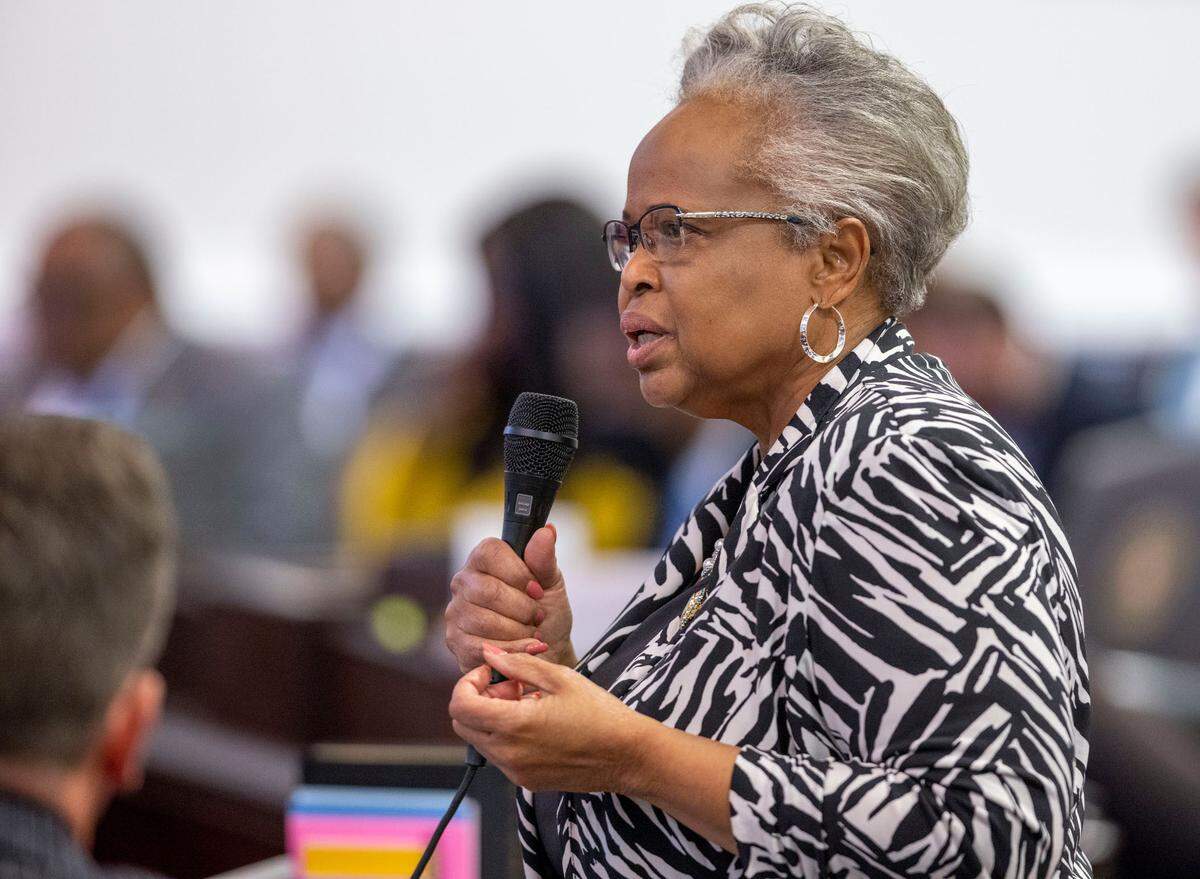
But Democrats, including Lowe, Robinson and others who voted for the GOP budget this week, have argued the office provides tangible benefit by diversifying the pool of firms that the state does business with.
Robinson raised concerns about the office’s elimination during a committee earlier this week and said she had data on the work the HUB office does and the benefit it provides, and said she had spoken with Sen. Carl Ford, a Rowan County Republican, about revising the bill at some point to spare the office from being shut down.
Lowe said on Thursday the HUB office “helps so many business people, both black and white and of all nationalities in our state.”
Raising pay for teachers, state workers, and retiree benefits
Lowe told The N&O he was also concerned about raises for teachers and state employees, and retiree benefits.
Asked if he was confident Republicans were willing to have a discussion about the concerns he and the other Democrats have expressed, Lowe said: “We’ve got to get in the room. Some of us have to be in the room. We can’t all stand outside the room and holler.”
Waddell, a Charlotte Democrat who has, like Lowe, served in the Senate since 2015, also said she was worried about the elimination of the HUB office, and the need for a cost-of-living adjustment, or COLA, for retirees.
“We want that to be substantial, so that retirees, we’re aging out, and we’ve been in this thing for a long time, so that we can live comfortably, and we can live with what we’ve been promised that we would get as a result of our retirement,” Waddell, 80, told The N&O.
Waddell also said she was optimistic Democrats can have productive discussions with Republicans as the budget process move forward.
“This is not the end, this is just the beginning,” Waddell said. “There’s plenty room for changes, and we expect to see changes, and this gives us an opportunity to discuss, to negotiate, and to make a difference.”
Sen. Ralph Hise, a top Republican budget writer from Western North Carolina, told The N&O on Thursday he and his colleagues “are hearing a lot” from Blue, Lowe, Robinson, and Waddell about changes they would like to see in the budget, and will “work to accommodate what we can.”
“Not everyone’s here just to fight, some people actually want to make changes in policy, and I’m glad to see that’s where we’re at,” Hise said.
More than two dozen Democratic amendments defeated
The initial vote on the budget followed a lengthy debate on Wednesday during which Republicans defeated more than two dozen amendments put forth by Democrats.
The amendments sought to freeze the state’s corporate income tax phaseout, reinstate the Earned Income Tax Credit, increase the state’s minimum wage, and fund other priorities Democrats have sought to advance by cutting funding for the Opportunity Scholarship program that provides families with private school vouchers.
The only Democratic amendment that did pass was offered by Blue, to give Wake County five additional assistant district attorneys. Blue said on the floor that he had raised the issue with GOP budget writers in committee the day before, and Republicans quickly recommended the amendment’s adoption.
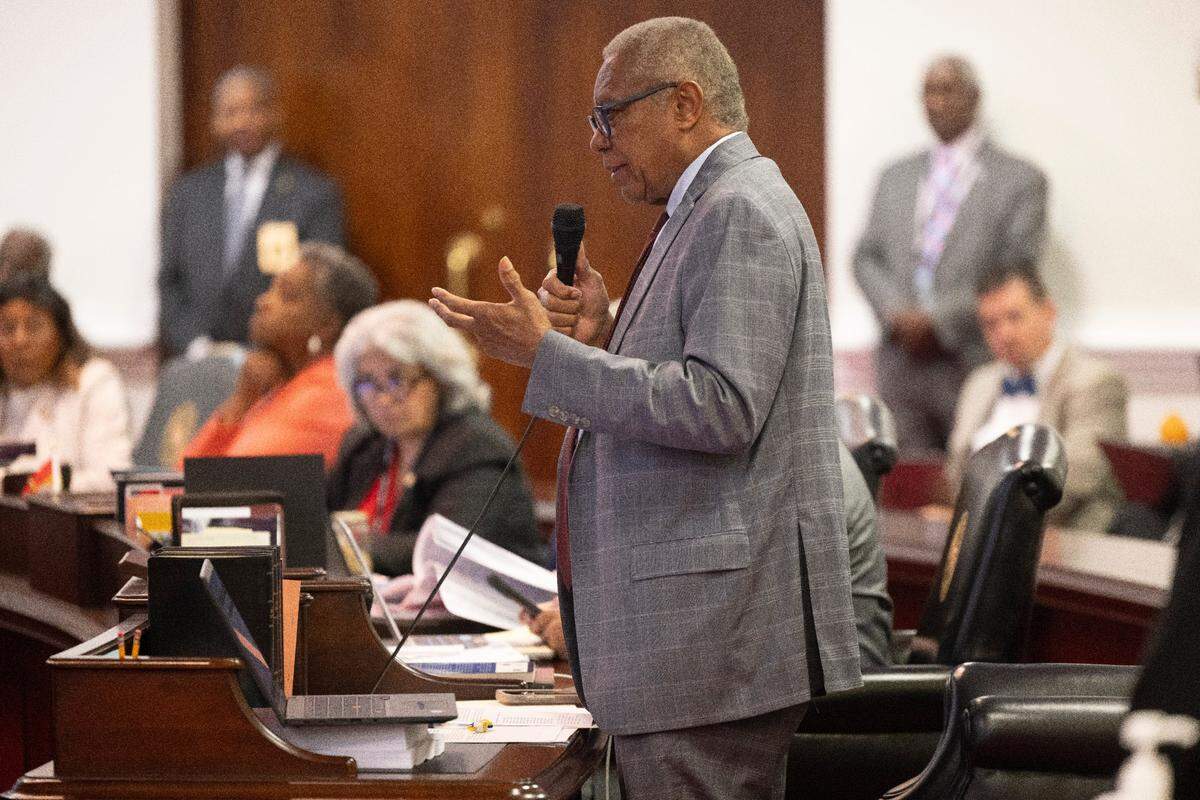
Democrats who did vote against the budget criticized Republicans for not investing enough in teachers and public schools, and unnecessarily cutting programs and jobs from state government, and putting money that they said could be used for important services back into the state’s rainy-day fund.
“This budget isn’t built on courage,” Senate Minority Leader Sydney Batch said towards the end of Wednesday’s debate. “It’s built on the backs of our most vulnerable citizens, and is simply anemic.”
Democrats elected Batch, the former deputy minority leader from Apex, as minority leader in December. She replaced Blue, who had led Senate Democrats for more than a decade and who made history in the 1990s as the first Black speaker of the House.
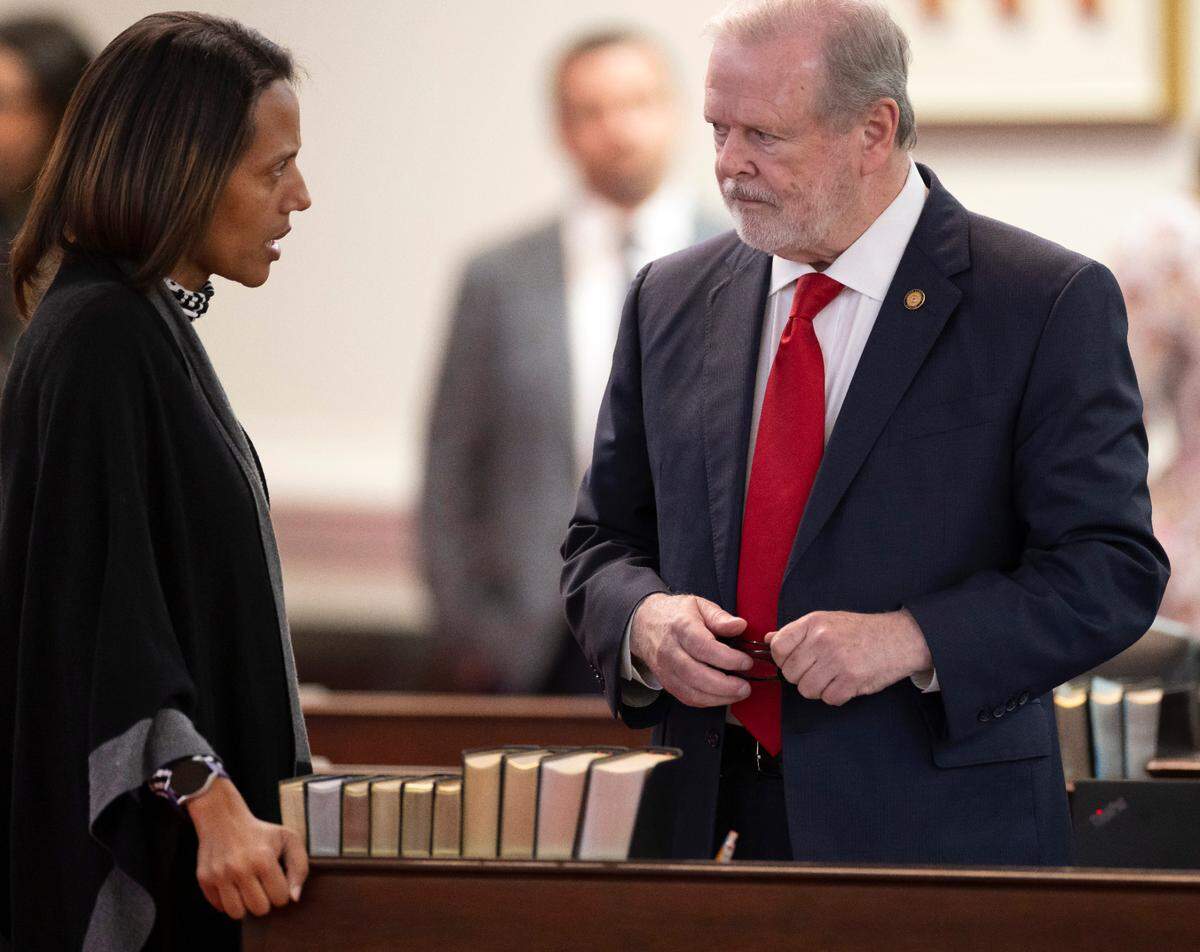
Speaking with reporters on Thursday, Berger said he and members of his caucus have had conversations with the Democrats who voted for the budget this session about their priorities.
He said he knows, for example, that they care in particular about the legislature’s commitment to historically Black colleges and universities.
“Budgets are complicated documents, and there are a lot of things in them that will garner support from folks, and there are things in there that folks say that they don’t like,” Berger said. “But on balance, I think most members will make a decision on whether to vote for or against a budget on whether or not, on balance, overall, it’s a beneficial thing.”
This story was originally published April 17, 2025 at 2:10 PM with the headline "These NC Democrats hope they can influence the budget after voting with GOP."