NC House budget calls for job cuts, tuition increase. What else they’re proposing

The North Carolina House rolled out its plan for cuts across state government on Thursday, including millions of dollars in state employee positions that are vacant.
The plan would require a tuition increase for students at universities in the UNC System.
The House, which is controlled by Republicans, held a series of hearings Thursday morning explaining how budget writers would spend about $66 billion in taxpayer money over the next two years. The Senate passed its own budget plan in April, and the General Assembly will need to agree on a final budget bill to send to Democratic Gov. Josh Stein.
House Speaker Destin Hall said Tuesday that the budget would have “cuts in appropriate areas,” but that raises for state employees and teachers would be better than what the Senate and Stein have proposed. Those numbers won’t be public until the House unveils its full budget next week.
A top House budget writer, Rep. Donny Lambeth, said Thursday that they “are up against a really challenging time, economically.”
Here’s what the House is proposing, as of Thursday.
Tuition increase
The budget requires the UNC System Board of Governors to increase undergraduate and graduate tuition rates to generate at least $30 million a year in additional revenue. Legislative staff said it could result in a tuition increase of 2% to 3% depending on how it’s implemented.
“We gave them as much flexibility as we could,” said Rep. Brian Biggs, a Randolph County Republican and co-chair of the House Education Appropriations Committee.
In-state tuition for undergraduate students in the UNC System has been flat for nine years, something university leaders often tout as a major accomplishment. System President Peter Hans said Thursday that he is “hopeful” the system could make it a full decade without raising tuition.
“We’ll certainly be in a vigorous exchange with the legislature about their thoughts on the issue,” Hans said.
Both the House and Senate budgets propose increasing tuition rates for out-of-state students in the NC Promise program, which offers significantly discounted tuition at Elizabeth City State University, Fayetteville State University, UNC Pembroke and Western Carolina University. The House proposes increasing the out-of-state rate to $3,500, up $1,000 from the current rate, while the Senate proposed raising the rate by just $500.
Under the House’s proposal to increase other tuition rates across the system, the Board of Governors wouldn’t be allowed to change the in-state NC Promise rates of $500 per semester.
The College Board says North Carolina has the third-lowest in-state tuition rate in the nation.
$130 million in UNC System cuts
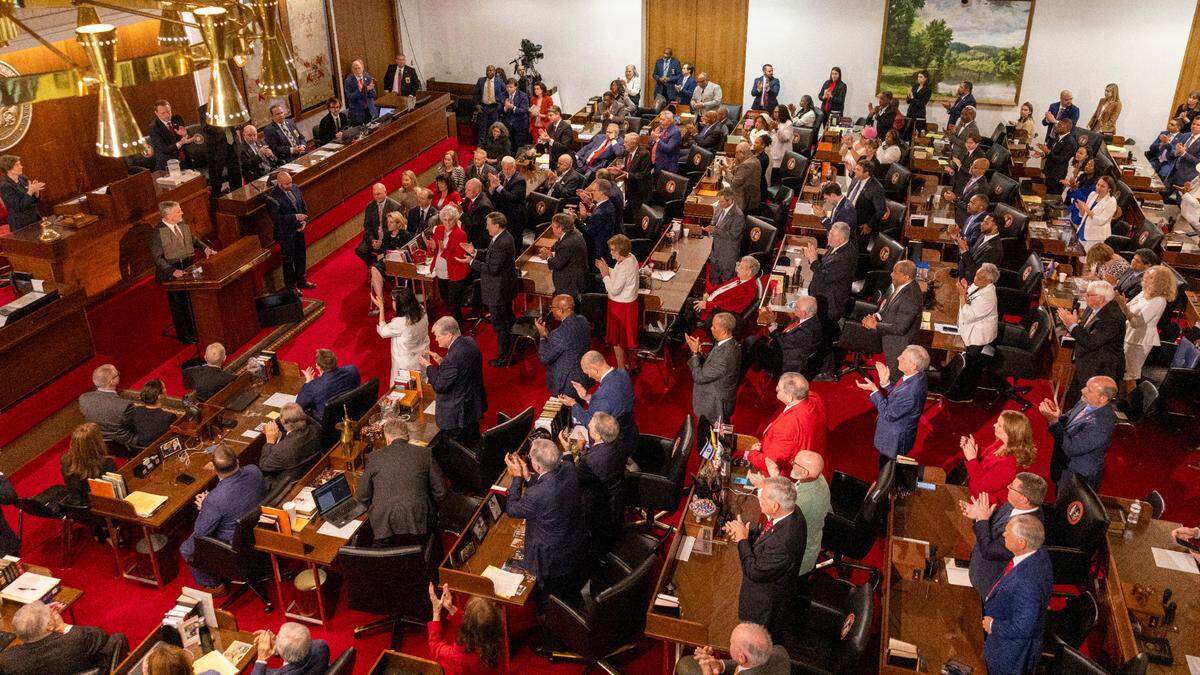
The proposed tuition increase comes at the same time the House budget would cut UNC System funding by $130 million over the next two years. The budget requires the UNC System Board of Governors to cut $61 million in the first year and $69 million in the second year of the budget.
The budget directs the Board of Governors to prioritize reductions in the UNC System Office, the Board of Governors’ Institutional Programs and Project Kitty Hawk. In 2021, state lawmakers allocated $97 million in pandemic relief funds to the UNC System to launch Project Kitty Hawk as a new technology nonprofit to serve adult learners.
Rep. David Willis, a Union County Republican and co-chair of the House Education Committee, said lawmakers are concerned about the lack of transparency in how the UNC System spends its money. At the same time, Willis said they’re anticipating more high school students opting for alternatives to the UNC System such as going right into the workforce or into two-year college programs.
“So looking at the future and trying to get ahead of enrollment declines that we anticipate in the future, I think this is one to have the schools go back and look at kind of right sizing, what their programs are, what their offerings are, where they’re maybe losing money on programs or maybe not as efficient as they need to be, and kind of tightening their belts,” Willis said in an interview.
The House budget doesn’t call for cuts in the community college system.
Fewer cuts in K-12 education from House compared to Senate
The House budget has fewer cuts in K-12 education spending than the Senate and includes increases in some areas. For instance, the House doesn’t mirror the Senate’s call to sharply cut funding for a program that has helped pay for the cost of high school students to take Advanced Placement tests.
House education leaders had put on hold a bill that would have eliminated K-3 class-size limits in all schools. Instead, the budget would allow growing school districts to exceed the K-3 size limits by three students per class and high-performing schools in those districts to go eight students above the limit.
Lawmakers also included several items in bills that have passed the chamber but haven’t been acted on by the Senate yet.
Education items in the budget include:
▪ Increase funding by $10 million for special-education students.
▪ Provide $10 million to train middle school teachers on the science of reading, a phonics-based approach that’s now used in elementary schools.
▪ Eliminate the Plasma Games program grant that’s been criticized by state education leaders. NC Supreme Court Chief Justice Paul Newby’s wife is a major investor in the company.
▪ Make permanent a program that provides funding for schools to purchase feminine hygiene products.
▪ Provide $500,000 to study HVAC (heating, ventilation and air conditioning) solutions in Wake County. Several district schools have had to close early due to HVAC problems.
▪ Require elementary schools to begin providing visual arts and performing arts courses to all students.
▪ Prohibit schools from denying students the regular school meal if they have too much debt in their meal account.
▪ Require school districts to post online the salaries of their central office employees.
▪ Require schools to develop policies limiting the use of cellphones by students in class.
Office on diversity in contracting would close
Other notable cuts and changes in the House plan:
▪ Like the Senate budget, the House budget would abolish the Office for Historically Underutilized Businesses, which includes 12 full-time positions. The office works to increase diversity in state purchasing and contracts.
▪ $5.4 million in cuts to vacant state employee jobs in the area known as general government, which includes agencies like the Department of Administration. The vacancy rate statewide is about 20%.
▪ $500 million from NC Innovation would be transferred to the state Helene fund. That’s the same amount the nonprofit has been awarded over the past two years to help UNC System researchers convert promising concepts into revenue-generating businesses.
▪ The budget would keep the state’s motor fleet managers from buying vehicles for the next year.
A statue of the late Rev. Billy Graham would be added to the State Capitol grounds, contingent on private funding. Previous proposals for a monument to African Americans on the grounds did not become law.
Board of Elections, auditor gains
Proposals in the budget would give additional funding to State Auditor Dave Boliek’s office and making changes to the State Board of Elections, which is now appointed by the auditor.
The auditor’s office would get five new positions, at a cost of $750,000, which is fewer than in the Senate budget proposal.
The State Board of Elections would get seven positions that are exempt from the State Human Resources Act, which means they can be political appointees.
The State Board of Elections, which is now controlled by a Republican majority after lawmakers shifted appointment power from the governor to the auditor, would move to the Albemarle Building, where the auditor’s office is located. The move would cost $2 million.
The elections board would be allowed to hire private attorneys.
Rep. Phil Rubin, a Wake County Democrat, tried to amend the part of the plan that would give the elections board new, exempt positions. He called it “a real risk to our elections” to have partisan staff.
Rubin said that lawmakers “all have an interest in making sure that the perception of our State Board of Elections — is that it is not partisan,” saying that the change worries him. His amendment failed, as did another that would get rid of the policy change allowing the state elections board to hire private counsel.
Vacant jobs cut, other changes in justice and public safety
House Republicans are proposing a sizable reduction in currently vacant correctional officer positions in the state’s prison system. Their budget directs the Department of Adult Correction to eliminate around 400 vacant positions lawmakers say have gone unfilled for more than a year, saving just under $24 million in funding that is allocated every year.
DAC is also directed to cut eight vacant sergeant positions in the department, saving $500,000 in recurring funds.
Meanwhile, the House GOP wants to keep the N.C. Innocence Inquiry Commission in place, but rename it the N.C. Postconviction Review Commission. Senate Republicans, in their budget proposal a month ago, said they wanted to eliminate the commission.
Established in 2006, the commission has reviewed over 3,600 claims of innocence and held 19 hearings, exonerating 16 individuals, The N&O previously reported.
Other public safety changes:
▪ More than $5 million for “Rounds tracking software” to keep track of and document prison staff interactions with inmates in solitary confinement.
▪ More than $1.2 million to install cameras on DAC-owned vans and buses to improve security during transportation of inmates.
▪ $3.5 million in one-time funding to provide state prisons with body scanners to prevent contraband from being smuggled inside.
▪ $1.5 million in recurring funds to expand the Local Reentry Council program that helps people with housing, employment, transportation, and other basic needs after leaving prison.
▪ $1.25 million in recurring funds for a pilot program focused on inmate education.
▪ The elimination of nearly 98 health services positions in DAC that have been vacant for more than a year, saving $6.1 million in recurring funds. The Senate GOP’s budget also proposed cuts here, but of only 40 nursing positions that have been vacant for more than 900 days, and nine health care technician positions that have been unfilled for more than 700 days, saving just over $3.7 million.
▪ Cutting funding for the Department of Justice’s Criminal Justice Fellows scholarship program by $564,000, leaving a budget of $100,000. The House GOP says this program, which provides high school students who want to pursue an associate’s degree in applied science in criminal justice with a 100% forgivable educational loan, “has been underutilized in recent years.”
▪ Eliminating $2 million in funding for a grant program that provided medically assisted treatment in jails for people with opioid use disorder.
▪ More than $4 million to buy body cameras for officers of Alcohol Law Enforcement and the State Highway Patrol, and support data storage for those cameras.
▪ $1 million in recurring funds for eight additional positions at the State Bureau of Investigation to support it as a standalone, independent agency.
▪ $50 million in one-time grant funding for the Center for Safer Schools, which is now housed under the State Bureau of Investigation, “to support students in crisis, school safety training, and the purchase of safety equipment.”
Cuts to health staff
Here are some of the top provisions on health care in the House plan:
▪ Terminates Medicaid coverage of weight management drugs, including the popular GLP-1 drugs, beginning Oct. 1, 2025. The use of these drugs for weight management has been covered by Medicaid since Aug. 1, 2024. Cutting these drugs would save the state $12 million in the first year of the budget and $16 million in the second.
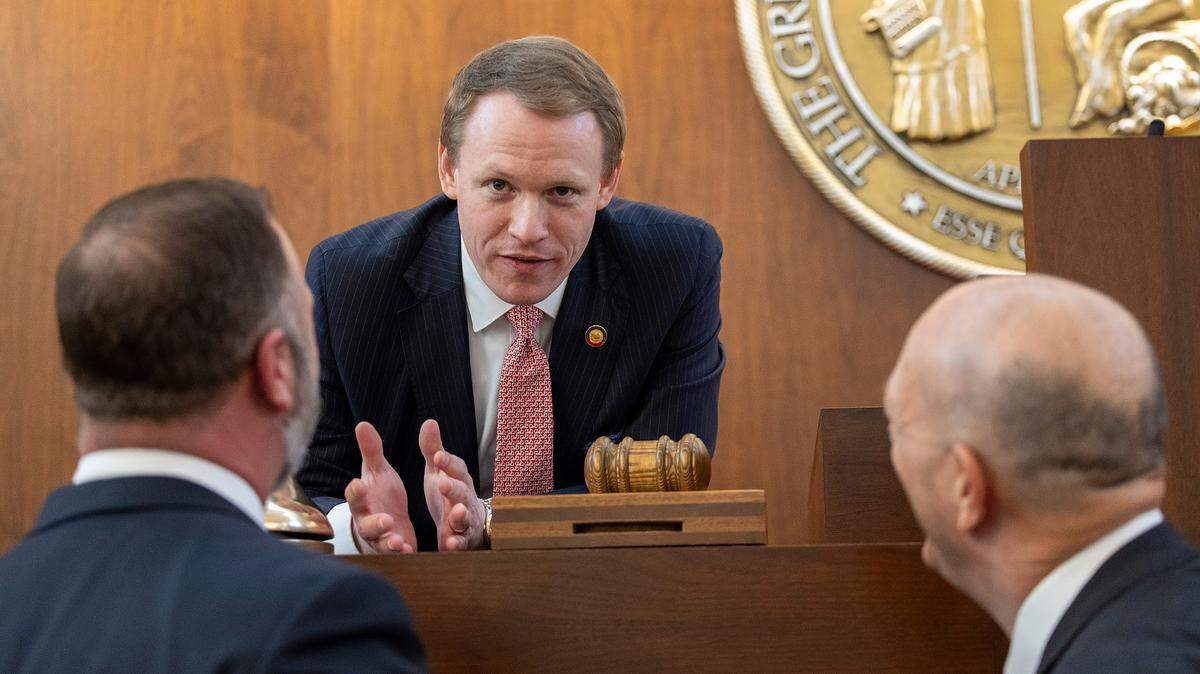
▪ Requires the Department of Health and Human Services (DHHS) to achieve savings of at least $10 million each year through the elimination of vacant positions. The department cannot eliminate vacant positions in its Division of Aging, Division of Public Health, and Division of State Operated Healthcare Facilities.
▪ Eliminates the Office of Health Equity within DHHS. That would save over $6 million over two years.
Included in the Senate budget but not in the House is funding to supplement the creation of a new children’s hospital being developed by Duke Health and UNC Health.
Lambeth, a Winston-Salem Republican, said Thursday during a committee hearing on the health provisions in the budget: “Is this 100% perfect? Nope. We’ve got some work to do.”
“Are there cuts in here that I don’t like? Absolutely – in other areas as well.”
“We are up against a really challenging time, economically, with economies slowing down and we’ve had to balance out a lot of priorities. There are a lot of people that will be excited about the House budget – which in my opinion is much better than the Senate budget – but there’s also going to be areas we hear from that are going to be disappointed,” Lambeth said.
Concern over federal Medicaid cuts
Health provisions in the budget also say that if there is any indication that work requirements are authorized by the federal government as a condition of participation in the Medicaid program — which appears likely to happen — then the state will work with federal officials to develop a plan for these requirements.
“We are very concerned about Medicaid cuts at the federal level,” Lambeth said.
“We would have a fair amount of work to do to define what that work requirement means.”
Beyond Medicaid cuts, he said, “We’re concerned about other cuts in Washington.”
“We’ll have at some point an update on what that might mean to the state budget.”
More jobs for DMV, but cuts to others in DOT
House lawmakers, responding to widespread frustration with the Division of Motor Vehicles, proposed a significant expansion to the agency’s workforce while also aiming to explore privatizing some of its functions. However, they also proposed eliminating a large swath of vacant positions throughout the Department of Transportation.
The House’s budget would include:
▪ Over $5 million in cuts to vacant positions across DOT.
▪ Over $2.6 million to hire 61 new DMV license examiner positions by the end of the biennium, and authorization to hire another 24 for a total of 85.
▪ Over $11 million to establish new DMV offices in Brunswick and Cabarrus Counties, and Fuquay-Varina in Wake County.
▪ A pilot program in Guilford and Harnett counties to explore allowing private businesses to renew drivers licenses.
▪ A pilot program in Forsyth County to explore allowing the DMV or a third-party vendor to provide in-home drivers license renewal services.
▪ A pilot program to allow commercial driving schools to administer some driver’s license exams.
This story was originally published May 15, 2025 at 1:08 PM with the headline "NC House budget calls for job cuts, tuition increase. What else they’re proposing."
.jpg)