
Helene relief? Check. NC budget? No. What lawmakers did and didn’t do this session
AI-generated summary reviewed by our newsroom.
- NC lawmakers passed 61 bills in 2025, but failed to agree on a state budget.
- Gov. Stein vetoed GOP-backed bills on immigration, gun rights, and DEI programs.
- Helene relief, DMV staffing, and pharmacy reforms advanced with bipartisan support.
Over the last six months, North Carolina lawmakers have enacted close to 70 bills.
While that number includes a variety of local administrative changes, Cabinet appointments and Helene relief, it does not include many of the big-ticket items typically expected from a legislative session.
Republicans who control the House and Senate failed to reach an agreement on a comprehensive state budget. Controversial social legislation on race and gender awaits Democratic Gov. Josh Stein’s likely veto.
And bills attempting to bolster state cooperation with immigration authorities have already met the governor’s veto pen — likely setting off one of many uphill battles to override, given that Republicans are one vote short of the numbers they need to bypass Stein without help from Democrats.
All of this places the 2025 legislative session in stark contrast to the dramatic session just two years ago, when Republicans gained a surprise supermajority after Rep. Tricia Cotham switched parties to join their caucus.
At this point in 2023, lawmakers had enacted just over 80 bills — eight of which became law after Republicans successfully overrode Democratic Gov. Roy Cooper’s veto. Among those bills were a crackdown on diversity, equity and inclusion efforts, a repeal of the state’s requirement for a permit to buy a handgun, and a 12-week abortion ban.
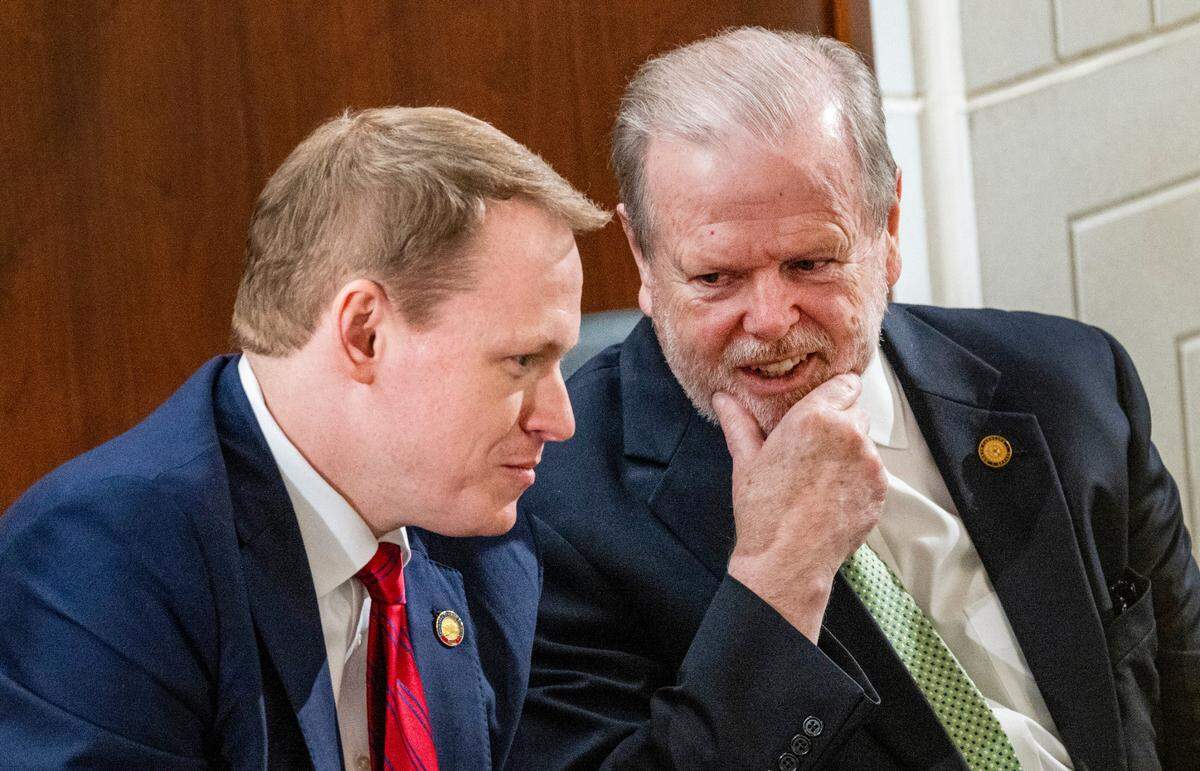
This year, bills to further limit DEI and gun permit requirements have uncertain prospects for becoming law after vetoes by Stein.
But while this year’s session may seem less productive, the comparison comes with the crucial caveat that though lawmakers may have left Raleigh, no piece of legislation is ever truly dead in the General Assembly. A miracle budget deal could appear suddenly. A massive mystery bill could be introduced and passed within hours. A stray Democrat could be convinced to join Republicans in overriding a veto (or to simply walk out on the vote).
With all that in mind, here’s a look at some of the most notable accomplishments and failures of the 2025 legislative session.
No budget, no raises for state workers and teachers
The fiscal year started on July 1, but North Carolina doesn’t have a new budget. That means raises for state employees and teachers are on hold until the leaders of the Republican-controlled House and Senate can reach a deal.
Passing a two-year spending plan is the main purpose of lawmakers’ long session, which is held in odd-numbered years. The session technically hasn’t ended yet, but the Senate and House adjourned in June without agreeing on when to come back later this summer.
Each chamber passed its own version of the budget bill this past spring, and the divide between them was stark. As has become the norm, Senate Republicans wanted more tax cuts than their House counterparts.
But a big change this year was the amount of Democratic support.
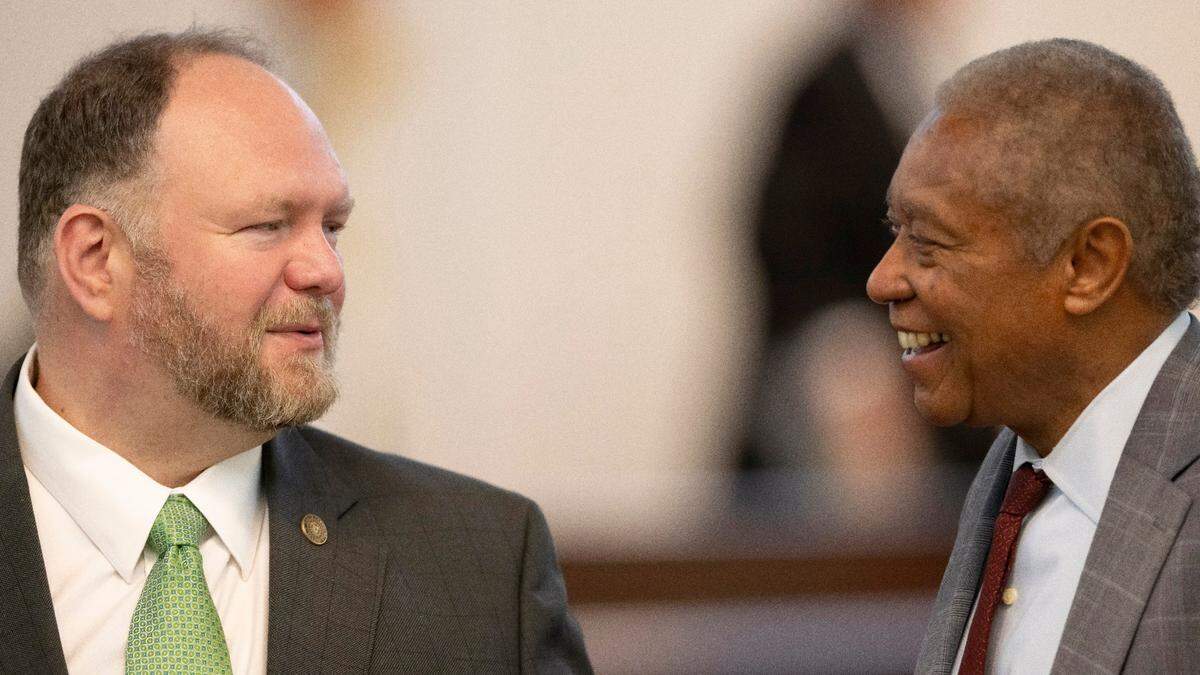
A handful of Democrats usually vote for a Republican budget. And it started out that way. In the Senate, four Democrats voted with Republicans, most notably Sen. Dan Blue, the former minority leader.
But then came a surprise in the House, a majority of Democrats, including minority leader Robert Reives – 27 total – voted for the Republican-written House budget. Tax cuts and public employee pay helped draw Democratic votes.
The House budget had higher raises for state employees, at 2.5%, than the 1.25% most of them would have received under the Senate budget and the 2% Stein proposed.
House Republicans want to slow future tax cuts and restore a back-to-school sales tax holiday.
The state isn’t required to pass a new budget, and the government won’t shut down, like in Washington. Instead, spending will remain at current levels until a new budget becomes law. If lawmakers reach a deal, they’re likely to make raises retroactive to July 1.

Helene relief passes at last minute
On the legislature’s last day, it funded more recovery efforts in Western North Carolina. Stein quickly signed the bill into law.
The measure sets aside $700 million for a Helene reserve fund and allocates $500 million from that fund. Those appropriated funds will go toward several initiatives, including support for crop loss, stream-flow rehabilitation, school infrastructure grants and more. Not included in the bill are small business grants — something the House supports but the Senate does not. Lawmakers are expected to set aside additional funding down the line.
Increased ICE cooperation hinges on veto overrides
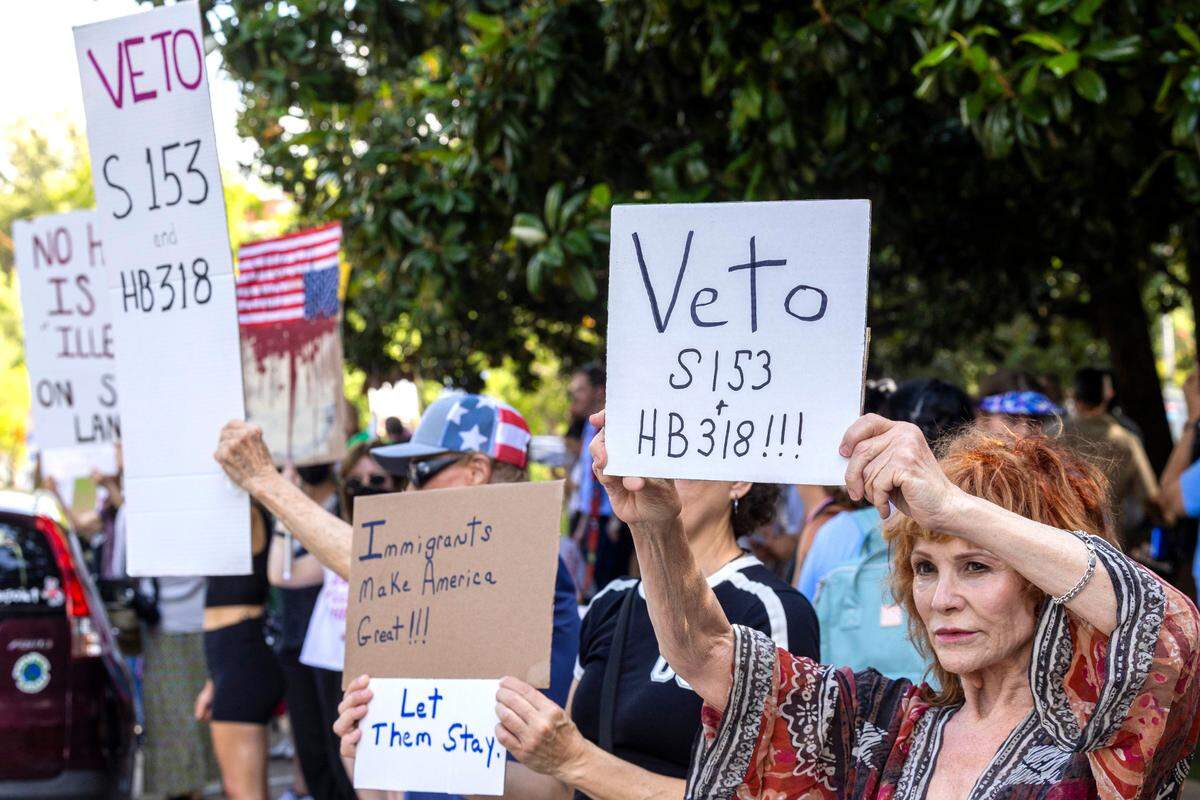
As the Trump administration ramps up its deportation efforts, GOP lawmakers in the state moved quickly to pass bills that would increase the state’s cooperation with immigration authorities.
One of the bills would require four state law enforcement agencies to enter cooperation agreements with U.S. Immigration and Customs Enforcement. Another makes changes to the process by which local authorities hold people ICE is seeking through detainer requests, and requires sheriffs to notify the agency before releasing them.
Stein vetoed both bills, saying they would overburden state officers and infringe on constitutional protections under the Fourth Amendment. Republicans have vowed to override both vetoes.
Gun laws depend on veto and override
Heading into this year’s session, GOP lawmakers identified a top priority when it came to gun rights legislation: allowing people to carry concealed handguns without getting a permit.
A bill that would do that was passed by both chambers and sent to Stein, who vetoed it. Notably, it didn’t receive the support of two veteran Republicans in the House, where the GOP is already one seat short of a supermajority. That raises questions of whether Republicans will be able to override Stein’s veto.
Republican lawmakers also sent another bill to Stein that would give private schools the option to allow employees or volunteers to carry concealed handguns and stun guns on campus. With this bill, the GOP picked up the support of one House Democrat who told The N&O that he would support overriding a veto if Stein decides to block the bill.
DMV could get more workers
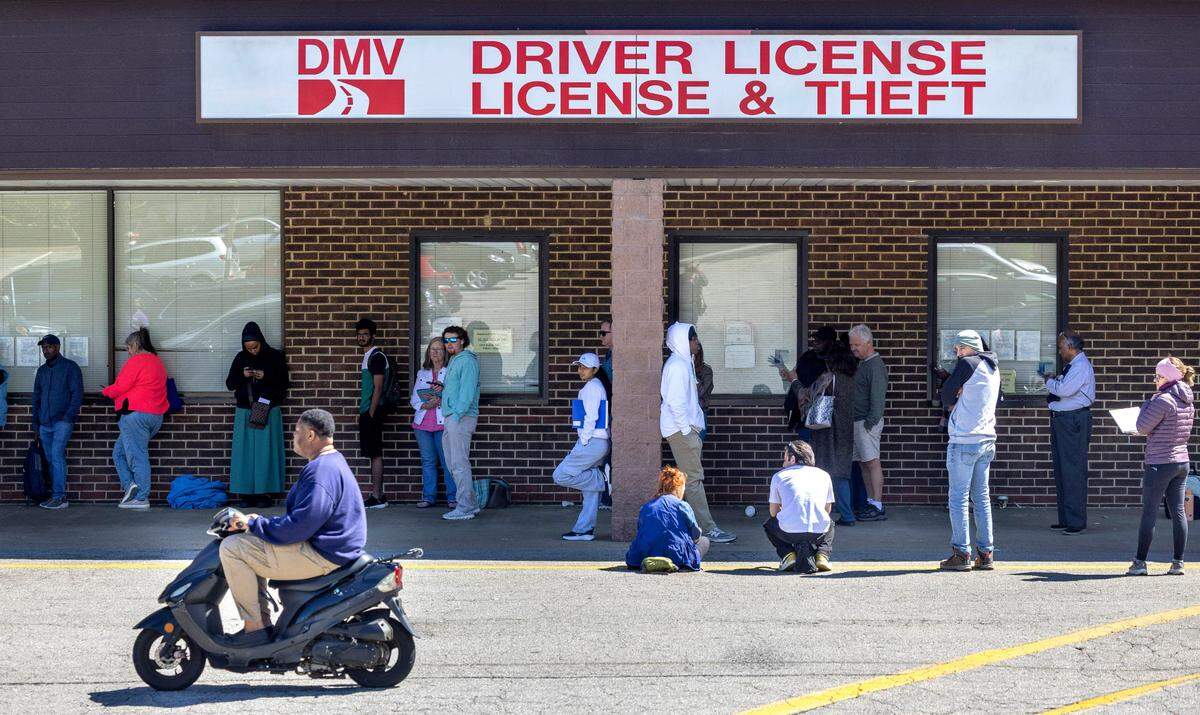
There seems to be growing consensus among lawmakers that the Division of Motor Vehicles needs more employees to serve a growing state. Long lines and wait times have become common at driver’s license offices, and lawmakers say they continually hear complaints from constituents.
The DMV asked for authority and money to hire 85 new driver’s license examiners to fully staff its existing offices and open or expand three others.
Instead, lawmakers looked for other ways to provide relief for residents and the DMV. They passed a two-year grace period on the renewal of driver’s licenses, so people wouldn’t need to go to a DMV office so soon.

But the request for additional employees gained support after Stein chose Paul Tine, a former lawmaker who caucused with Republicans, to become DMV commissioner. Tine says more workers would be very welcome but are just part of a broader strategy to remake the DMV’s culture and performance.
Then State Auditor Dave Boliek, a Republican, weighed in, saying his office’s “data-driven analysis” concluded that the DMV was understaffed. The two chambers will have to work out their differences, but they agree the DMV payroll should grow.
Will Wake County toll road be blocked?
The House budget includes a provision that would prevent the state from turning Capital Boulevard into a toll road in Wake County. Local officials are considering a plan to use tolls to speed up construction of a six-lane expressway between Raleigh and Wake Forest. That provision was not in the Senate budget.
DWI prevention effort
As part of a package of changes to criminal law that is awaiting action by Stein, lawmakers moved to expand the use of ignition locks to prevent drunken driving.
Public records closed off
State lawmakers moved to close off more public records while rejecting efforts to increase transparency.
Lawmakers sent Stein a crime bill that allows district attorneys to close off autopsy records that are part of a criminal investigation and keep them from being released during prosecution. Families of the deceased will continue to have access to some of the autopsy information.
The bill provision also requires the consent of the parents or legal guardians of those under 18 who died to release those records when there isn’t a criminal investigation.
In either case, the public can petition a judge to have those records released.
The legislature passed and Stein signed another bill that prevents the release of name, image or likeness contracts involving students at public schools who are athletes. Such NIL contracts have become lucrative for some athletes, particularly at universities competing in power conferences such as the ACC.
Meanwhile, legislative leaders moved bills that would have increased transparency on drawing up a state budget, redistricting and lawmakers’ records to a committee where they were never heard. A proposal to make public the reason for a public employee’s demotion or suspension never moved ahead, either.
DEI bills would impact agencies, schools, colleges
Republicans advanced a slate of bills targeting DEI initiatives in government and schools over fierce opposition from Democrats, who called the measures part of an “authoritarian playbook.” Stein vetoed the measures Thursday.
One of them would ban state agencies and municipalities from using DEI concepts in hiring decisions or giving differential treatment or special benefits on the basis of race, sex, ethnicity, sexual orientation and more.
That bill would also ban government agencies from using state funds to support DEI programs or applying for federal grants that require compliance with DEI policies. The Republican state auditor would regularly examine state agencies for compliance with the ban, and violations could result in a $10,000 civil penalty.
Two other bills would require schools and colleges to dismantle any DEI offices and restrict the instruction or promotion of what they label “divisive concepts,” like the notion that people are responsible “for actions committed in the past by other members of the same race or sex.”
Transgender rights debated
Another bill Stein vetoed, House Bill 805, bars government funding from going toward gender transition care for those in state prisons. It also declares there are two sexes, among many more Republican-backed provisions.
Legislation from earlier in the session tackled similar issues, but none have passed. One bill that didn’t move forward would require people in public schools and other facilities to use the bathroom that aligns with their biological sex.
Conservative social policies could affect K-12 education
Republican lawmakers passed several education bills promoting a socially conservative agenda over the objections of most Democratic legislators.
The vetoed bill dealing with transgender rights, HB 805, would also bar transgender students from sleeping in the same room with a person of the opposite biological sex on overnight school trips. And it would also allow parents to cite religious objections to excuse their children from specific classroom activities, discussions and assigned readings.
GOP legislators agreed to new rules for school libraries in that bill, too, such as allowing parents to list which books their children can’t borrow and requiring schools to list on their website all the books in their library.
But the Senate didn’t act on a separate proposal to make it easier for the public to challenge and sue schools over library books.
On a more bipartisan idea, lawmakers and Stein agreed to require schools to bar students from using their phones during instructional time.
JetZero site could get funding
The General Assembly has in recent years allocated hundreds of millions of dollars to build facilities and enhance infrastructure around large promised factories. It has made such upfront commitments at sites for Wolfspeed, VinFast, Boom Supersonic — and if a budget passes, it could do the same for JetZero, an aviation startup that promises to bring 14,500 jobs to the Greensboro airport.
In June, the state promised the General Assembly would provide $450 million over several years for the JetZero project. One recent spending proposal contains the money. State officials argue the money benefits the public even if the companies never deliver: The sites become more attractive for the next projects, and infrastructure could often use upgrades anyway.
But this is a different argument than what leaders give for traditional performance-based economic incentives, which are only realized once companies achieve hiring and investment targets.
What will happen to NCInnovation?
In the past two years, the nonprofit NCInnovation received half-a-billion dollars in public funding to help researchers across the University of North Carolina System bridge the so-called “valley of death” and turn their promising projects into profit-making, job-creating companies.
NCInnovation didn’t actually spend $500 million in 24 months. The nonprofit used this money to create a self-sustaining endowment, and it has awarded its first grants.
Now, the state House and Senate seek to claw back this funding as part of their proposed budgets. It’s a major pivot for the General Assembly, especially in the Senate, which was the more forceful NCInnovation backer way back in 2023.
Auditor could get new powers
Republicans furthered their efforts to empower the new state auditor, Boliek, this session by voting to give him more power to investigate private entities and expanding his access to government databases.
But Stein vetoed those changes after lawmakers passed them, mostly along party lines.
A separate measure seeking to give Boliek, a Republican, more power to recommend job cuts and the wholesale elimination of state agencies, did not reach Stein’s desk. That bill would have created a new Division of Accountability, Value and Efficiency — a reference to Boliek’s first name.
Similar language was included in Republican budget proposals that didn’t pass.
Casinos and gambling
Any lingering questions about whether there would be a fresh push for casino legalization this year were laid to rest by Senate leader Phil Berger in February.
Casinos were the main element of the proposed expansion of state-sanctioned gambling that delayed budget talks for months two years ago. Another component was the regulation of video lottery terminals. That idea resurfaced in a House bill that was filed in April but didn’t go anywhere.
On sports betting, lawmakers floated a few different ideas. In the House, GOP Rep. Erin Paré filed a bill early in session to allow for a state income tax deduction for gambling losses. The bill appears to have stalled for the time being.
Meanwhile, in their budget proposal, Senate Republicans said the state should double the gambling tax levied on sports betting operators from 18% to 36%, to raise additional revenue and bring the tax rate in line with what other states charge. House Republicans rejected that idea, keeping the rate at 18% in their budget plan.
No deal on health care costs and prior authorization
Both the Senate and House seem to agree that high health care costs in the state need to be addressed, but once again they couldn’t agree on how to do it — especially when it came to prior authorization, the process insurers use to decide if care is covered.
The House proposed setting deadlines for prior authorization decisions, requiring reports on care denials, and giving the Medical Board authority to investigate improper denial. The Senate wanted to focus more broadly on prior authorization alongside billing transparency and other cost reduction provisions.
Healthy Opportunities Pilots funding lapses
Not funded this year are Healthy Opportunities Pilots, which provide nonmedical support like food, utility payments, and transportation to doctor appointments as part of Medicaid.
Funding for the pilots was excluded from both budgets. After failed budget negotiations, the Senate suggested continuing the program in counties it was already implemented in. But that didn’t pass. The program’s funding lapsed at the end of June.
Pharmacy industry reform goes forward
Another area where agreement had previously eluded lawmakers was on how to regulate the prescription drug market and deal with pharmacy benefit managers, which are middlemen that negotiate rebates and discounts on drugs with manufacturers and wholesalers, on behalf of health plans.
This time, House and Senate lawmakers resolved their differences and unanimously approved a bill they sent to the governor.
That bill allows patients to select their preferred pharmacy without penalties and adds new reporting requirements and other rules.
Hemp regulations fail; marijuana doesn’t surface
As in past years, bills regulating hemp surfaced — and failed again.
Both hemp and marijuana come from cannabis. Hemp is legal, with no age limits on its use in North Carolina. Marijuana is not
The Senate sought to add sweeping regulations that could have effectively banned most hemp products currently on the market.
An effort in the House was more limited, proposing to make it illegal to sell or give products to anyone under 21.
Notably absent this year — unlike in past sessions — was legislation to legalize medical marijuana, a longtime priority of top Republican Sen. Bill Rabon that has repeatedly failed to cross the finish line.
Criminal justice bills pass
The General Assembly united behind a bill that law enforcement leaders across the state hope will encourage experienced officers to stay in their jobs longer amid severe staffing shortages.
Law enforcement officers who work for 30 years, or turn 55 with at least five years of service, receive a “special separation allowance.”
If officers retire, they could start collecting the benefit, typically thousands of dollars a month, until they turn age 62. But if they remain on the force, they forfeit the benefit. A new law allows officers to essentially pause the benefit until an officer wants to retire.
Shrimp trawling becomes major controversy
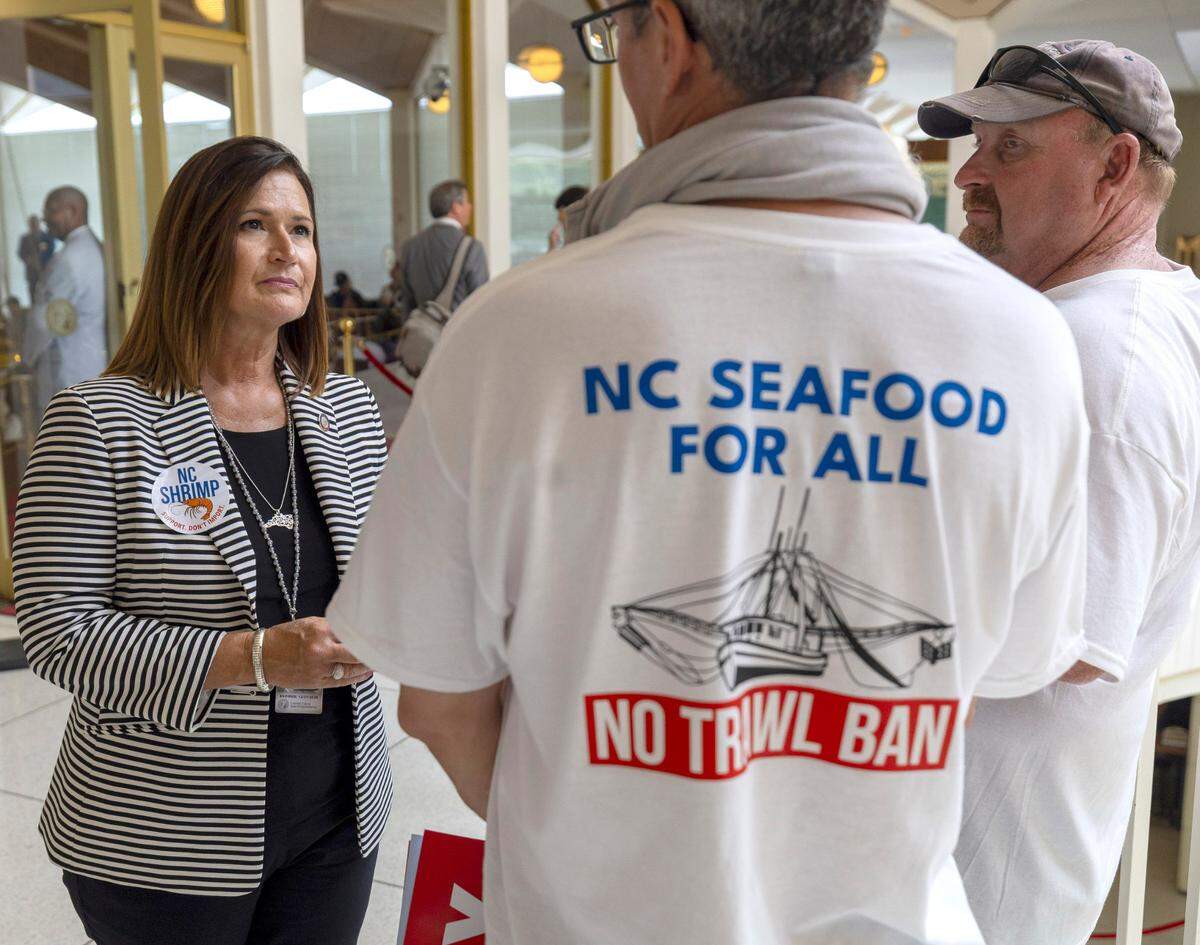
A bill that initially intended to expand the fishing season for flounder and red snapper resulted in more than a week of protests after an amendment was tacked on that would ban shrimp trawling within a half-mile of North Carolina’s coast.
Supporters of the revised bill argued trawling nets damage the seafloor and hurt fish populations through by-catch — or species caught unintentionally in a trawling haul. Others said the trawling ban would destroy an industry families have preserved for generations.
The bill passed the Senate but died in the House after a week of testimony from shrimpers and lawmakers.
Investment board to take over pension plan
The state’s $127 billion pension fund and other public assets will now be managed by a five-member board — including the treasurer and four political appointees. Previously, the state treasurer held full investment authority under a sole fiduciary model.
Carbon emissions and power-plant financing
Stein vetoed a bill that would allow Duke Energy to charge rate-payers in advance for power-plant construction.
Supporters of the switch to the alternative method of financing new plant construction say it would save consumers money because the utility won’t have to pay – and pass along – interest on borrowed funds. Critics say it can result in customers paying for plants that never get built or run over cost.
The bill also would let Duke Energy delay a carbon-emissions reduction goal set by law in 2021 the company now says it can’t achieve. The original goal was a 70% drop in the amount of carbon dioxide released by power plants in the state from 2005 levels by the year 2030.
Critics say the delay leaves the utility overly reliant on natural gas and shows a lack of commitment to a move toward cleaner energy sources such as solar.
This story was originally published July 3, 2025 at 9:58 AM with the headline "Helene relief? Check. NC budget? No. What lawmakers did and didn’t do this session."
CORRECTION: Lawmakers approved the expansion of the use of ignition locks to prevent drunken driving. A previous version of this article omitted the latest legislative development in that effort.