
Longtime CMPD sergeant running for sheriff talks Jail North, ICE and more
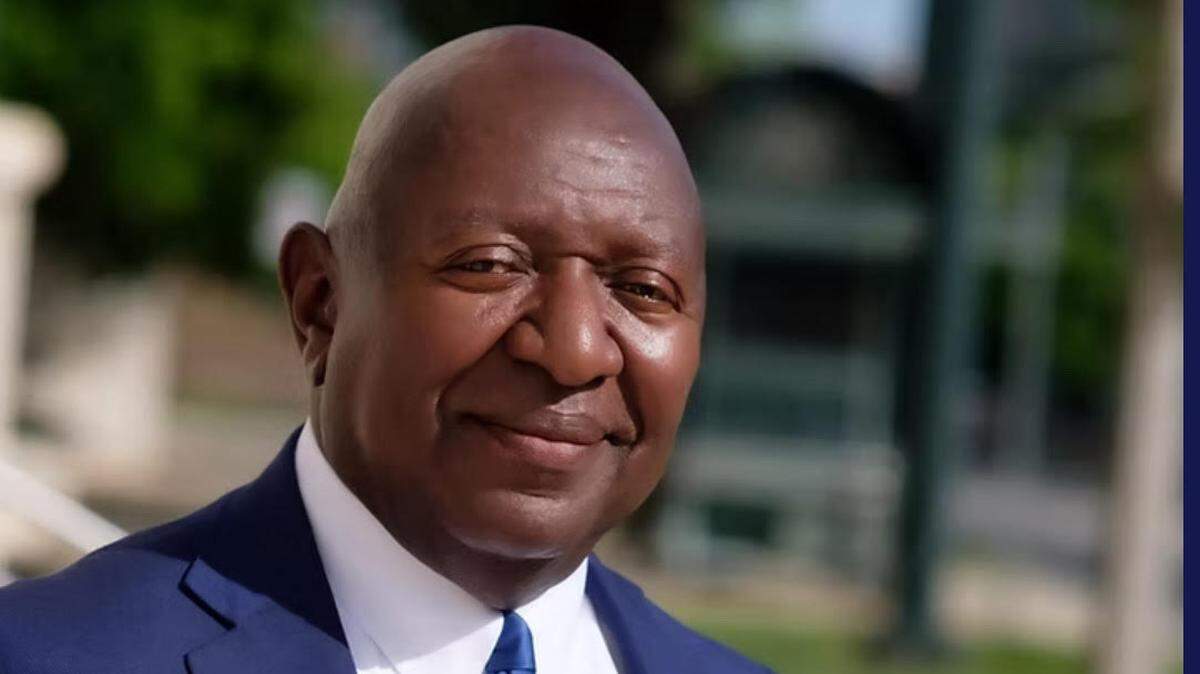
Charlotte-Mecklenburg Police Sgt. Ricky Robbins doesn’t want to reinvent the wheel.
A Democrat who recently announced his candidacy for sheriff in the March 2026 primary election, Robbins told The Charlotte Observer that there are no big, new programs he wants to stamp his name on. His goals are to keep inmates and detention officers safe, hire more staff and retain those staffers, he said.
He has endorsements from Carolina Panthers players, a former police chief and judges.
But Robbins is staying away from drama and avoiding criticizing Sheriff Garry McFadden to not be “negative,” he said.
In a sit-down interview, he shared his vision for the sheriff’s office, his thoughts on reopening the dormant Jail North and how he would work with Immigration and Customs Enforcement.
Robbins is a Charlotte native and one of the last remaining CMPD employees who started before the city and county police departments merged, he said. He said he’s worked in a number of roles as both an on-the-ground officer and supervisor: patrol, training, school resource officer, SWAT, traffic enforcement and more.
Today, he works out of Chief Johnny Jennings’ office, he said, as a supervisor. He lives in Mint Hill.
This interview was edited for length and clarity.
The Charlotte Observer: Was this decision to run for sheriff something you’d been thinking about for a long time? Was there a particular moment that made you decide to do it?
Robbins: Being born here and seeing the community grow, seeing the way departments have changed over the years, I thought about running four years ago in the election prior to this. I didn’t think for me it was the right time, the right situation. I try to weigh everything before I just jump into something.
I felt better this time. I had a lot more support; I had a lot of the community that thought it was a good thing to do.
I know and feel that I can do a good job and do something good for Mecklenburg County.
Observer: What are your priorities?
Robbins: The number one priority is making sure that staff and inmates are safe. You’re going to do a good job when you feel safe.
I want the people that have been incarcerated, inside the jail, to understand that we’re not there to punish them. They’ve been put there by the court system and we’re going to make sure they’re treated fairly and they’re safe.
You have to make sure that, number one, you’re retaining (employees). Number two: you’re doing things that attract people to want to come to Mecklenburg County.
Observer: What incentives do you think will do that?
When you recruit, people have to understand that they’re coming to work in an environment where they feel safe, where they feel valued and where you listen to them — and where they understand that we’re all here to work on this problem together.
I believe it starts at the top.
If you look at my record, my history, I’ve always worked alongside my people.
If you don’t treat one (employee) different from another, that’s going to take care of most of your problems with retention.
Observer: It sounds like a lot of it is morale and moral support.
Robbins: Morale and moral support, like you said, go hand in hand. But they have to see it. You can’t say it. It’s easy to stand up here and say anything.
What happened while they were in that unit? Did they get a better education? Did they get better training? Did they get better equipment? Those are things that people judge you on, not on what you say.
Observer: The other half that you mentioned is the inmates.
Robbins: Again, it’s going to be staffing. Because if you train people, you staff people, the visual aspect is going to be there. You see it, you can prevent it.
You have to make sure that that is your number one priority: Making sure that the place is managed safely and staffed correctly. When you don’t, that’s when we don’t see things happen. I would say that, most of the time, that’s what it is; we don’t have enough staffing in one place or another.
Observer: It’s been a while, but there was some discussion of reopening Jail North. Is that something that you think might be helpful?
Robbins: I think I would want to have a conversation about that, about the juvenile detention center, juveniles now being transported outside Mecklenburg County.
All those things need to be talked about. If it’s something that can be done, then that’s what you need to do. Things that have been closed down need to be reopened if we can do it safely and staff it sufficiently.
Observer: So, in other words, if the staffing numbers are there, you would support —
Robbins: Oh, 100 percent.
Observer: What do you think the sheriff’s office’s relationship with ICE needs to look like?
Robbins: There needs to be cooperation with everybody. All the state, local and federal agencies.
You can stay within the law, on both sides, by sitting down and talking and working through the issues. If there’s an issue where ICE feels we’re not contacting them, then we can fix that problem.
I can say, “Okay. You say we need to contact you. I’ll contact you.”
I can’t hold somebody if a judge says let them go. What needs to happen is ICE needs to understand: They need to do their part if they want the sheriff’s office to do their part.
You can’t get on the news and argue with each other. You have to sit down at the table.
I’m not trying to keep ICE from doing their job, but it’s not my job to do ICE’s job. So we’ve got to work together. Like I said before, if you talk, you can overcome all those things.
Observer: Let’s say you’re sheriff today, while HB10 is law. You get a detainer request from ICE.
Robbins: I’m going to call them. And then I’ve done everything that I’m obligated to do. I’m not going to keep ringing their phone off the hook, telling them to come pick him up.
Your obligation is to notify them.
That’s it. I’m not going to be a hindrance to them. But at the same time, I’ve got to do my job.
Observer: There’s been ICE arrests at the courthouse, which of course the sheriff’s office also oversees. I wonder what your thoughts are on those.
Robbins: If you’re apprehending someone and you’re not in uniform as a law enforcement officer and people don’t recognize you, that’s when the real big problems come in.
As law enforcement officers, we need to recognize somebody right away when something happens. When (we) don’t know what’s going on, you don’t expect the citizens to know what’s going on.
Observer: There’s the job on paper, which is the courthouse and the jail and assisting in public safety. But when a new leader comes in, they’re going to leave their mark with some change or initiative or program. Is there anything you’re excited about that would be uniquely yours for the sheriff’s office?
Robbins: I don’t know if it’s unique. I just want to be known for being one of the top — if not the top — sheriff’s office not in Mecklenburg County, not in North Carolina, but in the nation.
People are proud to work here. People are proud to come here. The department and the work we do and what we stand for is recognized nationally.
When you say that name, I want people to understand that’s a sharp department, good individuals, good leadership. And they have good support from the community. Community support is one of the most valued things you can have. If the community’s behind you, you’re going to be successful.
Ryan Oehrli covers criminal justice in the Charlotte region for The Charlotte Observer. His work is produced with financial support from the nonprofit The Just Trust. The Observer maintains full editorial control of its journalism.
This story was originally published July 18, 2025 at 5:00 AM.