
With the spotlight on Charlotte, Vi Lyles is in the eye of the storm
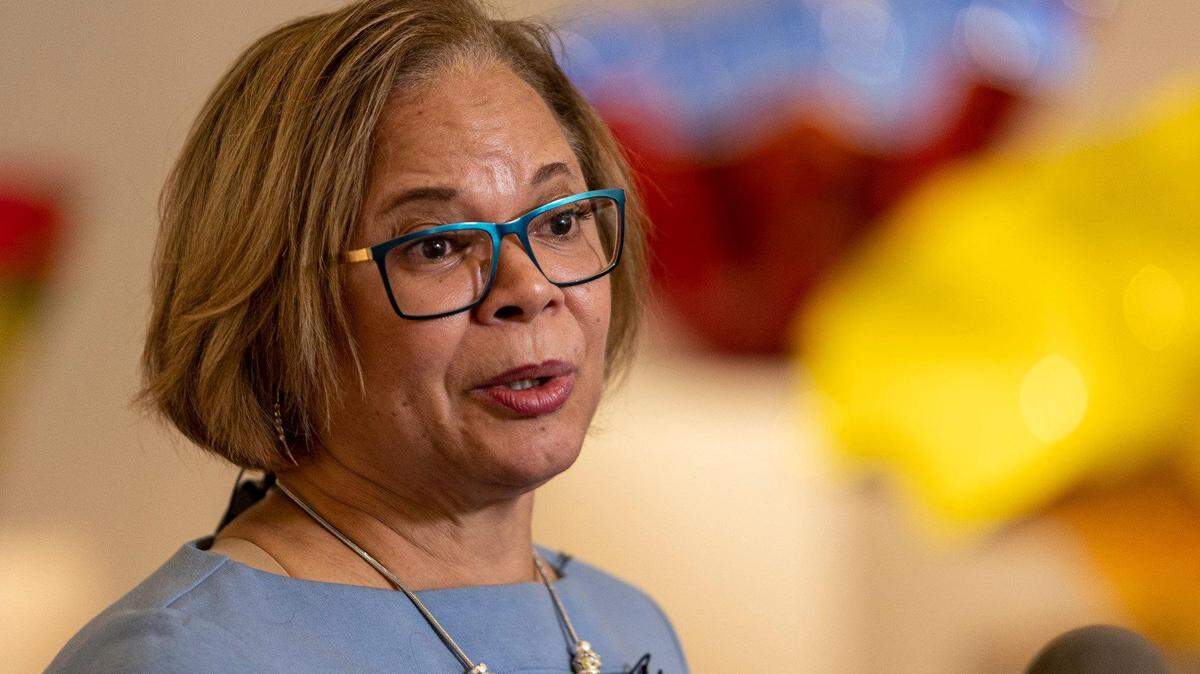
For the past eight years, Charlotte Mayor Vi Lyles has been a popular and well-regarded politician – beating her opponents by wide margins one after another at the ballot box. But following the murder of Iryna Zarutska, both Lyles and the City of Charlotte suddenly find themselves under an intense spotlight.
In her tenure as mayor, Lyles has become known for her ability to effectively reach across the aisle.
In the face of fierce opposition, Lyles supported bringing the Republican National Convention to Charlotte in 2020 — standing on her commitment to represent the entire city as mayor. She voted, along with the rest of City Council, in favor of the city’s nondiscrimination ordinance that prompted the legislature’s passage of HB2, but was later able to mend fences with members of the Republican Party. Most recently, she helped court North Carolina’s Republican legislature to allow Mecklenburg County to put a one-cent transportation sales tax referendum on the November ballot.
Despite her track record with Republicans, they are at the front lines of her most fervent recent opposition following the light rail stabbing. Republican criticism of Lyles has included calls for her resignation and critiques of "Democratic policies" that proceed under her watch.
“Her words after this vicious murder and the liberal policies which allowed it to happen have no place in a civil society,” U.S. Rep. Ralph Norman (R-S.C.) said in a call for Lyles' resignation on Wednesday. On the same day, Jason Simmons, chair of the North Carolina Republican Party called Charlotte a city plagued with crime due to Democratic “policies of appeasement.”
And the Charlotte-Mecklenburg Fraternal Order of Police criticized her for having 24-hour protection and demanded better benefits for police. Destin Hall, speaker of the North Carolina House of Representatives, said he plans to go through the budgets of the City of Charlotte and Mecklenburg County to see “where are they spending money that they shouldn’t be.”
“We're dealing with a local government, really Mecklenburg County and the City of Charlotte, two local governments who in my opinion have lost institutional control of their areas,” Hall said.
And conservative-leaning X accounts with hundreds of thousands of followers have accused Lyles of "emboldening" criminal activity in Charlotte and criticizing her for her silence.
Lyles was not available for an interview for this story, a spokesman said.
The cost of being mayor
In the matter of a weekend, Charlotte was slingshoted into the national spotlight after surveillance footage of Zarutska’s death was released. The horrific crime was used by conservative powerplayers like President Donald Trump to push their agenda of restoring “law and order” to large Democrat-led cities, experts say. The Democratic Party, as White House Deputy Chief of staff Stephen Miller put it in a post about Zarutska’s death, “is organized around the defense and protection of the criminal.” In a video addressing the nation from the Oval Office, Trump blamed Democratic policies for Zarutska’s death.
Susan Roberts, professor of political science at Davidson College, said this situation and the scrutiny that followed may make Lyles consider the political cost of being mayor in the future.
As the face of Charlotte, Lyles is taking the blame for a situation that requires a lens of nuance, Roberts said. DeCarlos Brown, the man who is accused of killing Zarutska, is believed to have mental health problems and the situation calls into question aspects of the criminal justice and judicial system. To blame Lyles or a particular party for Zarutska’s death isn’t fair, Roberts said.
Still, Lyles can’t run from this moment.
“She is the face of Charlotte,” Roberts said. “You can't explain away why this young man did it. It was violent... But she's not the person to blame. She's going to be in this spotlight, and it's going to be negative.”
This newfound pressure will require Lyles to tap into a style of leadership that the public has not yet seen, Eric Heberlig, political science professor at the University of North Carolina Charlotte, said.
Lyles is known for her behind the scenes, soft-spoken, small-group, relationship-building type of leadership. But with the nation’s eyes on Charlotte, a new strategy is required.
“The spotlight is there whether she wants it or not. So, she has to figure out not just her preferred message, but how she adapts what she’d prefer to say with what Charlotteans want and need to hear,” Heberlig said. “Not just in terms of substance, but in terms of the emotional impact of this incident. She has to combine both policy and being that ‘Consoler In Chief’ at the same time.”
Former Charlotte mayor and North Carolina Gov. Pat McCrory faced his own bout of national pressure in 2016 with the passage of the controversial HB2 law.
“That public pressure can be extremely intense,” he told the Observer. “I think my only advice to anyone going through that pressure is to show action immediately. Show action and resolve.”
Zarutska’s murder was not the result of failure by one specific person, but failure of a system over the past 10 to 15 years, McCrory said. The infusion of “progressive and liberal” polices and the failure to address little things as they arise resulted in this horrific event, he said, and it’s happening across the country.
McCrory cited “little things” like allowing people free rides on public transit and the visibility of homelessness uptown. To get back on track, swift action to restore a sense of safety must be taken, he said.
“I know the current leadership loves the city as much as all of us. We’re going to get it back, but it’s going to take time to regain their trust and confidence,” he said of residents. “They’re going to have to prove it like we had to do in the ‘90s. And it didn’t happen overnight.”
WBTV response
It wasn’t until this week that Lyles did her first media appearance addressing the incident. Her communication with the public on the issue was largely through statements via her social media. And after winning another primary Tuesday, Lyles’ team did not hold an election night party or have her make an appearance.
Speaking with WBTV’s Dedrick Russell, Lyles said that if she could do it all again, she’d address the public more quickly than she did. Going forward, the community can expect more communication from local government, she told Russell. “The good thing about it is being able to be in a city where you can say ‘I made a mistake,’ and people say ‘That’s OK.’ That’s all I ask for,” she told Russell.
In her WBTV interview, Lyles addressed the mounting pressure. Without being directly named by Trump, she has become among the many Democratic leaders in the country feeling the weight of scrutiny.
Lyles told Russell that having conversations with mayors of other blue states has helped her navigate this newfound pressure. But she made it clear that she’s not pushing back on the feedback from Washington officials, and she wants to work with them.
“If they are giving us reason to change what we’re doing we need to pay attention to it. This is not about somebody in the White House now. This is about what’s on the ground for Charlotte.”
This story was originally published September 15, 2025 at 5:01 AM.