GOP-run NC Supreme Court throws out Democrat-written rulings on school funding
AI-generated summary reviewed by our newsroom.
- Court rules courts lack authority to order state spending; lawsuit dismissed
- Ruling emphasizes General Assembly's appropriations role as voucher spending grows
- Dissenters say majority abandons students; officials urged to act
READ MORE
The Leandro case & NC public schools
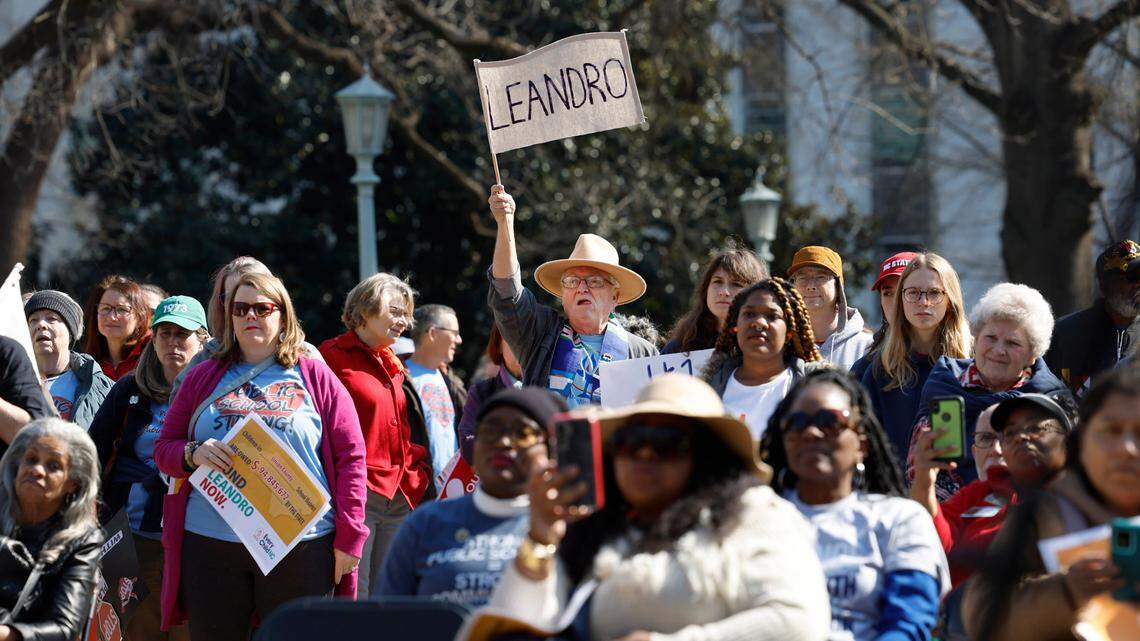
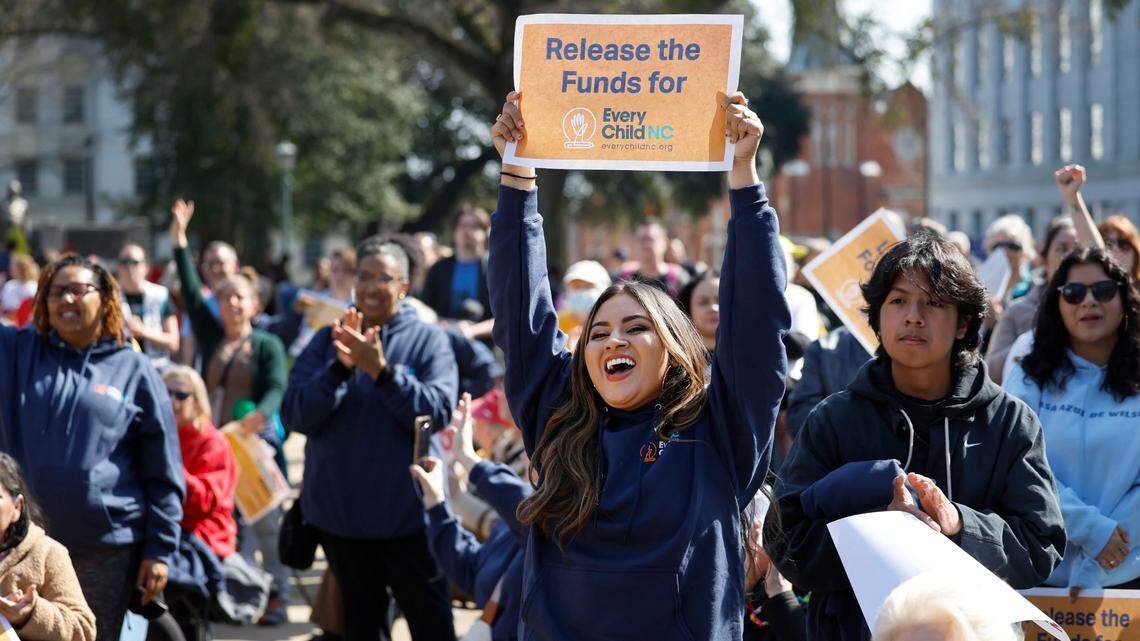
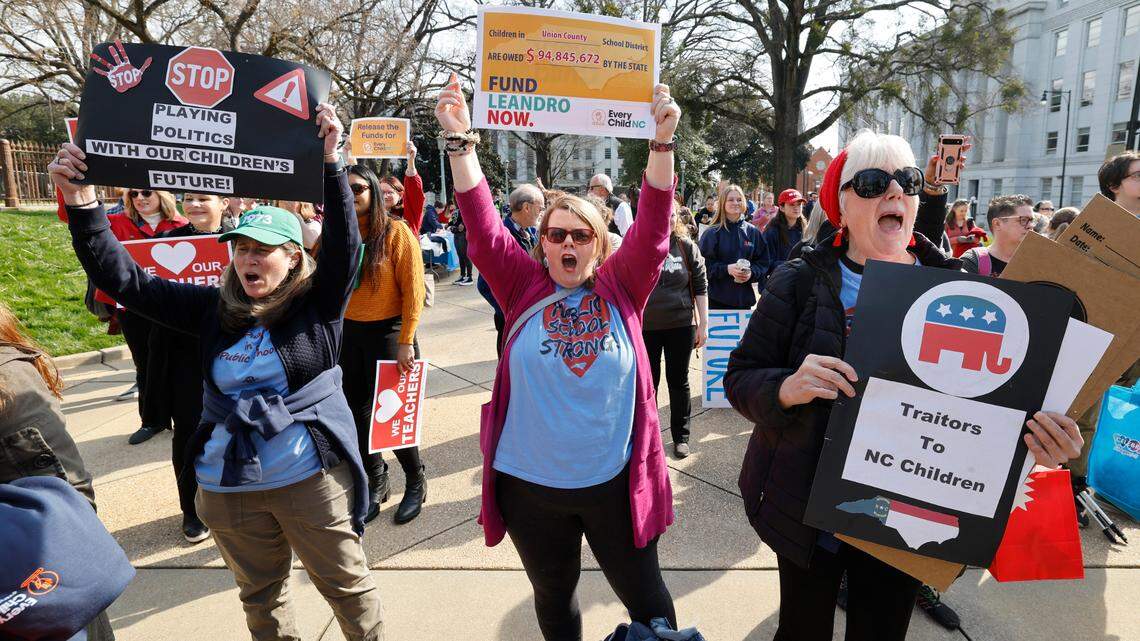
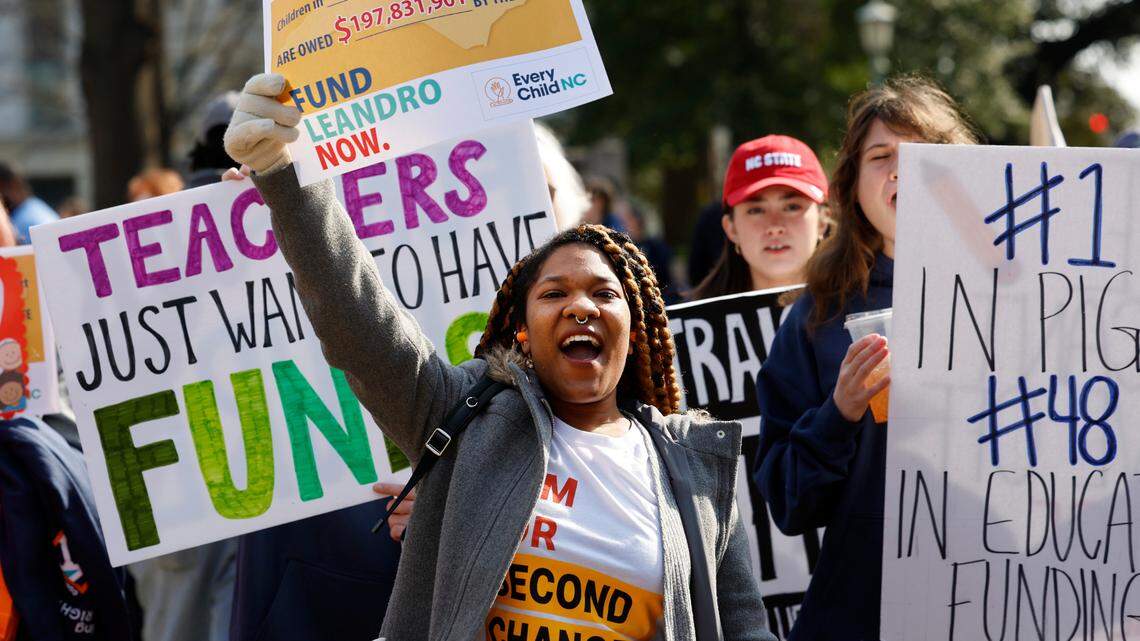
Since 1994, the long-running Leandro school lawsuit has seen the courts go back and forth about what it means when the North Carolina constitution says “equal opportunities shall be provided for all students.” Meanwhile, state leaders have grappled with how to provide a “sound basic education” for North Carolina’s 1.5 million public school students.
Expand All
The North Carolina Supreme Court has overturned a 2022 decision that allowed judges to order the transfer of hundreds of millions of taxpayer dollars to fund public schools.
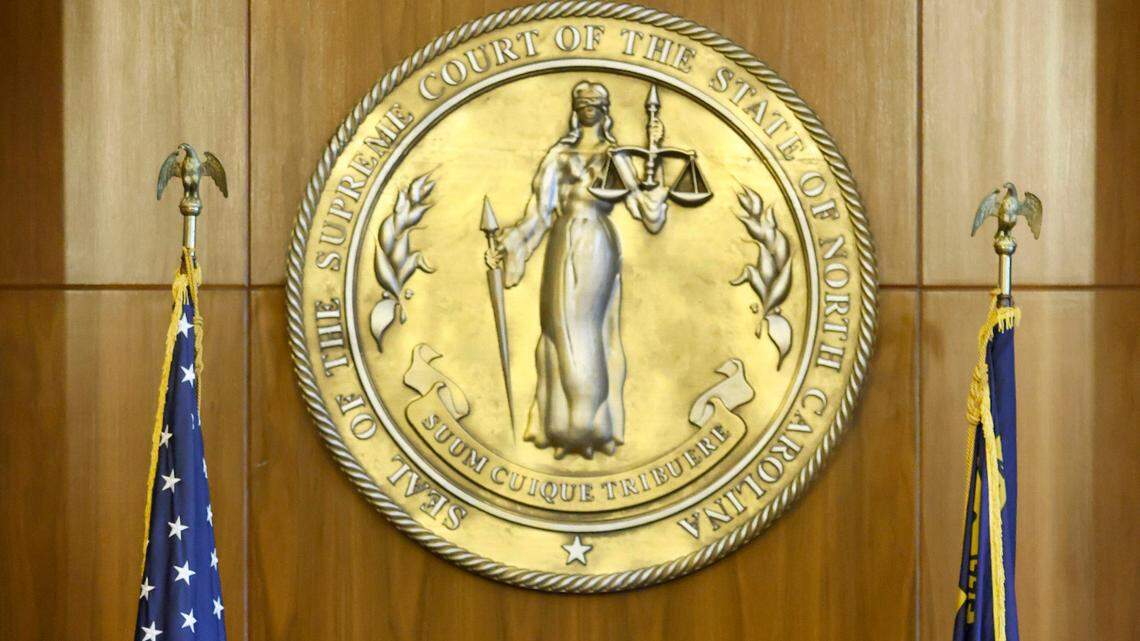
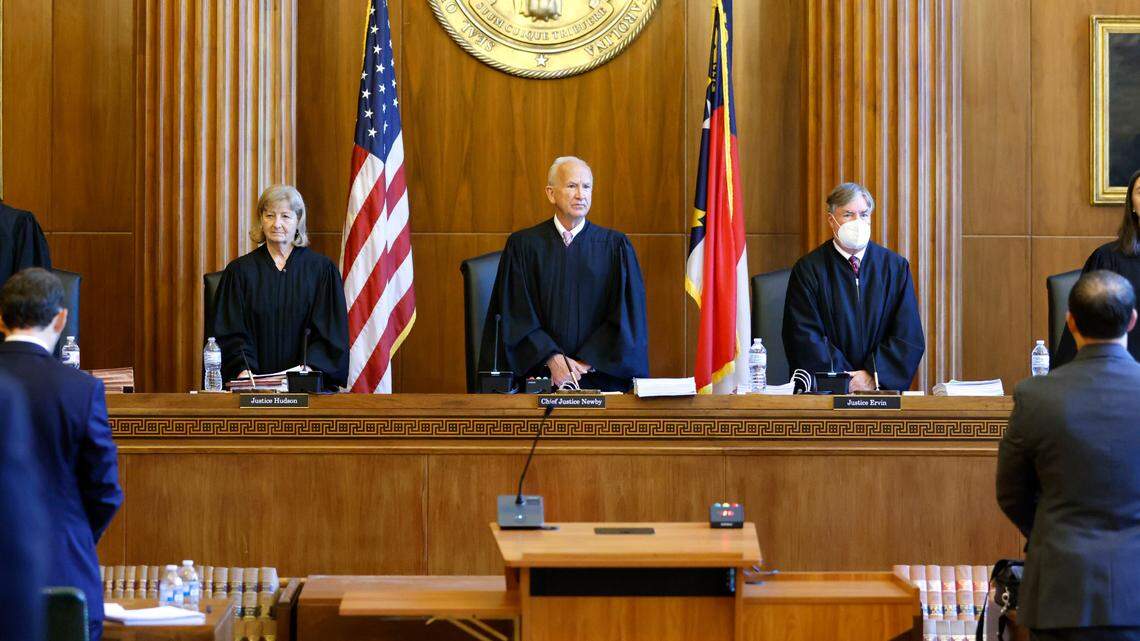
In a decision released on Thursday, the Supreme Court’s Republican majority ruled that state courts do not have the constitutional authority to make education policy decisions such as ordering the spending of state dollars for schools. The decision was 4-3 with Republican Associate Justice Richard Dietz joining the two Democratic justices in dissenting.
The decision reverses a 2022 ruling by the former Democrat majority that the courts can require state officials to transfer funds to try to provide students with their constitutional right to a sound basic education.
The court dismissed the lawsuit, apparently putting an end to the nearly 32-year-old court case.
“As this litigation comes to a close a few weeks shy of its thirty-second anniversary, we are reminded of these principles from our prior cases: In our constitution, the people established a tripartite system of government,” Republican Chief Justice Paul Newby wrote in the majority ruling.
“In doing so, the people did not vest the judicial branch with the power to resolve policy disputes between the other branches of government or to set education policy. We would be especially ill-equipped to resolve such questions in any event.”
But the court’s Democratic justices accused the majority of betraying the children of North Carolina.
“Today, this Court breaks a promise that constitutional drafters made to the people,” Democratic Associate Justice Allison Riggs wrote in her dissent. “The majority discards our constitutional commitment to the children of the state instead of acting to meet it.”
Decision disappointment for school supporters
The long-delayed ruling had been expected after the 2022 elections flipped the court majority to Republicans. The court’s Republican majority then agreed to block the money transfer and rehear the case over the objections of the Democratic justices.
“Education opens doors of opportunity for children, but today the Court slammed them in the face of students who deserve the right to a sound basic public education,” Democratic Gov. Josh Stein said in a statement Thursday. “The Supreme Court simply ignored its own established precedent, enabling the General Assembly to continue to deprive another generation of North Carolina students of the education promised by our Constitution.”
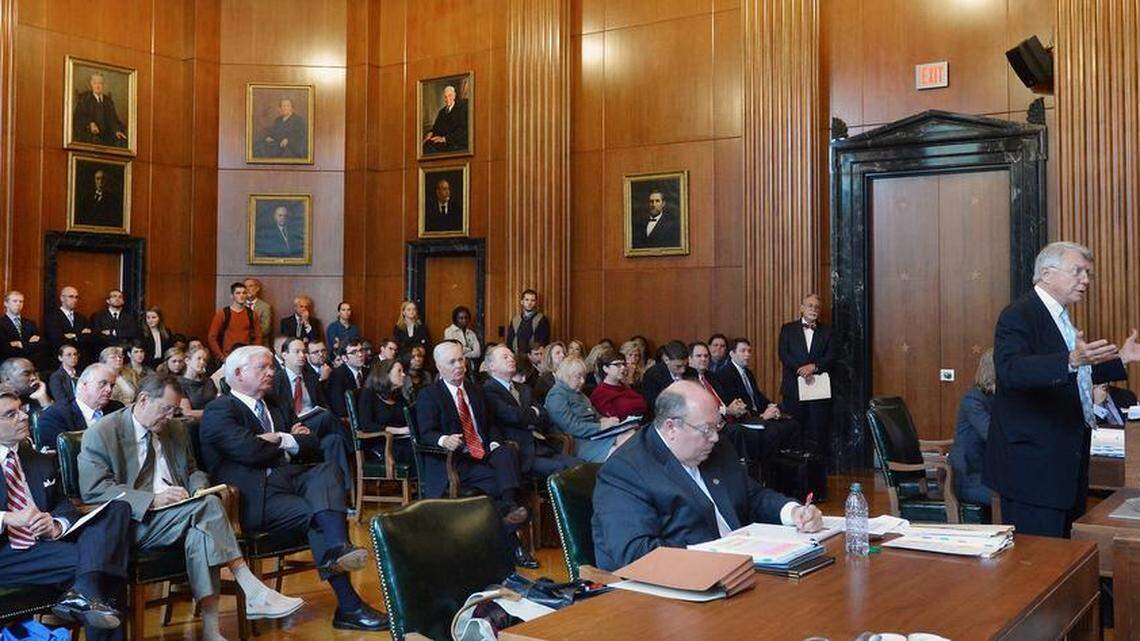
The ruling came 770 days after oral arguments were heard in February 2024. The lengthy wait for the new ruling had raised questions.
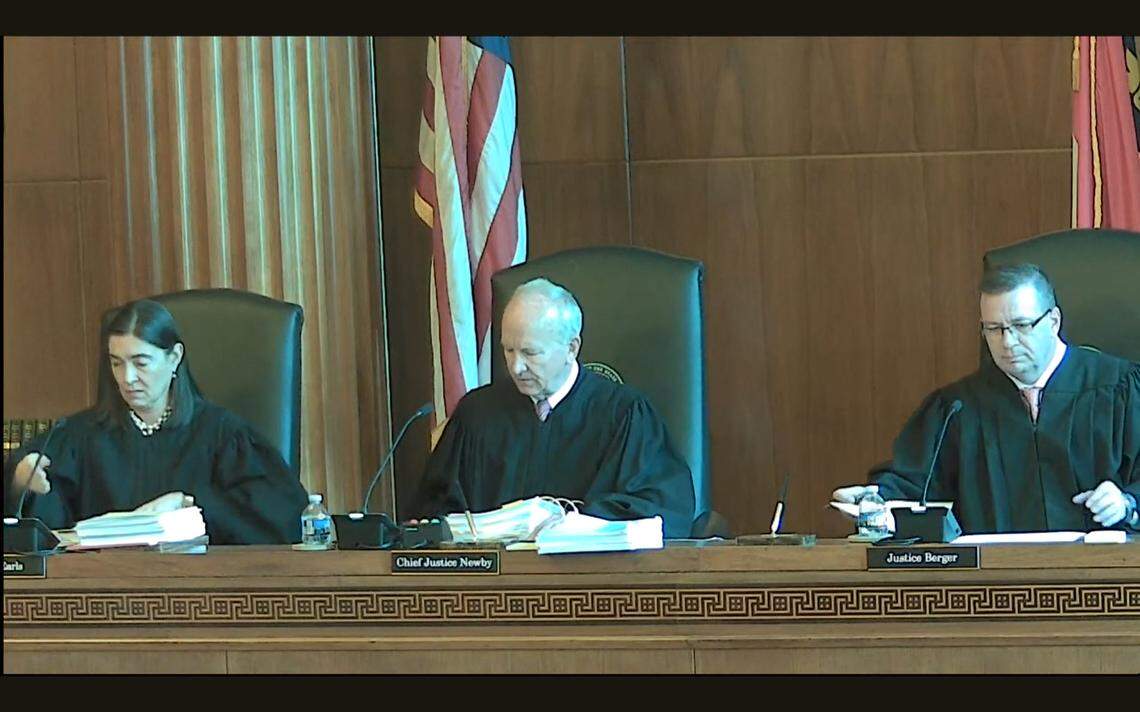
This year’s Supreme Court election won’t shift the court’s majority. Only Democratic Associate Justice Anita Earls, who is running against GOP state Rep. Sarah Stevens, will be on the midterm ballot
How should education be funded?
The decision comes at a turning point in how the state funds education. A report released in December by the Education Law Center ranked North Carolina last in the nation in school funding effort and 50th out of the 50 states and the District of Columbia in funding level.
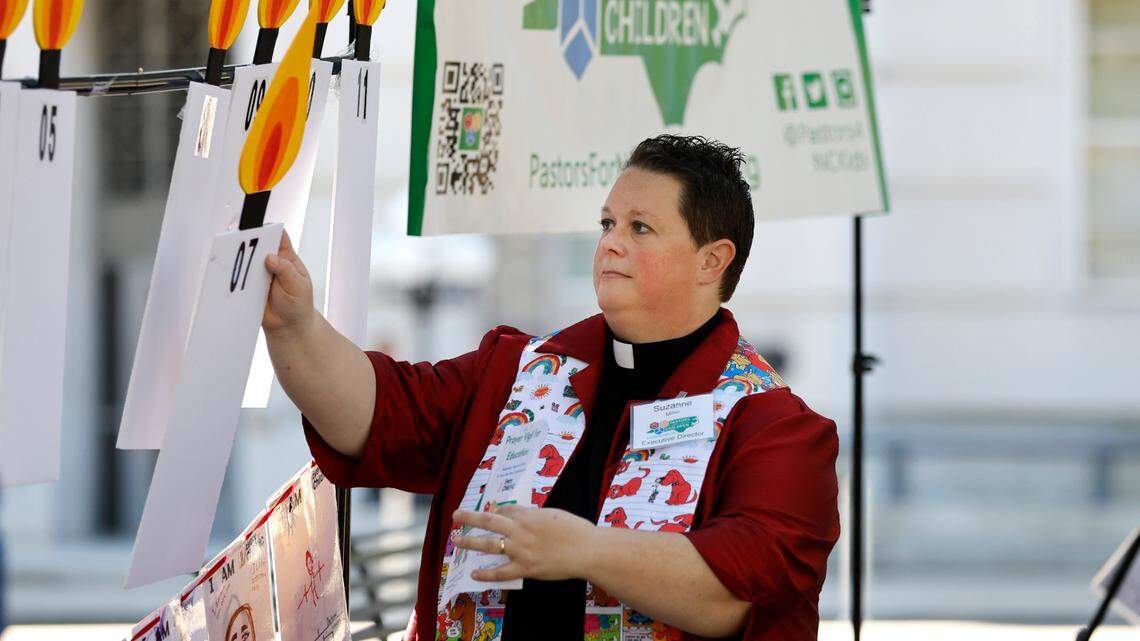
“While we take the necessary time to review the court’s opinion, one thing remains clear: every measure we have seen over time demonstrates that North Carolina’s public schools have been chronically under-resourced,” Democratic State Supt. Mo Green and State Board of Education chair Eric Davis said in a statement Thursday. “Ensuring that our children receive the education they deserve is not just a constitutional responsibility; it is a moral and economic imperative for the future of our state.”
State Republican legislators fought the judicial money transfer, arguing that only the General Assembly can order state dollars to be spent. Democratic lawmakers have supported the 2022 court decision.
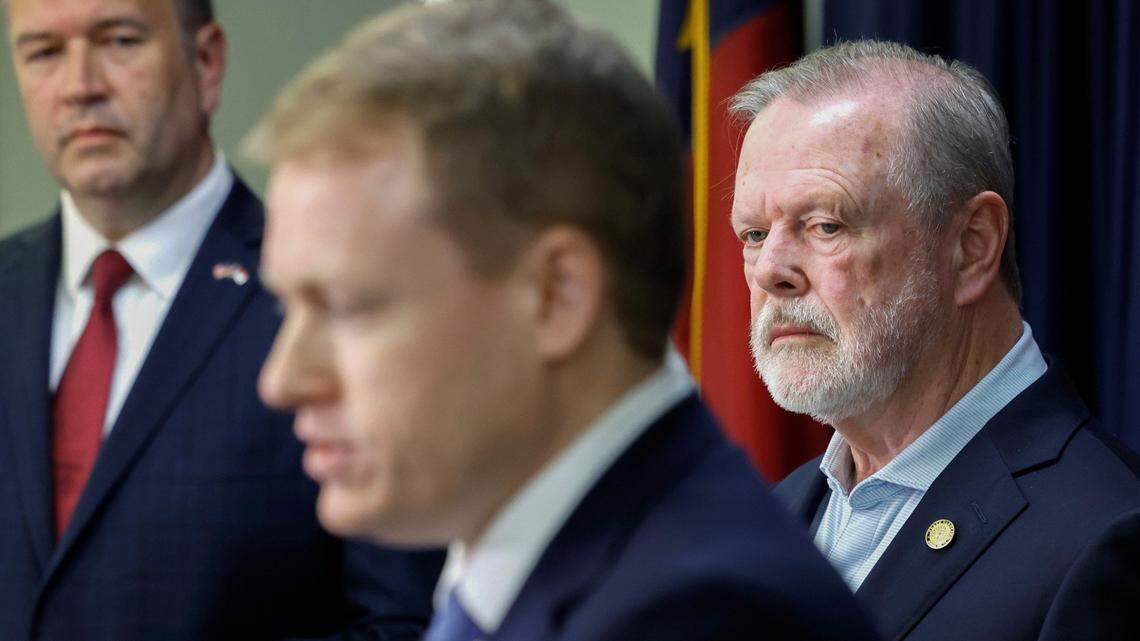
“For decades, liberal education special interests have improperly tried to hijack North Carolina’s constitutional funding process in order to impose their policy preferences via judicial fiat,” Senate leader Phil Berger said in a statement. “Today’s decision confirms that the proper pathway for policymaking is the legislative process.”
Additionally, GOP lawmakers opened eligibility to the Opportunity Scholarship program to all families and increased private school voucher funding. A majority of the state’s 135,000 private school students are receiving a taxpayer-funded voucher to help cover tuition costs. As of March, the state has spent $579.3 million this school year on vouchers to 106,587 private school students.
Berger said GOP lawmakers have “created pathways for all students to attend a school that best meets their needs.”
Democratic lawmakers said the additional voucher funding should have gone to public schools instead or to Hurricane Helene relief for Western North Carolina.
Last March, Democratic lawmakers filed legislation to fully fund the Leandro plan, as they have done in prior years. Republicans have not acted on the bills.
During the long wait for a new ruling, Stein, Berger and House Speaker Destin Hall announced this month the formation of a bipartisan Blue Ribbon Commission on Public Education. The commission will examine teacher training and student advancement, administrative operations, educational leadership and accountability.
Leandro case is more than 30 years old
The court ruling is the latest and potentially final chapter in the Leandro school funding lawsuit, which was initially filed in 1994 by five low-wealth school districts to get more state funding.
The case has been known as Leandro because that family was originally a plaintiff attending Hoke County Schools in 1994.
Over the years, the state Supreme Court has ruled that the state constitution guarantees every child “an opportunity to receive a sound basic education” and that the state was failing to meet that obligation.
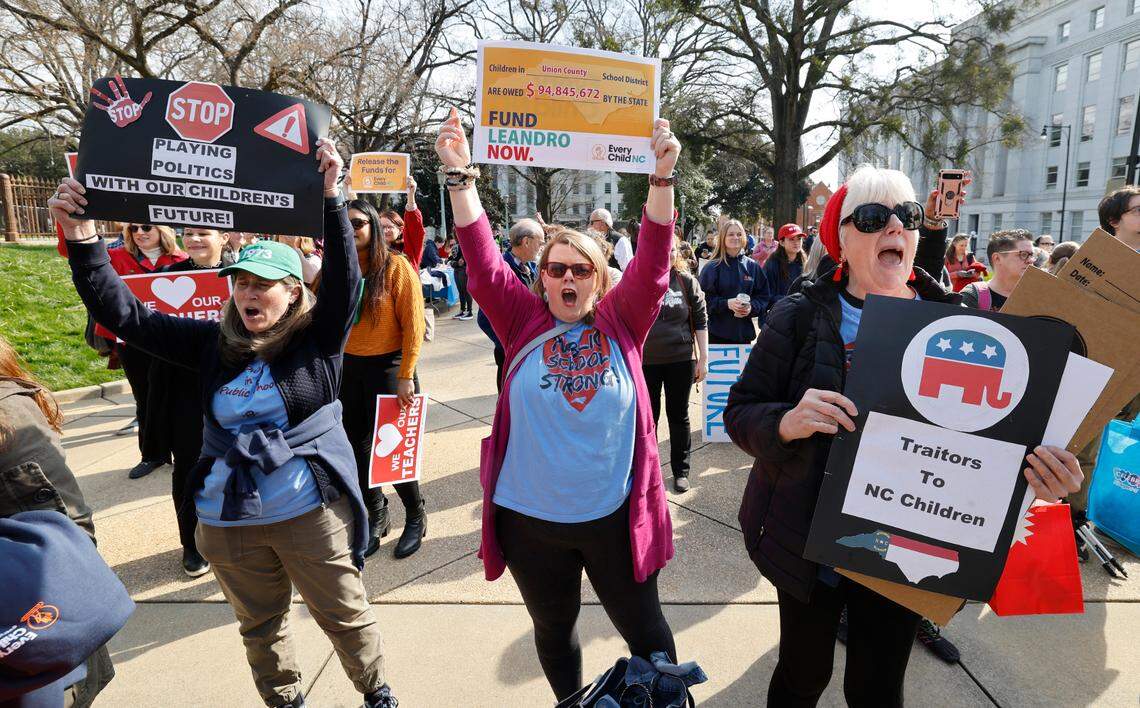
In November 2021, Superior Court Judge David Lee ordered the state treasurer, controller and budget director to transfer $1.75 billion to fund years two and three of an eight-year plan developed by a consultant. The plan is meant to try to provide every student with high-quality teachers and principals.
The eight-year plan is estimated to cost at least $5.6 billion.
Just days before the 2022 midterm elections, the Supreme Court upheld Lee’s order along party lines. The Democratic justices said the courts had deferred long enough for the state to implement a plan to provide a sound basic education.
Soon after taking control, the court’s GOP majority blocked enforcement of Lee’s order.
Lee has since passed away. In April 2023, Superior Court Judge James Ammons issued an updated court order saying $677.8 million was still owed for the second and third years of the Leandro plan.
GOP disputes statewide remedy
Berger and then-House Speaker Tim Moore appealed both Ammons’ authority to issue his order and the constitutional authority of the court’s 2022 decision. Berger is the father of Republican Associate Justice Phil Berger Jr.
Berger Jr. ruled on the case even though the plaintiffs had asked him to recuse himself. The court ruled 4-2 along party lines to let Berger Jr. hear the case after he asked for a decision by his fellow justices.
GOP legislative leaders had asked Earls to recuse herself because she had previously been an attorney for one of the plaintiffs in the lawsuit. She turned down the request.
During oral arguments in February 2024, the attorney for GOP lawmakers argued that any court ruling should only apply to Hoke County and not the entire state. The Hoke County school system is one of the original plaintiffs in the lawsuit.
The lawmakers also argued that the State Constitution doesn’t give the courts the authority to appropriate money.
‘Judges are not experts on education policy’
In the court’s ruling, Newby said Lee inappropriately exercised his authority as the trial judge to extend the case to be statewide in 2017. As a result, Newby said every decision made since then in the case is void.
“What began as modest, as-applied challenges to the allocation of educational resources in the named school districts became a full-scale, facial assault on the entire educational system enacted by the General Assembly,” Newby wrote. “When this case ceased to be about the as-applied claims raised in the complaints and refined by this Court’s decisions, the trial court’s authority to hear the case likewise ceased.”
In dismissing the lawsuit, Newby wrote that the education system cited by the original five school districts is no longer the same as it was in 1994 when the lawsuit began. Newby questioned how much money has been spent fighting the case over the past 32 years instead of providing students with an education.
The judicial branch is not the venue in which to seek education policy reform, according to Newby. Instead, Newby cited the work of the newly formed Blue Ribbon Commission on Public Education as the proper venue to make education changes.
“Judges are not experts on education policy,” Newby wrote. “We cannot account for the various policy alternatives or public opinion.”
Berger Jr. sided with the majority on Thursday. But Berger issued a separate concurring opinion because he said the majority didn’t go far enough “to clearly reject (the 2022 court ruling’s) unconstitutional assault on the separation of powers and appropriations clauses.”
Dissenting opinions on ruling
Dietz and the two Democratic justices issued separate dissents in the case.
Dietz criticized the Leandro plan as not being comprehensive enough to help all students. Unlike his fellow GOP justices, Dietz said he would have not dismissed the lawsuit.
Instead, Dietz said he would have officially added the General Assembly as a defendant in the lawsuit and allowed individual students to be part of the case in a class-action lawsuit. Dietz said he would have also proposed having multiple trial judges and not just one hear the case.
“This would permit the courts to dig deep into the failings of our public schools at the local level,” Dietz wrote. “The judiciary could rely not just on the views of a single paid consultant, as we were forced to do in the past, but on the views of students, parents, teachers and administrators.
“Hearings could occur district by district, or even school by school. When this task is not imposed on a single busy judge, the judiciary would have the freedom to truly get to the heart of this constitutional problem in a matter of months, rather than years or decades.”
Earls and Riggs focused their dissents criticizing the arguments made by the Republican majority. Earls called it a “shell game” to say it wasn’t a statewide case.
“The majority’s decision to absolve the State of its solemn obligation to provide opportunities for a sound basic education in a uniform system of public education, and arguably when a remedy is needed most, is one more adversity our schoolchildren will have to face bravely,” Earls wrote. “It is with those schoolchildren in mind, and with enduring hope that an independent and impartial judiciary will one day again fulfill its own obligations to protect the constitutional education rights of all schoolchildren and to check the State when it fails to do the same, I dissent.”
In her dissent, Riggs noted how Newby continually questioned Earls’ decision not to recuse herself when the majority had ruled Berger Jr. could hear the case. Riggs, who won a hard-fought election battle in 2024, said it may take voters weighing in to make a change.
“I do agree that the ballot box is the only place where one important North Carolina issue can be resolved: whether the jurists who serve on the Supreme Court of North Carolina are willing to enforce the rights our Constitution grants its citizens and whether those jurists can put politics aside to work together for the good of the people of this state,” Riggs wrote.
This story was originally published April 2, 2026 at 12:25 PM with the headline "GOP-run NC Supreme Court throws out Democrat-written rulings on school funding."