
US senator brings Small Business Administration staff to NC to hear frustrations
AI-generated summary reviewed by our newsroom.
- SBA disaster loan delays hindered recovery after Helene struck NC.
- Only 35% of the 5,700 loan applicants received funding, impacting business survival.
- Calls for simplified applications and forgivable loans dominated the NC field hearing.
In a Senate Small Business Committee field hearing, Western North Carolina leaders called for reform to the Small Business Administration’s disaster loan programs, saying a bureaucratic and convoluted system delayed recovery.
Small Business Administration officials apologized for the delays communities experienced after Helene’s historic damage and committed to creating systems that are efficient and people centered.
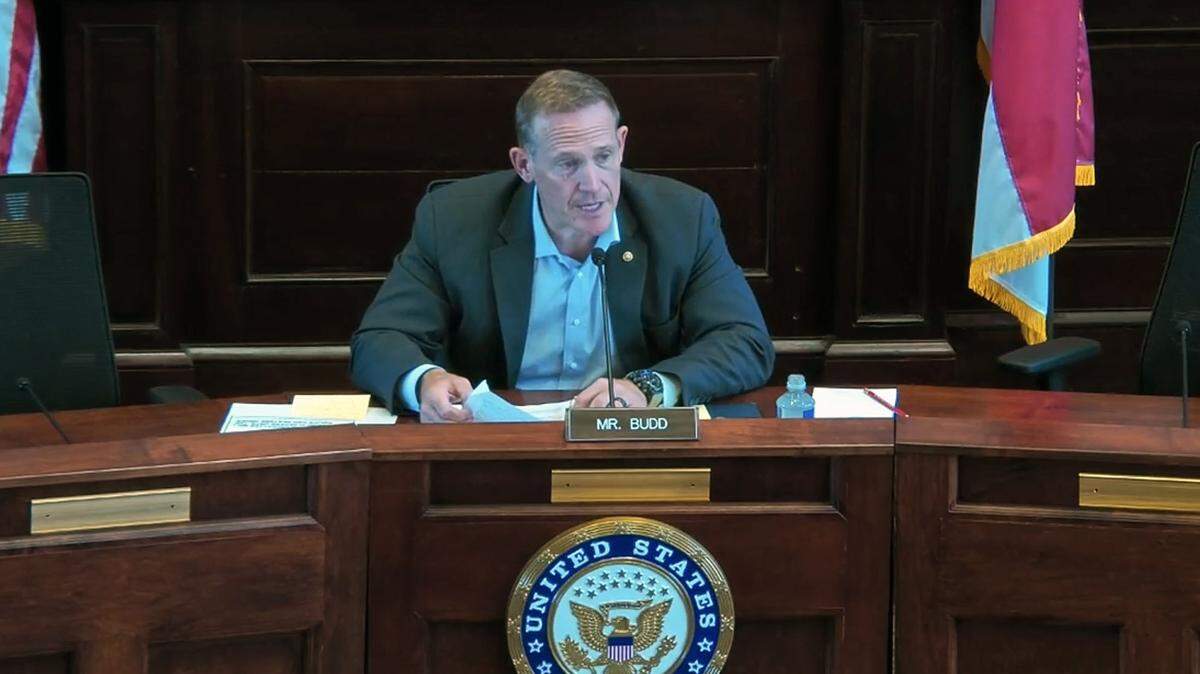
The hearing was hosted by U.S. Sen Ted Budd, a North Carolina Republican, in Hendersonville just days before the one-year anniversary of Helene’s landfall in Western North Carolina. The intent was for local leaders to give insight on how the Small Business Administration has worked with communities after the disaster and how funding shortfalls the agency experienced impacted recovery.
Among many other things, the SBA provides low-interest disaster loans after disasters. Just weeks after Helene made landfall in Western North Carolina, the disaster loan program ran out of money leaving applications for funding relief unfulfilled.
It wasn’t until two months later that Congress voted to approve $2.3 billion in additional funding to the agency through the American Relief Act of 2025, Budd said.
Budd emphasized the importance of the SBA’s role in disaster recovery and placed blame on the Biden administration for previous shortfalls.
“These loans help restore homes to their pre-disaster condition and help businesses replace equipment and maintain payroll. Unfortunately, due to the blunders of the Biden SBA, too many North Carolinians were unable to find the help they needed to simply rebuild and regain their livelihoods,” he said.
Budd added: “The prior administration mismanaged the SBA disaster loan program by issuing irresponsible rules and dramatically increasing the cost of making and administering disaster loans.”
When announcing that its disaster-relief fund was out of money n October 2024, the SBA noted that it had increased demand for aid and mentioned Hurricane Milton, which struck the U.S. weeks after Helene did.
In November, former President Joe Biden wrote congressional leaders seeking more funding.
“I warned the Congress of this potential shortfall even before Hurricane Helene landed on America’s shores. I requested more funding for SBA multiple times over the past several months,” he wrote. “Now the need is even more urgent.”
Helene’s impact on small business
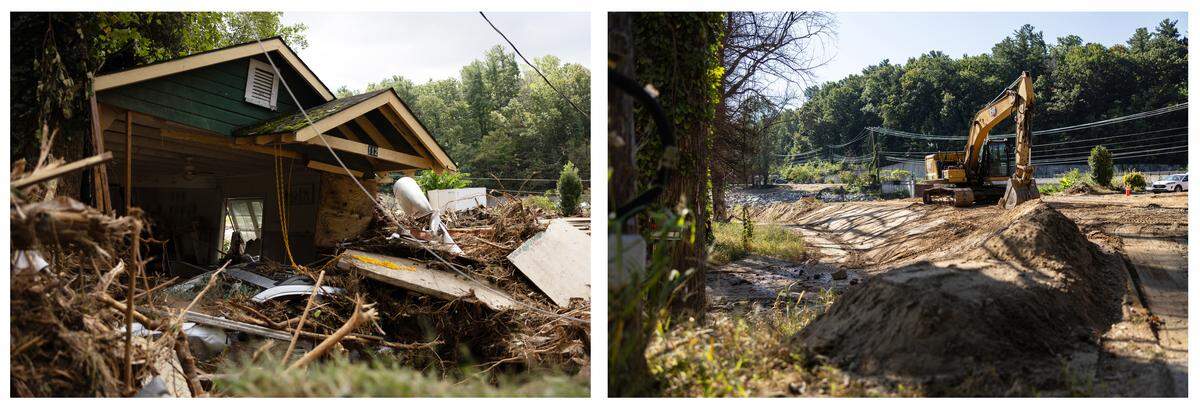
Helene hit Western North Carolina during leaf season — the region’s busiest economic period of the year. Between October 2024 and January 2025, Western North Carolina businesses had financial losses of $1.8 billion, according to the Economic Development Partnership of North Carolina. Physical damage to businesses was between $2.5 and $3 billion.
In a September press conference, Gov. Josh Stein said that 96% of small businesses in Western North Carolina were impacted by Helene. Six out of seven of those businesses have not yet returned to pre-Helene revenue levels, Stein said.
While the SBA has received its allocated funding from Congress, that hasn’t stopped communities from experiencing issues, Monday’s hearing made clear.
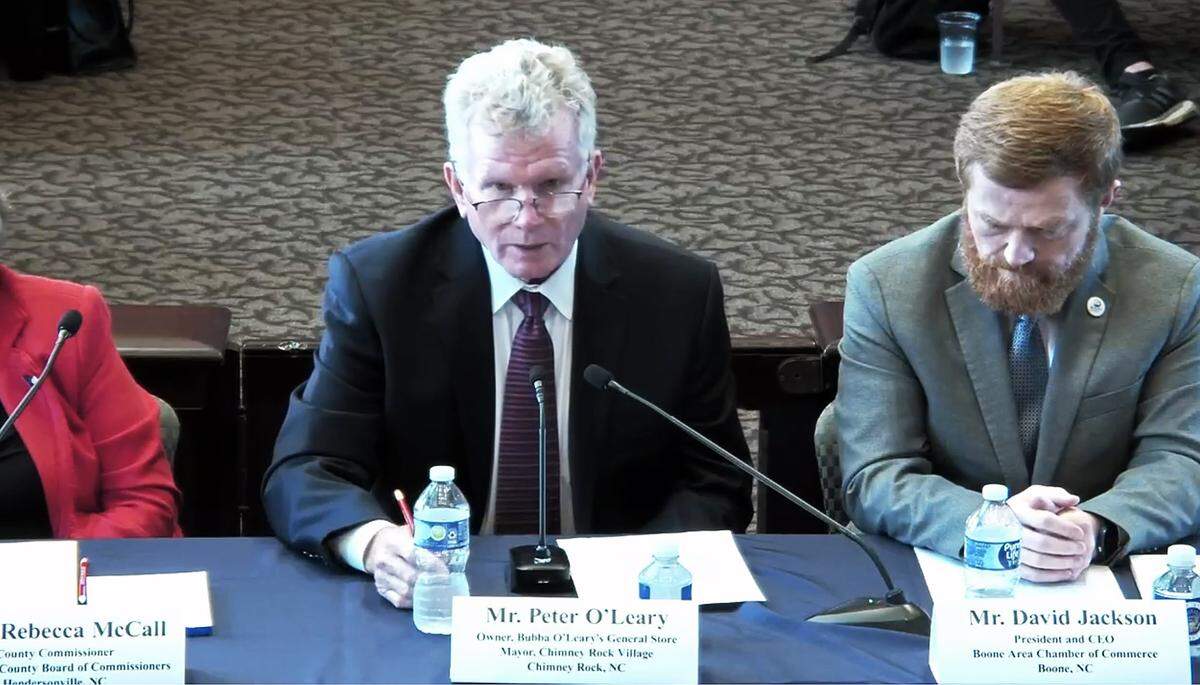
During the hearing, the Village of Chimney Rock mayor, who owns Bubba O’Leary’s General Store, said within the span of six months the SBA had assigned him five different case managers. Peter O’Leary, said he was approved for a loan back in October, but things kept changing.
Additional requests for information from the agency were confusing and when he did reach out with questions, he’d only hear from his case manager every few weeks. While he’s expected to receive funds in a few weeks, he said the convoluted process pushed rebuilding back six to seven months.
“For seasonal business like Chimney Rock village and a lot of western North Carolina… If you don’t do it at the right time of year, then you’re liable to not only miss this season, but maybe the next season,” O’Leary said of repairs. “So that’s why, for us, time is very important.”
Henderson County Commissioner Rebecca McCall said she wants to see SBA’s application process to be made simpler. It felt like the agency was looking for ways to say no, she said.
“I mean, it’s all the same government,” she said. “And there were multiple applications that had to be filed, and if you didn’t dot an I or cross a T, you were automatically denied.”
Loan hesitency
The Small Business Administration offers low-interest loans, but currently they are not forgivable — meaning business owners would eventually have to pay them back.
For many small businesses, especially those who were still working to pay off COVID-era loans, the idea of taking on more debt was daunting, David Jackson President and CEO Boone Area Chamber of Commerce said during the hearing. Rather than taking the chance, many businesses decided to close.
The need for financial support for small businesses is urgent, a recent report from the Stein’s office said. And there have been local efforts to fill the gaps for businesses who didn’t want to incur more debt.
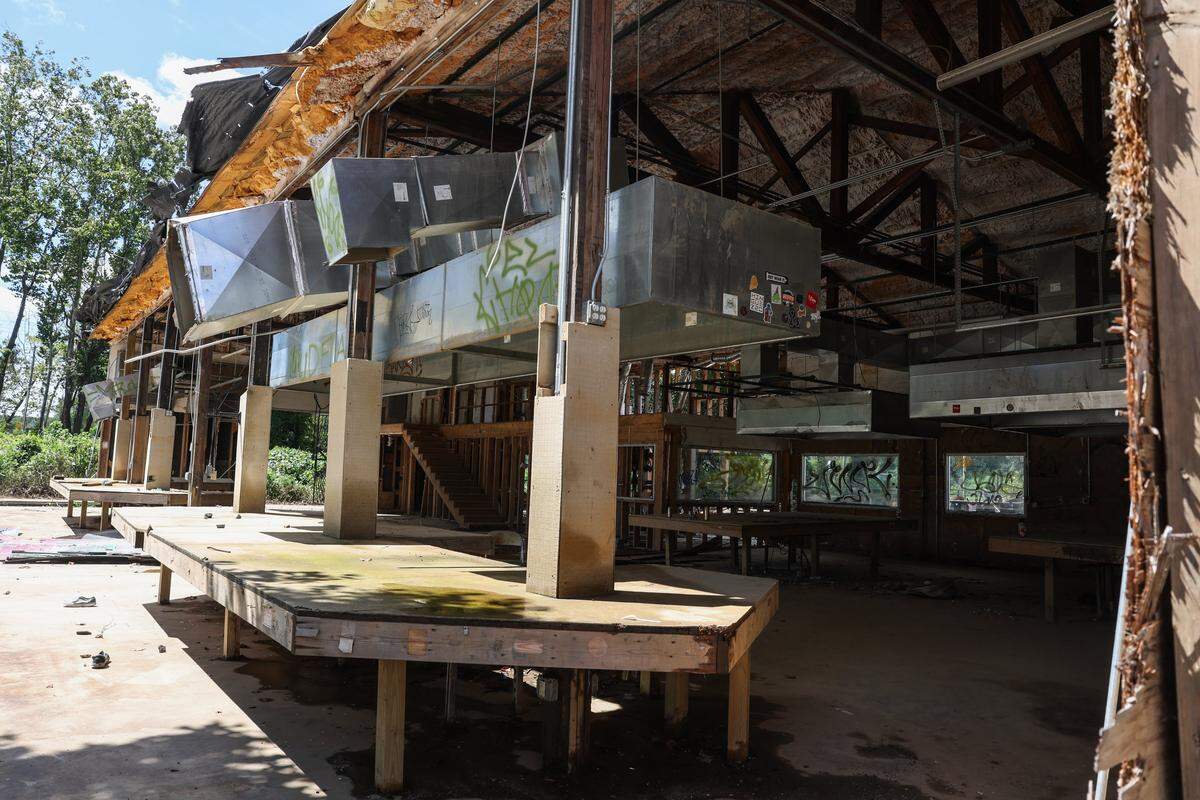
The Western North Carolina Small Business Initiative offered small businesses that sustained physical damage. But the demand greatly outpaced the supply. More than 7,300 businesses applied. Only 2,800 received funding.
There must be more options such as grants and forgivable loans from the federal government to help small businesses get back on their feet after disaster, Jaskson said.
“I don’t think that anybody that’s been represented by any of our communities has just come to this thing looking for a handout. They need a hand up into making sure that they have a fighting chance to move forward,” he said.
McCall said going forward, she wants to see the SBA to look at their process from the business owners perspective.
“These people needed help recovering and they were already paying off a mortgage,” she said. “If they lost the business, if the business floated down the river, then there’s nothing left of that business to even have a loan for. And then they’re stuck with that loan and then they’re facing the possibility of bankruptcy.”
Federal promises
Chris Stallings has been the Associate Administrator for the Office of Disaster Recovery and Resilience in the Small Business Administration since February. Since he took on this role, his team has made adjustments in response to failure identified after Helene, he said.
They have expanded the number of people in the field assisting communities after Helene struck, expanded recovery response in rural areas with portable loan offices and increased the rate of disbursement. The average approval time for applications now sits at two weeks compared to 17 days a year ago.
Stallings said the funding shortfall experienced last fall was due to the Biden Administration’s failure to communicate internally and with Congress.
“We make the promise that we’re here to do everything we can to learn from our mistakes and embrace them so that we can build a better future for everyone else who experiences similar situations.” Stallings said.
Stallings acknowledged concerns about the application process and said he hopes to see one application to apply for disaster relief across several federal agencies.
Stein request
This month, Stein asked Congress to fund the Small Business Administration’s disaster loan account with $400 million to fund forgivable loans. This ask was part of a larger $13.5 billion request for Congress to further support Helene recovery nearly a year after the storm. A similar $11.6 billion request Stein made in February to aid North Carolina in Helene recovery went unfunded by Congress.
More than 5,700 businesses across the state applied for disaster loans after Helene but so far only 35% of them received approval — totaling $244 million, according to Stein’s request. Of that $244 in approved loans, only $144 million have been disbursed to small businesses, the request said.
When asked if there was a need for additional funding, Budd said he hasn’t seen any recent requests from states who’ve experienced disaster over the year such as California and Texas.
In regard to Stein’s requests, Budd said Congress will evaluate it and make sure they are “getting to the right number.”
“The goal is not the money,” he said. “The goal is to get people back on their feet.”