NC crime bill goes to Gov. Stein’s desk with changes to bail and death penalty laws
AI-generated summary reviewed by our newsroom.
- NC lawmakers passed House Bill 307, imposing stricter bail conditions for violent crimes.
- Bill includes provision for resuming executions with alternative methods.
- Democrats opposed death penalty provisions citing racial bias and doubts about deterrence.
North Carolina lawmakers sent a wide-ranging crime bill to Democratic Gov. Josh Stein on Tuesday that would enact stricter bail rules for a broad new category of “violent offenses” and expand when mental health evaluations are conducted.
The bill, drafted by House and Senate Republicans in the wake of the fatal stabbing of Iryna Zarutska on a Charlotte light rail train last month, could also open the door to executions resuming in the state after ongoing legal challenges over claims of racial bias in capital cases are resolved.
House Bill 307, which GOP lawmakers named “Iryna’s Law,” was negotiated by Republicans in both chambers in recent weeks and was released publicly Sunday evening. It was taken up first by the Senate, where it appeared to have bipartisan support.
That changed Monday evening, when Republicans amended the bill to direct state prison officials to implement alternative methods of execution, prompting many Democrats to walk out of the chamber and refuse to vote on the bill. It passed 28-8.
In the House, however, more than a third of Democrats, including House Minority Leader Robert Reives joined Republicans in voting for the bill. It cleared the lower chamber 81-31.
More than two hours of debate over Iryna’s Law
Debate in the House was charged with anger and frustration over the stabbing of Zarutska, a 23-year-old refugee from Ukraine, which drew national attention this month after local authorities released gruesome surveillance footage of the incident.
The death penalty has been a part of the conversation around the country, and North Carolina Republicans announced earlier this month that they were looking at ways to restart executions, which have been paused in the state since 2006 due to court challenges. President Donald Trump has called for the man accused of killing Zarutska, 34-year-old DeCarlos Brown Jr., to receive the death penalty.
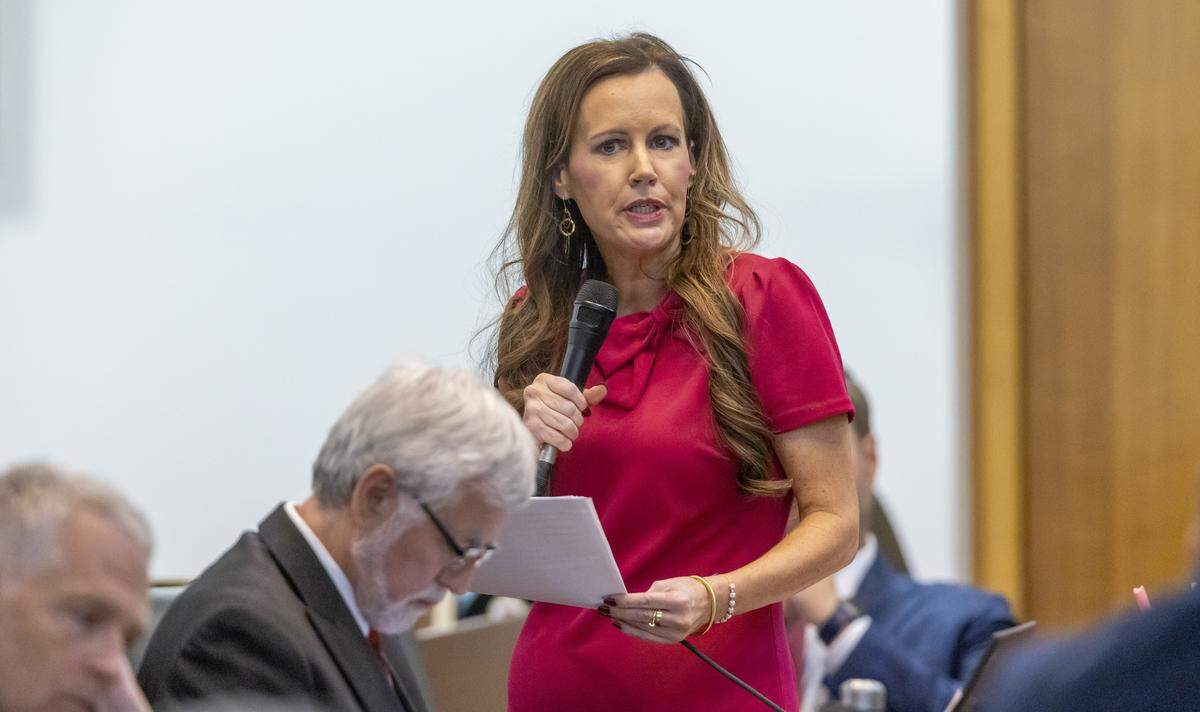
Rep. Tricia Cotham, a Republican whose district includes parts of Charlotte, said that Zarutska’s death was “preventable” and was a “direct result of judicial officials being too soft on crime, and allowing too many criminals to have a revolving door that pump into our neighborhoods, and into our communities.”
“(Brown) joined the city streets of Charlotte with nothing but a piece of paper, where he promised on his honor, of which he had none, to return back to court,” Cotham said. “You can guess how that turned out.”
One major change in the bill is the elimination of written promises to appear as one of the conditions for pre-trial release that judges and magistrate can set.
Brown, who had a series of convictions on his record and served more than five years in state prison for armed robbery, was twice arrested in 2024 for the misdemeanor charge of misusing the 911 system.
His mother told The Charlotte Observer that he had been diagnosed with schizophrenia. She said she had tried to get him involuntarily committed, but the mental hospital she went to said they couldn’t take him in unless he said he would kill himself, or someone else.
In January, he was arrested and charged with that offense again when he asked police to investigate a “man-made” material he said controlled when he ate, walked and talked. Court records show that Magistrate Teresa Stokes released Brown on Jan. 19, the same day he was arrested, on a written promise to appear, the Charlotte Observer previously reported.
The charge was still pending against Brown when he boarded the light rail on Aug. 22. Less than a month earlier, a judge had ordered his mental capacity to be evaluated.
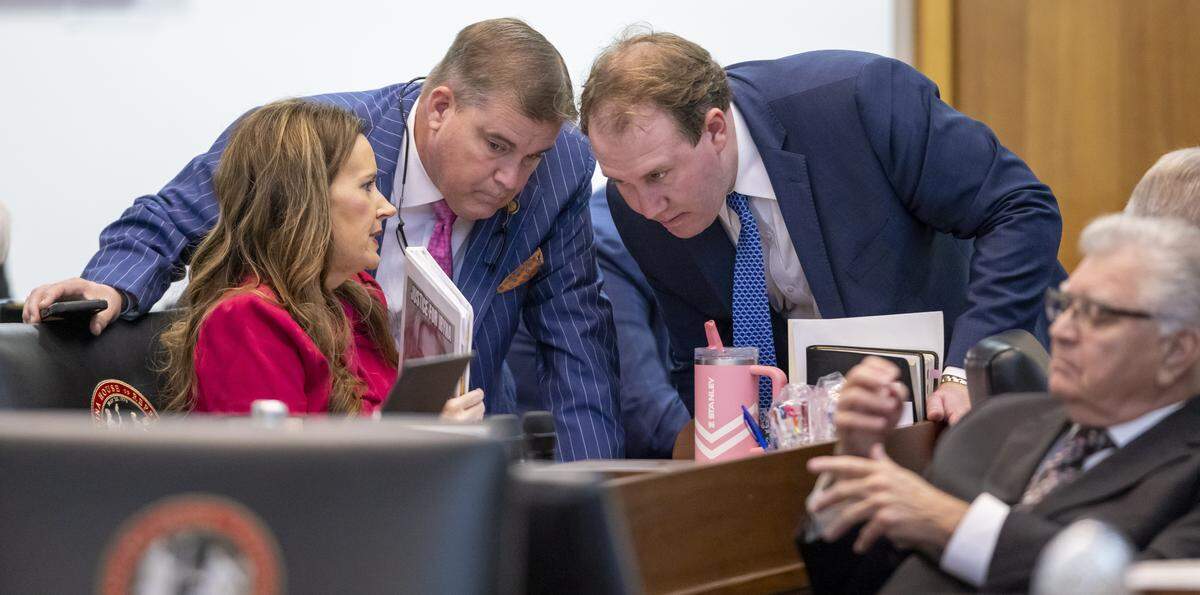
Another high-ranking Republican, Rep. Brenden Jones, said the bill is “a step to right what we can do in this state.”
“We owe it to this child,” Jones said of Zarutska. “We owe it to the people in this state to do the right thing, to protect one of our own, who came here, who trusted us that she would have the protection to have a vibrant, beautiful future.”
The bill also creates a new category of “violent offenses” under state law, grouping together a wide range of existing offenses for the purpose of outlining charges that would only qualify for pre-trial release on a secured bond, or on house arrest with electronic monitoring.
Democrats divided in voting for bill, but many express concerns
Democrats criticized the changes to bail laws that are included in the bill, and the absence of additional funding for mental health treatment. They also slammed the effort by Republicans to restart executions, expressing concerns about the effectiveness of capital punishment in deterring crime, racial bias in trials and sentencing, and the potential for innocent people to be sent to death row.
Another provision in the bill creates a new protocol for judicial officials to follow when someone comes before them after being arrested, and has suspected mental health issues.
Under that protocol, judges and magistrates would have to order evaluations for defendants charged with a violent offense, as defined in the bill, who also have been involuntarily committed in the last three years.
More broadly, an evaluation for possible commitment would be required anytime a judge or magistrate has “reasonable grounds” to believe any defendant charged with any crime “is a danger to themselves or others.”
Rep. Phil Rubin, a Raleigh Democrat, said he supported some parts of the bill and believes that violent criminals should remain in custody before trial, regardless of how much money they can post in a secured bond.
He voted against the bill, saying he ultimately decided the bill wasn’t a “serious endeavor” because it doesn’t contain funding for additional beds in mental hospitals, or to address capacity and correctional officer shortages in prisons.
“You are drastically increasing the number of people that we will detain,” Rubin said. “That will cause huge costs to our jails, and in turn that will actually cause huge costs to our prisons, because our jails are currently holding a lot people because our prisons are so underfunded.”
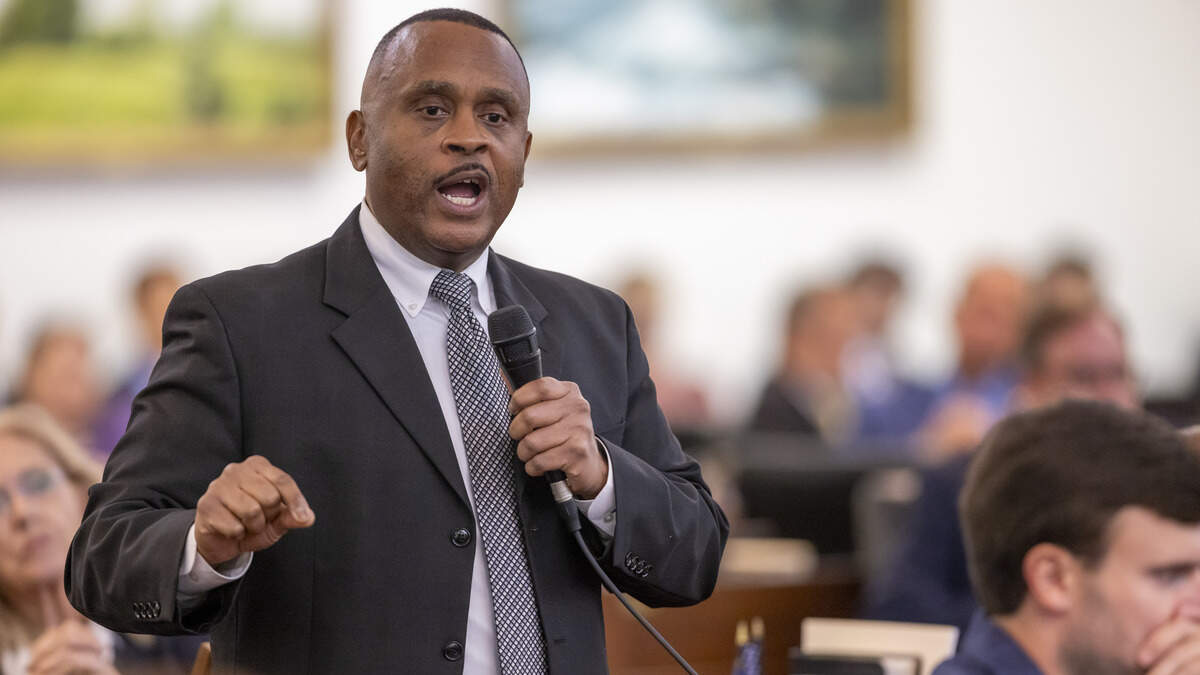
Reives, meanwhile, said he thought it was “cynical” for Republicans to try to restart the death penalty through a bill dealing with the failings in the legal system that have faced scrutiny since Zarutska’s killing.
“Coming up with barbaric ways to kill people doesn’t suddenly solve the problem,” Revies said. “No schizophrenic is going to change their mind because instead of lethal injection, they’re facing a firing squad. That’s ludicrous when you say it out loud. What that is, is giving people an illusion about how things get changed.”
Reives voted for the bill, despite voicing his opposition.
State would have to implement alternate execution methods
The amendment made to the bill on Monday, which was introduced by Senate leader Phil Berger, didn’t specify which alternate methods of execution N.C. prison officials should use.
The bill, as amended, only directs the Department of Adult Correction to “select another method of executing a death sentence that has been adopted by another state,” as long as the alternative hasn’t been ruled unconstitutional by the U.S. Supreme Court.
Instead, Reives said, lawmakers should make “meaningful change” by funding mental health evaluation and treatment to keep someone like Brown off the street.
“Put your money where your mouth is,” Reives said. “We have got the money to fix this mental health system, we have got the ability, we have got all of the facts that we need.”
“This is a lay-up,” he said.
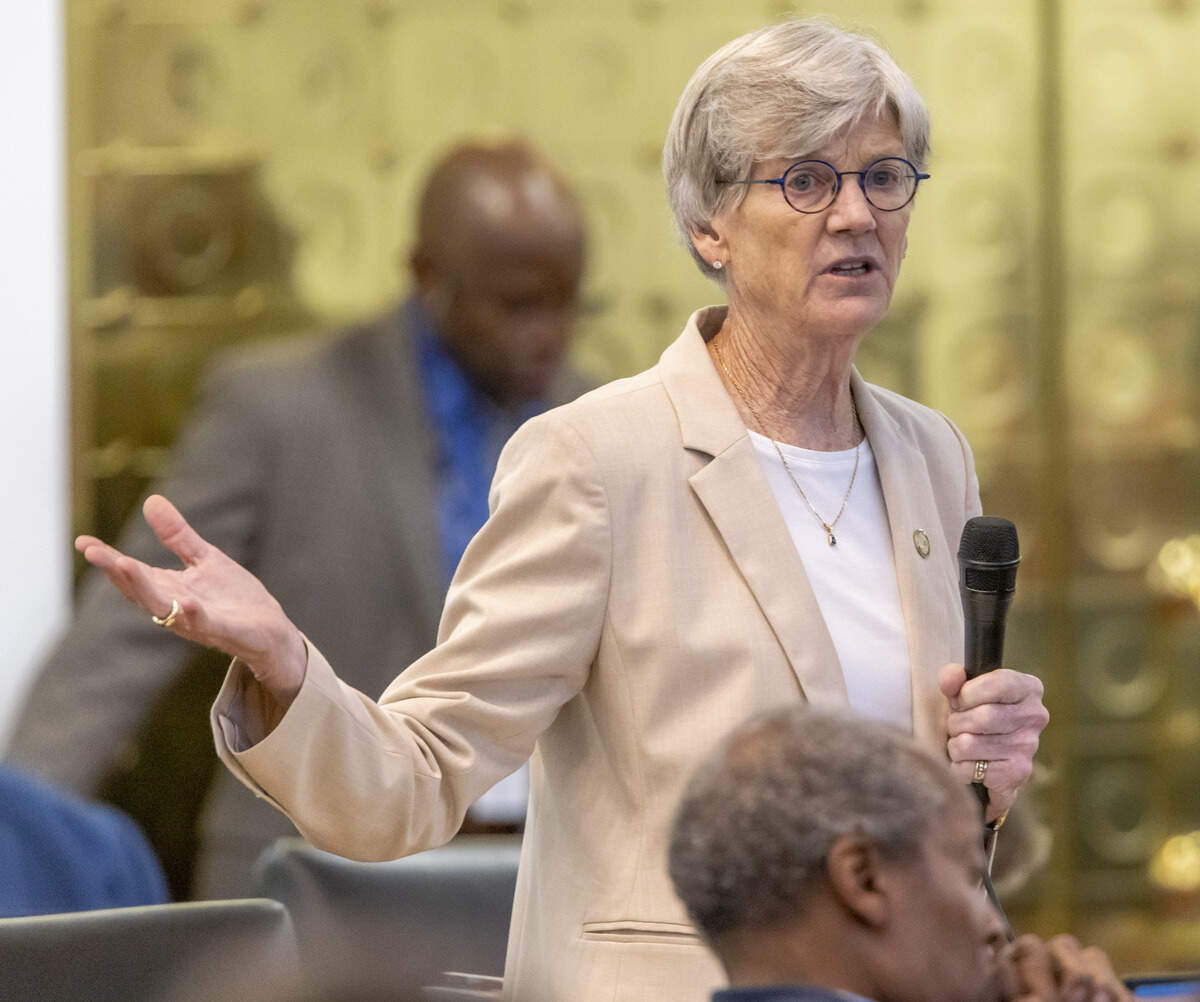
Democratic Rep. Marcia Morey, a retired judge from Durham, said when police officers picked up Brown for misusing 911 earlier this year, they should have taken him to a mental health professional who could have petitioned for involuntary commitment.
Morey also said that while Republicans have taken aim at “cashless bail,” the bill they drafted leaves in place the option for unsecured bonds, which don’t require paying the bond amount before release, only if a defendant fails to appear in court.
“Unsecured bonds are still allowed, you don’t have to put up a dime,” said Morey, who voted against the bill.
Ahead of the legislature reconvening this week, Stein said the crime bill “needs to make investments in public safety to put more cops on the beat, ensure that the magistrate system effectively holds criminals accountable, and keep people safe on public transportation and on our streets.”
Stein spokesperson Morgan Hopkins said on Monday the governor’s office was reviewing the bill.
This story was originally published September 23, 2025 at 4:26 PM with the headline "NC crime bill goes to Gov. Stein’s desk with changes to bail and death penalty laws."