For this NC family, Medicaid cuts could force decisions on keeping care at home
AI-generated summary reviewed by our newsroom.
- Medicaid reimbursement cuts reduced home nursing hours and strained family care.
- Nurse shortages and low pay force agencies to cut hours despite high care needs.
- Legislative stalemate leaves families waiting for funding to restore home care.
On her sister’s deathbed, Wanda Knox made a promise: she would never put her nephew, Sharod Knox, into a care facility.
That vow has defined the past two decades inside the Knox home in Kannapolis, where family members and nurses have worked together to manage his care. Every day, 46-year-old Sharod Knox relies on his nurse and on Wanda Knox, his 69-year-old aunt, to keep him breathing and fed, to monitor his ventilator, and to handle the constant routines that make staying home possible.
Sharod Knox has lived this way since a 2002 shooting left him quadriplegic and dependent on a ventilator. He requires “total care,” said his nurse Lou Eaton: bathing, grooming, feeding, medications, turning him every few hours, suctioning airways and maintaining medical equipment.
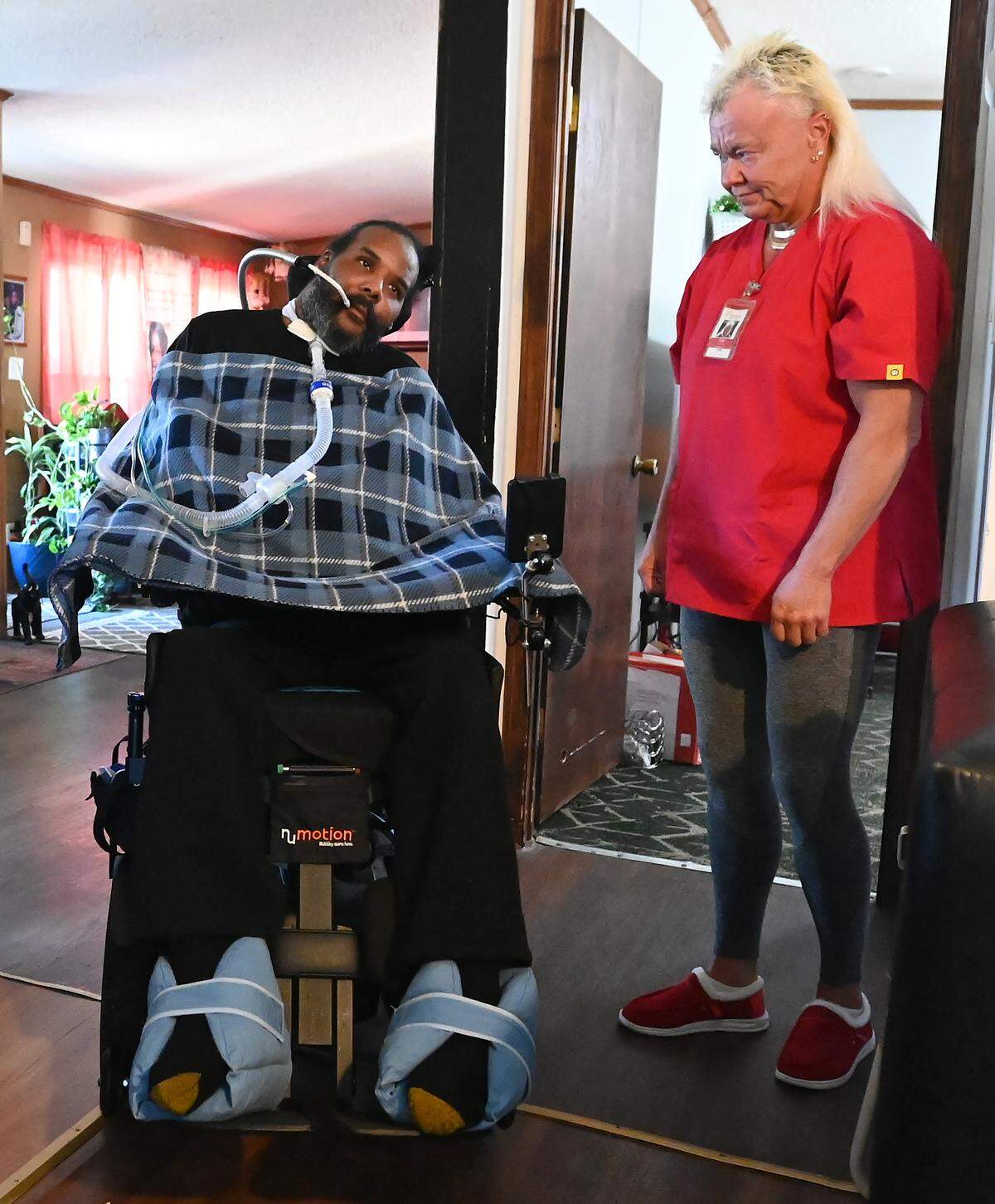
Across North Carolina, people like Sharod Knox are at the center of a growing crisis in home health care. Advocates warn that new cuts to Medicaid reimbursement rates of 3% to 10% could deepen an existing nursing shortage, forcing families to go without full coverage and pushing some patients into institutions.
The North Carolina Department of Health and Human Services reduced provider reimbursement rates across dozens of programs on Oct. 1, including for home care, ambulance services and hospitals. Advocates say that while home care costs Medicaid less than institutional care, rate cuts make it harder to find nurses, forcing some families toward facilities anyway.
In Raleigh, efforts to fix North Carolina’s Medicaid gap have reached a standstill in the Republican-controlled legislature. The House approved House Bill 491, meant to cover about $190 million in funding needs and undo the new rate reductions. But the Senate has not passed it, instead approving a bill that includes funding for a rural health program and a pediatric hospital in addition to filling the gap in Medicaid funding — deal-breakers for the House.
The legislature may wrap up 2025 without resolving the Medicaid funding issue, leaving the rate cuts in place and lawmakers nowhere nearer agreement. As the impasse remains, thousands of families are left waiting for relief.
Sharod Knox’s home used to be staffed 92 hours a week. Now, due to Medicaid cuts and a nursing shortage, his coverage has fallen to about 76 hours a week through home care company BAYADA. When nurses aren’t available, his aunt fills the gap herself, even as her own health makes the work increasingly difficult.
“I didn’t expect to get old, but I’m old,” Wanda Knox said. “If I go to the hospital, then who’s going to be here to take care of Rod?”
For Sharod Knox, living at home is important. Speaking softly from his motorized chair, he said being with family and nurses who know him well allows him to be himself.
“It makes me happy to know I got somebody with me to help… That’s a good feeling,” he said.
Over the years, he said, his nurses have become like family themselves.
Melissa Allman, director of government relations and advocacy engagement for BAYADA Hearts for Home Care, said patients don’t get that kind of one-on-one attention in a facility. But, she said, the job is grueling, and low pay makes retention hard. It’s difficult to staff highly skilled nurses.
“It’s got to be someone who’s basically a critical nurse, someone who can be his nurse, his therapist, his home health aide, you know, everything that he needs,” Allman said. “So the biggest challenge for us is being able to recruit and retain quality nurses that are willing to do that one-on-one care when they can make higher wages in other settings.”
Republican state Rep. Grant Campbell, a physician who represents Cabarrus and Rowan counties, visited the Knox home Thursday to see that reality first hand. He wants to not only reverse the cuts but raise reimbursement long-term, calling the current stalemate “a failure on Raleigh’s part.”
“Patients would rather be at home. Patients do better at home,” Campbell said. “They have connections with their families… It’s the right thing to do.”
The state’s Medicaid shortfall stems from the legislature not budgeting enough to match rising health care costs, according to NC DHHS. The agency, part of Democratic Gov. Josh Stein’s administration, cites inflation, higher demand for mental health care, and new, expensive drugs as major drivers. It also says new federal rules have added administrative costs, including more frequent eligibility checks.
The One Big Beautiful Bill Act could make the problem worse, according to NC Health News, as it adds work requirements and cuts federal Medicaid funding, with most provisions taking effect after the 2026 elections. Republican legislators dispute both the agency’s numbers and the need for immediate cuts, but they have agreed to provide more money — only to reach an impasse over unrelated issues.
While legislators weigh solutions in Raleigh, Wanda Knox continues the daily work of keeping her nephew at home. She said it’s a struggle caring for her nephew when nurses can’t, but she clings to the promise she made.
“His mother lay right on a bed over here and died with cancer, and all I gave her was my word that I will not put him in a nursing home unless I’m dead,” Wanda Knox said. “That’s the only way he’s going to go.”
This story was originally published October 27, 2025 at 5:00 AM.