UNC gets court win, but it’s sending coronavirus research records to lawmakers
AI-generated summary reviewed by our newsroom.
- House Gov Ops and Speaker Hall obtained UNC files for review and oversight
- Court of Appeals ruled UNC need not turn over additional Ralph Baric records to group.
- House Gov Ops continues separate inquiry and reports receipt of a large trove.
UNC-Chapel Hill doesn’t have to turn over additional records of the work of prominent scientist and coronavirus researcher Ralph Baric, the N.C. Court of Appeals ruled on Wednesday.
But U.S. Right to Know, the advocacy group denied the records, is not the only one seeking documents from UNC.
And UNC has turned over many documents as part of a separate legislative inquiry into Baric’s research, House Speaker Destin Hall said.
House Republicans’ staff on the General Assembly’s Joint Legislative Commission on Governmental Operations, known as Gov Ops, are conducting that inquiry. The legislature exempted Gov Ops from public records law, so the commission decides when and if investigative documents are shared publicly. Not all investigations or inquiries by Gov Ops result in a commission hearing or action.
However, The News & Observer has learned details of the request and the status of the investigation.
In June 2025, The N&O reported that Republican House Speaker Destin Hall and the House GOP arm of Gov Ops, which he oversees, had launched a “fact-finding mission” into Baric’s research. Baric has been targeted by lab leak theories.
Hall told The N&O in a recent interview that they have received “a ton of documents” from their UNC request.
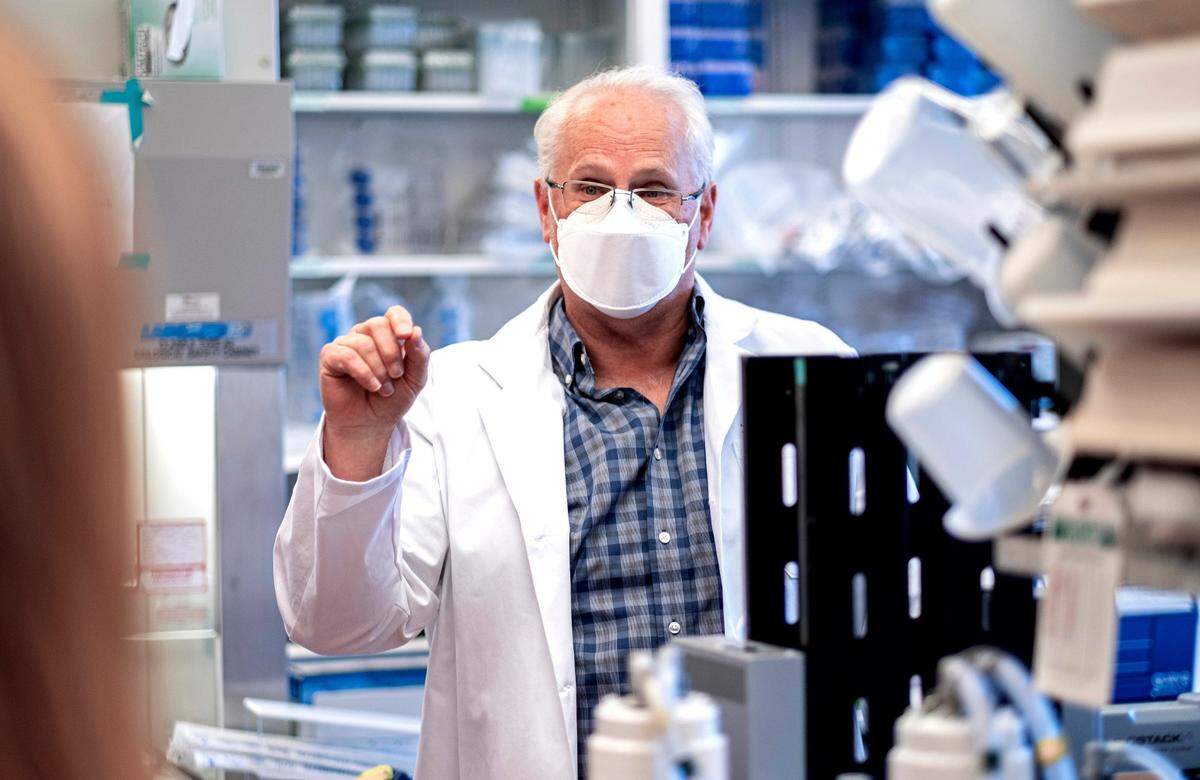
Baric’s life’s work laid the foundation for the development of vaccines against COVID-19 and UNC’s role in researching the virus. He is a distinguished professor in UNC’s Department of Epidemiology and professor in the Department of Microbiology and Immunology, is considered a world leader in studying coronaviruses.
Hall directed UNC Chancellor Lee Roberts to deliver records of that work to Gov Ops’ House majority staff in a June 11 letter exclusively obtained by The N&O.
The records that Hall sought includes those the university has fought to withhold from U.S. Right to Know, a private advocacy group that has sued UNC for records as part of its campaign to collect more information on the origin of the COVID-19 pandemic. But The N&O was not immediately able to determine whether any of those withheld documents were among those turned over to the legislature.
The General Assembly’s request to UNC:
- All records sought by U.S. Right to Know for a series of dates from 2020 to 2024;
- All documents provided to members of Congress about Baric, the Baric Lab, the SARS-Cov-2 virus, the Wuhan Institute of Virology; and communication from any account connected to the Baric Lab and to or from accounts connected to the Wuhan Institute of Virology, EcoHealth Alliance or the Defense Advanced Research Projects Agency from 2018 to 2021.
“There’s a ton of documents that our folks have gotten. As I understand it, they have maybe spoken to (Baric) as well,” Hall told The N&O in a recent interview.
He said that it’s up to Congress for some scrutiny of the documents, but that state House Republicans also wanted to know more about Baric’s research given it has received national attention.
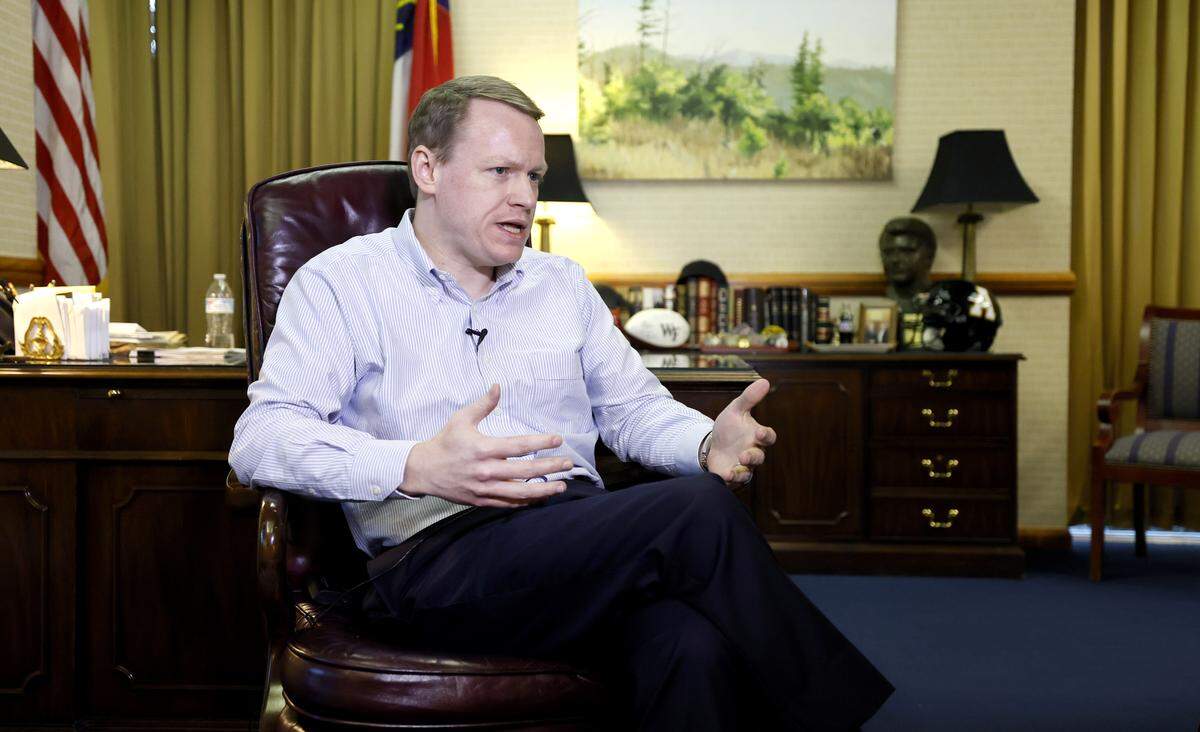
“We’re certainly not saying he did anything wrong one way or the other. By all accounts, with people who know him, he’s a good guy who was in a specialized area of research,” Hall said.
“And we’re just trying to understand — was there something going on here, from the institutional standpoint, that maybe was too dangerous. Obviously, COVID was a significant world event. And we are the body over the UNC System, and so (we’re) taking a look at those things,” he said.
UNC spokesperson Kevin Best said Thursday when asked about the status of the legislature’s request that nothing has changed since its statement to The N&O in June, which was that due to state law, “any request made to an agency employee by Commission staff and any communication between Commission staff and an agency employee is confidential.”
“The University deeply values and appreciates its partnership with the General Assembly and is committed to legal compliance and transparency,” Best said.
U.S. Right to Know’s request denied by appeals court
According to the Court of Appeals decision, U.S. Right to Know describes itself as “an investigative research group that promotes transparency for public health, [which] has been investigating the origins of COVID19 and the virus that causes it.” The group requested public records of Baric’s work and associations with the Wuhan Institute of Virology.
Gary Ruskin, executive director of U.S. Right to Know, told The N&O in an email that they are “disappointed” in the Court of Appeals result and are evaluating their “legal options and potential next steps.”
In response to the group’s eight records requests from July 2020 to October 2021 and January 2009 to October 2021, UNC produced more than 130,000 pages of responsive documents, according to court documents, but withheld 5,205 documents, citing state public records law allowing the withholding of “proprietary” research.
The Court of Appeals wrote that a lower court “was correct in finding ‘proprietary information’ to be ’information in which the owner has protectable interest’ as it relates to research.” The appeals court cited state law in writing that “while ‘proprietary information’ includes trade secrets, ‘proprietary information’ extends beyond the definition of trade secrets.”
The decision was written by a three-judge Court of Appeals panel led by Judge Jefferson Griffin, with Chief Judge Chris Dillion and Judge Julee Flood concurring. All are Republicans.
Paul Newton, UNC-Chapel Hill’s vice chancellor and general counsel, told The N&O in a statement on Thursday that the university “takes its commitment to transparency and compliance with public records laws seriously, and accordingly, the University produced more than 130,000 pages of records in response to US Right to Know requests.”
“We are gratified that the NC Court of Appeals has affirmed the trial court’s ruling confirming the University’s adherence to the law,” said Newton, a former Republican state senator.
2025 report from WHO on COVID-19 origins
The World Health Organization Scientific Advisory Group for the Origins of Novel Pathogens released a report in June 2025 about origins of COVID-19, which caused more than 7 million reported deaths worldwide, with estimates ranging between 14.9 million and more than 18 million.
“Despite vast amounts of research conducted on this virus, the definitive route through which it entered the human population remains unknown,” the report states.
The report also stated that much of the information it needed to assess the hypothesis of an “accidental laboratory related event, either during field investigations or a breach in laboratory biosafety or biosecurity, has not been made available to WHO or SAGO,” adding that it needs more information from the Chinese government.
“Without information to fully assess the nature of the work on coronaviruses in Wuhan laboratories, nor information about the conditions under which this work was done, it is not possible for SAGO to assess whether the first human infection(s) may have resulted due to a research related event or breach in laboratory biosafety. It can therefore not be ruled out, nor can it be proven until more information is provided,” the report shows.
It also said that, “The work to understand the origins of SARS-CoV-2 remains unfinished.”
Hall’s office told The N&O on Wednesday that documents are still coming in, and that UNC has been responsive to the request from the speaker and Gov Ops.
Gov Ops staff declined to comment for this story.
This story was originally published January 8, 2026 at 1:05 PM with the headline "UNC gets court win, but it’s sending coronavirus research records to lawmakers."