How Charlotte Mayor Vi Lyles learned what to carry — and what to leave behind
Vi Lyles isn’t quite ready yet.
She emerges from the corner of her office on the 15th floor of the Charlotte-Mecklenburg Government Center — family photographs arranged beside her, a panoramic view of uptown stretching into the morning light — holding a tiny twist-up tube in her right hand.
“Not fair,” she says, letting out a soft laugh. “I have to have lipstick.”
She exchanges pleasantries and a warm handshake, then retreats to the corner, where she applies a crimson coat.
“OK,” she says, rejoining her guests. “Now I feel like I’m a grown-up.”
A few moments later, Lyles turns toward that row of photographs.
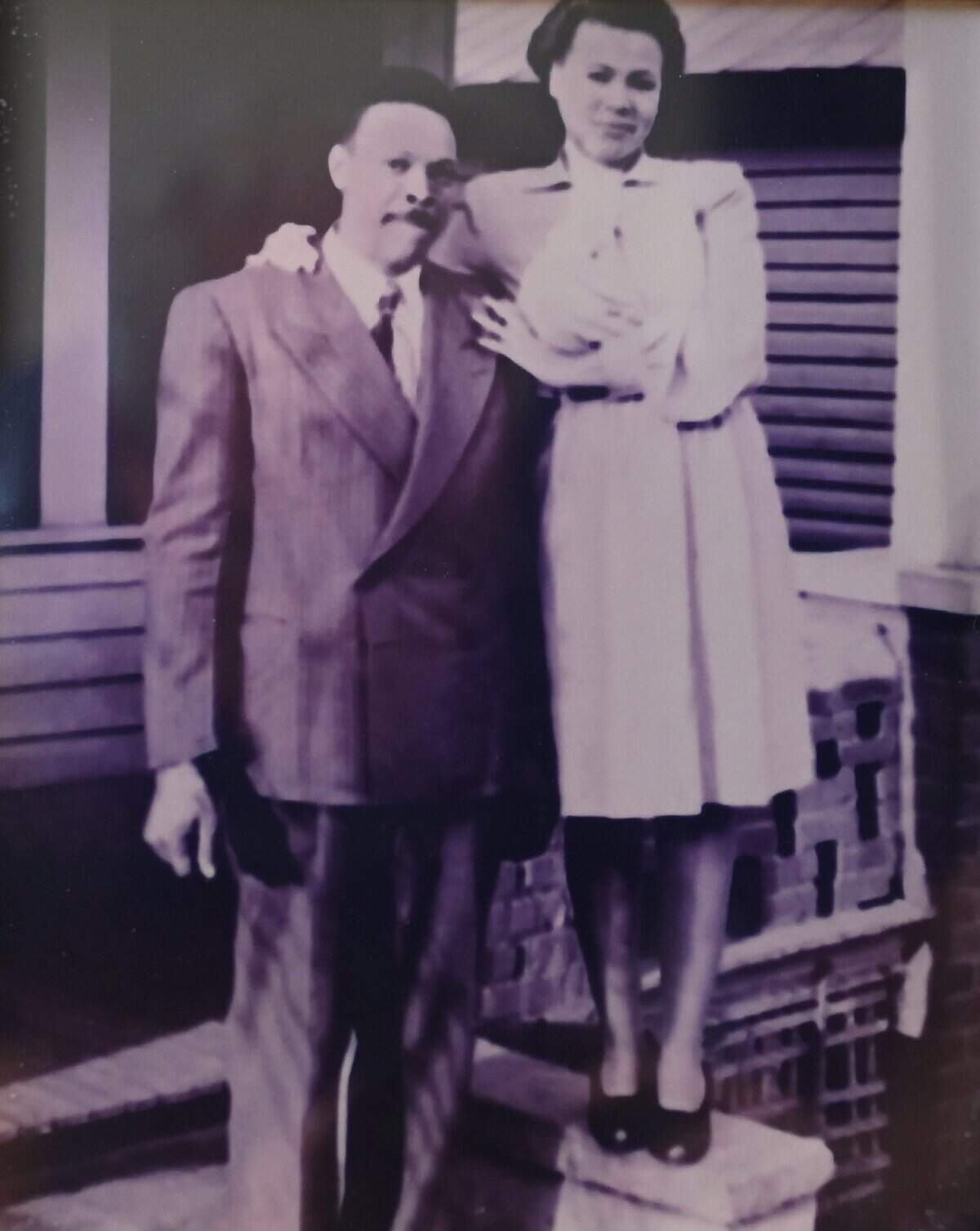
She points first to one of her parents. Then to another, taken in May 2024, when President Joe Biden visited Charlotte to meet privately with families of the law enforcement officers killed and wounded in a shootout earlier that week.
Next, she gestures toward a family photo of relatives gathered behind an older man seated in a lawn chair.
“This is my children’s grandfather,” she says. “He has a street named after him, over in Camp North End.”
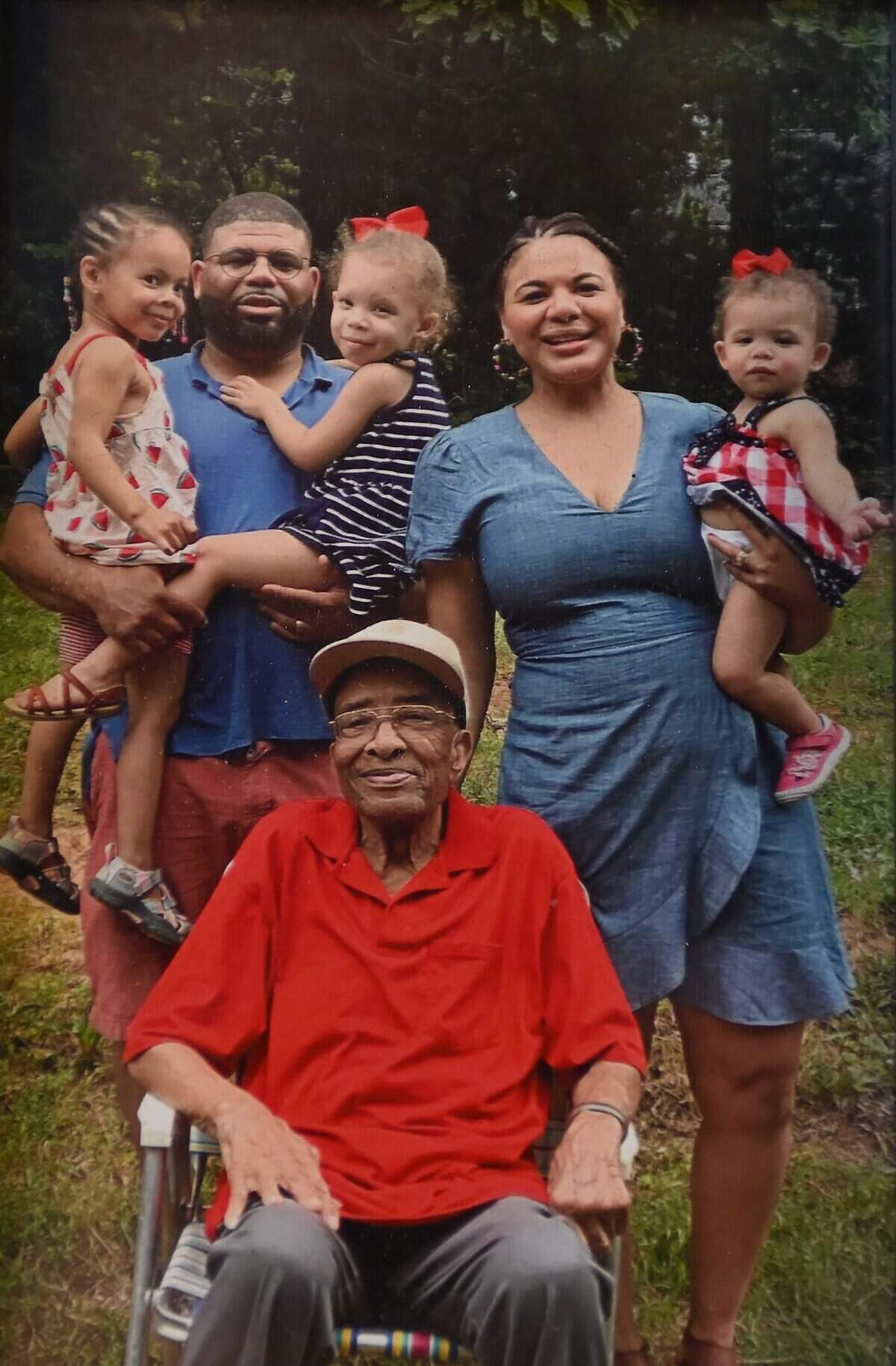
His name, Lyles explains, was Romeo Alexander, her first husband’s father, who died in 2020 at 97. Decades earlier, at his Statesville Avenue restaurant, Razades — a gathering place for a generation of African Americans determined to build lives in a city that did not always welcome them — he fed civil rights bus riders traveling through Charlotte. She speaks about him not as Black history, but as family, someone whose presence still helps define her own.
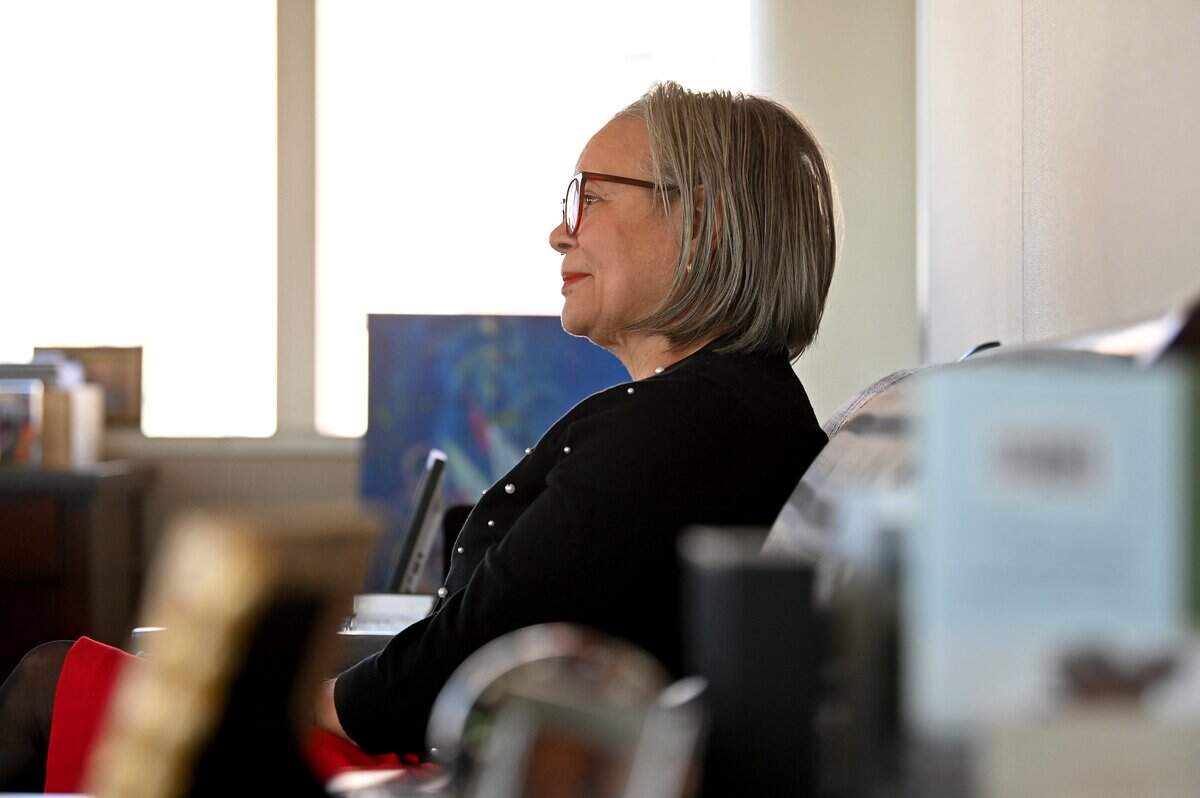
With that, she moves to the sofa to begin the conversation, and over the next hour, it becomes clear that the photographs in her office are more than decoration.
They are markers of the people and moments that shaped the way she moves through the world, long before she became mayor.
For much of her public life, Lyles — now 73, among the longest-serving figures in local government, and newly embarked on what could be the final chapter of her time in public office — has spoken in detail about Charlotte, its growth, its challenges, its future.
About working to address Charlotte’s widening housing gap, for example, having backed voter-approved bonds that steered hundreds of millions of dollars into the city’s Housing Trust Fund to create and preserve affordable housing. Or about the killing of Iryna Zarutska last summer and the criticism she faced afterward, when some residents said her initial response did not address public fear directly enough.
But Lyles has spoken less often about the intensely private experiences that shaped the steadiness and composure she projects as part of her public persona.
The sudden loss of her first husband when their children were still young.
A cancer diagnosis that left her crying on the side of the road.
The quiet, daily work of continuing when stopping might have seemed easier.
More than any election or policy debate, those moments shaped how she has led as mayor for eight-plus years, guiding Charlotte through extraordinary growth, political strain, and moments of public grief.
They taught her something simple, she says: “You make a decision that you’re gonna carry this through. And it’s not always easy.”
“In fact,” she adds, “sometimes it’s very, very hard.”
Everything changed — and she kept going
As she moved into and through her 30s, Lyles’s life was unfolding the way she had imagined.
She’d married Wayne Alexander, a respected Charlotte attorney, in 1978. Together they were building a family that included a son, Kwame, and a daughter, Aisha. She was thriving professionally, too.
In the 1980s she was the city liaison who helped city leaders and activists launch what became the Charlotte-Mecklenburg Housing Partnership (now DreamKey Partners) — early work rooted in the idea that stability begins with a place to live — while also rising through the city’s budget department; and in 1987, she became the city’s budget director at the age of just 35. The rhythms of work and home felt steady.
Then, in an instant, they weren’t.
“When he committed suicide,” she says of the father of her children, “that was just something like I never even thought could be what it is. ... It’s just really hard when you think that everything is okay, but you find in your own family that it’s not.”
It was December 1989. She was 37.
She remembers her five brothers converging on the home, filling the living room, gathering around to comfort their only sister. But what she recalls most clearly is her mother, Mary Clarkson Taylor, walking through the front door.
“All I could do was scream, ‘Mom,’” Lyles says. “She just immediately said, ‘You can do this. You can get through it.’”
At the time, it felt impossible — a loss she could neither fix nor fully understand. But there were immediate realities she could not escape. Kwame, then 10, and Aisha, then 7, still needed breakfast. They still needed to be taken to school. Bills still arrived. A job was still waiting.
So she focused first on what was directly in front of her, and kept her mother’s words close.
You can do this. You can get through it.
Making sure her children got to counseling, and going herself, helped. The biggest difference, though, was made by the people who refused to let her carry the weight alone.
Just one of many examples: “I didn’t have any babysitting,” she recalls. “And one of my very best friends … she said, ‘I’ll come and take care of the kids. Don’t you worry about that.’” Even at work, colleagues made space for her grief. She remembers Pam Syfert, then Charlotte’s city manager, letting her cry in her office. “She said, ‘I will always be here for you,’” Lyles says.
“People care for you,” she continues. “And when you have that kind of care, it helps you stand up straighter.”
“I’m not going to tell you that I felt like everything was going to be right,” she says. “But I did think that I could get through it, because I knew that I had people that supported me.”
‘How much more do I have to carry?’
The grief did not disappear in the years that followed, but it became something she learned to carry as her career advanced.
Colleagues came to know her as steady and disciplined, someone others could depend on, and in 1996 she was promoted to assistant city manager. That same year, she married her second husband, John Lyles, whose surname she still bears. (Her first husband’s last name, Alexander, is now her middle name.)
Gradually, her life regained its footing.
Then, one morning in 2004, she was driving to work when she received a phone call that would upend it again.
“‘Vi, you got to pull over,’” she recalls her doctor telling her. Once she did, he broke the news: “‘You have cancer. You have breast cancer.’”
Sitting there in the driver’s seat of her idling car, pulled to the side of the road, she began to sob.
Why is this happening? Lyles thought. She was in her early 50s — too young, she felt, to be facing something like this. How much more do I have to carry?
The why and the how-much would remain unknown. The what — surgery that included a mastectomy, followed by reconstruction — became the focus. Once again, her family rallied around her, with her children, her mother, and her extended family staying close through surgery and recovery.
Not long after her diagnosis, she retired from her position with the city. She focused on recovery. She started a consulting firm. She worked with civic organizations. For a time, her life moved in a different direction.
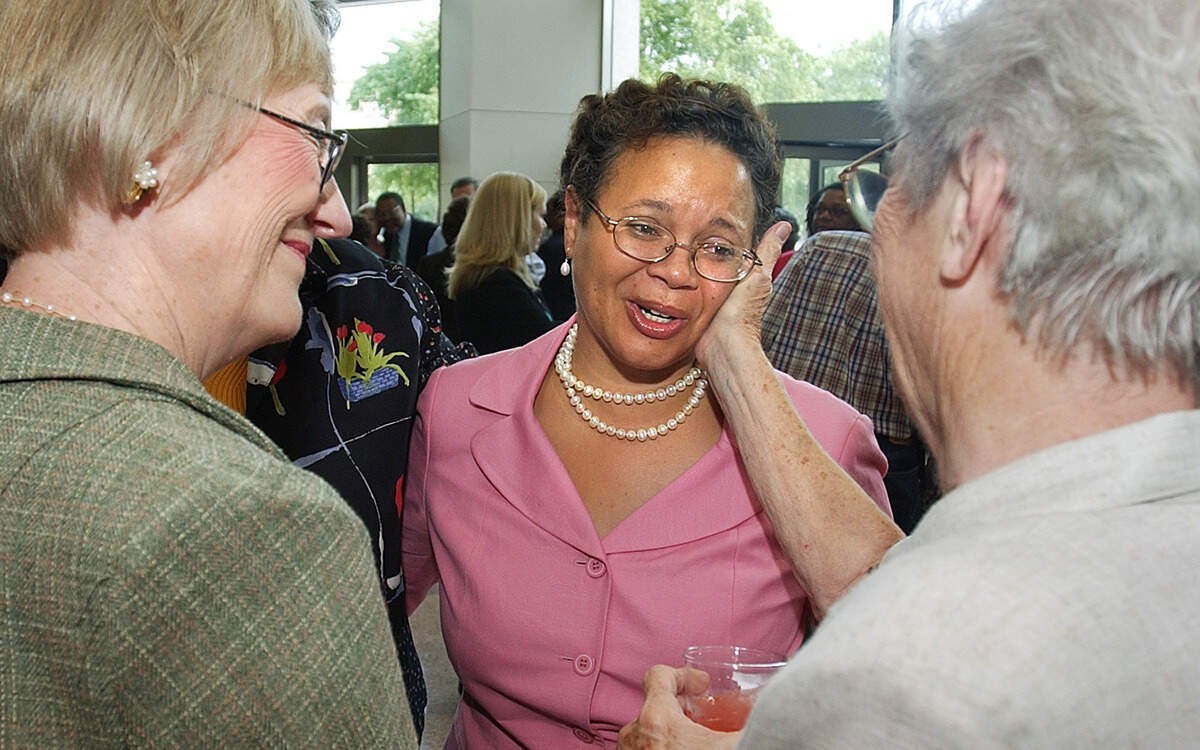
Then, in 2013, John Lyles died after his own battle with pancreatic cancer — and after encouraging her to return to public life. The same year, she ran for Charlotte City Council and won. Four years later, she ran for mayor.
And by that point, she had learned something she would carry for the rest of her life. Not that loss or hardship would stop coming, but that she could endure in spite of those things.
It’s an instinct that had been forming long before tragedy tested it.
At Queens, she learned she could stay
In 1970, she arrived at Queens College — now Queens University of Charlotte — as Viola Taylor, a young woman eager for independence, believing college would open her world. Instead, it challenged her view of it.
Although Bernice Poole Fulson had broken the color barrier in 1963, Queens persisted as a predominantly white institution navigating integration unevenly. When Lyles arrived seven years later, she was still among the school’s first African American students.
Many of Lyles’ classmates, meanwhile, came from wealth and privilege, and the differences were visible immediately — in the cars that pulled up outside the dorms, in the easy familiarity some students had with faculty, in the quiet assumptions about who belonged. “When the Cadillac came up and the chauffeur got out,” she recalls now, laughing softly, “I was like, Oh, this is a whole new world for me.”
The wealth startled her. What stayed with her longer, however, was something quieter: the sense that she occupied a space few people had expected her to fill. In classrooms and common areas, she was often aware of being watched, of being measured.
Raised in a close-knit family in Columbia, South Carolina — surrounded by siblings, cousins and neighbors who knew her name and her story — Lyles suddenly found herself navigating a world where belonging was not guaranteed. The campus was orderly and polished. The welcome felt less certain.
“I realized that everybody didn’t expect me to be there,” she says.
At one point, the isolation felt so heavy that during a return visit home she told her mother she didn’t want to stay. Her mother listened. Then she told Lyles, matter-of-factly, We don’t quit.
So, she returned to Queens. She stayed. She even graduated early, earning her degree in political science in just three years.
“Mostly it was obedience,” Lyles says now, smiling, when asked why she heeded her mother’s edict. Only later would she understand what that moment had given her:
The realization that sometimes you stay long enough for belonging to find you — and sometimes you learn that staying isn’t the answer.
In Salemburg, she learned she could leave
Just a few years later, while still in her 20s, Lyles found herself in a place where her mother’s motto would be tested in ways she hadn’t anticipated.
She had just completed her master’s in public administration at UNC Chapel Hill and accepted an assignment in Salemburg, a small town about 60 miles south of Raleigh where she was to help train law enforcement officers at what would become the state’s Justice Academy.
It was the kind of opportunity she had worked toward — meaningful, professional, and full of promise. But in a way that at first seemed similar to her early days at Queens, she felt remarkably out of place.
Salemburg was tiny — a one-stoplight town with a population of just a few hundred, surrounded by farmland and shaped by the racial realities of the mid-’70s.
“Here I am coming out of Chapel Hill ... thinking, I’ve got some experience that I’m going to be able to do things differently,” Lyles recalls. She arrived, though, to find that she was just one of two Black staffers in an otherwise-all-white work environment. “And I’ll never forget this ... my admin (a young white woman) came up to me, and she said, ‘Well, I’m going to be working with you, but that’s because ... I was the last person. ... You were the only person left.’”
“I was like, Oh my gosh, what have I gotten myself into?”
Lyles and her Black colleague, also a woman, struggled to find housing. Options disappeared without explanation. Doors that at a glance appeared to be open were for all intents and purposes closed to them.
Even mundane activities set off reminders that she did not fully belong.
When a local banker took the two women to the town restaurant for lunch one day early on, she recalls, “people practically walked out before we would sit down to eat.”
It didn’t take her long to decide that she could not stay. So she walked into her supervisor’s office and told him exactly that.
He urged her to reconsider. He told her they could figure it out. But she shook her head.
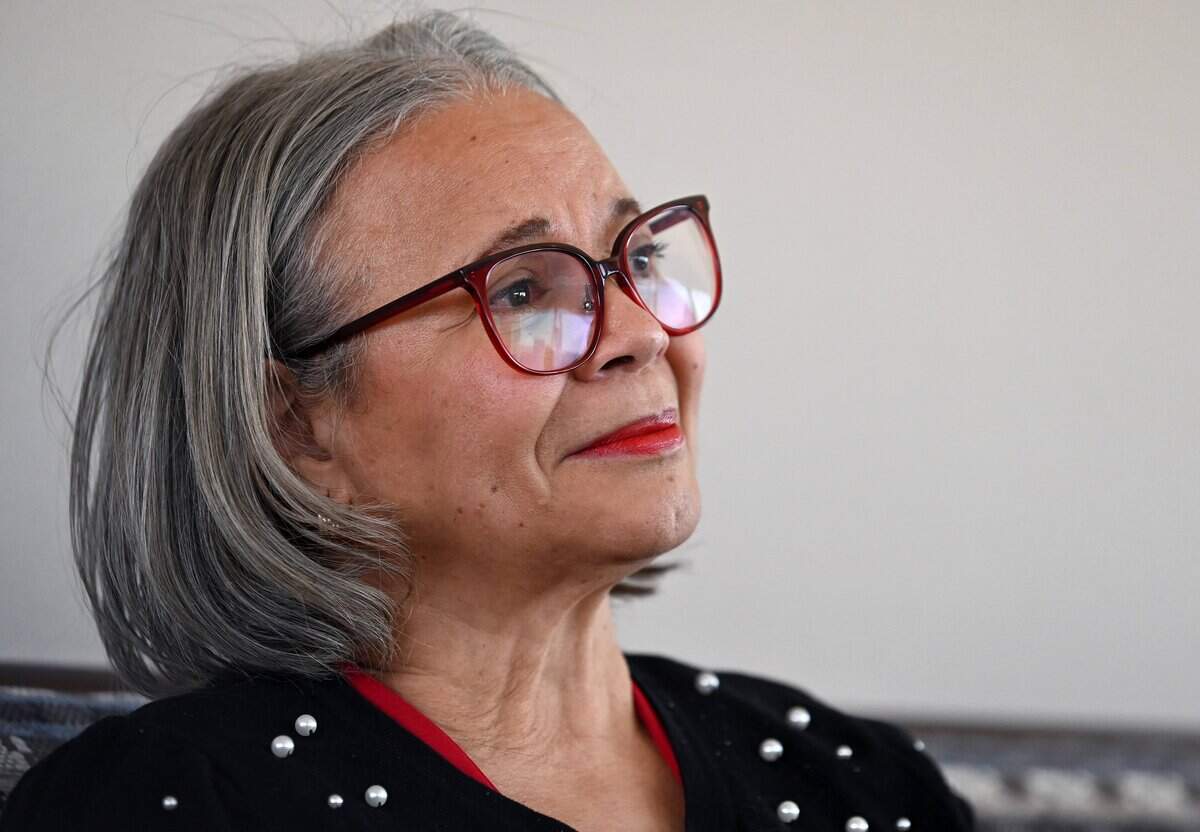
“‘No,’” she remembers telling him. “‘There’s no way in the world.’”
With that, she left and returned to Chapel Hill. Still, Salemburg taught Lyles an important lesson that has stuck with her to this day: “When someone doesn’t want you in their space, don’t be in their space.”
Not long after, she accepted a position with the City of Charlotte’s budget department — drawn to a growing city where she believed she could help shape something larger than herself.
And Charlotte, it turned out, was the place she would stay.
‘Sometimes — you just take a breath’
In the more than eight years Lyles has served as Charlotte’s first Black female mayor, she has faced a remarkable array of public challenges that have taken a private emotional toll.
Covid.
Protests after George Floyd’s murder.
The killing of Iryna Zarutska on the light rail.
Tensions around ICE and immigration enforcement.
Each demanded decisions that carried consequences far beyond the moment — balancing urgency with restraint, emotion with judgment. And even outside moments of crisis, the job has required choices that shape the city’s future in quieter but equally lasting ways — decisions about housing, growth and development that will determine who Charlotte is able to serve, and who it is not.
But when she’s asked about on-the-job emotional tests she’s faced in recent years, the one that springs to the front of her mind brings her back to April 29, 2024, the day a law enforcement operation in east Charlotte turned into an ambush, ending in the deaths of four officers and the wounding of several others.
It brings her back to the hospital hallway — the officers lining the corridor respectfully; the nurses and doctors standing shoulder to shoulder along the walls silently; the families waiting nearby, mournfully.
She pauses.
“I don’t know that you process,” she says, as she tries to explain the emotional toll. “Sometimes — you just take a breath.”
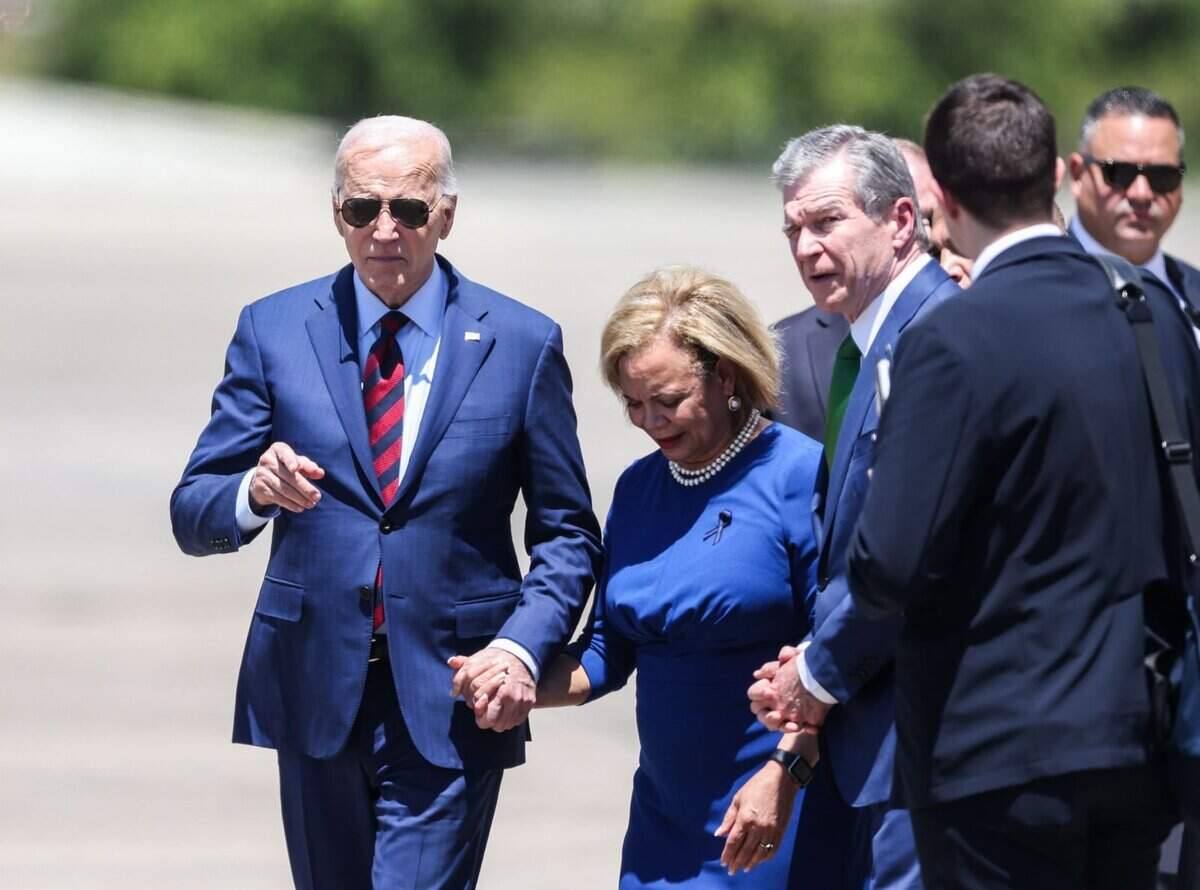
Being mayor, she has learned, means standing inside moments like that.
It means absorbing grief that does not belong to you, but still settles on your shoulders.
It means understanding that leadership is not only about decisions, but about remaining steady — even when confronting crises, absorbing criticism, or when others are not.
And to hear her tell it, that composure — something she carries to vigils, memorials, and City Council meetings that stretch late into the night — did not begin in the mayor’s office. It was cultivated long before, in quieter rooms and harder seasons.
In college, when she stayed. In Salemburg, when she left. After loss, when she returned.
Each decision shaped the next.
Meanwhile, another big decision may be approaching — although she hasn’t said whether this fifth term as mayor will be her last.
But when asked what she hopes her legacy will be, she does not speak first about buildings or headlines. She speaks about cohesion, about people feeling safe, and about opportunity in a city she has spent decades helping build and lead since arriving as a young woman unsure of her place.
A legacy that has nothing to do with lipstick — and everything to do with deciding, again and again, to carry on.
This story was originally published March 9, 2026 at 5:00 AM.