
How Davidson’s former president came to take on Donald Trump
Long before Carol Quillen jumped into the fight to protect the White House as the leader of the nation’s foremost preservation group, she stood at the helm of one of North Carolina’s most selective colleges for more than a decade.
It was a leap of faith for Davidson College to make her its first female and non-alumnus president, she said. Quillen wasn’t from the area and didn’t have the conventional qualifications of most university and college presidents, she said. Yet in her 11-year tenure she had a massive impact.
When she decided to step away from the role in July 2022, her plan was to take a year sabbatical then return to Davidson to teach. But then the National Trust for Historic Preservation approached her about leading the organization — a role she didn’t feel wholly prepared for. She had much to learn about things such as preservation legislation, tax credits and more, she said. But her draw to the shared importance of historic places solidified her choice to take on the role.
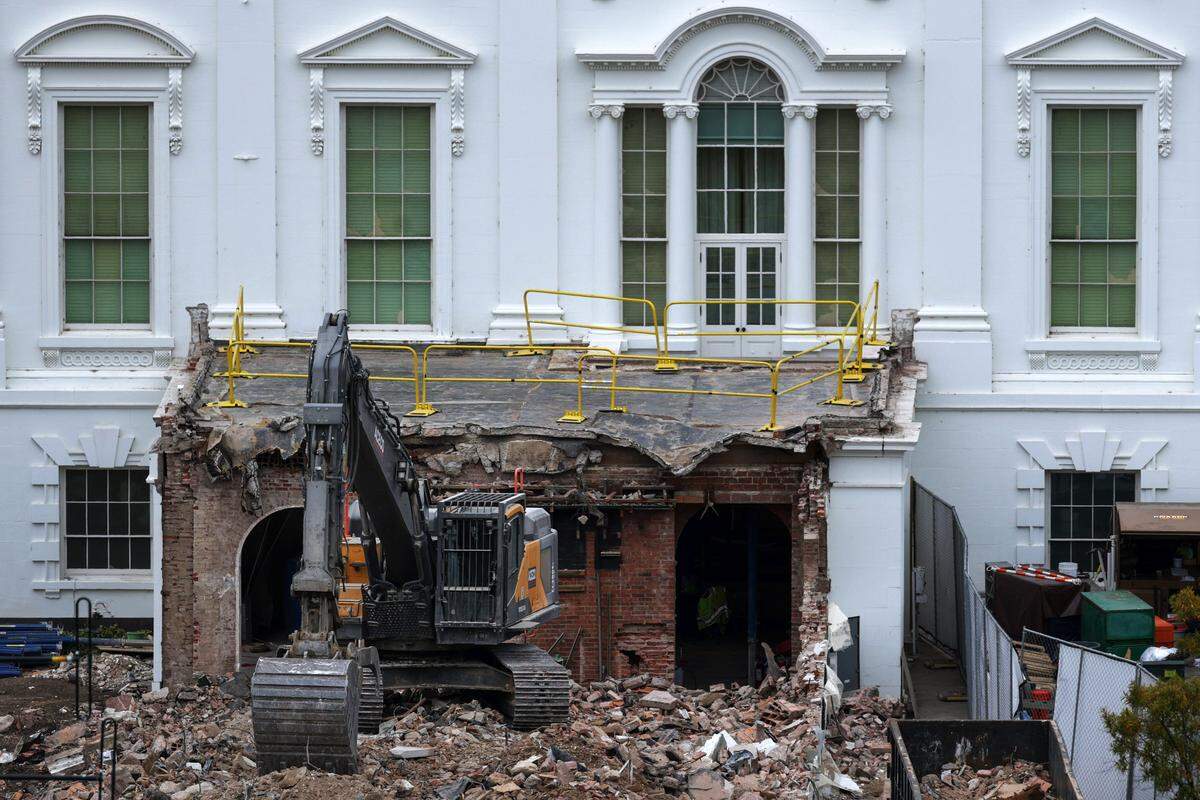
Now, as the president and CEO of the National Trust for Historic Preservation, she’s taking on her biggest challenge yet: The Trump administration. In December, the nonprofit filed a lawsuit against Trump and several other federal agencies demanding the halt of construction on the White House ballroom in the former East Wing.
It’s a personal project to Trump, something he’s been talking about executing long before his presidency. But to move forward, Quillen and her organization say, he must go through the American people first.
“I’m grateful for the opportunity to be at the Trust at this time when our history is so contested,” Quillen said. “When we run the risk of erasing parts of it. And when standing up for telling the full American story feels more important than ever.”
Trump needs permission, Quillen says
When the Trump administration ordered the demolition of the East Wing of the White House it did so without the permission of several longstanding institutions charged with oversight of development in the nation’s capital, the National Trust for Historic Preservation’s lawsuit alleges.
The Trump administration needed approval from Congress, organizations such the National Capital Planning Commission, and to conduct required environmental studies. These various layers of oversight allow the public to have a say in the appearance of the White House — the United States’ most recognizable symbol. Without these oversight measures, the public’s ability to give its input was stifled, the lawsuit alleges.
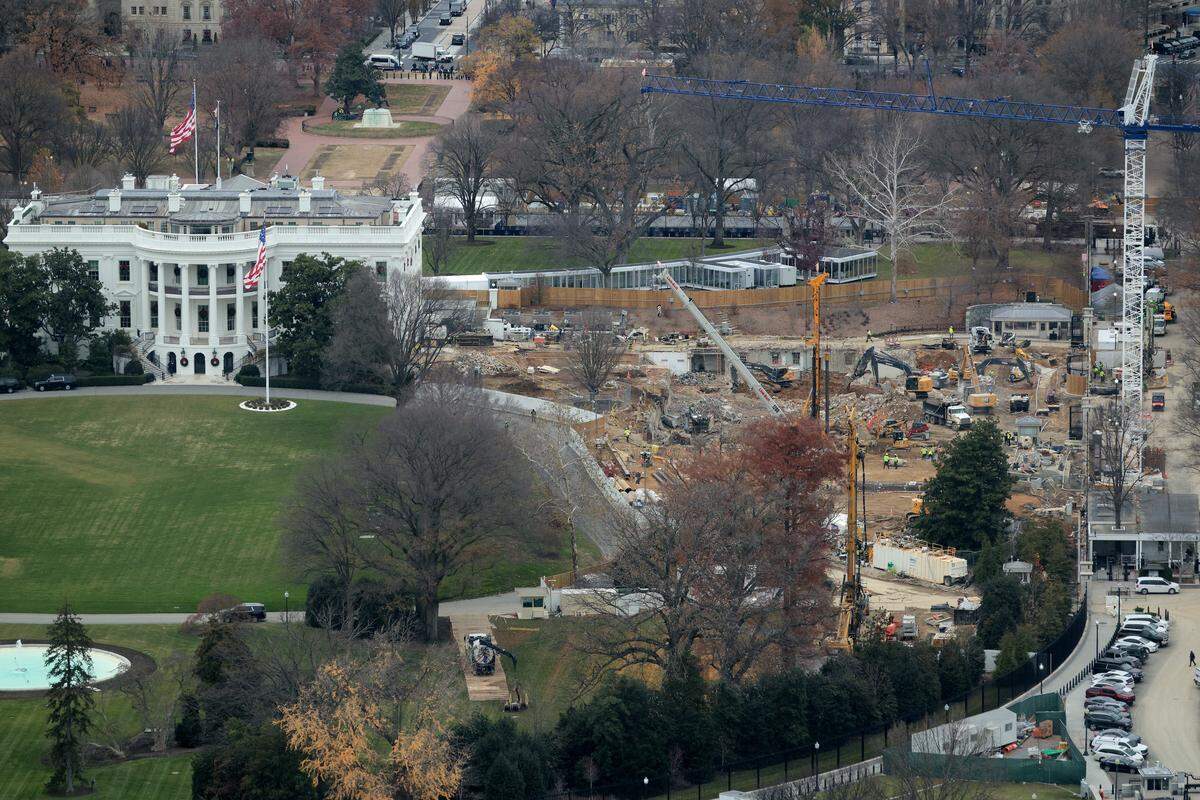
“No president is legally allowed to tear down portions of the White House without any review whatsoever— not President Trump, not President Biden, and not anyone else. And no president is legally allowed to construct a ballroom on public property without giving the public the opportunity to weigh in,” the lawsuit says. “President Trump’s efforts to do so should be immediately halted, and work on the Ballroom Project should be paused until the Defendants complete the required reviews — reviews that should have taken place before the Defendants demolished the East Wing, and before they began construction of the Ballroom — and secure the necessary approvals.”
In a brief in response to the lawsuit, the Trump administration said renovations to the White House have historically been left to the president’s discretion.
“From the beginning, Congress has almost exclusively entrusted these renovations to the President’s discretion, as it does expressly to this day,” the response read. “Congress’s deference to the President on the design and composition of the White House is no historical accident — it reflects the fact that the President lives and works in the White House...”
On January 22, a preliminary injunction to immediately halt construction on the White House was heard, but the judge did not issue an opinion. The Trust expects the judge to come back with an opinion this month, Quillen said.
In a lengthy Truth Social post days after the hearing, President Trump said it was “too late” to halt work on the ballroom claiming it would be “devastating” to the White House and the country.
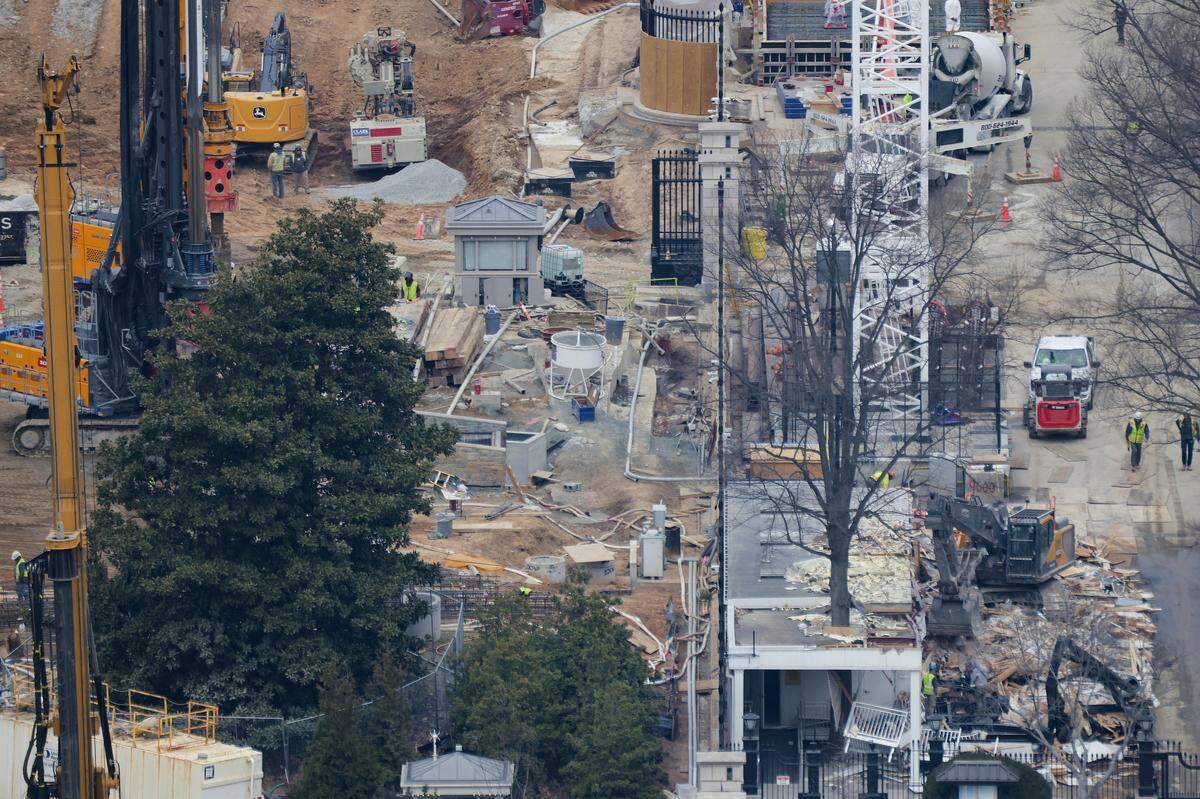
“Why didn’t these obstructionists and troublemakers bring their baseless lawsuit much earlier?” Trump said in the post. “Congress never tried, or wanted, to stop the Ballroom Project! Everyone knew what was taking place at the White House — A great, big, beautiful gift to the United States of America!”
Quillen, in an interview with The Charlotte Observer, said the Trust’s first action was not to sue. As soon as they heard about the decision to demolish the East Wing, Quillen said they sent letters to the National Park Service, the National Capital Planning Commission, and the Commission of Fine Arts — all institutions that have oversight over the White House. They received no response.
“From my perspective, we sought to exhaust other options, and we filed a case as soon as we recognized that those other options didn’t look like they were going to bear fruit,” she said.
Mission driven purpose
While the roles are different, there are similarities between her time leading Davidson College and the National Trust for Historic Preservation. Both require following the heart of the institution’s missions during moments you can’t control.
Quillen did his during her leadership of the college through the COVID-19 pandemic. Despite the uncertainty of that moment she and her team kept their eyes fixed on their intended purpose. It’s a lesson she carried with her into her leadership of the Trust.
“We can’t control the global pandemic. We can’t change it. We can strive to fulfill our mission in the context in which we find ourselves. And I think that lesson — look to your mission, understand that your task is to try to figure out how to fulfill that mission, no matter the circumstances — that’s an important approach,” she said.
Now, Quillen finds herself as the leader of the Trust during an unprecedented moment where Americans have watched the Trump administration target those who go against it.

The National Trust of Historic Preservation was created by Congress and signed into law by President Harry Truman in 1949 with the intent “to facilitate public participation in the preservation of sites, buildings, and objects of national significance or interest.” Despite the pressure of the moment, this has been the Trust’s north star.
“We are guided by our mission and by how we as the National Trust serve the American people,” Quillen said. “One of the ways in which we serve the American people is to protect the people’s voice in actions that affect our nation’s cherished historic resources and our full and complete history.”
Despite claims that the $300 million ballroom will be financed through gifts from wealthy donors, the White House belongs to the American people, Quillen said.
“We’re a government of the people, and when a decision affects a building that symbolizes us at our best and the values that we’re about to commemorate with the acknowledgement of the 250th anniversary of the signing of the Declaration of Independence, the American people should have a say in what happens at this place that arguably represents those values and our highest aspirations.”
This story was originally published February 5, 2026 at 5:01 AM.