Charlotte crime shouldn’t be used as ‘political device,’ NC Democratic leaders say
Leading North Carolina Democrats bemoaned the politicization of public safety at an event in Charlotte on Thursday.
State Senate Democratic Leader Sydney Batch, of Wake County, and House Democratic Leader Robert Reives, who represents Chatham and Randolph counties, addressed the Charlotte Regional Business Alliance as part of the group’s Advocacy in Action series. The duo took questions from the business community and local elected officials about their priorities headed into the General Assembly’s short session, the prospect of passing a state budget and the upcoming primary elections.
They were also asked about public safety in Charlotte in the aftermath of the fatal stabbing of Ukrainian refugee Iryna Zarutska on the light rail last year that thrust crime in the city into the national spotlight.
Both called for investment in mental health to deter crime but criticized the politicization of the topic.
“We use public safety as such a boogeyman that we don’t do the things that law enforcement officers want us to do to address it,” Reives said.
Batch, Reives on safety in Charlotte
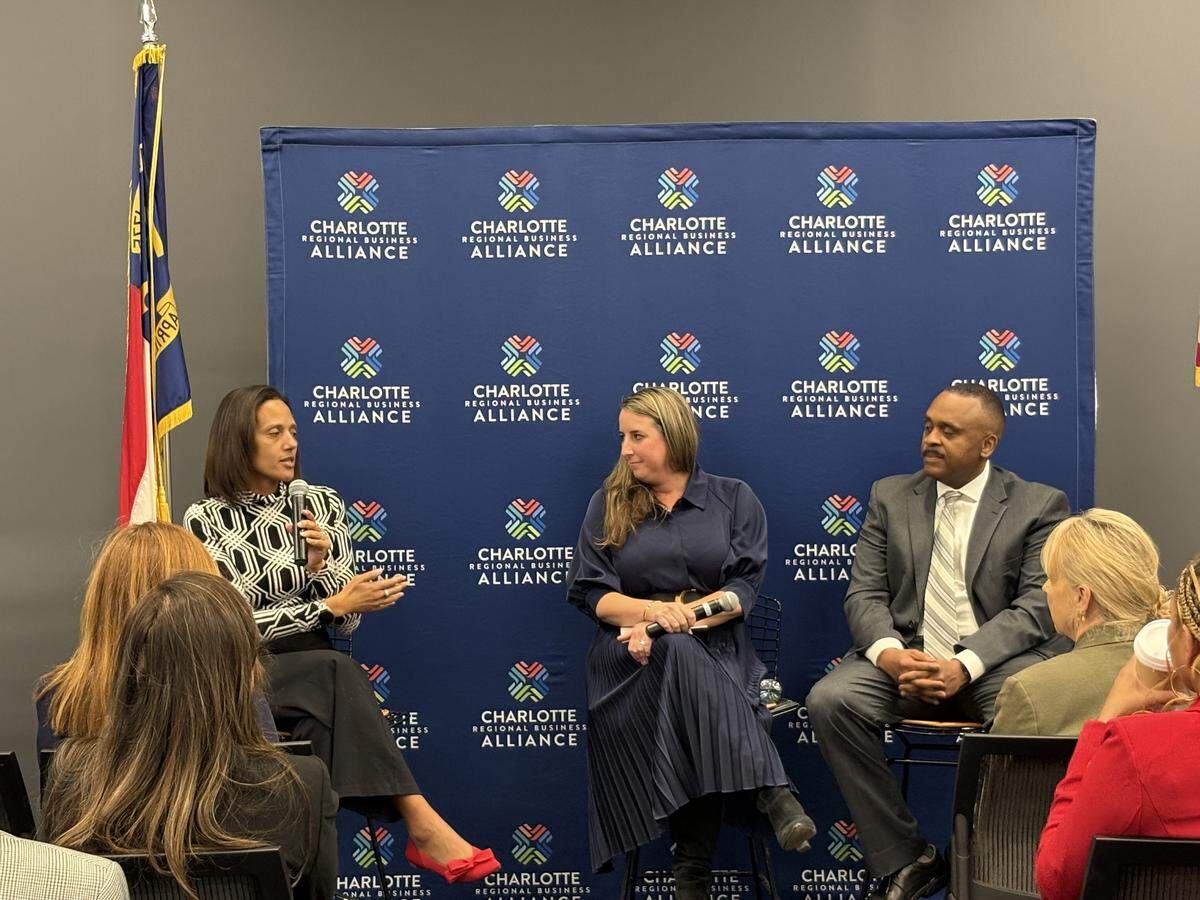
Reives called on elected officials and candidates to not use Zarutska’s death “as a political device.”
Political figures from across the county, including President Donald Trump, weighed in on the case last year after footage of the incident went viral on social media. Zarutska’s mother was a guest of Trump’s at the State of the Union on Tuesday, and North Carolina GOP Senate hopeful Michael Whatley used some of the footage of the killing in a campaign ad.
“To use that as a way to get elected is the wrong way,” Reives said. “It gets people scared. It gets people going in all kinds of directions about what we need to do.”
Batch questioned why equal attention hasn’t been given to the killing of another Ukrainian woman in Moore County. Law enforcement alleges Kateryna Tovmash’s ex-boyfriend fatally shot her and her new partner, a soldier stationed at Fort Bragg, on Valentine’s Day.
“I would also tell you that those three individuals were white,” Batch said of the Moore County case. “If we’re going to stoke fear in our communities about who is unsafe and how we’re going to go ahead and win elections, then we’re going to allow for what’s happening right now at the legislature to continue.”
Republicans have said Zarutska’s killing stemmed from a lax attitude towards crime from Democrats in Mecklenburg and questioned the court system’s handling of the suspect in the case, DeCarlos Brown. Brown had a history of mental health issues and arrests.
Both Batch and Reives called for more investment in mental health to help address the root causes of crime.
“You want to actually address safety in communities? You’ve got to give people the resources that make them healthy, that heal the traumas,” Batch said.
They echoed previous concerns shared by local Democratic leaders about the additional costs to the local justice system brought on by Iryna’s Law, sweeping legislation passed by the GOP-dominated legislature after Zarutska’s death.
“We have done some things that I’m happy to see. We’ve formed committees,” Reives said. “But then those committees have to be followed by money and action.’
Batch, Reives on primaries and North Carolina budget prospects
Asked for her priorities heading into the General Assembly’s next session, Batch said her answer “will be different” after next week’s primary elections, “depending on what the makeup is of the legislature.” She specifically highlighted Republican Senate President Phil Berger’s contentious primary fight against Rockingham Sheriff Sam Page.
“If (Berger) doesn’t come back and win his election, it’s going to have massive ripple effects,” she said. “What those look like, we don’t know. But there will be a changing of guard pretty significantly within the Senate.”
Batch predicted the state’s ongoing budget stalemate will continue.
“We are unlikely to have a budget passed, regardless of what the makeup is after the primaries. I wish I had better news, but that’s just the reality where we are,” she said.
Reives said revenue is the “big issue” in budget negotiations. He predicted more talk about casinos and gambling in those revenue discussions but questioned whether that’s a practical approach to bringing in more money to the state’s coffers.
“We’ve got some real revenue challenges,” he said.
The costly ongoing recovery efforts from Helene in Western North Carolina may force the legislature to rethink the tax cut fight at the center of the budget hold-up.
“Our revenue has changed. Our needs have changed. Our growth has changed,” he said.