
NC State Bar says federal rule change could let US attorneys’ misconduct go unchecked
AI-generated summary reviewed by our newsroom.
- NC State Bar warns rule could delay or block independent scrutiny of federal lawyers.
- NC State Bar says proposed rule violates federal law and usurps state regulatory power.
- Bar warns that DOJ gatekeeping could delay probes and hinder protection of public.
The agency charged with protecting North Carolinians from unethical lawyers says a proposed federal rule change could shield U.S. attorneys from scrutiny and put the public at risk.
In a letter dated Sunday, April 5, the North Carolina State Bar, which licenses and disciplines attorneys in the state, warned that the proposed federal rule change would impede the state’s investigation of alleged misconduct by U.S. prosecutors or other attorneys who represent the federal government.
“By delaying or allowing the [Department of Justice] to gatekeep investigations into attorney misconduct, the proposed rule hinders the ability of state regulators to effectively protect the public,” states the letter unanimously approved last week by the State Bar Council.
The proposed change would require state agencies like the North Carolina State Bar to wait until the DOJ determines whether it will investigate a complaint. If the DOJ declines to investigate — or finds a violation — the State Bar could then move forward with its own investigation and discipline process, which could result in attorneys losing their license in the state.
It’s unclear whether the State Bar could move forward with an investigation if the DOJ doesn’t find a violation. The DOJ didn’t respond to questions submitted by The News & Observer about the rule change or its approval process.
Letter: Rule change seizes power reserved for state
The rule change also “usurps” regulatory power reserved for the states, says the North Carolina State Bar letter signed by President Katherine Frye.
The change would violate a longstanding federal law requiring U.S. government attorneys to follow the same laws and rules as other attorneys in each state where they practice, the letter states. The 1998 law confirmed that the U.S. attorney general lacked the authority to exempt federal attorneys from rules that state authorities had established for attorneys, the letter states.
DOJ officials say the proposed change reflects the current practice of state bars pausing investigations until the federal government moves forward. The rule change is needed because political activists are using state complaint processes to target federal attorneys, including senior officials.
“Even more troubling,” DOJ officials said, “is the willingness of some state bar disciplinary authorities to give credence to such complaints.”
Some recent high-profile complaints about federal attorneys highlight the kinds of issues the DOJ appears to be trying to address — including the dismissal of charges against former New York City Mayor Eric Adams, the execution of a search warrant for a Washington Post reporter’s home, and emails that allegedly pressured Georgetown University’s law school to change its diversity policy.
Former U.S. Attorney General Pam Bondi faced a complaint in Florida, where she is licensed to practice as an attorney, accusing her of violating ethical rules for her role in the firing and resignations of many government attorneys, the Miami Herald reported. The Florida Bar declined to investigate Bondi.
The proposed rule change was published 30 days ago under Bondi, who President Donald Trump fired last week.
Monday, April 6, is the last day to comment on the proposed rule. More than 1 million people have commented. The North Carolina Association of Black Lawyers also sent a letter opposing the change.
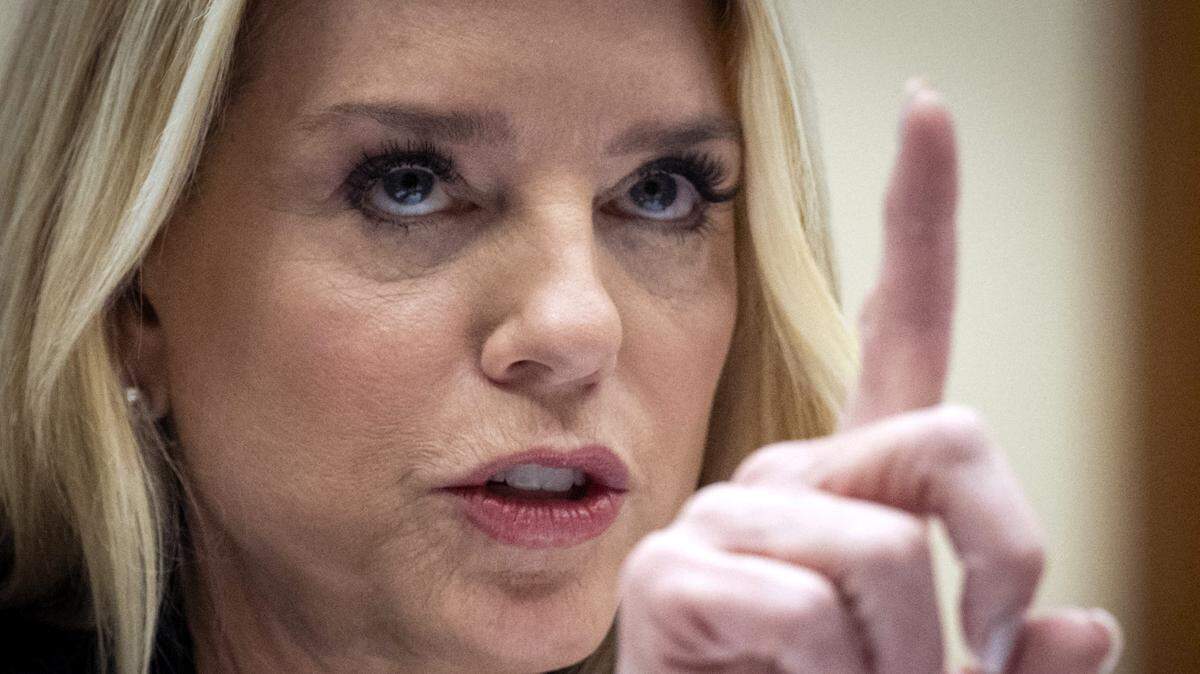
Copy of North Carolina State Bar letter opposing federal change
Dear Acting Attorney General Blanche,
The North Carolina State Bar is a state regulatory agency charged with protecting the public and ensuring that lawyers uphold the highest professional standards. With unanimous support from the agency’s governing body, the North Carolina State Bar submits this comment in opposition to the proposed amendments to 28 CFR Part 77 (“the proposed rule”).
The proposed rule is both legally infirm and contrary to public policy. The proposed rule would create an alternative process for investigating alleged ethical misconduct by Department of Justice (DOJ) lawyers. Notwithstanding the DOJ’s contention that 28 U.S.C. 530B (“the McDade Amendment”) authorizes the proposed rule, establishing a separate investigatory process for lawyers representing the United States contradicts the unambiguous meaning and intent of that statute: “An attorney for the Government shall be subject to State laws and rules … governing attorneys in each State where such attorney engages in that attorney’s duties, to the same extent and in the same manner as other attorneys in that State.” 28 U.S.C. 530B(a) (emphasis added). When it was enacted in 1998, the McDade Amendment “was designed to confirm that the Attorney General did not have the authority to exempt Department attorneys from the ethical standards to which other attorneys were held,” reflecting that Congress did not accept DOJ’s claim at the time that it had authority to waive the ethical rules with which federal prosecutors would otherwise be required to comply. Congressional Research Service Report RL30060 at 3 (emphasis added), available at: https://www.congress.gov/crs-product/RL30060.
Regulation of the practice of law is squarely within the police powers reserved to the states under the 10th Amendment. “The power of the courts of each state to establish their own rules of qualification for the practice of law within their jurisdiction, subject only to the requirements of the due process or equal protection clauses of the Fourteenth Amendment, is beyond controversy.]” Hawkins v. Moss, 503 F.2d 1171, 1175 (4th Cir. 1974). “[T]he State bears a special responsibility for maintaining standards among members of the licensed professions. … ‘The interest of the States in regulating lawyers is especially great since lawyers are essential to the primary governmental function of administering justice, and have historically been ‘officers of the courts.’” Ohralik v. Ohio State Bar Ass’n, 436 U.S. 447, 460 (1978) (quoting Goldfarb v. Virginia State Bar, 421 U.S. 773, 792 (1975)) (internal citations omitted). By substituting internal federal agency review for independent state regulatory enforcement, the proposed rule infringes on states’ well-established 10th Amendment authority to regulate attorneys licensed by the state. See Theard v. United States, 354 U.S. 278, 281 (1957) (“The two judicial systems of courts, the state judicatures and the federal judiciary, have autonomous control over the conduct of their officers”). The proposed rule runs counter to principles of federalism by usurping a regulatory power reserved to the states.
By delaying or allowing the DOJ to gatekeep investigations into attorney misconduct, the proposed rule hinders the ability of state regulators to effectively protect the public. The proposed rule provides no timeline for internal DOJ investigations during which state disciplinary authorities will be directed to suspend their investigations. Accordingly, application of the proposed rule could delay state action indefinitely, effectively precluding investigation and professional discipline by state regulatory authorities — the only entities that can impose professional discipline against lawyers whose license to practice law is granted by the state. Moreover, the proposed rule is ambiguous about whether state regulators could proceed with an investigation if the DOJ decided its lawyer did not violate applicable ethics rules.
States’ attorney disciplinary systems are structured so that allegations of misconduct are reviewed by an entity institutionally independent from the accused lawyer. By allowing DOJ lawyers’ own employer to control the investigation of complaints received by state disciplinary authorities, the proposed rule interferes with independent state regulation of lawyers licensed by, or practicing in, that state.
Finally, the proposed rule creates a special system of professional ethics enforcement for DOJ lawyers, shielding them from the ethical standards and disciplinary consequences that apply to all other lawyers. There is no justification for excusing a cohort of lawyers from state regulation merely because they represent (or previously represented) the United States. Doing so offends principles of equal protection and equitable application of the law. For these reasons, the North Carolina State Bar strongly opposes the proposed rule and urges the DOJ not to adopt the proposed amendments to 28 C.F.R. Part 77.
Sincerely,
Katherine Frye
President, North Carolina State Bar
This story was originally published April 6, 2026 at 3:21 PM with the headline "NC State Bar says federal rule change could let US attorneys’ misconduct go unchecked."