
Budget standoff confronts returning NC lawmakers, but new unknowns are in the mix
AI-generated summary reviewed by our newsroom.
- Republicans hold a 30-20 Senate supermajority with leadership conversations underway.
- The General Assembly returns without a state budget and more than $30 billion is at stake.
- Sen. Phil Berger lost his primary but intends to finish his term through December.
The biggest issue looming over the General Assembly as lawmakers return to Raleigh for their new legislative session is the lack of a state budget.
The alarms were sounded months ago.
The stalemate between the House and Senate has lasted even longer.
But there is a new element in the mix: Some of the lawmakers are short-timers, because they lost their primary elections.
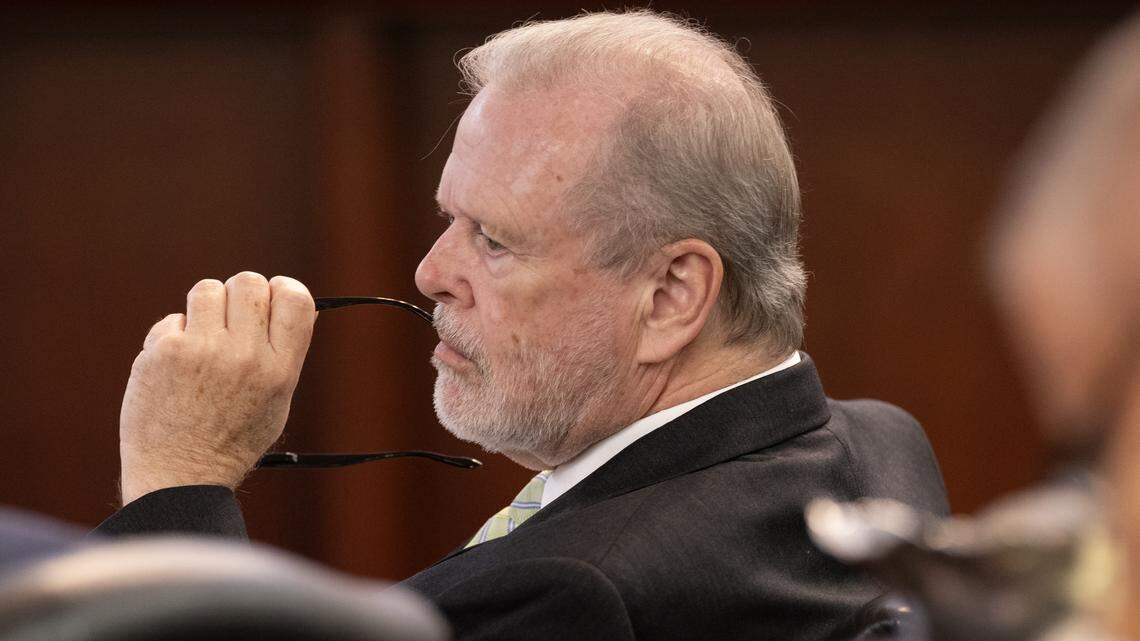
That includes the most powerful person in the Legislative Building: Senate leader Phil Berger. While Berger says he’ll finish out the rest of his term this year, the race to replace him has already begun.
At stake is more than $30 billion in taxpayer money that the legislature will decide how to spend. Medicaid funding? Teacher raises? Tax cuts? Raises for state employees and retirees? A new children’s hospital?
There are many questions. The answers are TBD. We are in a state of anticipation.
So what can we expect?
How the NC Senate may play out this session
The sense of anticipation is perhaps most acute in the Senate. The Senate Republican caucus, which is led by Berger, planned to meet this week for the first time as a group since Berger lost his primary.
Johnston County Republican Sen. Benton Sawrey expects “business as usual” when the session begins April 21. Berger is still president pro tem, Sawrey said, and he doesn’t see anything changing in how the Senate operates with respect to policy or its leadership structure.
Still, the state doesn’t have a playbook for this.
“We don’t know a North Carolina where the Republicans are in charge of the Senate and Phil Berger is not in charge of the Senate as well,” political science professor Chris Cooper told The News & Observer in an interview. While Berger will still be at the helm this session, his primary loss means he’ll soon exit.
The power is shifting.
Cooper, who teaches at Western Carolina University in Cullowhee, said that Republican House Speaker Destin Hall, who did not have a primary, “clearly has more of the upper hand now.”
Cooper said it’s unclear if Berger’s primary loss means he’ll make a budget deal with Hall. Berger may still hold the line, insisting on tax cuts. Or he could be willing to put them on hold in exchange for something else, like funding for the new Duke and UNC children’s hospital being built in Apex.
“In some ways, he has nothing to lose by holding the line,” Cooper said of Berger’s tax position.
The state’s revenue forecast projects that income tax benchmarks will be met, which would mean the individual income tax rate will be reduced from 3.99% in 2026 to 3.49%. Berger has been entrenched in his support for the planned tax cuts, which he described as a “promise” made to taxpayers in the 2023 budget deal.
“I understand that some people may disagree, but it’s my view, but it’s also the Senate Republican caucus view, and it is that we have created in the state of North Carolina certain momentum that has never existed in North Carolina before,” Berger told The N&O in February.
Democratic Gov. Josh Stein wants the state to freeze tax cuts, while Hall and other House Republicans want to slow them by changing the revenue benchmarks.
Stein warns of a potential budget shortfall because of the planned tax cuts.
Stein said last week that he hasn’t talked to Berger since the day he conceded his primary race to Rockingham County Sheriff Sam Page, after a recount. Stein was in Berger’s district for an economic development announcement hours before Berger conceded, and they did not discuss his defeat, Stein said.
“I have no idea how that particular political development will affect it,” Stein told The N&O about Berger’s primary loss impacting the budget and tax cuts.
“What I do know is that Sen. Berger, like all the senators, all the representatives, they have to do what’s in the best interest of the state, and creating a fiscal crisis for the state that is self-imposed, it just doesn’t make sense on a going-forward basis,” Stein said.
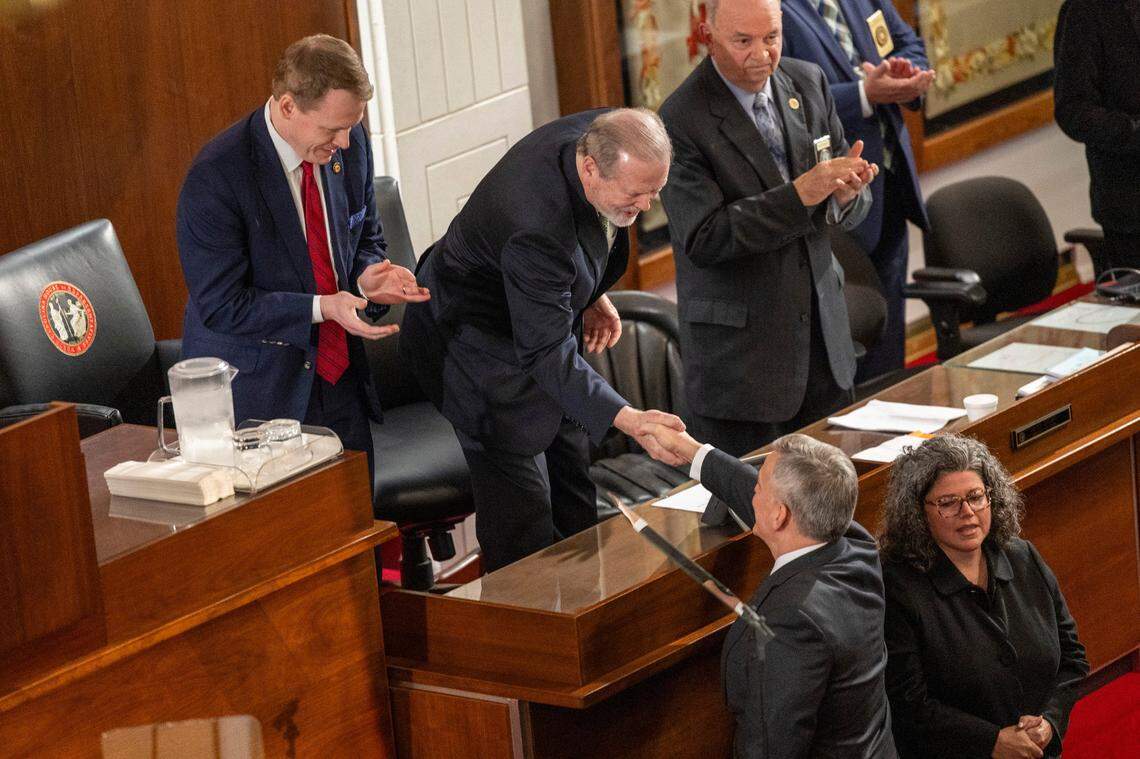
Stein is about to make his third pitch of the year to lawmakers to send him a budget bill. They’re now more than nine months overdue.
Like other lawmakers, Iredell County Republican Sen. Vickie Sawyer wants to see a budget, and soon.
“Whatever the resolution comes between the House and Senate, my prayers are that it is a quick process and that we can get the needs of North Carolinians handled,” Sawyer told The N&O.
While Republicans control Berger’s Senate session power, Stein has other things to worry about over in the House, which is also controlled by Republicans.
The House budget, written by Republicans, has support from a majority of Democrats. But when it comes to Stein’s vetoes, most Democrats have held the line when Republicans have tried to override them.
Most, but not all.
Four overrides remain on House calendar
Three House Democrats who voted with Republicans on some veto overrides lost their primaries. One of them, Rep. Carla Cunningham, drew enough ire over a floor speech on immigration legislation that Stein got into the race to endorse her opponent. It helped lead to her defeat.
There are four bills that the House did not override: a second immigration bill, two seeking to end diversity, equity and inclusion practices, and one allowing people to carry concealed handguns without a permit. The gun bill did not have unanimous support among Republicans, much less a vote from any Democrats to override Stein.
The N&O asked Stein what he thinks about the potential for overrides in the House this session, given he campaigned against Cunningham, the incumbent Democrat.
“A number of the overrides that are outstanding are things like, should we allow teenagers to walk around with concealed weapons, with no safety training whatsoever. I don’t think that’s a good idea, and I don’t think they think it’s a good idea,” Stein said.
“And so (some House Democrats) may be mad with me, they may be mad at other folks for — because of the fact they lost in their primary. But it doesn’t change that they have their own values, their own beliefs, and they represent their districts,” Stein said. “So we’ll see how it all plays out, but I’m confident that the people who serve in this General Assembly are going to try to do what’s right for their people.”
Cunningham did not respond to an interview request from The N&O. But she wrote in an email to supporters two weeks ago, “While this election marks a transition, my service is not complete,” going on to say she intends to finish out her term through December.
This is the Mecklenburg County Democrat’s seventh term in the House. In the same email, she talked about starting her political career organizing for President Barack Obama and health care access. She also briefly talked about the campaign, describing attack mailers as “false narratives and propaganda.”
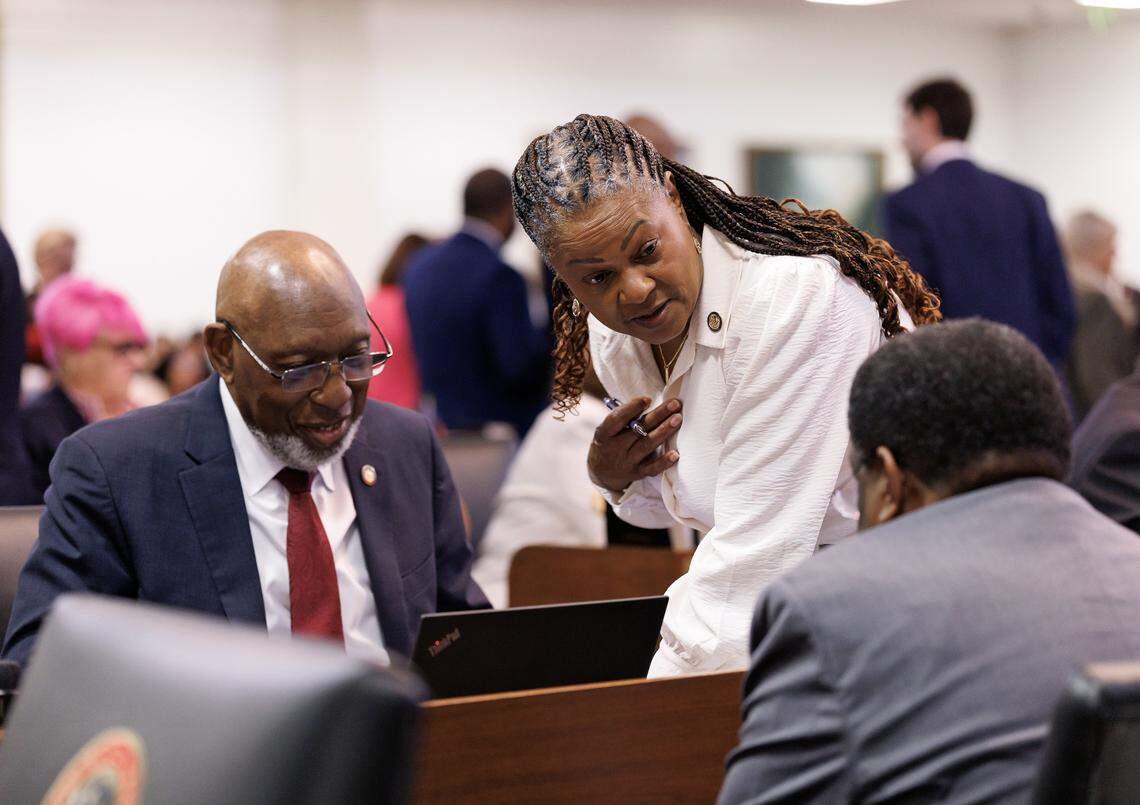
Most lawmakers who lose a primary still finish out their term. Lawmakers who resign their terms early usually do so because they are taking a different job, tied to scandal or want to pave the way for their replacement. Of the incumbent lawmakers who lost their March primaries, none have said they’ll leave early.
Former N.C. Sen. Mike Woodard served in the Senate from 2013 through 2024, when he lost his Durham Democratic primary to now-Sen. Sophia Chitlik. He served out his full term. Like everyone else who has spent significant time in the Legislative Building, he knows there are two ways it can go this session.
“It has the potential to be a very active session with a number of important bills that were left over — and veto overrides,” he said. “They still, in my opinion, owe the citizens of North Carolina a budget, a real budget, and there are important things that are budget-related, teacher salaries and state employee raises, Medicaid rebase — but we haven’t seen any indication yet that they will do much of anything.
“So it could be very active, or it could continue to be one of the least active legislative sessions,” Woodard said.
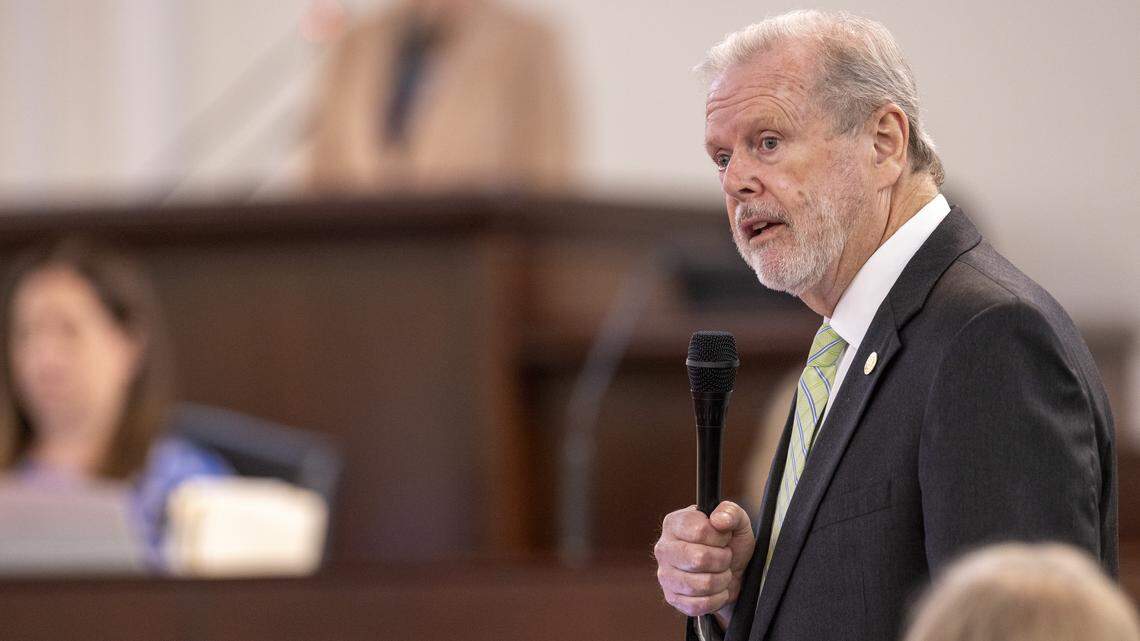
Berger the ‘institutionalist’
The former senator, having served with Berger for a decade, doesn’t see Berger’s loss changing who he is.
“Phil Berger is an institutionalist, and he is going to continue to support the institution that has been a part of his life for a quarter-century,” Woodard said. “He’s not going to do anything crazy that would go against the quarter-century of work that he’s built up. So he’s going to continue to be that steady, institutional leader that he’s always been, and he’ll continue doing that through December.”
Three of Berger’s Senate Republican colleagues have already said publicly they want to succeed him: Sen. Todd Johnson of Union County, Sen. Ralph Hise of Spruce Pine and Sen. Michael Lee of New Hanover County. But there are others potentially in the running, like Sen. Brent Jackson, who is a budget chair along with Hise and Lee. Those three chairs will be part of the final conversations, along with Berger, about a budget deal with the House.
Stein will make his third spending request of the year this week, urging House and Senate leaders to make a budget deal. He said that he and Berger have “very different perspectives on what’s the best way to serve the interest of North Carolina, what’s going to position us for long term success — but I respect the fact that he believes deeply what he does, and it comes from a place of affection for North Carolina.”
As for the next Senate leader Stein may work with, the governor said it might not be a Republican, if the GOP loses their majority in November.
“If it’s a Democrat, then I expect they put forward Sen. (Sydney) Batch,” Stein said. “I would be eager to work with her. If it’s a Republican, I don’t know who it will be, but whoever it is, my job as the governor is to work in good faith, to try to find common ground, to bridge across differences, to do what is in the interest of the people of North Carolina. So whoever the senators choose as their leader, I’m ready to sit down and work with them, just as I am with Speaker Hall.”
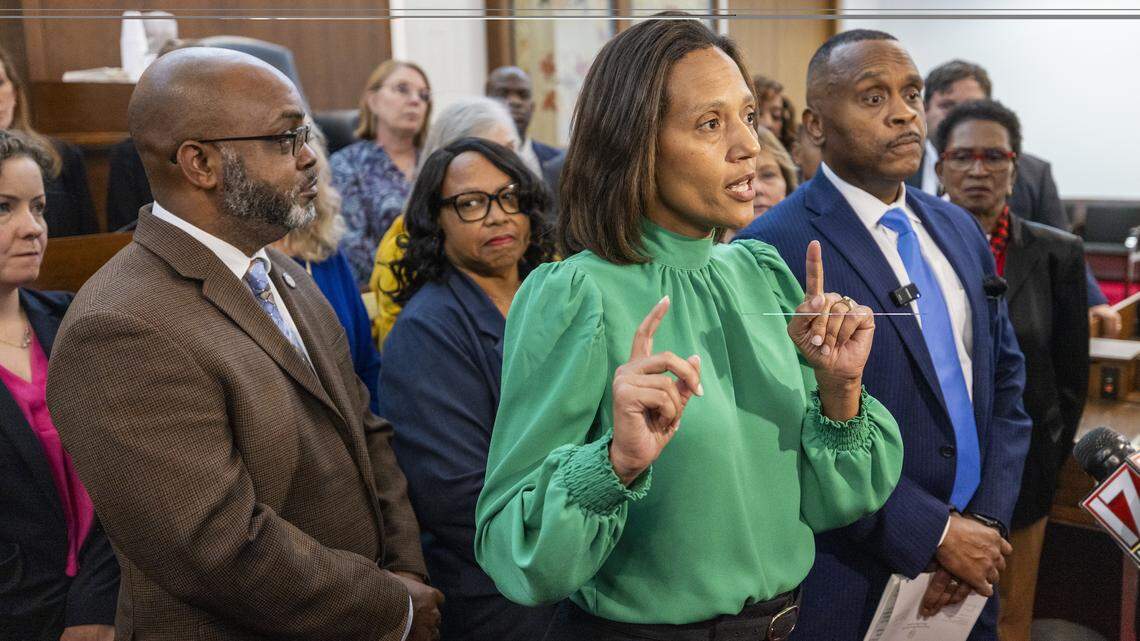
Batch, the Senate minority leader, told reporters after Berger conceded his race that “while I want to work with all 30 of my Republican colleagues on passing the budget, I only need six brave and courageous souls to cross the aisle, work with (Democrats) in a really genuine and meaningful way, for North Carolinians and for their respective constituents.”
Republicans hold a 30-20 supermajority in the Senate, but some are worried about maintaining that lead after the November elections.
Recent polls show voters favor Democrats over Republicans in state legislative races. Still, the state’s political geography, including the district lines drawn by Republicans, will make it an uphill battle for Democrats to flip control.
Batch said she hopes Berger’s loss shows “that in this time and at this inflection point, we are seeing a course correction in the state of North Carolina and in politics. And everyone thought that there was no way that Sen. Berger would lose, that certain people in the House would lose, that primaries would go the way that they went.”
“What I can tell you in politics is, the only thing that we can guarantee in life is change,” she said.
Cooper, the political science professor, said there are two pieces to consider in the Senate’s future.
“There’s what Berger is able to do, and how he exercises his power. And there’s this question of, can the Democrats exercise their power?”
This story was originally published April 15, 2026 at 10:23 AM with the headline "Budget standoff confronts returning NC lawmakers, but new unknowns are in the mix."
