East Charlotte data center delayed. Could city council consider a total ban?
The developer of a proposed east Charlotte data center has requested a one-month delay on its controversial rezoning petition amid mounting community opposition, including calls for a complete ban.
The American Tower Corporation asked Charlotte to defer its request to rezone 58 acres near Reedy Creek Nature Preserve until May 18. The City Council was originally scheduled to hold a public hearing on the request Monday.
City staff, meanwhile, are looking into a policy that could regulate Charlotte’s approach to data centers, but that guidance likely won’t come until after the council makes a decision on the east Charlotte parcel. If approved, a 40,000-square-foot facility could open off Hood Road by mid-2028.
Organizers in the push against the data center considered the deferral a small win in their greater mission to ban all data centers in the city.
“It shows that our pressure is working,” said Susanna Chen, who spoke at a news conference outside the Charlotte-Mecklenburg Government Center on Monday.
Chen is a member of the Party for Socialism and Liberation, which has led the anti-data center effort. Their petition urging the City Council to reject the rezoning request has garnered more than 4,200 signatures.
Resident concerns ranged from rising electric bills to noise pollution to water quality.
Greg Asciutto, executive director of community nonprofit CharlotteEAST, said he worried whatever decision the City Council makes could set a “disastrous” precedent citywide.
“You need a consensus of pressure from council members to say, ‘Hey, we want to put a stop to this,’” Asciutto told The Charlotte Observer. “And right now, I genuinely don’t know if there (is a majority), which is concerning.”
It was not immediately clear why the American Tower Corporation requested a deferral. The company did not respond to a request for comment. City spokesperson Jack VanderToll said he would forward information from staff “as soon as it becomes available.”
Deferral requests often come from a council member or the attorney representing the corporation. Sometimes, those requests happen when corporations realize they don’t have overwhelming support from the City Council and want more time to whip favorable votes, said District 5 councilman JD Mazuera Arias said.
Mazuera Arias didn’t know the reason for this deferral. He represents the area where the proposed center would be built.
“I can only assume it’s because there’s a lot of community pushback and speculation from council members,” Mazuera Arias said.
What’s next for data centers in Charlotte
Charlotte is developing guidance for how it can regulate data centers, according to Monica Holmes, city planning director. Staff members are researching the issue and meeting with other large cities to understand their approach.
The City Council can expect to have recommendations on data centers within the next three to six months, Holmes said at an April 13 meeting.
For at-large councilwoman Dimple Ajmera, that’s not quick enough if the council continues considering data center developments in the meantime.
“We should not move forward with projects near residential communities until we have clear standards on water, energy, and community impact,” Ajmera told the Observer in a written statement. “Once these decisions are made, they’re very difficult to reverse — and we have to get this right.”
Ajmera proposed a moratorium on all data centers until the city has a regulation on the books. Holmes said she will discuss that possibility with the city attorney’s office.
Kimberly Owens, who represents District 6 in south Charlotte, said she doesn’t think data centers need to be in residential areas but encouraged her colleagues to have an “open mind” given that AI will shape the future economy.
If U.S. cities ban data centers, then companies could decide to store their data in foreign countries instead, Owens said.
“I think there is a real risk to that as a country, and I just would encourage us all to perhaps do a bit of a deeper dive on the issue of data centers and not to be as reactive as our constituents are being,” Owens said. “We need to play to where the puck is going, and AI is here, and data centers need to live someplace.”
Mazuera Arias said he appreciated Owens’ concerns.
But Mazuera Arias also believes data centers cause more harm than good and would consider a ban within city limits.
“We need a way to highly regulate and scrutinize them,” Mazuera Arias said. “We need to really take our responsibility seriously of protecting the residents of Charlotte.”
What is the proposed east Charlotte data center?
American Tower Corporation wants to change the land use designations on a parcel it already owns in east Charlotte from office and neighborhood use to commercial. The Boston-based telecommunications real estate company is currently operating a tower on the property.
The proposed facility’s proximity to that tower and to internet users would help deliver services faster, the company said in a previous statement.
The company said its data center would have “minimal community impacts” despite sitting next to a residential neighborhood. Decibel levels would abide by local noise ordinances, and the data center would not draw from the local water supply, according to the company.
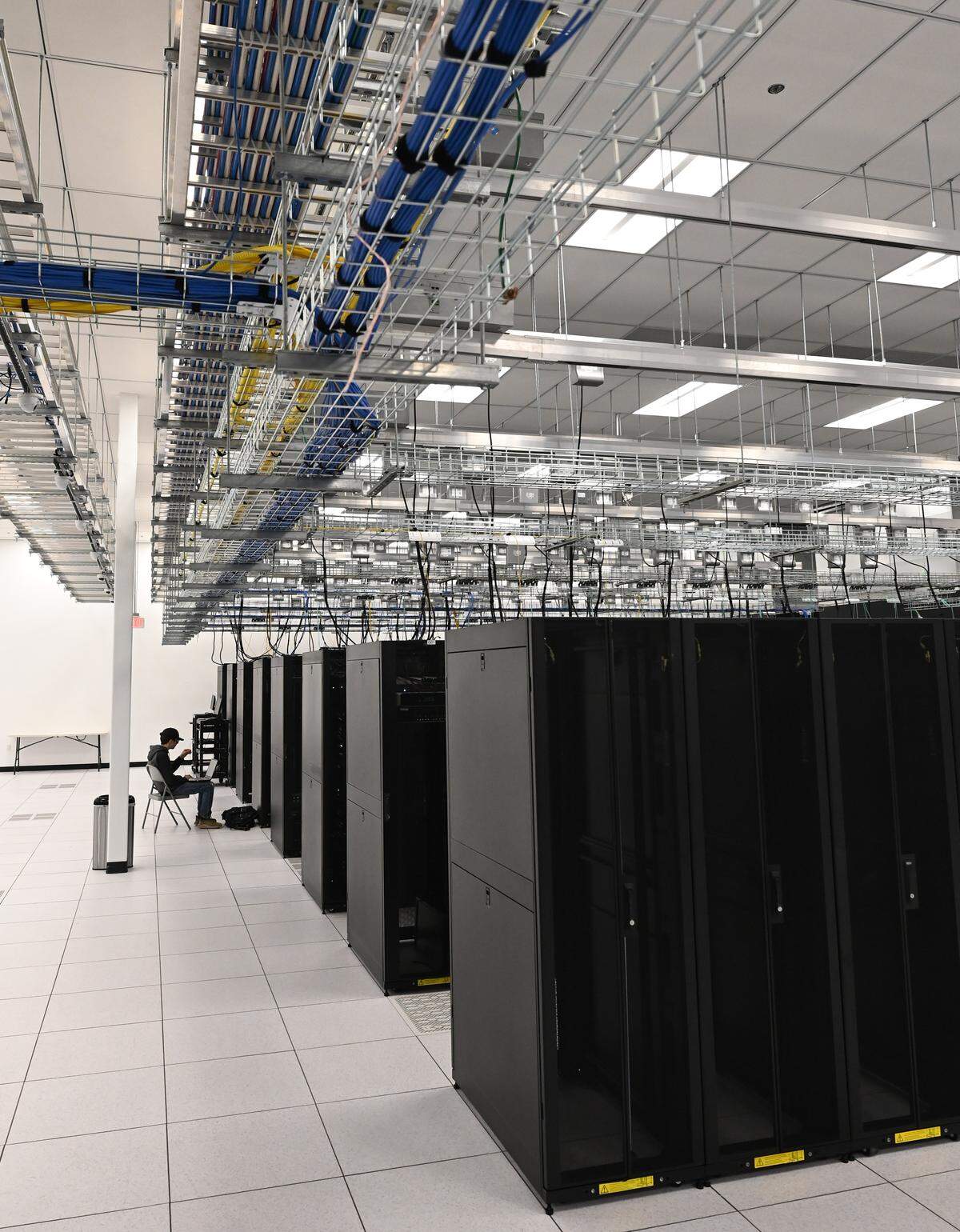
The company described the proposed facility as a small-scale operation compared to larger AI “hyperscalers,” which most people associate with the term “data center.” Their facility would use just 2% of a hyperscaler’s power and occupy about 2% as much space, according to the company.
Multiple council members, including Mazuera Arias and Ajmera, said they didn’t care how big the center was. That it sits so close to homes is a problem they cannot reconcile.
“We still do not fully understand or appreciate the environmental or health impacts of data centers near where people live and sleep or have families or go about their day to day lives,” Mazuera Arias said. “I recognize that this is not an AI hyperscale data center like the ones we are seeing on television. It is a data center nonetheless.”