
NC lawmakers vote for Medicaid deal. It goes beyond money to fraud and immigration.
AI-generated summary reviewed by our newsroom.
- The bill provides $319 million more to finish out the fiscal year, per DHHS request.
- Cuts Medicaid for immigrants, limits emergency Medicaid and mandates DHS referrals.
- Requires monthly eligibility checks, aligns with work requirements effective Jan 1, 2027..
A deal has eluded North Carolina lawmakers on Medicaid funding since last summer.
On Tuesday, their first day back in session, GOP leaders announced a deal. Later that day, they released the bill.
And on Wednesday, lawmakers moved quickly to approve the legislation, which addresses the funding issue — and goes well beyond it.
House lawmakers gave initial approval to the bill in the afternoon with all present in favor of it except for Rep. Pricey Harrison, a Greensboro Democrat. She did not speak during the debate about her stance on the bill.
The Senate gave its own preliminary approval to the bill shortly after, with all voting in favor except for Sen. Michael Garrett, a Greensboro Democrat. Both the House and Senate have said they’ll take final votes on Tuesday.
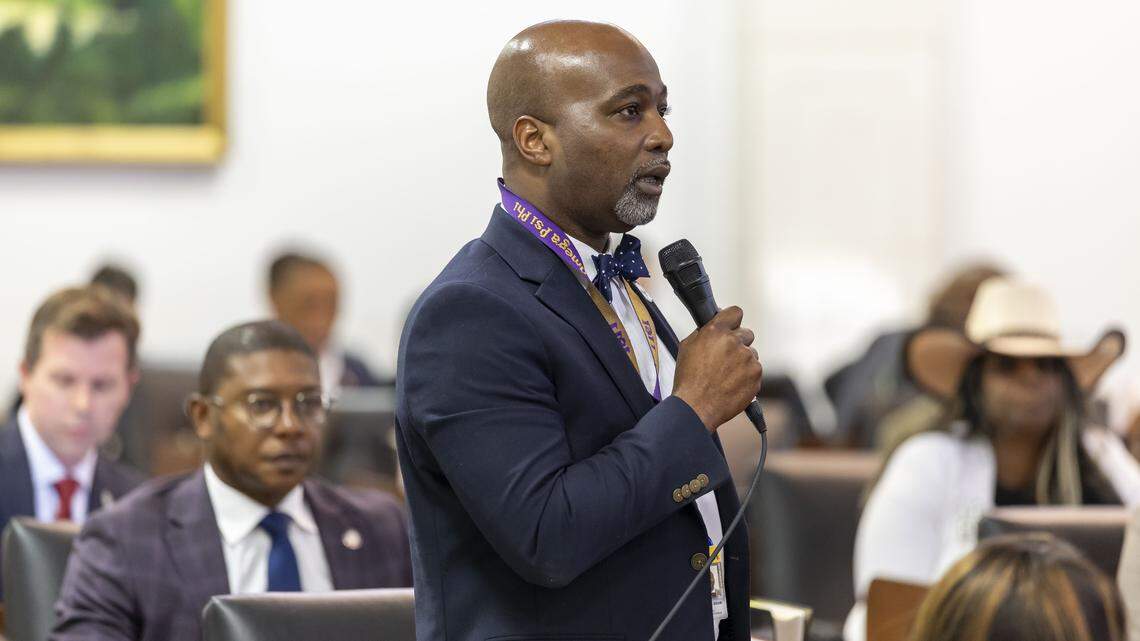
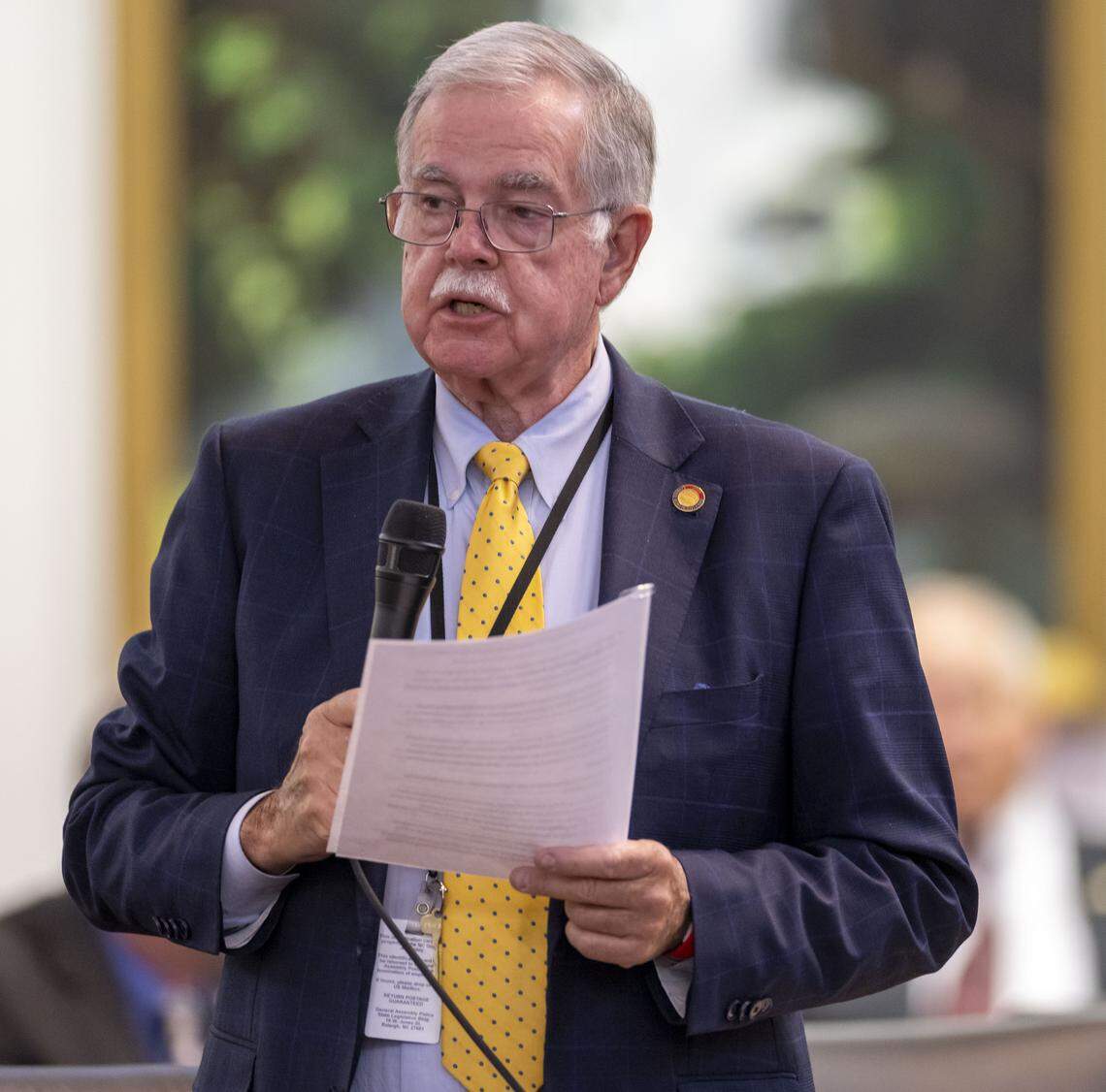
Rep. Donny Lambeth, a Winston-Salem Republican, said during the House session that over the last seven months, he’d received numerous calls with questions on how the state would deal with coming federal changes to Medicaid. Congress passed a sweeping federal spending bill in July with new work requirements for Medicaid expansion recipients, restrictions on provider taxes that fund expansion, new state obligations to contribute to food assistance programs and more.
The bill is “not perfect. We still have more to do, and we have certainly, long-term work to do to curb the cost increases that we’re seeing in Medicaid. But this is a really, really good start,” said Lambeth, who is a budget writer.
Republicans control both chambers.
The deal provides $319 million more in funding to the state’s Medicaid program to finish out the fiscal year that ends in June, the full amount requested last year by the state’s Department of Health and Human Services to cover a shortfall in state funding. Medicaid, which covers over 3 million North Carolinians, is jointly funded by the federal government and the state.
A few Democrats in the House spoke on the bill, largely lauding the additional funding being provided, but noting concerns with certain pieces of the legislation. In the Senate, Democratic Leader Sydney Batch said Democrats received the bill on Tuesday and had not had “time to digest a 30-page bill that has significant changes to our laws.”
After the session, she told reporters, the bill had several “poison pills,” with the most noteworthy one she’d seen being one that is going to “force us, as a state, to remove women and children who are legally here as permanent residents paying taxes in North Carolina from Medicaid.” She said that’ll lead to about 25,000 women and children losing coverage.
The bill cuts Medicaid coverage for immigrants with certain forms of legal status. The federal bill already cut immigrants’ access, but this bill appears to go further. The News & Observer has reached out to DHHS for further clarity. It also requires the state to refer any Medicaid applicant or recipient whose citizenship or immigration status cannot be verified — or who is found not to have proper documentation — to the Department of Homeland Security for investigation and enforcement. That becomes effective in October.
Asked by The N&O about those cuts after passage of the bill in the Senate, Senate leader Phil Berger said: “We have such an explosion of cost in the Medicaid program.” He said what he was hearing “is taxpayers don’t feel like their taxes ought to be going for benefits for folks who are in this country illegally.”
House Speaker Destin Hall told reporters said the provisions in the bill “deal with getting our hands around waste, fraud and abuse.”
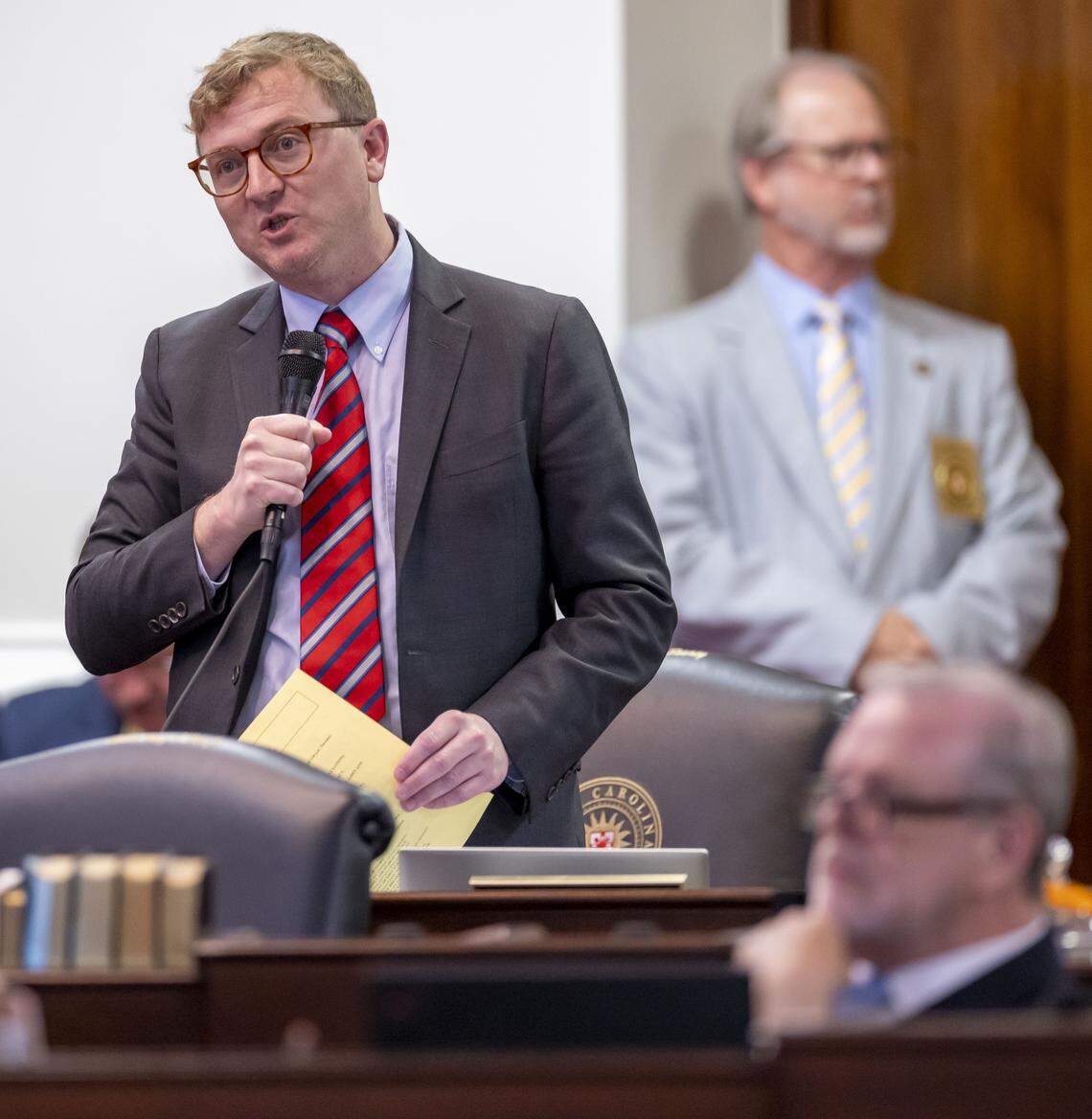
Rep. Zach Hawkins, a Durham Democrat, said he has two autistic sons, and said the tightening of services for autistic kids in the bill “will most certainly make sure that bad actors don’t have the opportunity to take advantage of the system.” But, he said, a 16-hour cap on weekly services in the bill should be looked at further to make sure all who need services can access them.
Rep. Timothy Reeder, an Ayden Republican and budget writer, and Lambeth both thanked the North Carolina Healthcare Association, which represents hospitals, for its work on the bill — particularly sections of the bill that require hospitals to pick up more of the tab on Medicaid expansion costs to avoid the state having to provide that funding. Medicaid expansion is funded via federal dollars and hospital assessments that are then indirectly reimbursed by the federal government.
Democratic Gov. Josh Stein said in a statement shared by his office that “fully funding Medicaid is critical to protecting health care for millions of North Carolinians. Our office is reviewing the bill.”
Summer Tonizzo, a spokesperson, said on behalf of DHHS that “we appreciate the North Carolina General Assembly’s commitment to fully funding NC Medicaid for the current year. We will continue working with lawmakers to ensure efforts protect and strengthen access to care for all North Carolinians.”
The provisions in the bill include:
- Provides $500,000 for the state auditor to audit North Carolina’s Medicaid program and NCWorks Career Centers, which help connect job seekers with employers. Stein had asked for about that same amount in a budget request released Tuesday for the Medicaid Investigations Division, within the state’s Department of Justice.
- Cuts Medicaid coverage for immigrants with certain forms of legal status — such as refugees, green card holders, and those seeking asylum — many of whom were previously able to access Medicaid in certain circumstances and some, after a five-year waiting period. The federal legislation from July already restricted access, such as to green card holders and certain Cuban and Haitian immigrants, and to certain lawfully present children and pregnant adults, according to the DHHS website. North Carolina waives the waiting period for lawfully present immigrant children and pregnant women, according to KFF. It also places new limits on immigrants in the country without legal authorization who are accessing emergency Medicaid, and requires that the income of any household member barred from Medicaid due to immigration status still be counted when determining whether other family members financially qualify. It also has the DHS referral requirement.
- Requires DHHS to annually establish Medicaid copayments at the maximum allowed by the federal government. The American Cancer Society, Cancer Action Network said in a statement that “the bill disproportionately penalizes cancer patients by implementing the maximum allowable co-payment of $25 for each health care visit, including those where cancer patients and others with serious illness receive their lifesaving treatment.”
- Updates state language to align with new federal requirements passed by the Trump administration, requiring most Medicaid recipients to meet work or community engagement requirements to keep their coverage. Those changes are effective Jan. 1, 2027.
- Requires DHHS to conduct monthly reviews of Medicaid eligibility. That was previously done on a quarterly basis. The bill also bars the use of self-attestations for Medicaid benefits and for benefits under the Supplemental Nutrition Assistance Program as proof of eligibility. It also implements a three-month look-back period for work requirement compliance.
- Requires DHHS to report regularly to the legislature on how it is spending funds tied to the Rural Health Transition Program — a Trump administration initiative created to provide funding for rural health programs following hefty Medicaid cuts projected to cost states billions. North Carolina is receiving $213 million in 2026 and will be eligible for additional funding each year for the next five years.
- Requires DHHS to report each year to the legislature on Medicaid fraud, waste, and abuse — including improper payments, recovered funds, and data on ineligible recipients who received services.
- Updates rules for Medicaid plans, including new standards for which providers must be included and when plans can create closed networks for certain service categories. A Medicaid plan may close a network, limiting which providers can offer services, if a service category jeopardizes program integrity or cost-effectiveness.
- Directs DHHS to develop a plan for improving program integrity and efficiency in Medicaid, which should include new oversight of GLP-1 weight-loss drugs.
- Places new restrictions on how ABA therapy is delivered and billed under Medicaid, limiting telehealth services, requiring more in-person oversight, capping treatment hours without state approval and mandating certifications and individualized treatment plans.
- Requires hospitals to help cover the administrative costs of implementing the new Medicaid eligibility and work requirement rules.
The legislation also addresses issues beyond Medicaid, including the creation of the North Carolina Blue Ribbon Commission on Public Education to study the state’s public education system and funding for the Department of Adult Correction, the Division of Motor Vehicles, the State Bureau of Investigation, and an extension of the scholarship program for children of wartime veterans.
Medicaid had caused an impasse involving the Republican-led House and Senate and the Democratic governor’s administration. While the House and Senate agreed that additional funding was needed for the Medicaid program (lawmakers provided $600 million initially), they disputed the $319 million estimate from DHHS, pointing instead to a lower figure estimated by the General Assembly’s Fiscal Research Division.
GOP leaders also criticized DHHS and the governor over the handling of the funding issue, while Gov. Josh Stein said lawmakers were not taking prompt action to address the shortfall. DHHS previously implemented cuts to Medicaid provider reimbursement rates that were later reversed following lawsuits.
Lawmakers also disagreed internally over what should be included in the Medicaid legislation, with the Senate seeking to add funding for a children’s hospital system being developed by UNC Health and Duke Health. That funding was not included in the final deal. Senate leader Phil Berger said Tuesday that negotiations over that proposal would continue as part of broader budget talks.
This story was originally published April 22, 2026 at 1:29 PM with the headline "NC lawmakers vote for Medicaid deal. It goes beyond money to fraud and immigration.."
