
House passes bail transparency bill following Ukrainian refugee’s death in Charlotte
AI-generated summary reviewed by our newsroom.
- House passed a bill requiring DOJ to list jurisdictions permitting cashless bail.
- Rep. Mark Harris proposed HR 5625 after Iryna Zarutska’s death.
- Raskin said cashless bail has been used across 94 federal districts for over 60 years.
The death of Ukrainian refugee Iryna Zarutska.
The campaign of U.S. Senate candidate Roy Cooper.
The pardons, by President Donald Trump, of those who stormed the U.S. Capitol on Jan. 6, 2021.
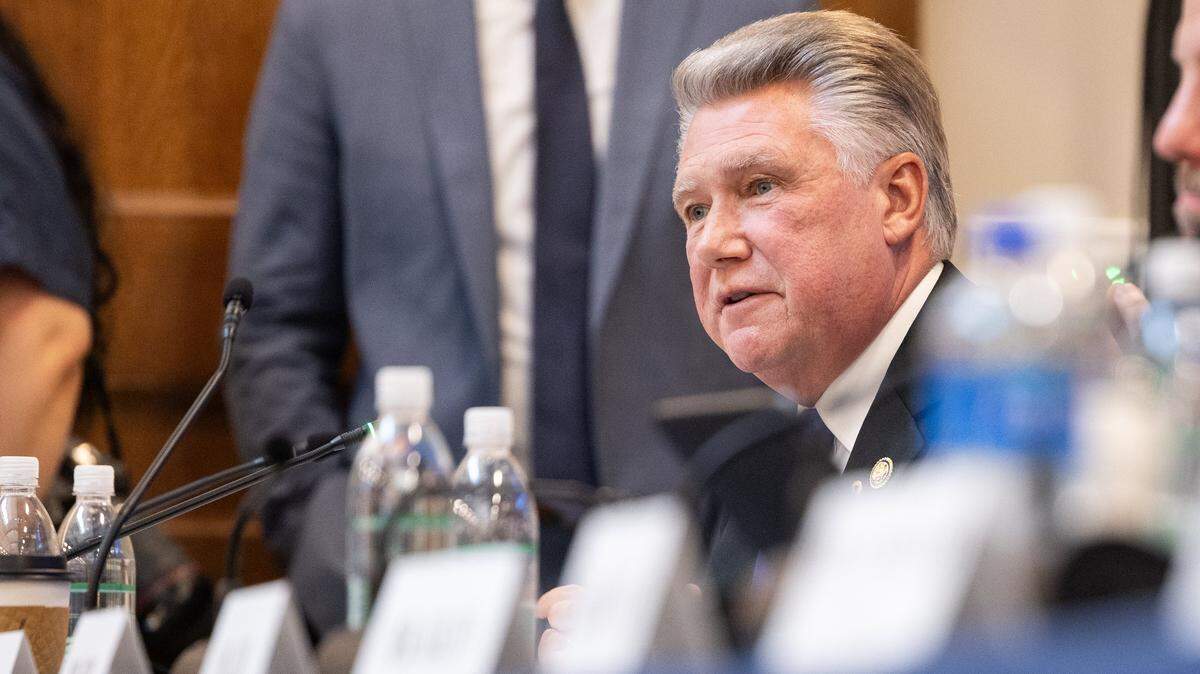
All of these were topics on the U.S. House floor within a 30-minute span as lawmakers debated a bill introduced by Rep. Mark Harris, a Republican from Charlotte, that requires the Department of Justice to make publicly available a list of state and local governments that permit cashless bail.
The bill passed the House on Thursday afternoon 301 to 116.
Cashless bail allows defendants to get out of jail before their trial dates without paying money if a judge finds that they pose no threat to the community, and they are not a flight risk.
Rep. Jamie Raskin, a Democrat from Maryland who debated the bill with Harris, said cashless bail has been used in the federal court system across the 94 federal court districts for more than 60 years.
But the policy has been controversial and Trump, last year, signed an executive order threatening to withhold federal funding from communities that use cashless bail. The order was targeted at Washington, D.C.
Iryna’s law
Harris proposed House Resolution 5625, the Cashless Bail Reporting Act, following the death of 23-year-old Zarutska on the Charlotte light rail. Police charged DeCarlos Brown, 34, of Charlotte in her death.
Brown was out of jail on a misdemeanor charge of misusing the 911 system after reporting a man-made material was controlling his body from inside.
“The whole nation watched in horror as we witnessed the brutal murder of Ukrainian refugee Iryna Zarutska on a Charlotte light rail,” Harris said, on the House floor. “This murder took place right outside my district in a city I’ve called home for many years. This tragic incident cannot be described as anything other than a cold-hearted murder carried out by a dangerous individual who should not have been out on the streets to begin with.”
Brown’s release
Brown’s mother previously told The Charlotte Observer her son was diagnosed with schizophrenia. She had tried to have him involuntarily committed after he became violent at home.
Brown has a long criminal history that includes an armed robbery conviction. He was released from prison in September 2020 after serving his full sentence.
In February 2021, his name was included retroactively on a list of defendants associated with the settlement of a lawsuit seeking to release inmates early, due to the COVID-19 pandemic. Republicans have relied on that detail to attack Cooper’s Senate campaign because he was governor at the time and his administration agreed to the settlement and oversaw the releases.
Rep. Tim Moore, a Republican from Kings Mountain, who served as North Carolina’s House speaker when Brown was released and was notified of the settlement, brought up Cooper on the House floor Thursday, during the debate.
“In our home state of North Carolina, former Gov. Roy Cooper actually released over 3,500 convicts — people who had already been convicted— released them early from prison — with lengthy criminal records,” Moore said.
The people on the settlement list were all near the end of their sentences and would have been released before the year’s end regardless.
Moore told the chamber that these are “dangerous” people, calling them “criminals” and saying “they are going to rob, they’re going to murder, they’re going to commit crimes, and they should be incarcerated.”
“This is going to shine a light on those jurisdictions where the judges are just letting these violent criminals back out again,” Moore said.
Pardoning convicts
Raskin, who stood on the other side of the space at the front of the chamber known as the well, reminded Moore that Trump pardoned 1,500 convicted men and women who stormed the U.S. Capitol on Jan. 6, 2021, in an attempt to stop Congress from certifying President Joe Biden’s election.
The insurrection left 174 officers injured and has been connected to five officers’ deaths.
According to The Wall Street Journal, Trump is considering pardoning 250 people to celebrate the 250th birthday of the United States.
“We certainly don’t want to see anybody released without regard to whether they pose a danger to the community or abscond and disappear,” Raskin said.
He added that Trump did not look into whether any of the “Proud Boys, Oath Keepers or other rioters” had prior convictions including domestic violence, armed robbery or other serious felonies.
He said dozens have re-offended, bringing up Andrew Paul Johnson, recently sentenced to life in prison after raping two children under 13 years old and offering, if they didn’t report him, to split restitution from the Trump administration for his Jan. 6 imprisonment.
“Those two kids lives are irrevocably altered because of the process that took place, which was no process,” Raskin said. “I could not agree more with the point that people should not be getting out of jail or prison without any regard to the danger that they pose to the community.”
Supporting the bill
In fact, Raskin said he didn’t oppose Harris’ bill.
“This bill … is unobjectionable, but it doesn’t do much work at all,” Raskin said on the floor. “It’s hard to see how issuing a report advances community safety or justice,” he said, before adding that he found Harris’ rhetoric “strangely hostile.”
Raskin said bail is not meant to be punishment.
“Whether you are the president, the pope or a pauper, you are considered innocent and presumed to be innocent until you’ve been proven guilty in a court of law observing due process by a jury of your peers beyond a reasonable doubt, with the prosecution satisfying every element of the burden of proof,” Raskin said. “People have a right to their freedom while they’re preparing to stand trial, for among other reasons, to get ready for trial, unless they are a flight risk or unless they pose a danger to themselves or to other people. That’s basically the rule, as I understand it.”
As for cashless bail, Raskin questioned why Harris, Moore and Rep. Chuck Edwards, a Republican from Flat Rock, who joined his fellow Republicans, believed that cashless bail was wrong, reminding them that it’s used across the federal system.
“They all use a cashless bail system,” Raskin said. “When a person is brought forward on an arraignment before the court … the court asks one simple question, which is: Is this person a flight risk, or do they pose a danger to themselves?”
He said someone shouldn’t be held unnecessarily because they can’t afford to pay $5,000.
Raskin also said that the cash bail system is a multimillion-dollar business and very active in politics. He said bail bondsmen don’t want to see local governments adopt the federal cashless bail system because it would cost them money.
“I’m surprised that there are members of Congress who are demonizing jurisdictions simply because they prefer to employ a policy that exactly mirrors federal law,” Raskin said. ”To say that that’s somehow soft-on-crime strikes me as just bizarre, unless the entire federal system is soft-on-crime.”
Raskin said he’s fine with requiring the Department of Justice to compile information that’s already publicly available.
This story was originally published May 14, 2026 at 5:40 PM.
