‘Hellacious’ car noise is affecting Charlotte businesses. How will officials act?
Charlotte can’t sleep.
Phone calls and email complaints have poured in from across the city over noisy cars that businesses say have cost them money and residents say have cost them their peace, according to city leaders. The City Council is considering new enforcement techniques to help curb the racket — or at least identify hot spots.
“These are very loud cars, and it reverberates all around the neighborhood. And I think the important thing, too, is it creates an atmosphere of unease. Like, you hear that noise, and it’s scary aside from just being irritating,” councilman Ed Driggs said during a safety committee meeting on Monday. “Our failure to rein that in … can be perceived as an inability on our part to protect quality of life for our citizens.”
The city’s strongest enforcement tool could be cameras that measure noise levels. But North Carolina is a Dillon Rule state, meaning Charlotte can only pass policies if the state has given it explicit permission to do so.
Noise cameras are not explicitly allowed under state law, said Jessica Battle, assistant city attorney for the Charlotte-Mecklenburg Police Department. Her office is looking at what more the city could do, such as using noise cameras for data collection but not enforcement.
Councilman Malcolm Graham suggested the city find a state legislator to sponsor a bill to change the law in Raleigh, which would give Charlotte more room to act.
“It’s not a question of if we have to do something. We must do something,” Graham said.
Loud noise is the number one complaint CMPD Capt. Christian Wagner said he receives from uptown residents.
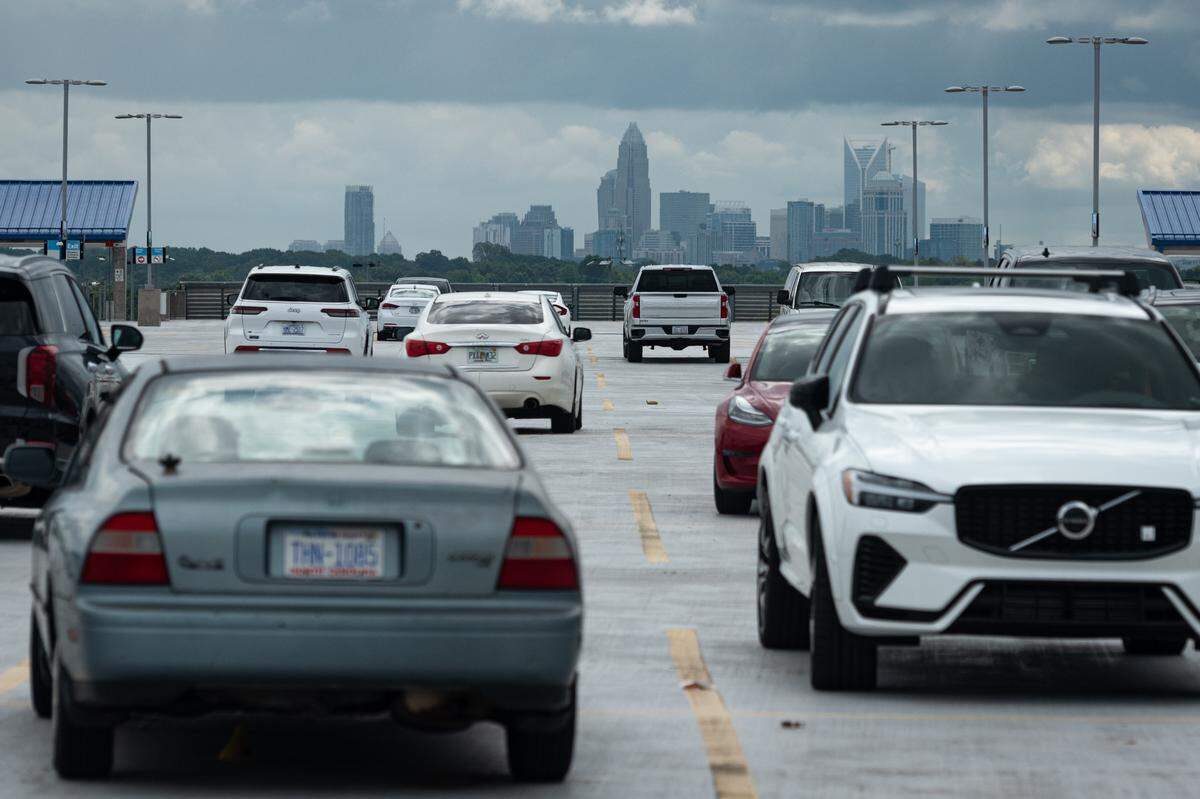
Charlotte already has a noise ordinance on the books that prohibits the removal or modification of mufflers to create “unreasonably loud and disturbing noises,” and CMPD officers can pull vehicles over if they are in violation.
On May 15, CMPD stopped 66 vehicles for noise-related traffic violations as part of a targeted operation. Police made four arrests and issued 61 citations, including 16 specifically for loud mufflers.
But enforcement can be tricky due to limited resources, Wagner said. Photo enforcement would help beef up those efforts.
“I think there’s an opportunity here for our city to follow that route,” Wagner said.
Charlotte residents are dealing with the same issue on “almost a nightly basis,”
Residents, businesses say noise is out of control in Charlotte
Multiple residents lamented the issue during an April council meeting.
Jeremy Lamb, a cellist for the Charlotte Symphony Orchestra, complained about the “hellacious noise” caused by cars with exhaust cutouts or missing mufflers. To demonstrate the issue during his public comment, Lamb held an iPad to the microphone and played a nearly minute-long compilation video he’d filmed of cars driving around the streets of Charlotte with popping and grating sounds. Mayor Vi Lyles interjected before the video finished to tell Lamb his time was up.
“We got it. We really did get it,” Lyles said.
Hotelier Hugh Templeman said the noise issue was so serious that visitors were taking note — and dinging businesses like his for the auditory intrusions.
About 4% fewer travelers visited Charlotte compared to the same time last year, Templeman said.
“Part of that problem is amazingly attached to the video we heard earlier, noise in the city,” he said. “We’re losing business as a city. I’m losing business as a hotel.”
Templeman is the general manager of The Grand Bohemian, an upscale hotel in uptown. His hotel spent $140,000 to add a third layer of glass to windows to block out more street noise.
The Grand Bohemian had 70 complaints in 2025, amounting to 78% positive feedback versus 22% negative. If noise complaints were tossed from that metric, Templeman said his hotel would have 83% positive feedback, putting it in “elite status.”
“From 2 a.m. and 5:30 in the morning, our folks who’re visiting our city could not sleep. And you see the impact on the hotel grading, that they would say, ‘Love the city, had a great opportunity, but when it comes to sleeping, Charlotte is dead last,’” Mayor Pro Tem James Mitchell said during the committee meeting.
Mitchell has been meeting with concerned hotel operators since January, he said. He initially thought the issue could warrant a pilot program specific to uptown. He now realizes the problem is much more extensive and warrants a citywide solution, he said.
The topic is slated to return to the safety committee in August for more discussion.
This story was originally published June 1, 2026 at 5:06 PM.