Two NC lawmakers, a Democrat and a Republican, push Congress to delay SNAP changes
AI-generated summary reviewed by our newsroom.
- Two North Carolina senators and hunger groups urged Congress to delay SNAP cost shifts.
- North Carolina's SNAP enrollment fell 19% from March 2025 to March 2026, per federal data.
- State data show NC’s SNAP error rate fell from 10.21% in 2024 to just over 7% in 2025.
Last July, the One Big Beautiful Bill Act passed Congress and was quickly signed into law by President Donald Trump.
The law reduced federal support for social safety net programs, including Medicaid, the government-funded health insurance program for low-income Americans, and the Supplemental Nutrition Assistance Program, commonly known as food stamps.
The changes left states grappling with how to implement the new requirements as much of the financial burden shifted from the federal government to them.
Now, nearly a year later, two North Carolina legislative leaders — one Republican and one Democrat — have joined a coalition of hunger relief and public health organizations in urging Congress to delay provisions of the law that would require states to shoulder a larger share of SNAP benefit costs.
In a letter sent to members of two key congressional agriculture committees that helped shape the legislation — as well as forwarded to North Carolina’s U.S. Senators — the group argued that states need more time to prepare for the changes and their financial impact.
Delaying some of the provisions in the law would ensure North Carolina and other states are “held accountable based on conditions they can control, rather than penalized for unavoidable disruptions caused by federal actions,” they wrote.
SNAP in North Carolina
More than 1.2 million North Carolinians rely on SNAP, which provides food-purchasing aid to families that need it and qualify.
That includes over 540,000 children, 153,000 older adults, and 46,000 veterans, said Michael Leighs, Deputy Secretary for Opportunity and Well-Being with the state’s health and human services department.
Additional costs in North Carolina from the federal changes to SNAP could amount to over $500 million, says the letter.
The letter was sent by Senate Democratic Whip Jay Chaudhuri from Raleigh and Republican Senator Jim Burgin, of Angier, who chairs several committees at the state legislature dealing with healthcare, joined by a coalition of major statewide hunger relief and public health organizations. The legislature is led by Republicans.
Neither U.S. Sens. Thom Tillis nor Ted Budd, both Republicans, responded to requests for comment about the letter from the state lawmakers.
Neither Tillis nor Budd serve on the agriculture committees, but may take an interest in the letter due to the state lawmakers’ concerns.
The letter was sent during a difficult week in the U.S. Senate because of an ultimatum by President Donald Trump to pass legislation that affects voter ID laws. The Senate doesn’t have the votes to pass the bill and chose instead to go home until July 13.
Tillis opposed the bill in the Senate over his own concerns about the impact it would have on North Carolina’s Medicaid recipients resulting him ending his reelection campaign last summer.
Chaudhuri told The News & Observer that the driving reason for sending the letter is the impact of the One Big Beautiful Bill, and “what it’s going to do to food assistance, and the SNAP cuts to families in North Carolina.”
More than 80,000 people were enrolled in SNAP in Wake County in 2025, making it one of the counties with the highest enrollment in the state.
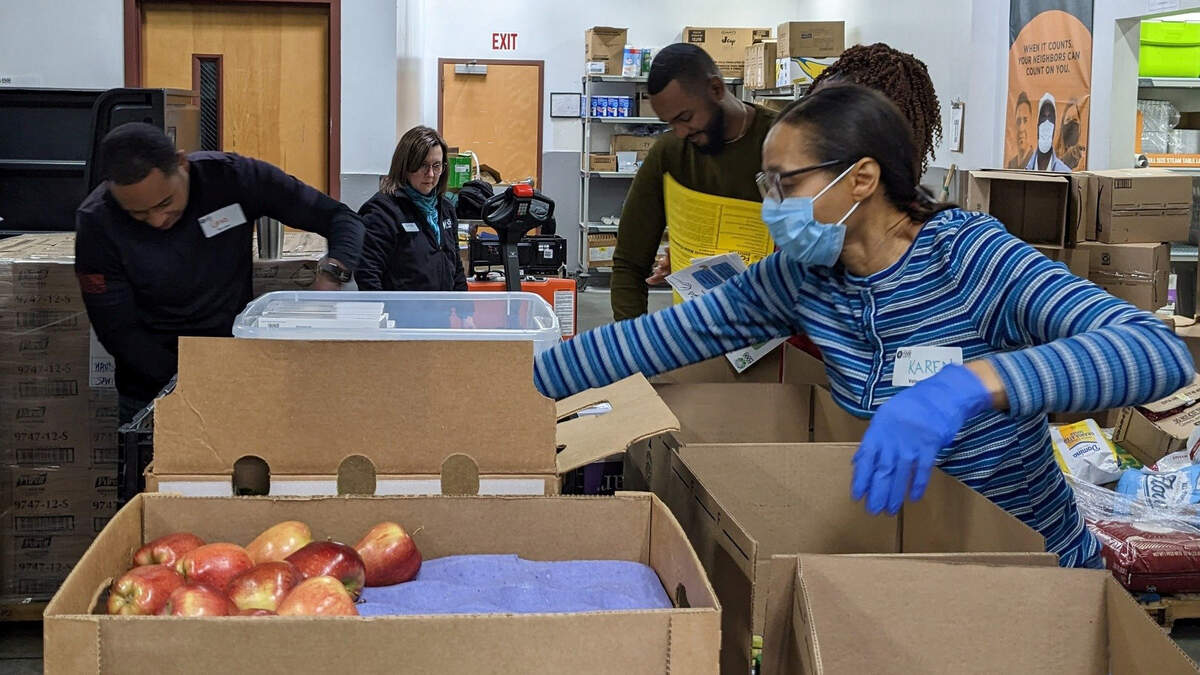
Wake County is also home to major food assistance organizations — including the Food Bank of Central and Eastern North Carolina, which signed onto the letter. Chaudhuri said “what these heroic food assistance organizations are trying to do is amazing, and we try to help in doing our part as volunteers, but there is no substitute for what the federal government can do to try to make sure that our families, seniors, and kids don’t go hungry.”
Those groups are seeing “the most number of citizens and families that have come to food banks in a generation,” he said. “This is a once-in-a-generation impact that is really going to push children and families to go hungry.”
Signatories to the letter, including Burgin, feel “very strongly that we should delay the implementation of the provisions affecting the food assistance program,” Chaudhuri said.
Chaudhuri said the letter was sent Friday from his office and that they have not yet received any follow up. The N&O reached out to Burgin for comment but was told by his staff he was out of the office.
Both Chaudhuri and Burgin are also members of the Agriculture, Energy, and Environment committees in the state senate, and their letter was addressed to members of the U.S. Senate Agriculture Committee and the Senate Appropriations Subcommittee on Agriculture.
What SNAP changes did the Big Beautiful bill make?
There are three main SNAP changes in the July law:
- Expanded work requirements, which are already in effect, to include parents of teenagers aged 14 and over, raise the age limit from 54 to 64, and cut work exemptions for the homeless, veterans and former foster care youth. It also cut access to some lawfully present immigrants. The changes have already had consequences. Federal data shows NC’s SNAP enrollment dropped roughly 19% between March 2025 and March 2026, the most recent federal data — one of the steepest declines in the country. An analysis of state data by the Center on Budget and Policy Priorities shows a somewhat smaller drop. Asked about that decline and the data, Leighs said there are 106,000 people who are now subject to the work requirement due to the changes.
- A federal administration match requiring states to pay 75% of administrative costs (up from 50%) beginning October 2026. The state’s health and human services department presented data to state lawmakers in January estimating additional costs at $16M for the state and $69M for counties annually. North Carolina is one of only a few states where counties — not the state — administer SNAP and many other benefits through local Department of Social Services offices.
- A state error rate match beginning as soon as October 2027 requiring states to cover a share of benefit costs currently paid 100% by the federal government. The share is based on the state’s error rate, or the percentage of benefits incorrectly paid out, whether too much or too little. If the rate is under 6%, the state owes nothing; 6–8% owes 5%; 8–10% owes 10%; over 10% owes 15%.
So what change is sought?
The lawmakers and coalition are seeking to delay the SNAP benefit and administrative cost-sharing provisions until 2030 for all states, and to use 2027 data for determining cost-sharing obligations.
They point to several factors outside the state’s control. While the One Big Beautiful Bill became law on July 4, 2025, the federal government didn’t finish issuing implementation guidance until October 2025, then had to issue corrective guidance in December.
The federal government shutdown last year — which at 43 days was the longest in U.S. history — “produced rapidly shifting and conflicting guidance on benefit issuance, generating irregular statewide issuance patterns that are not reflective of stable or normal operations,” they wrote.
Because of this, the data being used to determine cost-sharing obligations “does not accurately represent North Carolina’s performance,” the letter states.
Delaying the provisions would give states time to implement policy changes, reduce error rates and invest in program improvements, the letter says.
Where does NC stand now?
North Carolina’s error rate was 10.21% in 2024 — just below the national average of 10.93% that year — placing the state in the highest cost-sharing bucket.
DHHS in January estimated that North Carolina’s 2024 error rate could cost the state roughly $420 million per year, based on total benefits of more than $2.8 billion.
But the rate has fallen in 2025.
It now stands at 7.36%, compared with 10.62% nationally.
Leighs said that drop reflects “the hard work of our counties and our state staff” and while “the progress is really encouraging, there is more work to be done.”
Work continues to try to get the rate below 6% — where the state would not have to pick up any of the tab — and that has included working with counties that may have a higher error rate to work on process improvements and upgrading the state’s NC FAST eligibility system, which county workers use to determine assistance eligibility, to get it up to date with policy changes and increase automation.
Despite progress, Leighs said there were concerns that all the policy changes — including the work requirements — could lead to the error rate climbing again, and that the state may not get below 6% in time.
“That is something we are tracking and speaks to the need for a potential two-year delay to allow for policy to settle and more time to implement strategies,” he said.
The first four months of the 2026 federal fiscal year — from October through January — show that the rate has continued to decrease, sitting at 6.69%, he said. But “changes in HR 1 will continue to be reflected in the subsequent months as we go out through the rest of the fiscal year.”
To determine their initial SNAP match penalty, states can choose to use data from either Fiscal Year 2025 or Fiscal Year 2026.
Another concern is the administrative costs counties will take on. Leighs said that is a “significant concern” for counties as they work to develop budgets, and “we’re also concerned that that could set us back in this great progress that we make.”
Should the state not hit under 6% and instead fall in the 6–8% range, that could amount to the state paying about $140 million yearly for SNAP benefits.
That amount remains a “highly significant cost to the state,” with the federal government requiring that if states cannot come up with the required cost share, they cannot participate in SNAP, Leighs said.
Conversations are ongoing with state lawmakers as well as with folks at the national level focused primarily through the National Governors Association and the American Public Human Services Association to request additional time, Leighs said.
“This is really an issue that cuts across all states,” and so “I’ve seen a united front in states that are seeking that additional time to make sure that we can all be successful,” he said.
Congressional impact reporter Danielle Battaglia contributed to this report.
This story was originally published June 25, 2026 at 12:49 PM with the headline "Two NC lawmakers, a Democrat and a Republican, push Congress to delay SNAP changes."