
Childcare is the quiet economic crisis in NC. Now providers may finally get relief

AI-generated summary reviewed by our newsroom.
- North Carolina budget creates a reimbursement rate floor for childcare centers.
- The budget includes $1.5M and $7.3M in one-time spending.
- Many rural centers face closures and staffing losses amid low pay and rising costs.
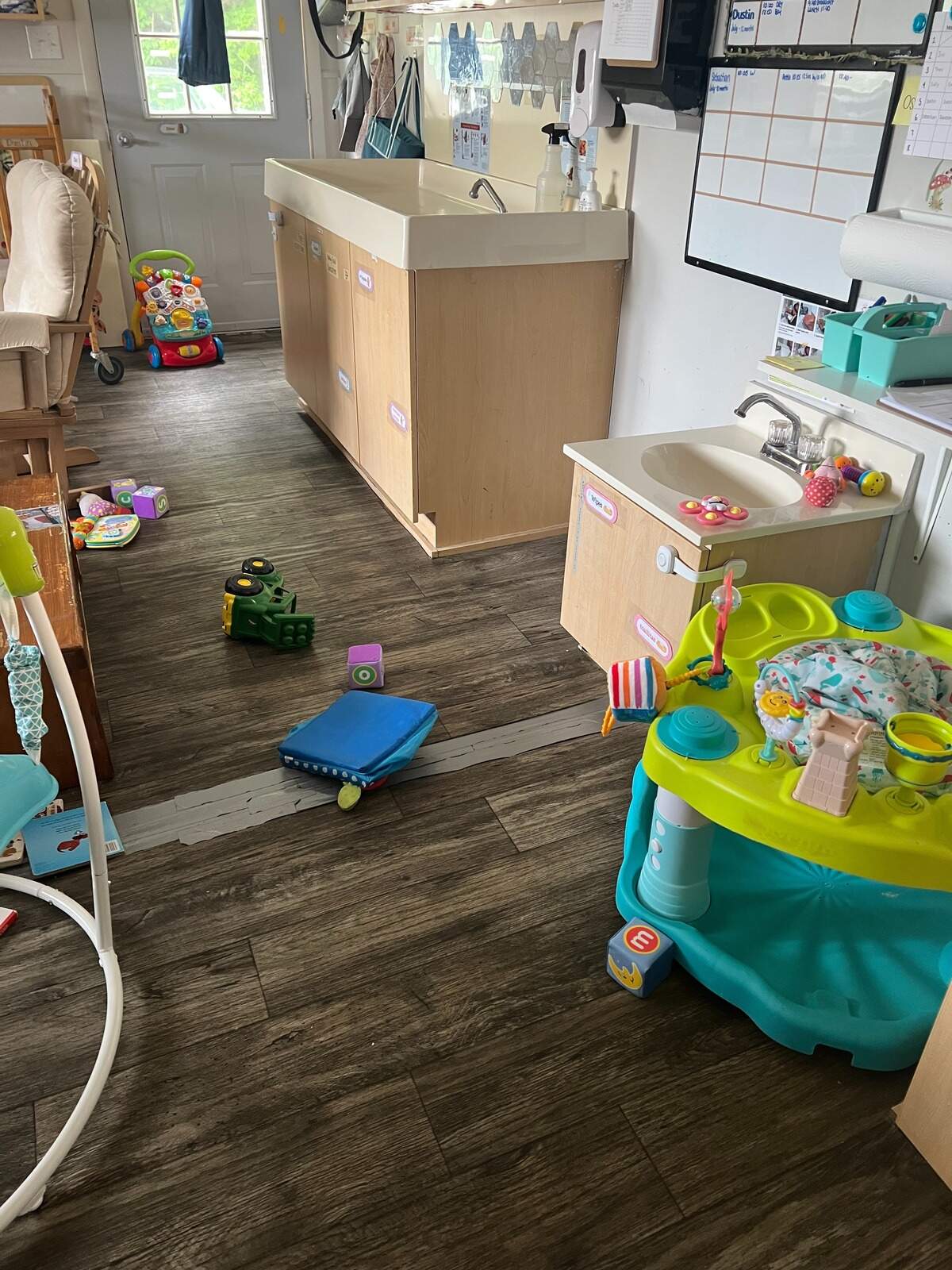
The duct tape placed on the wood floor still clings two years after the hurricane.
Halee Hartley notices it every day.
She notices the operational costs and high bills, too. She jokes she’ll work 17 jobs before she lets her childcare center in Boone close.
Hartley, who operates two childcare facilities, said she doesn’t pay herself. On the side, she manages rental properties and works as an agent specialist for Western North Carolina Early Childhood Coalition.
Western North Carolina has coped with a pandemic and the destruction of Helene in the last few years, while quietly maintaining childcare services with low pay and staffing turnover. Families in the region stomach the cost of sending their children to preschool even while they make less on average statewide.
The new state budget that the General Assembly passed and Gov. Josh Stein signed into law will help some of them. It will “almost double our reimbursement rate per child,” Hartley said.
That’s because of a provision to create a floor for the reimbursement rates paid to centers.
Also in the budget: $1.5 million in one-time costs to fund a pilot program in Johnston and Wayne counties to offer free training for individuals who want to become credentialed childcare providers; and $7.3 million in more one-time spending to expand mental and behavioral health services for children, families and staff in childcare settings and out-of-school programs.
“It brings me to tears to think about what it’s going to do to our local childcare facilities,” Hartley told The News & Observer. “Legislators didn’t realize childcare is critical until the pandemic.”
In North Carolina, the state determines the reimbursement rate county-by-county and by the age of the child served by the childcare providers. The formula the state has been using doesn’t take account of what it actually costs for a childcare center to provide that care, said Emily Blevins, communications director for NC Child.
“The formula disproportionately impacts rural communities, with rural communities receiving less subsidy funding than their more suburban and urban counterparts, even though the cost of providing that care is pretty similar across the state. Diapers, food, wages, utilities — these all cost about the same amount no matter what county you’re in,” Blevins said in an email to The N&O.
When subsidy reimbursement rates, or the funds childcare operators receive for providing services to income-eligible families, fall below the cost of providing that care, childcare operators have to find a way to make up for the deficit. They could reduce staff, close some classrooms or increase tuition rates. And sometimes it means that they have to close altogether.
At Hartley’s center, Kid Cove, “We are going to be raising hourly wages, and right off the bat, once [the budget provision] goes into effect, which should be Oct. 1,” she said, “and then we also are going to be able to catch up on some very much needed structural renovations that we have had to put off for years now.”
Staff turnover, pay challenges
Drive two hours from Boone and you’ll find Canton. The town, with a little less than 4,500 people, is still catching up after suffering the closure of a paper mill that ended 1,000 jobs in 2023.
Scattered billboards and signs litter streets that advertise work at Sonic or other fast-food restaurants, at higher pay than what Mary Moody can offer at her childcare center.
Moody has been in the childcare business for over two decades. She originally started Kid Connection in 2004, and now owns Silver Bluff Kids Early Center. In the midst of the pandemic, five veteran teachers left because they could not afford to provide for their families, with average pay at the center around $14 to $15 an hour.
“I had someone who had worked for me for 17 years that took a job as a lead at a fast food restaurant, making more money,” she said.
“The economy is changing as the cost of living increases and everyone is getting underpaid,” Moody said.
NC Child and the U.S. Chamber and NC Chamber Foundations collaborated on a report that found that childcare-related employee turnover and absenteeism cost North Carolina employers $4.29 billion annually, and that the state misses out on $1.36 billion in annual tax revenue due to turnover and absence costs stemming from childcare issues.
While many North Carolina centers were given a compensation grant during the pandemic that allowed teachers to receive higher pay and other benefits, it dried up in the last few years.
“I had several people tell me that they were either going to have to go to different jobs or that they were going to have to get a second job, or they were in tears that didn’t know what they were going to do if they lost that money,” Moody said. “We got really creative on things that we could cut. We did have to take away benefits like health insurance reimbursement, no more contributions to their retirement plans, just in order to continue paying them the hourly wage.”
Moody has not received definitive figures yet on what the new subsidy rates will be, but said she expects to see an increase of $350-450 more per month per child. She also said she wants to get her staff health benefits when the funding is received.
Out of the 54 families Moody serves, 70% are on subsidies. Hartley serves 140 families between her two centers, and 25 families are on subsidies.
In the past year alone, North Carolina experienced a net loss of more than 100 childcare programs, Blevins said. Rural communities, already considered childcare deserts, have absorbed many of those losses. Without additional investment, advocates estimate at least 40 more rural providers could disappear this year.
Moody’s center’s budget is maxed out, she said. Paying her staff of 13 uses about 75% to 80% of monthly revenue.
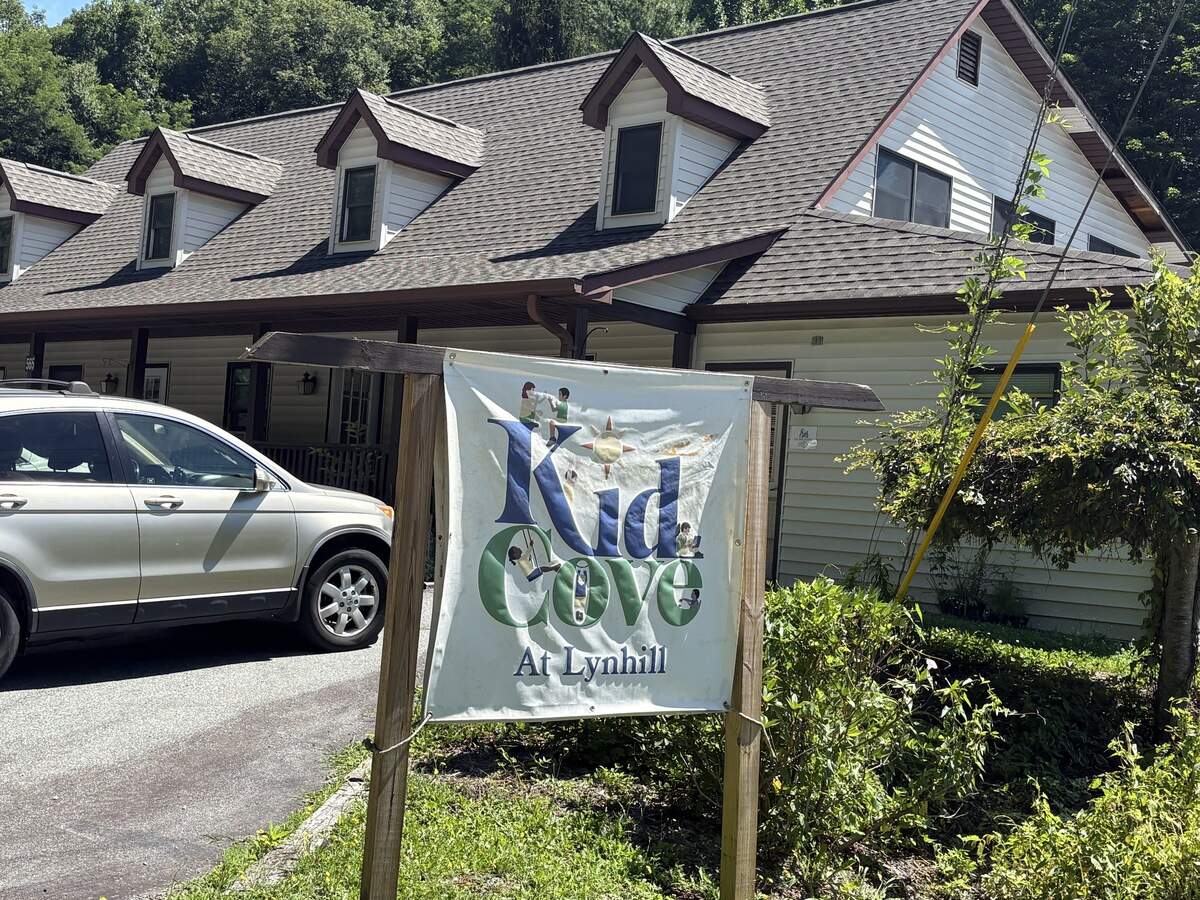
Hartley’s Kid Cove doesn’t have a high turnover rate, she said, but she struggles to find qualified candidates. Pay there starts at $14 an hour.
“I tell my employees … I 100% do not blame you if you want to go work elsewhere for a higher hourly wage, but 90% of mine stay because they love what they do,” she said.
Many work additional evening jobs to pay bills.
Kid Cove is waiting for hurricane relief which has been approved but not processed.
Parents pay the cost
Kyndall Monroe and her husband put their 2-year-old in a licensed home daycare at a cost of $780 a month; their 4-month-old is occasionally dropped off at Kid Cove, at about $120 a month. Monroe said she can pay up to $1,500 a month, including occasional weekends when they send their kids to childcare or need a babysitter. She feels fortunate to find two centers that she really likes and fit in her budget.
During Helene, Monroe’s family house in Boone flooded five feet, and they had to move to Banner Elk. Meanwhile, they dealt with a changing childcare situation, as some providers shut down. She and her husband juggled house renovations and childcare.
“It was really frustrating,” Monroe said. “Taking a kid out of their known routine and taking them into something else is really difficult.”
The NC Child report found that 35% of parents who experienced disruptions to their employment in the past year reported leaving the workforce as a direct result of childcare challenges.
In most of the state, it’s more expensive to send a child to childcare than it is to send them to college. A year of childcare generally costs more than tuition at UNC-Chapel Hill or any other UNC System school, according to Blevins.
Hartley, worried her center would close, received support from the local Chamber of Commerce through an education foundation that covered the entire county’s childcare tuition for the month of October.
During Helene, families with young children in Boone experienced mudslides or severe flooding or lost their houses entirely, Hartley said. She decided to hold floors together with duct tape to keep the center afloat. She knew how critical her center was.
“I just had it in my heart — I can’t consciously charge these families tuition for the month of October, because they’re having to go through a lot right now too, and buying a lot of extras that they probably can’t afford,” she said. Since the paper mill closed in Canton, many families still struggle to pay their regular bills even while benefiting from childcare subsidies, Moody said.
“They have to make a decision whether they’re going to bring them to the childcare center, and know that they’re here, loved and cared for in a safe environment, or either not work that day because they don’t have the necessary supplies, or leave them with someone in unlicensed care.”
This story was originally published July 17, 2026 at 7:00 AM with the headline "Childcare is the quiet economic crisis in NC. Now providers may finally get relief."