Election isn’t until 2026, but challengers are lining up for Charlotte’s Cunningham
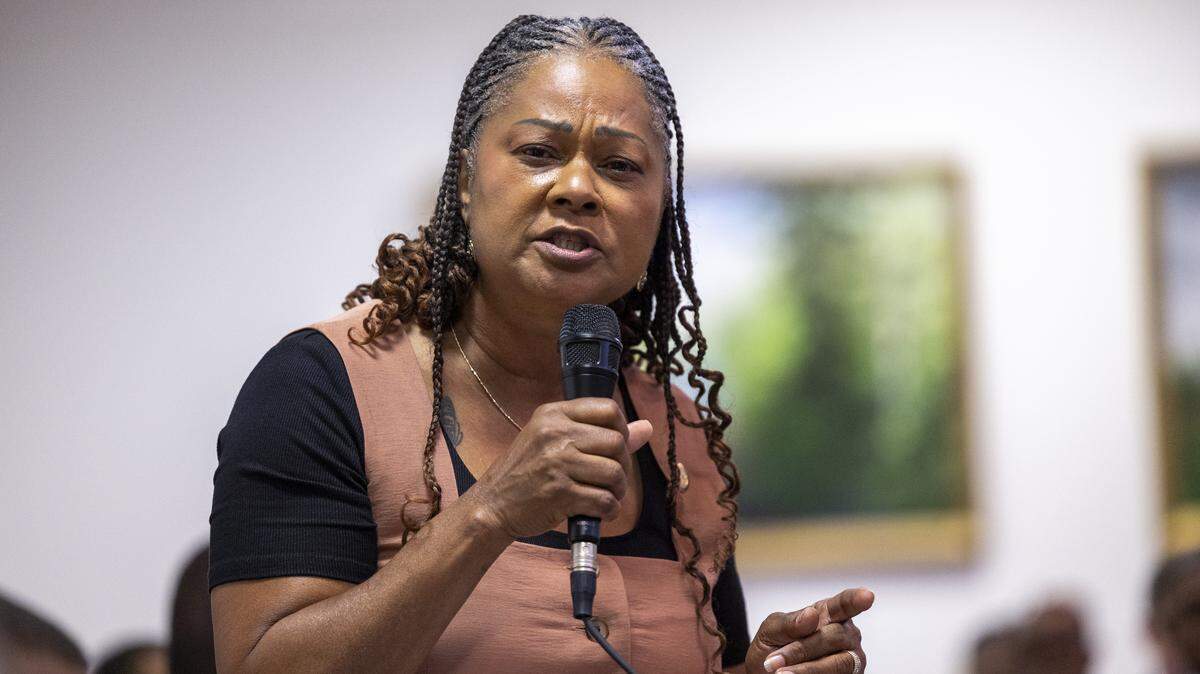
A longtime Charlotte-area legislator who faced controversy and criticism for siding with Republicans on a veto override vote and comments on immigration over the summer is poised to face multiple challengers in 2026.
Rep. Carla Cunningham is in her seventh term representing state House District 106. The widow of another longtime legislator and a nurse by trade, she’s long been a fixture in local Democratic politics known for her advocacy on health care.
But recently, she has drawn condemnation from members of her party for voting with Republicans to override Democratic Gov. Josh Stein’s veto of an immigration bill and for comments about immigrants during the vote.
In an email statement Thursday, Cunningham told The Charlotte Observer she is thankful for the opportunity to lead and looks forward to continue conversations with constituents.
Candidate filing doesn’t officially open until December, but multiple candidates already have announced their intentions to run as Democrats. That slate includes two previous legislative candidates and a prominent minister and activist.
Such a crowded field of candidates would contrast with Cunningham’s previous reelection bids, when she’s faced little to no opposition.
“It’s going to be tough,” Western Carolina University political scientist Chris Cooper said. “... She obviously has game recognition going in, which is a bonus. On the other hand, she has received a lot of negative media attention.”
Cunningham’s background and previous advocacy
Cunningham was first elected to the state House in 2012, but local political activist Robbie Akhere recalls first meeting her when Cunningham was working with then-Sen. Barack Obama’s first presidential campaign. Akhere said she was drawn to Cunningham because of her deep knowledge of Charlotte-area politics.
“I was so impressed,” Akhere told The Charlotte Observer.
The pair advocated together for health care reform and Medicaid expansion. Once Cunningham was elected, Akhere said she was impressed with her ability to connect with constituents and work across the aisle on issues such as mental health funding and school lunch debt relief.
“She’s always thinking about, ‘How can I help people?” Akhere said.
A 2016 Observer story noted Cunningham sponsored bills to ratify the Equal Rights Amendment, raise the minimum wage and slow the expansion of corporate tax cuts. It reported she was also passionate about domestic violence and suicide prevention, and she was quoted in the piece calling herself “very progressive.”
But she’s faced criticism from some in her party for other votes in recent years.
Cunningham previously voted with the GOP in 2024 to override then-Democratic Gov. Roy Cooper’s veto of a budget bill that required sheriffs to cooperate with immigration authorities and provided funding for private school vouchers.
At the time, The News & Observer reported, Cunningham said that bill provided “essential investments in areas like education, public health, community support and public safety” such as cooperation with ICE, Medicaid rebates and more funding for community colleges.
“To reject the bill outright would mean forfeiting critical funding for these initiatives, which I cannot do in good conscience,” Cunningham said at the time. “For me, it’s a matter of not throwing the baby out with the bathwater. While I remain critical of the Opportunity Scholarship Program, I must prioritize the broader benefits that this legislation will provide for our communities.”
Cunningham’s veto votes, immigration comments draw ire
Critiques came to a head this summer when Cunningham cast the deciding vote to override Stein’s veto of House Bill 318, which bolstered the legislation enacted last year requiring sheriffs to cooperate with federal immigration authorities.
In a floor speech, Cunningham said she’d “been degraded” for her votes in favor of stronger immigration enforcement, and “called racist” and “trash” and that the U.S. has been “exploited and abused by the different tactics to gain citizenship in America.”
“First, as a people, we need to recognize that it’s not just the numbers that matter, but also where the immigrants come from and the culture they bring with them to another country,” Cunningham said in her speech. “As the social scientists report, all cultures are not equal.”
While her vote alone may have “raised a few eyebrows,” Cooper said her speech was especially controversial in Democratic circles.
“That is viewed by the Democratic Party as an extreme position, much more so than just wanting more border security,” he said.
Condemnation was swift.
Senate Democratic Leader Sydney Batch, Charlotte-area state Sen. Caleb Theodros and former Charlotte Mayor Pro Tem Braxton Winston were among those who called her comments divisive.
The Young Democrats of North Carolina, the official youth arm of the state party, said in a statement Cunningham “disgraced her office with a hate-filled speech attacking the very immigrant communities she was elected to serve.”
Numerous people left comments on Cunningham’s Facebook page criticizing her votes and comments, and WFAE reported more than 100 people attended a town hall she hosted shortly after the incident, “mostly to question and oppose Cunningham.”
Longtime Charlotte organizer Colette Forrest told the Observer she was “extraordinarily disappointed” in Cunningham’s voting record.
“Sometimes I’m actually confused when I hear her talk if she’s a Democrat,” Forrest said.
Akhere said she feels Cunningham’s message may have gotten “cloudy” in her floor speech, adding she’s seen the representative reach out to various immigrant communities over the years.
“I’ve never heard her say anything negative about undocumented people,” she said.
Cunningham told the Observer her “position on immigration has not changed.”
“My support for every constituent in my district has never wavered ... I wholeheartedly welcome those working through the proper channels and have advocated to welcome refugee families in need,” she said in her email a statement. “I have spent many years building relationships with leaders from the diverse cultures in our community, gaining a deep understanding of the unique ways each approaches connection and collaboration across cultures.”
Primary challengers enter the fray
The backlash against Cunningham’s votes and comments extends into the upcoming 2026 election cycle.
The Rev. Rodney Sadler launched a primary challenge against Cunningham last week.
Sadler, who helped lead the Moral Monday movement and served on the North Carolina NAACP executive committee, appeared to allude to the immigration controversy in his campaign announcement.
“Right now, working people in Mecklenburg County can’t afford to live. The basic things get more expensive every day, while wages stay rock-bottom and jobs get harder and harder to find,” he said in a statement. “The wealthy few try to tell us to blame each other. They tell us it’s the fault of our immigrant neighbors. They hand out blame based on the color of our skin, how we dress, where we come from, or who we love. We know better. In the North Carolina State House, I will put the people first. I will stand up for all of our neighbors. And I will be a champion for love in action.”
In a Facebook post about the start of his campaign, Sadler wrote he was “wholly disappointed in our current representative who when asked why she voted against Governor Stein’s veto and forced our state law enforcement officers to work with the rouge MAGA ICE said that ‘all cultures are not equal’ … letting out a rant that resembles the words of the supremacist extremists whose policies I have been arrested opposing.”
Sadler’s campaign said in a news release it “raised $23,000 in the first week of his campaign.”
Vermanno Bowman, who Cunningham defeated handily in a 2022 primary, has also announced plans to run again in the district.
“Our district deserves a progressive fighter who will stand up for working families, defend our rights, and push for bold solutions to the challenges we face,” he wrote on social media.
Local attorney Morris McAdoo, who also previously ran unsuccessfully for the state legislature, confirmed to the Observer he also plans to run in District 106.
Mecklenburg County Democratic Party Chairman Wesley Harris told the Observer he and the party will remain neutral during the 2026 primary.
“The voters of District 106 will decide who their Democratic nominee will be,” he said in a statement. “The Mecklenburg Democratic Party applauds anyone who steps up to run for the NC General Assembly during this important time and looks forward to supporting our Democratic nominees.”
Whoever emerges victorious from the primary is likely to have an excellent chance at the seat in the heavily Democratic district.
Is Cunningham vulnerable in 2026?
Cunningham hasn’t faced significant opposition in her previous races.
Since 2012, she’s only had primary challengers in two election cycles and a general election opponent three times. And she’s won with at least 70% of the vote in every election.
That means “she’s not very well practiced” in competitive campaigning despite her long tenure in the state House, Cooper said.
Although House elections are still more than a year away, Cunningham’s challengers are likely “to make sure that we do not forget” her floor speech on immigration, Cooper added. A more crowded field of candidates can also split up the vote. That could give a candidate with a strong base of support a better chance of beating challengers.
“We refer to this period as the invisible primary. This is where donors and consultants and candidates are all jockeying for position,” Cooper said. Supporters are likely to coalesce, he added, around the candidate who is politically experienced, well-connected and likely to be a good fundraiser.
Forrest said she’s “prayerful” the opposing candidates will come together to decide who should move forward in order to have a less crowded field.
“When you have an overcrowded race, the incumbent always is the favored victor,” she said.
Name recognition and the ability to generate excitement among voters are key factors for a candidate’s success, Forrest said. Sadler could benefit from his connections in the faith community and with grassroots organizations, she added, while McAdoo has ties to sizable Greek organizations.
Akhere predicted Cunningham will be able to promote her record on issues such as health care and tap into her longstanding community relationships in a reelection fight.
“They’re talking about what they’d like to do, what they might want to do …,” Akhere said of Cunningham’s challengers. “But she is doing things.”
Cunningham shared a similar message in her statement.
“I have been instrumental in erasing school lunch debt, expanding Medicaid, securing millions for our local nonprofits, increasing funding for mental health services statewide, and more,” she said. “In today’s divisive political climate, leadership requires relationships like mine to get things done so our community, and the people and families in it, can thrive.”