Charlotte GOP lost big on election night. Is it final nail in coffin for Republicans?
Early vote returns weren’t what Charlotte Republicans wanted on Tuesday. The party trailed by a wide margin in City Council races they thought would be competitive. They didn’t improve much from there.
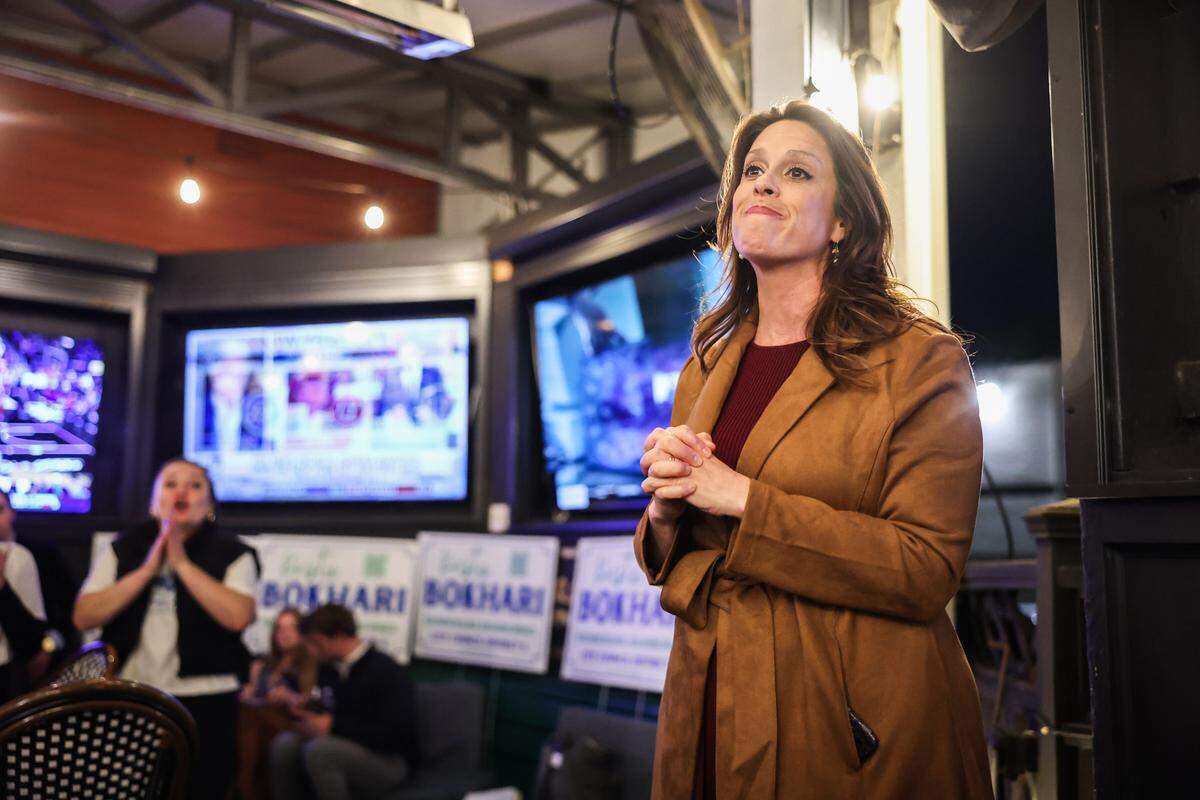
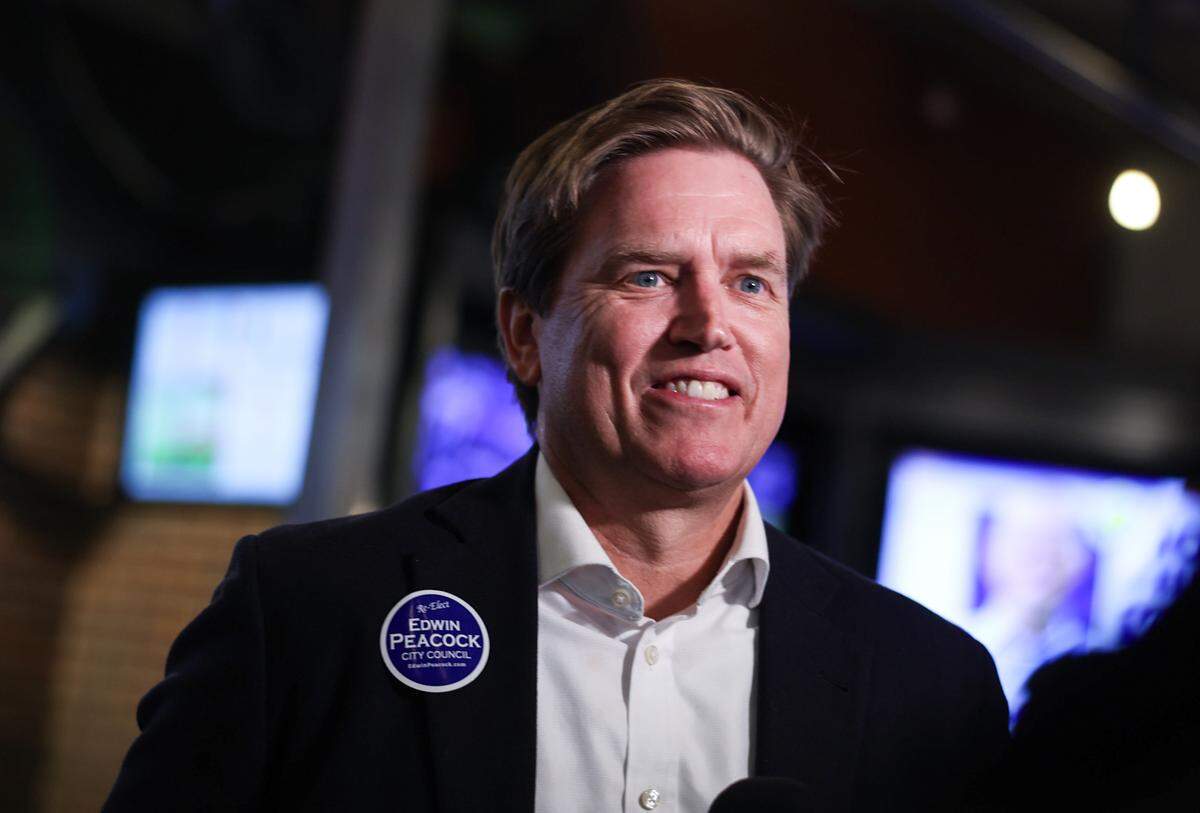
At-large candidate Edwin Peacock III and District 6 candidate Krista Bokhari held a joint watch party at Selwyn Pub, where reality set in early in the evening: Republicans got clobbered, and their representation on the council would be cut in half.
Democrats held onto seats they represented. Kimberly Owens’ win in District 6 snagged one more, flipping a council seat for the first time in 14 years and turning a longtime red district blue.
Democrats now have an overwhelming 10-to-1 majority.
“I think we could’ve done better,” said District 7 Councilman Ed Driggs. He ran unopposed this year and is the last Republican standing across council, county commission and the school board. “I want us at least to put our best foot forward and, if possible, retain some presence in local government. The idea of having single-party government should offend everybody.”
Peacock and Bokhari raised far more money than the other candidates and had name recognition to boot. Peacock is an experienced councilman. Bokhari is the wife of the former councilman for her district.
They campaigned on messages that Republicans lend critical alternative perspectives and could prevent groupthink from steering the city in the wrong direction.
But Charlotte Republicans are now left wondering how supposed tight races ran away from them and what comes next for their beleaguered party.
“Is it the death nail? It’s certainly one of them,” Peacock said. “I’m not going to put the coffin in the grave just yet, but it’s just going to take a long time (to recover).”
What voter trends say about Charlotte

The dwindling Republican presence in Charlotte was no secret heading into Election Day. Data show Democrats had slowly closed the gap in District 6 after a steady forward march.
This year’s results broke from incremental trends and swung decisively in the other direction. Bokhari lost by a 13% margin, or more than 3,700 votes. A dozen precincts that had voted for her husband in the last nail-biter election flipped, dropping her party’s share of District 6 precinct wins from 50% to 18%.
And in 2022, at-large Republicans lost to the Democrats by 14,000 votes. This year, Peacock trailed by 40,000 votes.
“I would have never in a million years gotten into this race if I knew that I was that far off,” Peacock said.
District 7’s Republican bonafides haven’t been put to the partisan test since 2017, but it has shown signs of trouble for the GOP.
District 7, below District 6 in south Charlotte, received hundreds more votes for write-in candidates than every other district combined. In all, 16.2% of District 7 voters — 2,677 people — did not support Driggs even though he was the only name on their ballot.
That continued an upward trend from prior elections. About 15.1% of voters chose a write-in candidate in 2023, 11.2% in 2022 and 6.3% in 2019. Driggs last faced a Democratic challenger in 2017, when he received approximately two-thirds of the vote.
His 2017 performance was on par with Tariq Bokhari, the District 6 Republican winner that year whose percentage of the vote would shrink each successive election. By 2023, a margin of just 1.36% separated Bokhari from his Democratic opponent.
It’s unclear how Republicans might fare in District 7 if a strong Democrat entered the race.
“My impression is, from my dealings with constituents and attending community meetings and things, that the race when I leave is going to be wide open,” Driggs said. “A lot will depend, as it should, on the merits of the individual candidates. I don’t think there’s a huge bias in favor of one party or the other that makes it a foregone conclusion.”
What’s next for Mecklenburg GOP?
As the dust settled on election night and the scale of Republicans’ defeat became clear, former Mayor and North Carolina Gov. Pat McCrory remarked Abraham Lincoln himself couldn’t win in Charlotte on a Republican ticket.
The outlook is grim for the local GOP, Peacock said.
“I feel for my local party. I feel for Charlotte,” he said. “I hope there is somebody that can really fire up the opposite side. I don’t know. At this moment, I don’t know who that would be.”
Peacock was a strong candidate whose moderate position should’ve had broad appeal, Driggs said. Peacock served on the council from 2007-2011 and again in 2025 when the council appointed him to finish the remainder of Tariq Bokhari’s term. Bokhari resigned in May to work for the Trump administration.
Driggs viewed Peacock’s loss as proof that frustration over national politics bled into local decisions.
“We need to proceed with an awareness of that and find out how we can make clear locally that we have some understanding of the community in which we live,” Driggs said. “That we bring a perspective that is a useful counterbalance, if you will, to the positions that are being taken by the Democrats.”
Peacock likewise attributed the results to “Trump-lash,” calling President Donald Trump “kryptonite” for Republicans in off-cycle, down-ballot local races. He worries the party’s lackluster performance this year could challenge Mecklenburg GOP’s ability to recruit “anyone that is possibly electable” for decades to come.
Driggs doesn’t consider himself an insider with the Mecklenburg GOP, he said, but as an elected Republican, he’d like the party to send out a message with broader appeal.
“I wonder if the Republicans need to understand better the situation in Mecklenburg County. We are outnumbered by Democrats two-to-one,” Driggs said. “For Republicans to be effective, we need to try and build partnerships. We need to attract unaffiliated voters and offer solutions that resonate with a lot of people.”
Charlotte City Council is down to one Republican
Peacock doesn’t foresee any immediate changes to how the council will conduct business as a result of losing a Republican.
Driggs will continue to play an important role despite serving as the lone Republican voice, Peacock said. The soon-to-be seven-term councilman is no stranger to working from the bottom.
“He’s a wise conservative that really tries to seek Democratic alliances, and that’s what he’ll need, to be an alliance builder,” Peacock said. “He’s had to do that. He’s not trying to be the majority, but often, in many cases, he’s able to lead this current council to the right conclusion.”
It’s no exercise in futility, Driggs said. Most council issues aren’t partisan like on the national stage.
A former vice president at Goldman Sachs, he takes a managerial approach and tries to be helpful, he said, offering insight from his business and economics background. And he’s learned how to navigate the personalities on council, different as they may be.
“You don’t engage in battles that you can’t win. There’s no point in spouting a lot of political rhetoric from the dais and alienating everybody else when there are only two of you — or, now, one of me,” Driggs said. “You try to establish a mood of collaboration and try to find the things you have in common, try to persuade people about your position instead of criticizing their position.”
This story was originally published November 7, 2025 at 5:00 AM.