
Cooper and Whatley talk a lot about each other. But where do they stand on policy?
AI-generated summary reviewed by our newsroom.
- Cooper launched a cross-state “Make Stuff Cost Less” tour outlining economic agenda.
- Whatley posted no policy on his site until McClatchy inquired.
- Both candidates support divestment or placing stocks in blind trusts for Congress members.
Opponents of former Gov. Roy Cooper call him another rubber stamp for Senate Minority Leader Chuck Schumer.
Former Republican National Committee Chairman Michael Whatley is called by his adversaries a puppet of President Donald Trump.
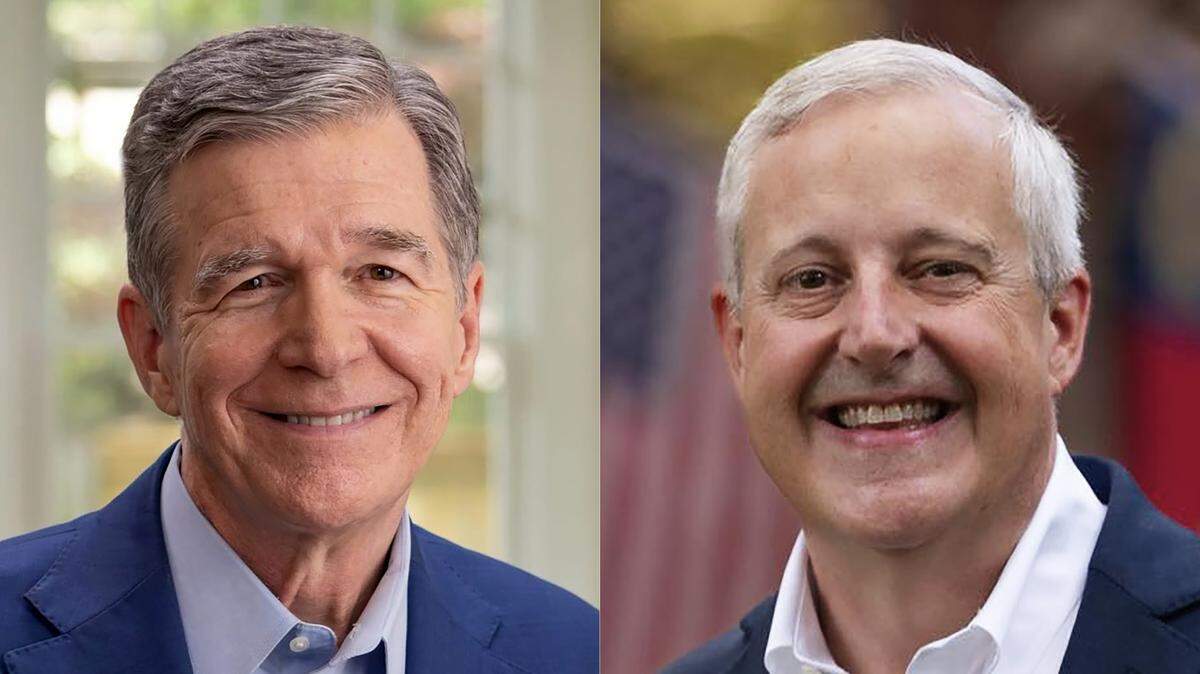
Cooper, 68, a Democrat from Raleigh, and Whatley, 57, a Republican from Gastonia, are facing off against one another to succeed Republican Thom Tillis for his seat in the U.S. Senate. And a lot of ink has been spilled about both men and what they say about one another.
But what about their policy positions?
Immediately after winning the Democratic primary, Cooper launched a cross-state “Make Stuff Cost Less” tour focusing on five areas of the economy and how he plans to bring relief from rising costs to North Carolinians. His plans are also included on his website.
Whatley doesn’t make finding his policy positions as easy for the average voter. There was nothing on his website about policy until Thursday, after McClatchy inquired about it. That meant voters must catch his speeches or attend his events that aren’t widely publicized. And many of those speeches focus on what he likes about Trump’s policies or opposes about Cooper’s platform.
McClatchy caught up with Whatley last week at a “No Tax on Tips” roundtable he held in Zebulon and asked him for specifics. He said his focus is on safe neighborhoods for children, job creation and support for the military.
McClatchy also asked the teams for both Whatley and Cooper if they wanted to provide further details for this article. Cooper’s team responded.
“While Whatley insists that prices are down, Roy Cooper knows that’s not true, and he’s running to make stuff cost less, and is the only candidate in this race with real plans to put the middle class back in reach for North Carolinians,” Cooper’s team said in a written statement.
Whatley’s team did not respond.
“It’s a little late to not have just canned answers ready to go, but that said, I don’t think that it’s going to matter that much in the end,” said Chris Cooper, a political science professor at Western Carolina University who tracks North Carolina elections closely (and who is not related to Roy Cooper).
McClatchy rounded up what could be found on their policy positions by examining their events, news releases and interviews. Here’s what we found.
Cooper and Whatley on the economy
President Bill Clinton’s campaign strategist, James Carville, coined the phrase, “It’s the economy, stupid,” and that couldn’t be more true this election cycle.
North Carolinians face gas prices that are now 50% higher than in January, and inflation rates that crossed 4% in May, the highest level in three years.
“This administration’s reckless war in Iran is driving up costs for American consumers,” Roy Cooper posted on social media, “with no end in sight. Now, inflation is at a three-year-high, all while (Whatley) has been telling us it’s fine.”
Four days before Trump launched the war in Iran with Israeli Prime Minister Benjamin Netanyahu, which has driven costs higher, on top of Trump’s tariffs, Whatley told Fox News that “inflation is way down.”
Whatley told McClatchy in Zebulon that he wants North Carolina families to be able to “take home more money and keep more money.”
“We want to make sure that we have policies that are going to create more jobs and better jobs,” Whatley said. “That people are going to pay less every day when they go through their life, including on taxes.”
Cooper has spent the past four months on a statewide tour talking about the economy and the cost of groceries and food, healthcare, energy and utility bills, housing and childcare expenses.
Food and farming costs
Cooper came out early in his tour to talk about the cost of food and groceries and the impact the economy is having on North Carolina farmers.
In March, at a rally in Raleigh, Cooper addressed his plan to lower prices.
“Fixing this problem of food and grocery prices starts at the source: our farmers,” Cooper said. “We’ve got to do more to support them and to stop these chaotic tariffs that are making their jobs so much harder.”
Whatley’s campaign told WRAL in November that tariffs “will create jobs, raise wages, expand opportunity, and make our state affordable again.”
But Cooper said “farmers are getting crushed by tariffs” and that’s raising prices at grocery stores and restaurants.
He offered four steps to lower the costs:
- ending tariffs;
- blocking anti-competitive mergers that reduce competition and raise prices;
- preventing stores from using algorithm-based pricing for specific customers;
- preventing algorithm-based pricing that raises prices by monitoring competitors.
Whatley said in a news release he will fight “for tax, trade and regulatory policies” that help farmers.
Healthcare expenses
Cooper and Whatley have very different takes on Trump’s One Big Beautiful Bill that became law last July 4.
It’s the same bill that led Tillis to drop his reelection campaign, after he and Trump publicly sparred on social media over the impact the bill would have on North Carolina’s Medicaid recipients. Tillis said more than 660,000 North Carolinians would lose coverage if the bill passed.
Whatley worked behind the scenes to get North Carolina Republicans to side against Tillis.
Meanwhile, Medicaid expansion was one of Cooper’s chief accomplishments during his second term as governor. He pushed expansion for years, and signed it after Republicans agreed, leading to nearly 700,000 new enrollees by the end of 2025.
But now the future of Medicaid enrollment is uncertain as implementation of the One Big Beautiful Bill plays out.
Cooper’s platform is very detailed when it comes to cutting costs for healthcare.
Among his goals:
- Clawing back Affordable Care Act tax credit cuts;
- Reversing Medicaid cuts;
- Allowing doctors to make healthcare decisions for their patients without interference from insurance companies;
- Preventing insurance companies from denying coverage of something a doctor says a patient needs;
- Broadening Medicare negotiations with drug manufacturers to lower prescription costs;
- Greater oversight of hospital mergers and takeovers;
- Reining in pharmacy benefit managers and their associates, which he says pocket savings instead of passing it to patients and put small-town pharmacists out of business;
- Capping out-of-network charges for nonemergency care to prevent surprise billing;
- Designating emergency ground ambulance service as an essential health benefit;
- Capping annual prescription out-of-pocket expenses;
- Requiring hospitals to automatically enroll in charity care and to lower drug and medical costs to prevent medical debt;
- Ensuring upfront healthcare pricing.
Energy and utility costs
Cooper’s economic plan also includes a strategy to lower electric and utility bills. His campaign has noted that electric bills in North Carolina have risen 22% since 2020.
To combat higher energy costs, Cooper says he would ensure data centers pay the full costs of the power they consume, preventing that costs from being passed to consumers.
He also wants to encourage large tech companies to build their own energy sources to reduce utility costs for consumers.
Cooper wants to ban utility companies from disconnecting power during dangerous heat or cold. He wants the modernization of energy grids.
In February, Duke Energy requested customers conserve energy because the grid was having a difficult time handling the cold weather.
Whatley added a section to his website this week focused on energy and the economy, saying, “America’s economic strength depends on reliable, affordable energy and reining in Washington’s reckless spending. By practicing fiscal responsibility and unleashing American energy, we can empower American workers, create good-paying jobs, achieve energy independence, and build lasting prosperity for every American.”
Focusing on children
Both Cooper and Whatley have policy positions focused on the children of North Carolina.
Whatley told McClatchy he wants to ensure children have safe neighborhoods. He didn’t provide further details and the newspaper wasn’t given the opportunity to follow up with another question at the Zebulon event.
Whatley’s campaign has faced backlash after Asheville Watchdog tied Whatley to Harvey West, who was convicted of sex crimes involving children. West confirmed to WRAL that Whatley appointed him to the North Carolina Republican Party’s powerful Plan of Organization Committee.
West pleaded guilty to 16 counts of indecent liberties with a child, Asheville Watchdog reported. He served six years in prison and had to register as a sex offender, though he no longer is required to.
Cooper’s policy positions related to children and families focused on the economy and helping parents cut down on childcare costs.
His plan includes:
- Expanding child and dependent care tax credits;
- Investing in apprenticeships for childcare workers and providing better wages in the industry;
- Cutting red tape that he contends is unnecessarily raising costs for childcare facilities;
- Providing employers with tax credits for on-site childcare or for subsidizing employee childcare.
Lowering housing costs
Cooper’s economic plan also includes attempts to lower housing costs.
Cooper announced he supports building more homes by providing incentives for multi-family and modular construction in order to build housing quicker and lower costs.
He wants to roll back any tariffs driving up construction costs.
He wants to ban algorithm-driven rent setting, in which companies use RealPage and Yardi to collect real-time data from other landlords to set their rent prices.
Attorney General Jeff Jackson sued several landlords for this practice.
Cooper also wants to eliminate what he says are unnecessary rules that drive up housing costs.
The military
Whatley offered two other policy positions focused on the military and public safety.
North Carolina is home to at least 10 military installations, including Fort Bragg, one of the world’s largest, with 50,000 troops and 14,000 civilians who work there.
“We have almost 10% of the U.S. services: Armed Services, Army, Navy, Coast Guard, Marines, Air Force, that are based here in North Carolina,” Whatley told McClatchy in Zebulon. “We have 720,000 veterans that call North Carolina home more than any other state in the country, and I want to make sure that we’re supporting them as well.”
The N&O was not able to find other details of his military proposals on his website.
Public safety
Anyone following the Senate campaign would not be shocked that public safety has been a key issue for the Whatley campaign.
Whatley spent much of the year talking about public safety.
He argues against what he calls soft-on-crime policies and for support of law enforcement agencies.
This week, Whatley added on his website that he is “100% supportive of President Trump securing the border and deporting the millions of criminal illegal aliens" in the country.
He’s also cited the release of prisoners in North Carolina during the COVID-19 pandemic to argue that Cooper jeopardized public safety. Cooper’s administration settled with civil rights groups to release prisoners who the groups said were at risk because of the virus.
Among the names on the list tied to that settlement is DeCarlos Brown, a Charlotte man now charged in the fatal stabbing of Ukrainian refugee Iryna Zarutska on a bus in Charlotte, years after the release. Brown’s inclusion on the list was retroactive, because he was already out of the prison when the settlement was signed.
Whatley has promised his first act in Congress would be to support a federal Iryna’s Law that limits pretrial release for violent offenders and strengthens the ability for involuntary commitment of repeat offenders. Critics of a version of the law that was passed at the state level argue it will cause overcrowding, doesn’t do enough to support mental health treatment and may keep more people than necessary behind bars before they’re convicted.
On Thursday he added to his website: “I will stand shoulder to shoulder with President Trump to restore law and order, roll back dangerous and lenient Democrat policies, back the blue without apology, and put law-abiding North Carolinians first.”
And despite Brown being a Charlotte native, Republicans have also tied Zarutska’s death to the need for border security.
Stock trading
Both Cooper and Whatley agree that members of Congress should divest from their stock portfolios or place their stocks in a blind trust.
For decades, members of Congress have wrestled with how to deal with members owning stock. Many have become rich off stock ownership and others have been accused of insider trading due to well-timed stock trades that either provided them with additional money or prevented them from major losses.
Policy position requirements
Chris Cooper said whether Cooper and Whatley have policy positions matter to few voters.
“Not many voters at all who are clued in enough to the details of policy positions don’t already have their minds made up,” Cooper said. “The kinds of people who tend who care a lot about policy and care a lot about details are the exact kinds of people who tend to be strong partisan Republican and Democrats. A detailed policy agenda is good for representation, and it’s good for governance, but it really doesn’t get you a lot of electoral success.”
This story was originally published June 14, 2026 at 5:00 AM with the headline "Cooper and Whatley talk a lot about each other. But where do they stand on policy?."
