Why Cabarrus County rejected Midland early voting site despite NC auditor request
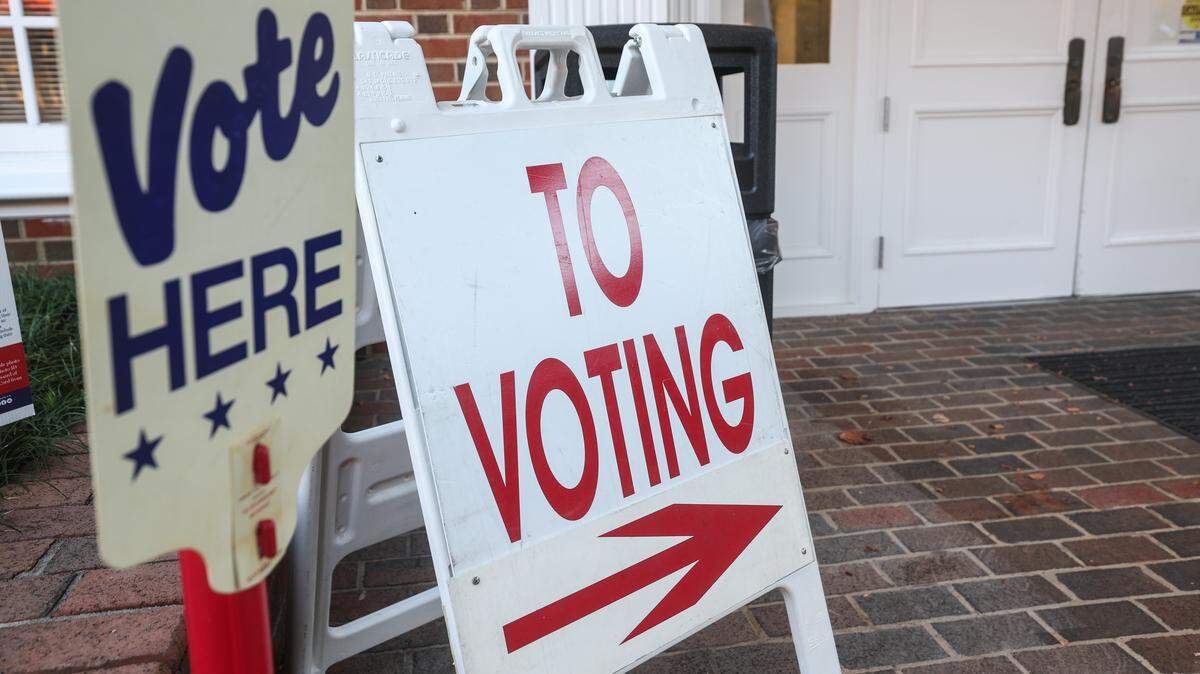
After weeks of debate over where and when Cabarrus County residents should be able to vote early, the county’s elections board unanimously approved a plan this week that leaves out one of the most contentious proposals: an early voting site in Midland.
The decision comes after public records obtained by news outlets showed North Carolina’s Office of the State Auditor asked Cabarrus officials to consider opening an early voting location in the southern Cabarrus town. Instead, the county approved a four-site plan that excludes Midland while also eliminating Sunday voting — another issue that had divided the board during lengthy negotiations.
Board Secretary Martin Ericson, a Democrat, said the unanimous vote represented a compromise after weeks of disagreement over both the Midland site and Sunday voting.
“Approaching the meeting this past Monday, it was determined that the Midland site was not going to work out,” Ericson told The Charlotte Observer. “The only determination then was whether we would have four or three early voting sites, and we came to an agreement on four sites.”
The final plan, announced Thursday, includes early voting sites at Cabarrus Arena & Events Center, Afton Ridge Library, Rowan-Cabarrus Community College’s Kannapolis campus, and Cabarrus County EMS Headquarters.
The debate over Midland stretched back months.
Board minutes show members voted in April to delay adopting an early voting plan for 30 days to allow additional time to look for a possible voting site in Midland. During that time, board members toured multiple potential locations before ultimately deciding not to include one in the final plan.
Ericson said the request to further explore Midland came from several sources.
“There was a request to delay for 30 days consideration of an early voting plan in an effort to find a site in Midland,” he said. “That request (came) from the State Auditor’s Office, from candidate for the state Senate Kevin Crutchfield and representatives of the public as well as the Cabarrus County Republican Party.”
Public records previously reported by Carolina Public Press show Cabarrus Elections Director Carol Soles wrote in an internal email that “apparently the Auditor would like an early voting site in Midland.”
State Auditor Dave Boliek’s office has faced scrutiny in recent weeks after records showed communications between the office and county election officials around North Carolina regarding early voting plans. Former elections liaison Dallas Woodhouse resigned earlier this month following reporting on those communications.
North Carolina Democratic Party Chair Anderson Clayton said in a news release reporting showing the office communicated with election officials in multiple counties raised concerns about outside pressure on local boards, calling it a “coordinated partisan campaign” to influence early voting decisions.
The Office of the State Auditor maintained that its interest in a Midland site was based on expanding geographic access to early voting, not dictating the county’s final plan.
“The Midland site would have added a site in the southern part of the county, which was sort of underserved,” spokesperson Randy Brechbiel told The Charlotte Observer. “But ultimately, this was a local board decision. They voted unanimously, so they’ll move forward with their plan.”
Woodhouse declined to comment.
Midland leans substantially more Republican than Cabarrus County as a whole. In the 2024 presidential election, Cabarrus County voters backed President Donald Trump with 50.9% of the vote, compared with 47.7% for former Vice President Kamala Harris. In Midland’s two voting precincts, Trump received a combined 71.6% of the vote, while Harris received 26.7%.
While the Midland proposal ultimately failed, another major point of contention — Sunday voting — was also resolved through compromise.
Earlier versions of the county’s early voting plan included Sunday voting, which Democrats generally supported and Republicans opposed. Ericson said he initially backed Sunday voting but concluded it was unlikely a non-unanimous plan including Sundays would be approved by the current State Board of Elections.
“It was decided that the board could not come to a unanimous plan that included Sunday voting,” Ericson said. “We had already come to an agreement on days and hours. The only contention still at that meeting was whether to include a site in Midland.”
Under North Carolina law, if county election boards cannot unanimously agree on an early voting plan, competing proposals are sent to the State Board of Elections, which has the authority to choose one of the submitted plans or create its own.
“It is entirely out of our hands,” Ericson said of that process. “It sort of behooves the county to come up with a unanimous plan.”
Ericson said he believes the final plan provides reasonable access for voters across the county.
“There is no perfect plan,” he said. “I think it is a reasonable plan.”
He noted that more than 98% of registered voters live within 10 miles of an early voting site and pointed to curbside voting, no-excuse absentee voting and bipartisan teams that assist residents in nursing homes and other care facilities as additional ways the county works to expand access.
Crutchfield, a former state representative and current Republican candidate for the state Senate, said he advocated for a Midland early voting site because residents in that part of Cabarrus County must travel farther than much of the rest of the county to vote early.
Crutchfield said Midland covers a large geographic portion of the county but has no early voting location, requiring many residents to drive to Concord or the Cabarrus Arena to cast ballots before Election Day. He also pointed to the Bethel Elementary precinct in Midland, which he said routinely records some of the county’s highest Election Day turnout, arguing that a nearby early voting site could improve access for those voters.
“I think they’re disenfranchised by not having that opportunity that’s even reasonably close to them,” Crutchfield said, estimating some residents in the easternmost part of Midland face drives of roughly 17 miles to the nearest early voting site.
Although disappointed the final plan did not include Midland, Crutchfield said he understood the board’s reasoning, saying members appeared to weigh the area’s population against the cost of opening another site.
“I’d rather them have a site in Midland,” he said, “but clearly this time they decided not to, and that’s what we’re moving forward with.”