Mecklenburg Superior Court candidates talk light rail, eCourts, case backlog
To help inform voters in the March 3, 2026, election, this candidate questionnaire is available to be republished by local publications in North Carolina without any cost. Please consider subscribing to The Charlotte Observer to help make this coverage possible.
This story focuses on the election for District 26C Superior Court Judge sitting in Seat 1, which features sheriff’s office attorney George Guise and Rowan County Assistant District Attorney Caleb Newman. The district covers northern Mecklenburg County.
Republican Judge George Bell, who currently holds the seat, is running to be a North Carolina Court of Appeals judge.
The Charlotte Observer asked both candidates in this race to complete a questionnaire to inform voters about their opinions on big issues facing voters.
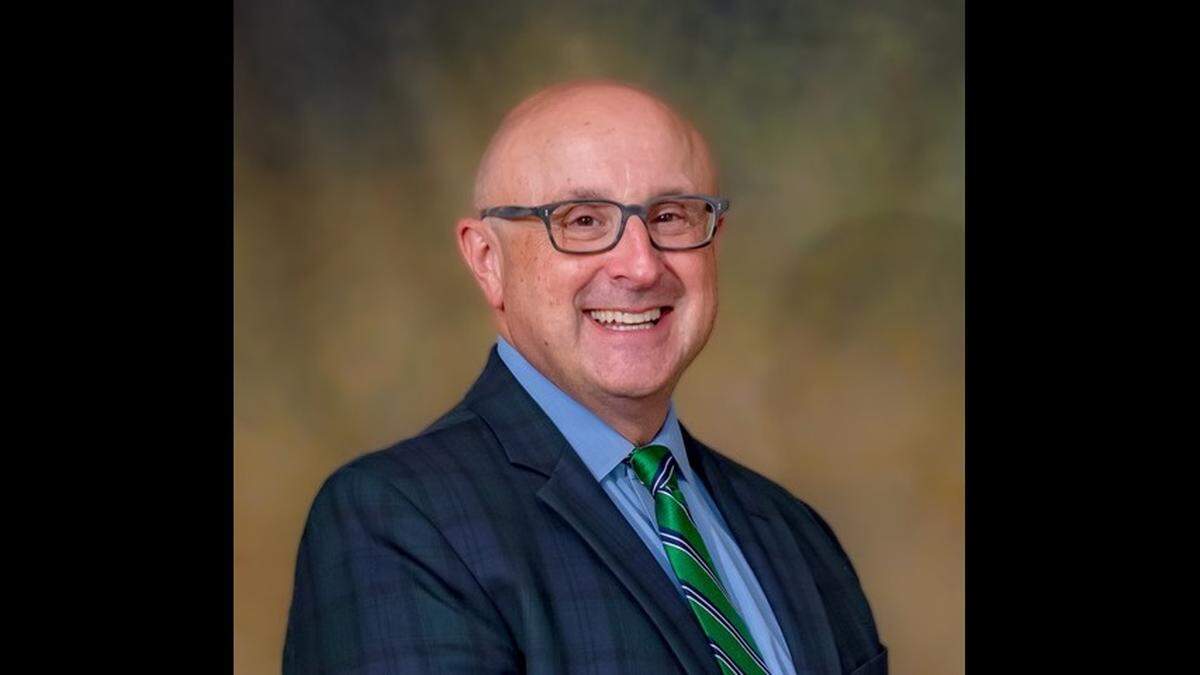
George Guise
Name: George Guise
Political Party: Democrat
Age as of 2/6/2026: 60
Campaign website: www.guiseforsuperiorcourt.com
Occupation: In-House Counsel to the Mecklenburg County Sheriff’s Office
Education: Davidson College (1987); Vanderbilt University School of Law (1990)
Have you run for elected office before?
No.
Please list highlights in your legal career.
Mecklenburg County Sheriff’s Office, Charlotte, NC - In-House Counsel (2019-Present)
Copeland Richards PLLC, Davidson, NC - Civil Litigation and Criminal Defense (2017-2019)
US Department of Justice, Charlotte, NC - Assistant US Attorney for the Western District of North Carolina, prosecuting gang-related offenses, drug trafficking, money laundering and violent crimes (2010-2017)
Davidson College, Davidson, NC - Grant Coordinator, Adjunct Lecturer, Major Gifts Officer, General Counsel (1999-2010)
Mecklenburg County District Attorney’s Office, Assistant District Attorney, prosecuting homicides, sex offenses, felony assaults and other violent crimes (1995-1997)
DeKalb County District Attorney’s Office, Decatur, GA - Assistant District Attorney, prosecuting both violent crimes and white-collar felony crimes (1991-1995)
Hurt Richardson Garner Todd & Cadenhead, Atlanta, GA - Civil Litigation in 100+ lawyer firm (1990-1991)
Please list highlights of your civic involvement.
Current:
National Sheriff’s Association - Legal Affairs Committee
North Carolina Association of Police and Sheriffs’ Attorneys
Mecklenburg County Key Court Officials
Mecklenburg County Criminal Justice Advisory Group (CJAG) - Executive Committee
Mecklenburg County Courthouse Security Committee - Executive Committee
Mecklenburg County Teen Court - Judge
Past:
North Carolina Association of Police and Sheriffs’ Attorneys - Board of Directors and President
Charlotte Center for Legal Advocacy - Board of Directors
Legal Services of Southern Piedmont - Board of Directors
McCrorey YMCA - Board of Directors
Queens University of Charlotte - Board of Visitors
Davidson College - Administrative Advisory Group, President
National Association of College and University Attorneys
What’s an example of a case you handled or observed that shaped you?
Having been a prosecutor of gang-related offenses and violent crimes for more than a dozen years, one of the first clients I accepted as court-appointed counsel in private practice was “LJ”. LJ was one of 83 members of the Nine Trey Set of the United Blood Nation charged in a sweeping RICO conspiracy in the Western District of North Carolina. He was “jumped in” to the Bloods when he was 9 years old. One of the first tattoos he got was his full name on his upper arm, because LJ’s mom was worried that he would end up in the morgue without proper ID, and the tattoo would help identify him. LJ was in-and-out of juvenile detention before making some effort to leave the gang by joining the Army at age 18. At the time he was indicted in the RICO case he was on active duty in Afghanistan, but he had remained connected with the gang. Ultimately, LJ elected not to go to trial and pled guilty to offenses that merited a sentence of 18 months in custody — significantly less time than almost every other defendant charged in the conspiracy. LJ and his family’s experience had a profound impact upon me, helping me to better understand that justice doesn’t begin or end inside the four walls of the courtroom. Justice can be impacted by circumstances outside someone’s control, like economic mobility or lack thereof, education and access to affordable health care, housing and even personal safety. LJ explained that as a 9-year-old boy, he felt like he needed the “protection” of the Bloods because his community couldn’t provide him the protection he needed otherwise. My court-appointed representation of LJ ended once he was sentenced, but I visited him in federal prison and kept in touch with him for several years after he was released. Last I heard from him he was living and working in South Carolina, married, a father, and fully disassociated from the gang.
Judges here run in partisan elections but are expected to be neutral arbiters on the bench. Why are you running with your chosen political party, and how would your political ideologies inform your leadership as a judge?
I know good judges who are Republicans and others who are Democrats like I am. In fact, every Superior Court Judge in Mecklenburg County permitted to endorse a candidate in my race has endorsed me, and this includes members of both parties. But I am running as a Democrat because I’ve been a Democrat all my life, and I believe that says something about the values that I will bring to the bench: an unwavering commitment to the need for an independent judiciary, an unbiased application of the law without influence from the legislature or executive, and a fierce dedication to the fundamental Constitutional safeguards of due process and equal protection for all individuals.
What made you want to run? Current events in Charlotte (light rail stabbings, Border Patrol) fixed a national spotlight on the city, and its judges became a pillar talking-point for the Trump administration and state officials. Did that contribute to your decision to run or cause any hesitation?
I am running because I sincerely believe that serving on the Superior Court bench would put to the highest and best use my over 30 years of experience and commitment to the provision and administration of justice in Mecklenburg County.
Current events in Charlotte have only amplified the importance of putting the most experienced, fair and impartial Judges on the bench.
The White House called Ukrainian refugee Iryna Zarutska’s death “the culmination of North Carolina’s Democrat politicians, prosecutors and judges prioritizing woke agendas that fail to protect their citizens when they need them the most.” Trump said “her blood is on the hands of the Democrats who refuse to put bad people in jail.” Mayor Vi Lyles called the death “a tragic failure by the courts and magistrates.”
As there exists the possibility that, if elected, I could preside over some aspect of DeCarlos Brown’s prosecution, including what could ultimately be his trial, it would be inappropriate for me to comment upon issues regarding responsibility for Iryna Zarutska’s death.
What parts of House Bill 307, “Iryna’s Law,” will most directly affect how you do your job, and do you support those changes?
Our courts are always under pressure to prioritize and move criminal cases with defendants in pretrial detention through the justice system as expeditiously as possible. HB307’s provisions will result in — and have already resulted in — a significant increase in the number of defendants being held in custody pretrial, putting even more pressure on the court system to work hard and efficiently to manage those cases appropriately, while maintaining and protecting all individuals’ rights to due process and equal protection under the law. While HB307’s new requirements with regard to the evaluation of mental health issues in consideration of conditions of pretrial release are initially the responsibility of Magistrate and District Court Judges, review of those release orders will frequently fall to the Superior Court and may create the need for additional administrative hearings. As a Superior Court Judge — or aspiring to become one — it would be inappropriate for me to indicate support for or against HB307 or any law. It would be my job to follow the law, and to ensure that it is applied fairly, correctly, and without favor or bias.
eCourts has many issues. It has reportedly caused people to be wrongfully arrested or held in jail longer than they should have been. It has also exposed sensitive information. What responsibilities do judges have when tech system failures affect victims or defendants?
Reliance upon any tech system, even one required to be used by the Administrative Office of the Courts and the Supreme Court of North Carolina, is never an excuse for the Court’s failure to protect the rights of victims or defendants. If a judge were to have knowledge of a failure of eCourts that might result in the infringement upon an individual’s rights, that judge would have an affirmative duty to step in and prevent the infringement, even if that were to mean having to find an alternative to the tech system on a case-by-case basis.
What are the most important issues in District 26 courts today, and how would you address them?
(a) The backlog of criminal cases, in particular cases charging violent crimes, remains a significant concern. Daily reports of the population of individuals being held at Detention Center-Central show the 10 longest held defendants all having been in custody more than five years, and one individual having been in custody more than six years awaiting trial. The backlog cannot be fully addressed or resolved without additional resources to include more prosecutors, defense lawyers, court staff and judges. But even with the resources currently available, we can and must do better. We can all work more diligently and more efficiently, and that starts with judges setting the example for hard work, productivity and accountability.
(b) Implicit racial bias in our criminal justice system also remains a reality. The US Census Bureau reported Mecklenburg County’s population to be around 1.2 million people in 2024, and approximately 32% African American. Yet the daily population report for residents of Mecklenburg County’s Detention Center-Central shows that approximately 75% of the individuals in custody pretrial are African American. While these numbers point to issues beyond the criminal justice system, they nonetheless suggest that the criminal justice system is implicitly biased and that judges need to receive training on implicit bias, to acknowledge their own implicit biases, and to establish standard practices to ensure the fair and equal treatment of all individuals coming before the court at every stage of a criminal case — from the setting of bond amounts to the sentencing of convicted defendants.
What would you want your reputation as a judge to be?
One of the highest integrity, who knows and adheres to the law, who works extremely hard, and who treats all individuals without favor or prejudice but with dignity and respect.
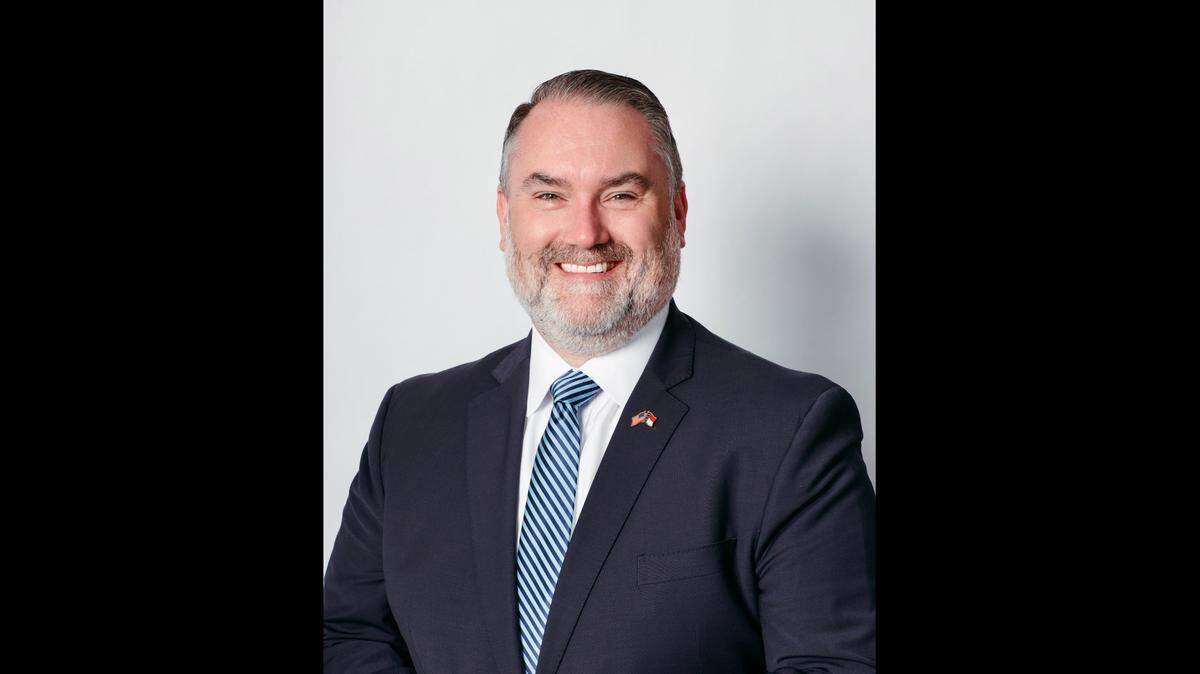
Caleb Newman
Name: Caleb Newman
Political Party: Democrat
Age as of 2/6/2026: 39
Campaign website: www.newmanforjudge.com (Facebook: Caleb Newman for Superior Court Judge) (Instagram: @newmanforjudge)
Occupation: Criminal, Superior Court/Homicide Prosecutor, Rowan County District Attorney’s Office
Education: University of North Carolina at Charlotte, BA in Criminal Justice, 2007; Charlotte School of Law, JD, 2014
Have you run for elected office before?
No.
Please list highlights in your legal career.
I began my legal career with the Federal Public Defender’s Office in the Western District of North Carolina, where I was primarily focused on post-conviction and appellate work before I transitioned to trial court representation. During my four-year tenure, I developed extensive federal trial experience, representing indigent defendants in complex litigation. Following a period in private practice centered around civil litigation within the North Carolina Business Court and Superior Court, I returned to public service as a prosecutor. Since 2019, I have served in the Cabarrus and Rowan County District Attorney’s Offices, where I currently prosecute high-level felonies, including drug trafficking, sexual assault, child exploitation and homicide.
Please list highlights of your civic involvement.
My commitment to public service is rooted in a lifelong dedication to advocacy and education. While in law school, I served as a volunteer with Safe Alliance, representing victims of domestic violence in court to ensure their voices were heard and their safety prioritized. As a product of North Carolina public schools, I am a fierce advocate for our education system. I have spent time tutoring students in the CMS system and traveled to Raleigh to demand competitive pay for our teachers. My passion for teaching extended into my professional career, where I served as an adjunct instructor at Central Piedmont Community College, teaching law and criminal justice to evening students. Beyond the classroom and the courtroom, I have been a vocal proponent of community safety, joining thousands in Washington, D.C., to march for sensible gun violence prevention in our schools. I am also a supporter of the arts and sing with the Charlotte Master Chorale, the resident chorus for the Charlotte Symphony Orchestra.
What’s an example of a case you handled or observed that shaped you?
In 2022, I had the distinction of becoming the first prosecutor in the State of North Carolina to take a Death by Distribution case to trial. This law, first codified in 2019 to hold illegal drug dealers accountable for overdose deaths, presents unique evidentiary and legal challenges. Following my successful prosecution of that landmark case, I have traveled across the state to train fellow homicide prosecutors and investigators on the complexities of these proceedings. Serving as a pioneer in this area of law has been deeply rewarding, allowing me to translate courtroom success into statewide educational leadership.
Judges here run in partisan elections but are expected to be neutral arbiters on the bench. Why are you running with your chosen political party, and how would your political ideologies inform your leadership as a judge?
North Carolina law requires all declared judicial candidates to identify with a political party. While I am running as a member of the Democratic party, my first and final loyalty is to the Constitution, North Carolina General Statutes, and binding case law from the Court of Appeals and Supreme Court. I identify as a Democrat because of a shared commitment to fairness, equal access to justice, and the protection of individual rights. These aren’t just partisan goals — they are the pillars of a functional democracy. My political ideology informs my leadership by driving me to ensure our courts are efficient, transparent, and respectful to every person who walks through their doors. However, once I put on my robe, I will be a neutral arbiter. A judge’s ideology must never be a predictor of a case’s outcome; rather, my values ensure that the process leading to that outcome is beyond reproach. In Mecklenburg County — particularly in District 26C — we value competence over rhetoric, and that is the kind of leadership I will bring to the Superior Court bench.
What made you want to run? Current events in Charlotte (light rail stabbings, Border Patrol) fixed a national spotlight on the city, and its judges became a pillar talking-point for the Trump administration and state officials. Did that contribute to your decision to run or cause any hesitation?
I am running for Superior Court Judge because I believe our trial courts are where our community’s most critical issues are resolved, and those resolutions require a judge with a steady hand informed by deep experience in those same trial courts. Having served our community and region as a federal public defender and a homicide and felony prosecutor, I have seen firsthand how much it matters to have a judge who is prepared on day one. Our courts are not training grounds, and it would be a disservice to litigants and parties to have an inexperienced and unqualified judge presiding over any trial court. I want to ensure District 26C has a Superior Court Judge that reflects our community’s high standards for professionalism, integrity, and a commitment to our community for years to come.
The recent events in Charlotte and the resulting national attention certainly highlight the immense stakes of our judicial system. While the national spotlight can certainly bring pressure, it did not cause me to hesitate for even a moment; if anything, it solidified my resolve. We need judges who remain unswayed by public clamor or political headlines. Whether a case is being discussed in a local coffee shop, on social media, or on a national news stage, a Superior Court Judge’s job remains the same: to look at the evidence, apply the law, and prioritize the safety and rights of the community. My decision to run is rooted in the belief that District 26C deserves a Superior Court Judge who is focused on the facts in the courtroom, not the talking points in a political campaign.
The White House called Ukrainian refugee Iryna Zarutska’s death “the culmination of North Carolina’s Democrat politicians, prosecutors and judges prioritizing woke agendas that fail to protect their citizens when they need them the most.” Trump said “her blood is on the hands of the Democrats who refuse to put bad people in jail.” Mayor Vi Lyles called the death “a tragic failure by the courts and magistrates.”
When a troubling event like this occurs, it is natural for the public and political leaders to demand answers and seek accountability. As a judicial candidate, I cannot comment on the fairness of political characterizations or the specifics of a case that may come before the court. However, I can say this: The primary responsibility of a Superior Court Judge is to uphold the law and ensure that our justice system protects the rights and safety of every citizen. Public confidence in the judiciary depends on judges who make decisions based strictly on the facts and the law, free from political pressure. My commitment is to ensure that the law is applied firmly and fairly so that our community remains a safe and just place to live.
What parts of House Bill 307, “Iryna’s Law,” will most directly affect how you do your job, and do you support those changes?
House Bill 307 represents a significant shift in how courts in North Carolina handle pretrial release, particularly regarding violent offenses and mental health considerations. As a prosecutor working in Superior Court every day, I have already become intimately familiar with the real-world implications of this major change in the advocacy of my current client: the State of North Carolina. The most direct impact on the role of a Superior Court Judge involves the new requirements for written findings of fact in certain bond hearings and the increased scrutiny of a defendant’s criminal record and mental health history. I fully support the goal of increasing transparency and ensuring that judicial officials have the most comprehensive and complete information available when making critical decisions about public safety. As a Superior Court Judge, I will strictly adhere to these new statutory requirements. My job is not to legislate, but to apply the law as written by the General Assembly, ensuring that every bond decision is documented clearly so the public can understand the basis for the court’s actions.
eCourts has many issues. It has reportedly caused people to be wrongfully arrested or held in jail longer than they should have been. It has also exposed sensitive information. What responsibilities do judges have when tech system failures affect victims or defendants?
The transition to eCourts has presented serious challenges that directly impact the lives of North Carolinians. When technical failures lead to wrongful arrests or the exposure of sensitive data, they undermine the very foundation of our legal system: due process. A judge’s responsibility is to be the final safeguard. We cannot simply blame the software; we must exercise active oversight. This means being proactive in verifying information when system red flags appear and ensuring that the Clerk’s Office and legal counsel have the support they need to correct errors immediately. My priority as a Superior Court Judge will be to ensure that efficiency never comes at the cost of accuracy. Every individual before the court — whether a victim seeking justice or a defendant seeking a fair hearing — deserves a system that works reliably.
What are the most important issues in District 26 courts today, and how would you address them?
In our district, our most pressing challenges are the persistent backlog of criminal trials — particularly for defendants in custody — and the geographic accessibility of judicial services. To address trial delays, I will scrupulously hold all parties accountable when continuances are sought in aging cases, adhering to the principle that justice delayed is justice denied. Cases do not improve with time, and both the prosecution and defense are entitled to a fair and speedy resolution. Furthermore, I am a vocal advocate for establishing a magistrate’s presence in northern Mecklenburg County. Currently, law enforcement and victims in Huntersville, Cornelius, and Davidson must travel to uptown Charlotte for routine matters that should and could be handled locally. Drawing on my experience working with domestic violence survivors, I know that local accessibility is not just a convenience — it is a necessity for an efficient and effective criminal justice system.
What would you want your reputation as a judge to be?
First and foremost, I want my reputation as a judge to be defined by fairness, honesty, transparency, and respect. I believe that every person who enters my courtroom — whether they are a victim, a defendant, an attorney, or a witness — deserves to be treated with dignity and to leave the courtroom feeling that they were truly heard. My goal is to be known as a judge who is exceptionally well-prepared and who applies the law with rigorous consistency and integrity — the same qualities I have exhibited since becoming an attorney. Having served as both a federal public defender and a homicide prosecutor, I understand the weight of the decisions made from the bench. I want my legacy to be that of a neutral arbiter who balanced a firm commitment to public safety with an unwavering dedication to the constitutional rights of every individual.
This story was originally published February 16, 2026 at 5:14 AM.