No windfall: With small RNC in town, uptown businesses ‘expecting nothing from it’
When the Democratic dominated city council in Charlotte threw its weight behind bringing the Republican National Convention to the city two years ago, members touted the economics over the politics.
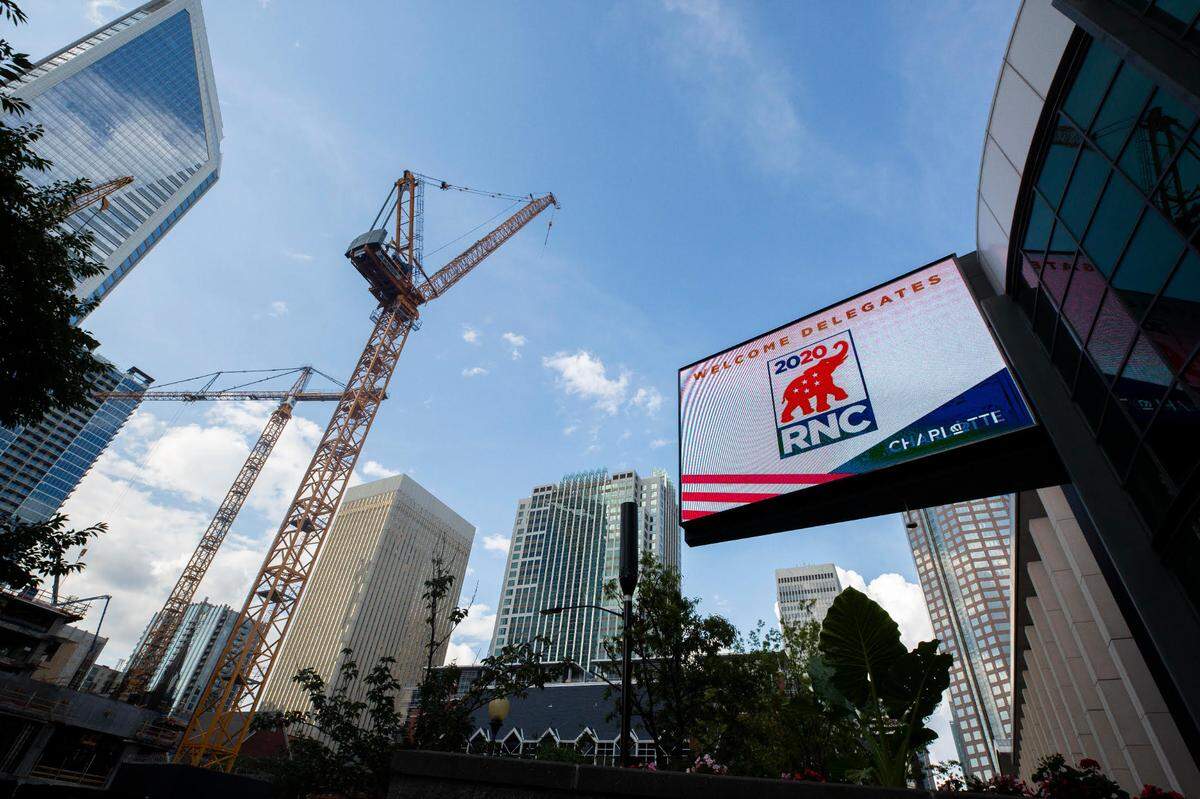
Despite a contentious vote, proponents said they supported the bid because they expected the convention would be a windfall for the city’s hotels, restaurants and other businesses, with an economic impact of over $150 million. And it would showcase the uptown skyline on news stations around the world, they said.
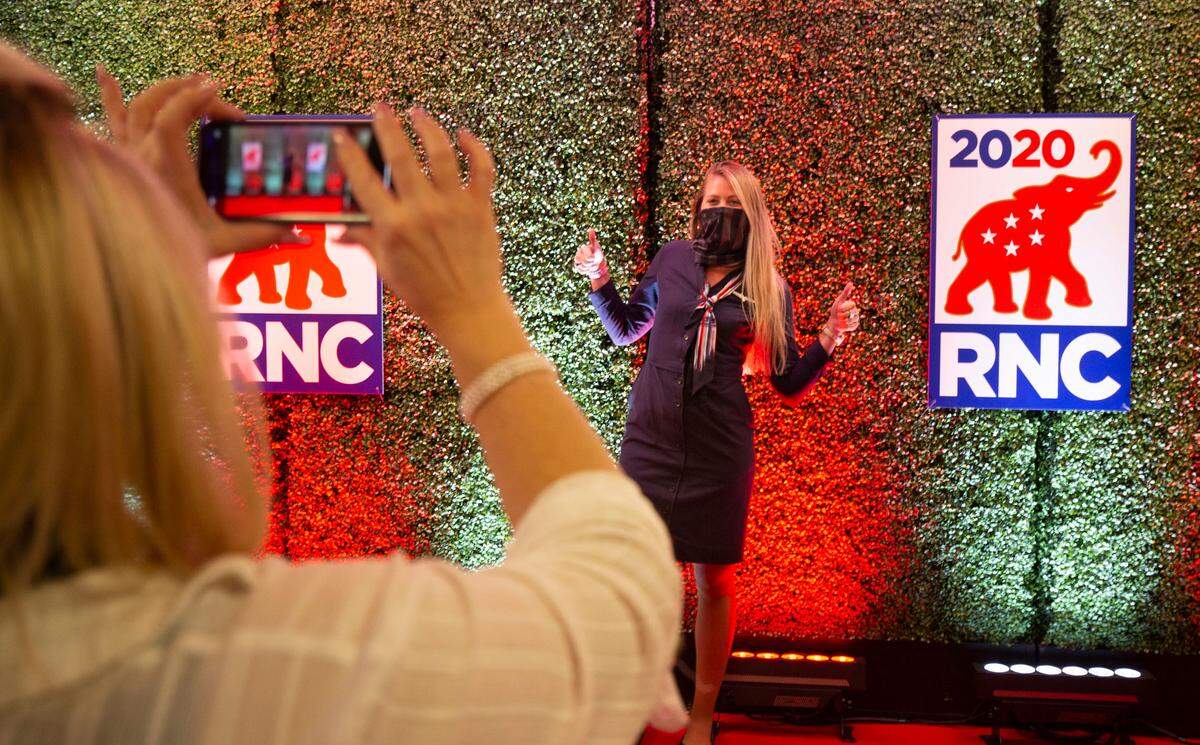
Now, because of the novel coronavirus pandemic, what was once a flashy, four-day event has been reduced to just a few hours at the Charlotte Convention Center on Monday.
A total of 336 delegates will gather there to nominate President Donald Trump and Vice President Mike Pence, before leaving town that afternoon. The convention was originally expected to draw 50,000 people to the city.
As a result, the benefits for local businesses are now likely to be minimal, according to several economic experts.
Pierre Bader, owner of Aria Tuscan Grill on North Tryon Street, said he initially was gearing up for the biggest month of the year with the full RNC event planned in uptown. He said he was part of negotiations to host up to 1,000 officials at Founders Hall.
“But it all came crashing down,” he said.
Now, with about 300 to 400 convention guests expected, Bader said that’s about how many diners he’d serve on a normal Friday or Saturday night before the pandemic. “We’re expecting nothing from it,” he said.
Even a full-scale convention doesn’t produce the bonanza many expect, said Eric Heberlig, a political science professor at UNC Charlotte. Instead, he said the boost usually goes to a handful of industries, like hotels, restaurants, caterers and taxi drivers.
“This time around, even those industries that typically get the bulk of the spending aren’t going to see much of it,” he said. “So, economically speaking, it’ll be a normal weekend in Charlotte.”
City boosters and some small businesses say any additional dollars in the economy are helpful amid COVID-19. Still, it’s a fraction of what was once expected.
“Most of the economic impact and the way we measure impact is really about visitor spending,” said Tom Murray, CEO of the Charlotte Regional Visitors Authority. “Certainly it’s not going to be that kind of event obviously, when we’re expecting upwards of over 35,000 people, and we’ll have probably 400 to 500 people.”
Promised benefits
The Democratic National Convention held in Charlotte in 2012 pumped $164 million into the local economy, a study commissioned afterward by the CRVA, city and three other groups found. The RNC was expected to produce a similar economic impact.
“It’s really unfortunate for a lot of local businesses and vendors that expected to have an economic lift from a national political convention, they didn’t get to see a bunch of that,” said John Lassiter, CEO of Charlotte’s host committee for the convention.
Even without the coronavirus, some previous political conventions have fallen short of economic expectations. The 2016 convention in Cleveland generated less than anticipated by local officials, and experts say the gains are not widespread.
According to the 2012 DNC study from consultant firm Tourism Economics, hotels benefited the most, booking 61,246 room nights and generating $20.9 million in revenue. Visitors also spent millions on food and beverage, as well as transportation, the study found.
Those industries have also been hardest hit as restrictions on travel and food and beverage industries were implemented to curb the spread of COVID-19.
‘A light at the end of the tunnel’
As businesses reopen and try to rebound from the devastation, some were looking to the RNC as a crucial boost.
Vinay Patel, principal with SREE Hotels, said he lost $2.5 million in contracted room nights at his 12 Charlotte area hotels. Between the rooms, food and beverages, he expected to bring in around $3 million from convention goers.
“What the RNC meant was a light at the end of the tunnel for the industry,” he said. “If this and the DNC, if they went off without a hitch, it would signal to this country and the globe that there is some sense of normalcy coming back in all of this.”
Restaurateur Mital Naik said there are other barriers, literally, for getting a business boost.
Brazz Carvery & Brazilian Steakhouse is across the street from the convention center. Naik said a fence barricade will block access along South College Street.
“So I don’t think we’re going to see anything,” he said. “I don’t see them bothering to come over here.”
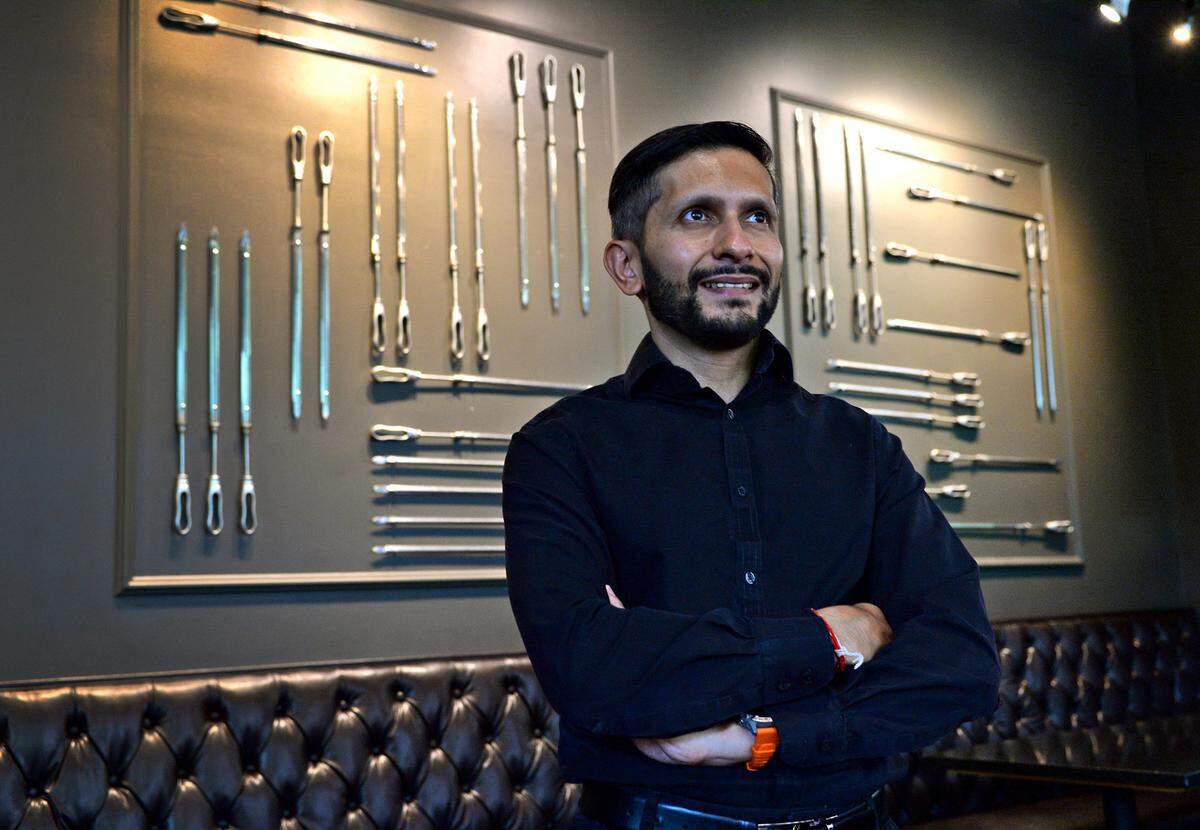
Naik said originally RNC organizers talked about providing a walkway for easy access but that fell away as venue changes started in June. ”They’ve done what they needed to do for security,” he said. “Planning in a month vs. a year is going to have different outcomes.”
Still, Naik has his “fingers crossed” he’ll see some diners. “We’re always trying to be optimistic but I don’t have any expectations. I hope I’m wrong,” he said.
‘Any business is good business’
With the coronavirus wreaking havoc on restaurants and businesses, some are eager to welcome the RNC, or at least hope it could bring some traffic to uptown.
Ri Ra on North Tryon Street reopened Aug. 10. On Wednesday, the Irish restaurant and pub shared a welcome to RNC delegates, staff and guests on Facebook: “We are open for business and can’t wait to show off our beautiful restaurant … Grab your mask and come on by!”
Dave Adams, assistant general manager at World of Beer in Epicentre, said any traffic would be good. “We’re hopeful it will bring more business in,” he said.
The Epicentre was a hot spot for events and celebrity sightings during the 2012 DNC. Adams said now only three eateries are open there. The other two are Insomnia Cookies and Mortimer’s Cafe & Pub.
When economists calculate the impacts of events like political conventions, they often take into account potential losses, for example when residents and office workers stay away due to the traffic and security measures.
It’s called the crowding out effect, says Victor Matheson, a professor of economics at the College of the Holy Cross in Massachusetts who has studied the impact of political conventions.
But this time around, because activity has already come to a halt in the center city, all new business is beneficial, he said.
“What usually happens with one of these things is you’ve got a gigantic influx of money and people but at the same time it creates such a security nightmare and such a massive hassle for everyone living in the city that it turns out to be pretty close to a wash a lot of the time,” he said. “At least the small impact you’re getting is a real impact that is not likely to displace other activities that would have happened anyway.”
Lassiter said the host committee has spent $20 million on operations that flowed into the local economy.
The host committee also announced Friday that it would give $500,000 worth of grants to small businesses in the hospitality sector that would have seen a boost from the convention.
A spokeswoman for the RNC said supporting businesses and workers in Charlotte is a “top priority.” She pointed to partnerships with local caterers, QC Catering and Uptown Catering Company, to provide food for delegates.
Ginny Northrup, sales manager for QC Catering, said the Charlotte company has about 15 smaller events booked in the area, thanks to the RNC being in town. The 10-year-old catering company usually books more than 50 events a week with over 200 guests at weddings and corporate functions.
“It definitely gave us a little boost in sales,” Northrup said. “Any business is good business right now.”
Media attention
Part of the allure of bringing a political convention is the idea that a city is in the international spotlight. The event was once expected to bring 15,000 journalists from across the world.
That’s why, even with the debate over the economic value, many cities still opt to host conventions, experts say.
“It’s pretty much a good commercial for a hosting city,” said R. Craig Sautter, author of three books on the history of presidential conventions and adjunct faculty at DePaul University in Chicago. “Which is why so many cities bid for the convention, even if they know they’re going to lose some money on it.”
But with a much smaller number of reporters flocking to Charlotte, the publicity benefits dwindle, too.
“We probably will not get the kind of reach that we had hoped to,” said Murray, with the CRVA. “But it certainly never hurts to have somebody writing a positive story about your city.”
Convention organizers and local boosters say they’re doing what they can to still promote the city.
The CRVA and Charlotte Center City Partners are teaming up to show off the city to RNC guests, said Center City Partners CEO Michael Smith. CCCP encourages economic, cultural and residential development in uptown.
“We’re excited to have the delegates here even though it’s a different scale than planned,” Smith said. He said the event will provide a “pop of guests” to hotels, caterers and restaurants.
The two groups will give out maps highlighting things to see in uptown, like parks, water fountains and murals, and spotlighting the “many great restaurants,” Smith said.
The RNC, Smith said, is going to have a different impact than originally planned, but hopefully will garner media attention.
“It’ll be nice to have another 400 guests looking for things to do and restaurants to sample,” Smith said. “Our hope is that these guests return home and tell stories of our hospitality and the great place of business that Charlotte is.”
This story was originally published August 21, 2020 at 7:30 AM.