
Republican National Convention kicks off in Charlotte, subdued — then Trump shows up
The renomination of Donald Trump for a second term as president of the United States began Monday morning at an unusual Republican National Convention in the Richardson Ballroom of the Charlotte Convention Center.
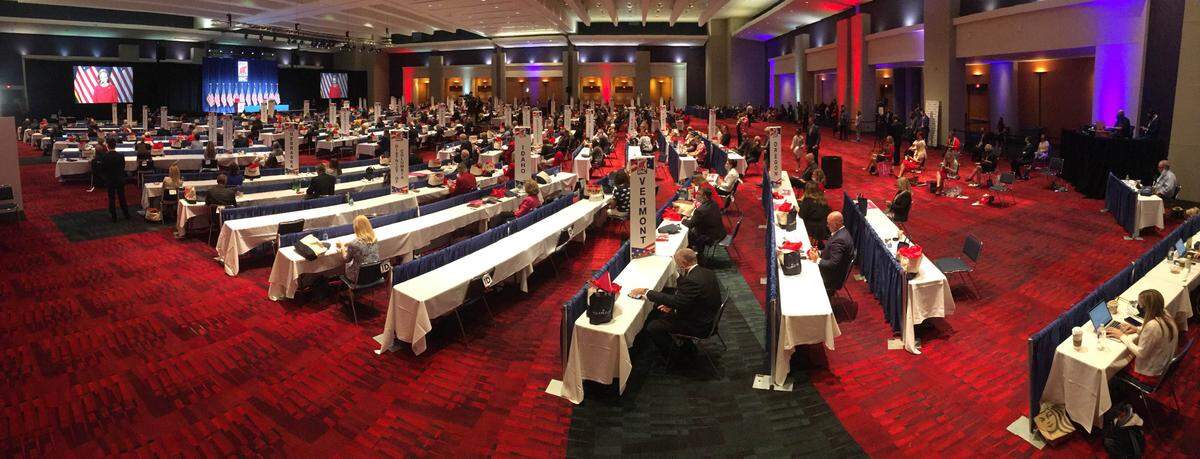
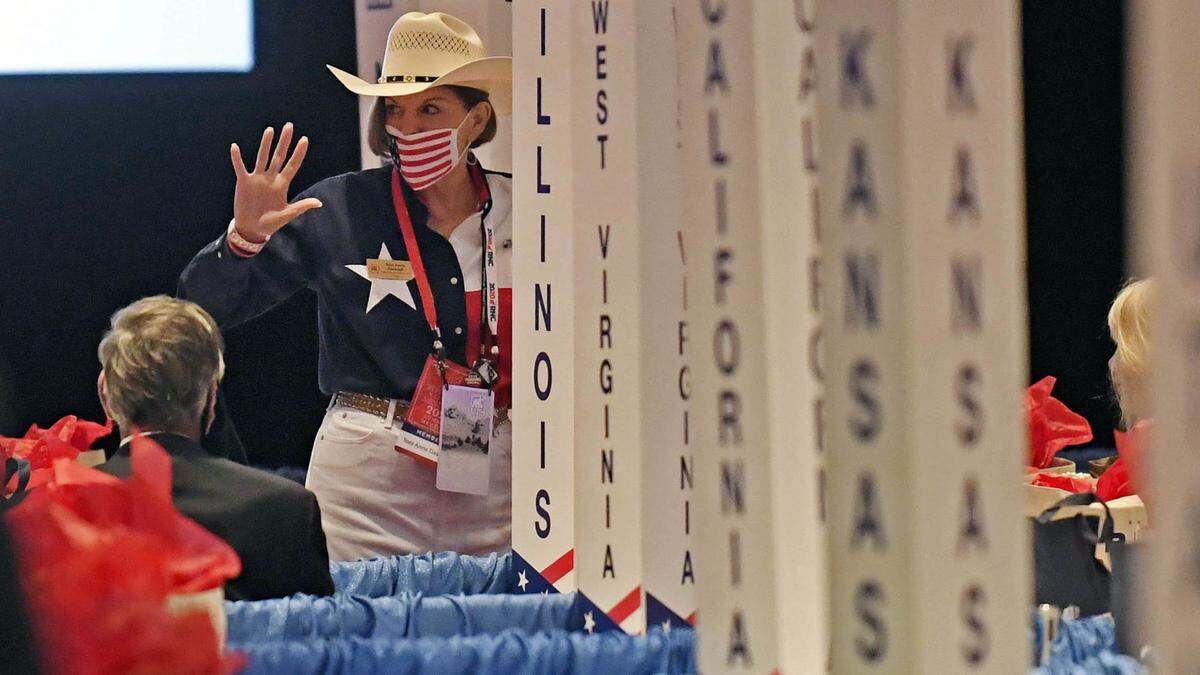
Instead of raucous crowds of delegates, swarms of media and a flood of thousands into uptown Charlotte, the roll-call vote to re-up Trump as the presidential nominee for the Republican Party took place in a much more subdued environment. The ongoing coronavirus pandemic, which has killed over 170,000 Americans so far, limited the size of the event to only a few hundred, seated at individual six-foot tables spaced out in the convention hall.
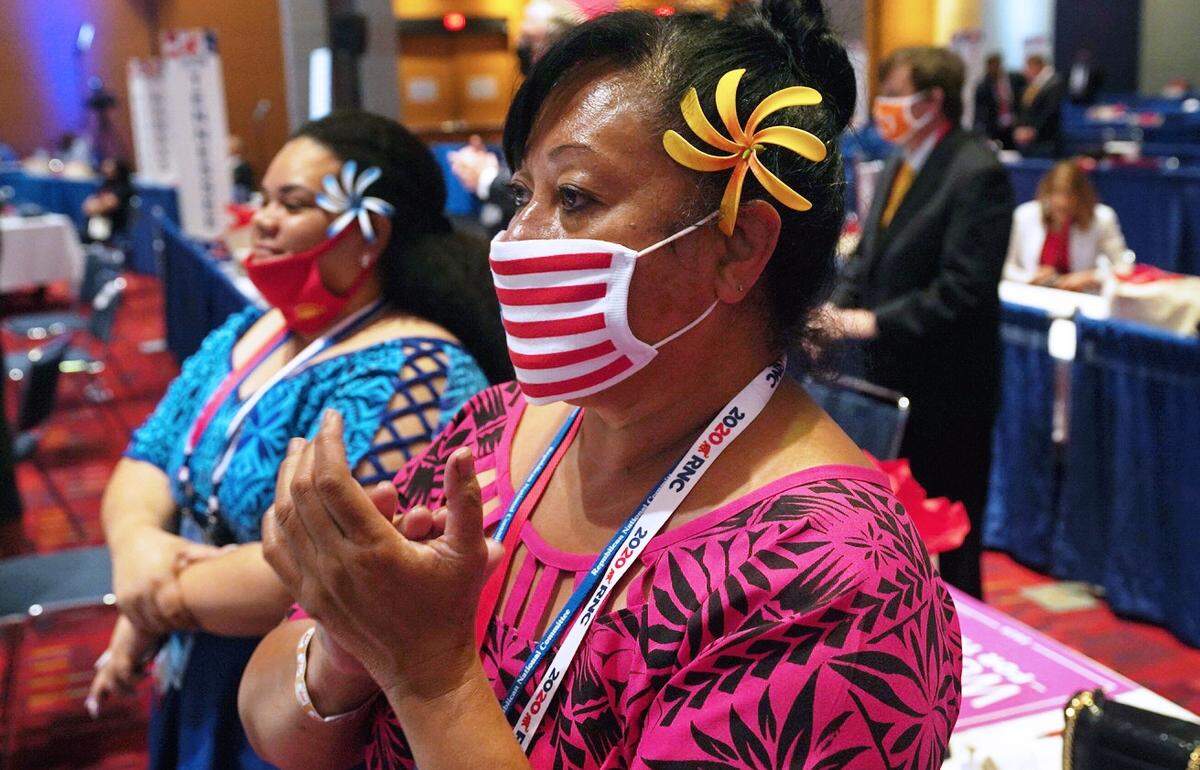
All visitors for the event underwent a test for the virus conducted by local health-care workers, and all attendees were asked to wear masks. Inside the convention hall, though, many delegates were not wearing them, or had them below their chins. Staff said they would enforce the public health mandate.
Only six delegates from each state were allowed to attend the event, leaving a crew of high-ranking party officials from across the country to do the formal work of renomination. The ballroom in which the roll-call was held was used in the 2012 Democratic National Convention for a speech by then-First Lady Michelle Obama.
In contrast to the Democrats’ roll-call vote, which took viewers on a video tour around the country, Republican held a classic in-person roll-call vote, complete with the tradition of adding in local flavor to the rote listing of votes. Connecticut, the Nutmeg state, cast 28 “spicy” votes for Trump. Delaware’s representative wore a tri-corner hat, to commemorate that state’s role in the American Revolution. North Carolina’s vote, delivered by John Steward from Union County, included shout-outs to the first flight at Kitty Hawk, the radio station WBT and North Carolina A&T University.
There was no question of the winner, though: all states cast all of their votes to re-nominate Trump, who did not face major opposition.
‘Boring. B-o-r-i-n-g’
Much of the early proceedings on Monday were taken up with technical work. Substantive changes to the party’s platform and rules were put off until 2024, leaving little important business for Monday outside of the renomination of the presidential ticket.
“This is the most subdued convention I have ever seen,” said Ada Fisher, a North Carolina Republican delegate from Salisbury. She described the weekend so far with one word: “Boring. B-o-r-i-n-g.”
With opposition to Trump almost entirely excised from the party, Vice President Michael Pence was renominated for a second term with unanimous support shortly after 10 a.m. He spoke to the convention at noon, in which he issued a call to “make America great again, again.”
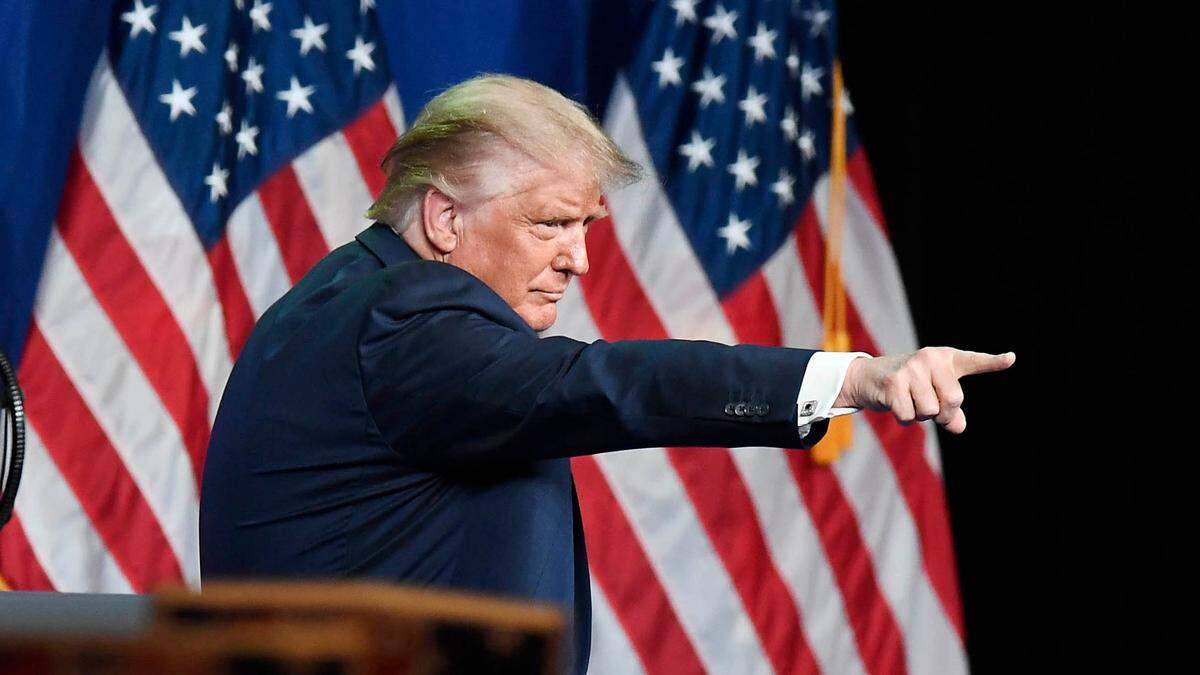
Trump addressed the crowd after formally winning renomination around mid-day, when the votes of Florida clinched the nomination. What was already expected to be a hard-fought battle for re-election has only been complicated by the pandemic. The president is trailing his rival Democrat, former Vice President Joe Biden, in the polls in a number of swing states, including North Carolina.
“We did this out of respect for the state,” Trump said about hosting the convention in person. “We said we wanted to hold our convention in North Carolina.”
Trump gave an almost hour-long wide-ranging speech that focused partly on the coronavirus pandemic, which was seldom mentioned by other speakers during the convention. He later bounced around a numbers of subjects: how the networks were covering the convention, keeping the word “God” in the Pledge of Allegiance, the Republican running to replace now-White House Chief of Staff Mark Meadows in Congress, his poll numbers, the legitimacy of mail-in voting and pharmaceutical pricing.
He concluded with a pitch outlining goals for his second term: strengthening the military, creating 10 million jobs in the first 10 months, building highways faster, hiring more police, and criminal justice reform.
“I believe we have far greater enthusiasm in this election,” he said. “This is the most important election in the history of our country.”
He left the convention at 1:30 p.m. to attend an event in Henderson County before returning to Washington. The convention finished its public business shortly before 2:00 p.m.
Welcoming audience
Trump’s pitch was welcomed by a friendly room.
“Since winning the 2016 election in historic fashion, President Trump has worked relentlessly every single day to keep his promises to the American people,” said Michael Whatley, the chairman of the North Carolina Republican Party, in his speech nominating Trump for a second term.
“No president has done more for the American people in his first four years than Donald J. Trump,” he said.
Despite the unanimous support in the room for Trump, many Republicans who once clamored for his approval are conspicuously absent from the speakers list for the convention, which will shift to other locations for the following three virtual days of events. Instead, a coterie of family members and loyalists, like his children Ivanka, Tiffany and Don Jr., will speak.
U.S. Sen. Thom Tillis, a North Carolina Republican in a competitive re-election fight this year, was a prominent no-show at the Monday roll-call vote. He currently trails his Democratic opponent, former state Sen. Cal Cunningham, in most polls.
Charlotte to Florida to Charlotte
The events that led to this admittedly low-key event zigged and zagged from the handshake world of local Charlotte politics to a pitched conflict between Gov. Roy Cooper and President Donald Trump. Even before the pandemic hit, the Charlotte City Council vote to host the convention in the first place passed by a slim margin two years ago.
In the months since the pandemic set in on the U.S., the fate and location of the convention was in doubt numerous times. Early into the pandemic, Trump threatened to pull the convention from Charlotte if he couldn’t have a full crowd to speak to. Cooper declined to indulge the idea. Trump then said he would move the convention to Jacksonville, leaving only the contractually required activities in Charlotte.
But when thousands began to die from the virus in Florida, in part due to the state’s rapid relaxation of public health restrictions, a Jacksonville convention was no longer an option. A skeleton convention in Charlotte, tightly hewn to local public health guidelines, was all that was left.
Uptown businesses that were expecting a boom now anticipate little gain from the event. The millions of dollars raised by Republican boosters for the event instead were redirected in part to local charities. And a city that was expecting a party that would foster civic pride, instead got a speech in a convention center ballroom that normally hosts mid-sized business groups.
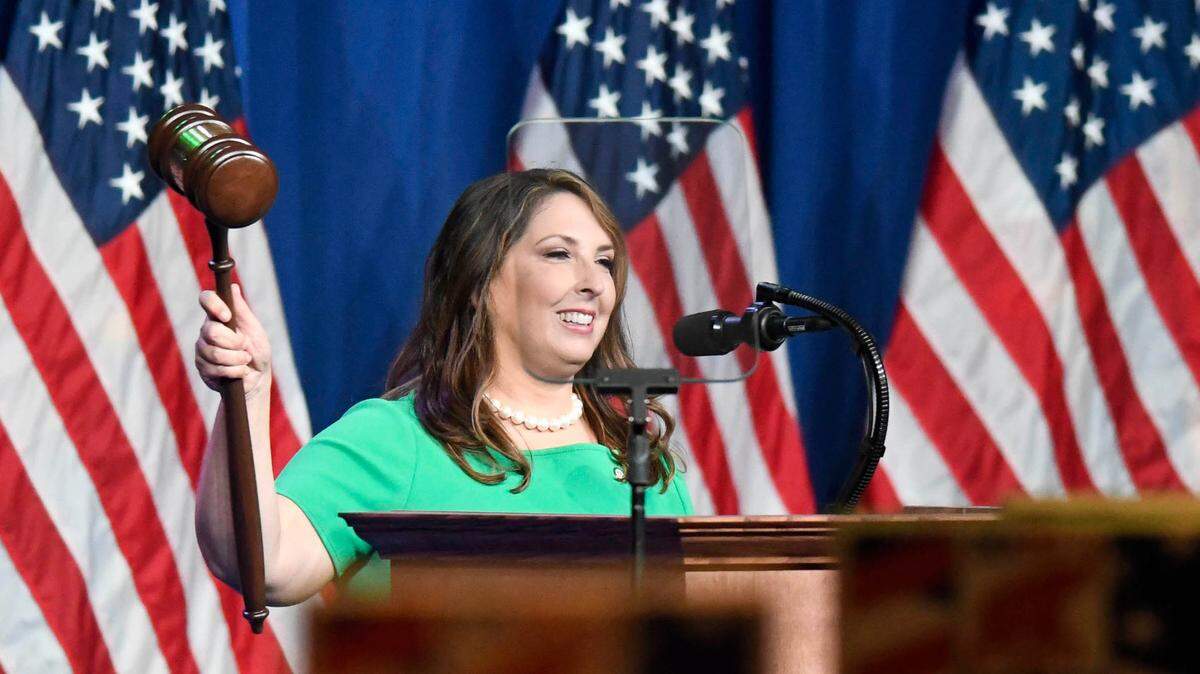
Despite the tumultuous path to Monday’s events, at the top of the event Republican National Committee Chair Ronna McDaniel praised Charlotte Mayor Vi Lyles, a Democrat who was a top booster of bringing the RNC to Charlotte. “You, the city, and Mecklenburg County have been great partners,” McDaniel said.
The smaller event was still contentious in the city, with protests rolling through the city for the three nights preceding the events. Four were arrested overnight protesting the RNC. One person was arrested Monday for jumping a fence in the outer security area of the convention.
Flaunting public health rules
While the scale of the event was greatly diminished, many were still concerned about its public health risks.
Though all guests were required to wear masks and stay six feet from one another, many attendees were not wearing masks and gathered in tight groups throughout the event. When Trump spoke, many delegates left their seats to crowd around the podium.
Mecklenburg Public Health Director Gibbie Harris contacted the RNC about the lack of masks and social distancing during the event Monday. Harris said she was assured that the RNC was working hard to address the issues. Still, many attendees were not wearing masks throughout the event. All RNC attendees were tested for COVID-19 upon arriving at the convention this weekend.
This story was originally published August 24, 2020 at 9:37 AM.