
Bringing Aretha Franklin to perform in Raleigh in the late ’60s was a pretty big deal
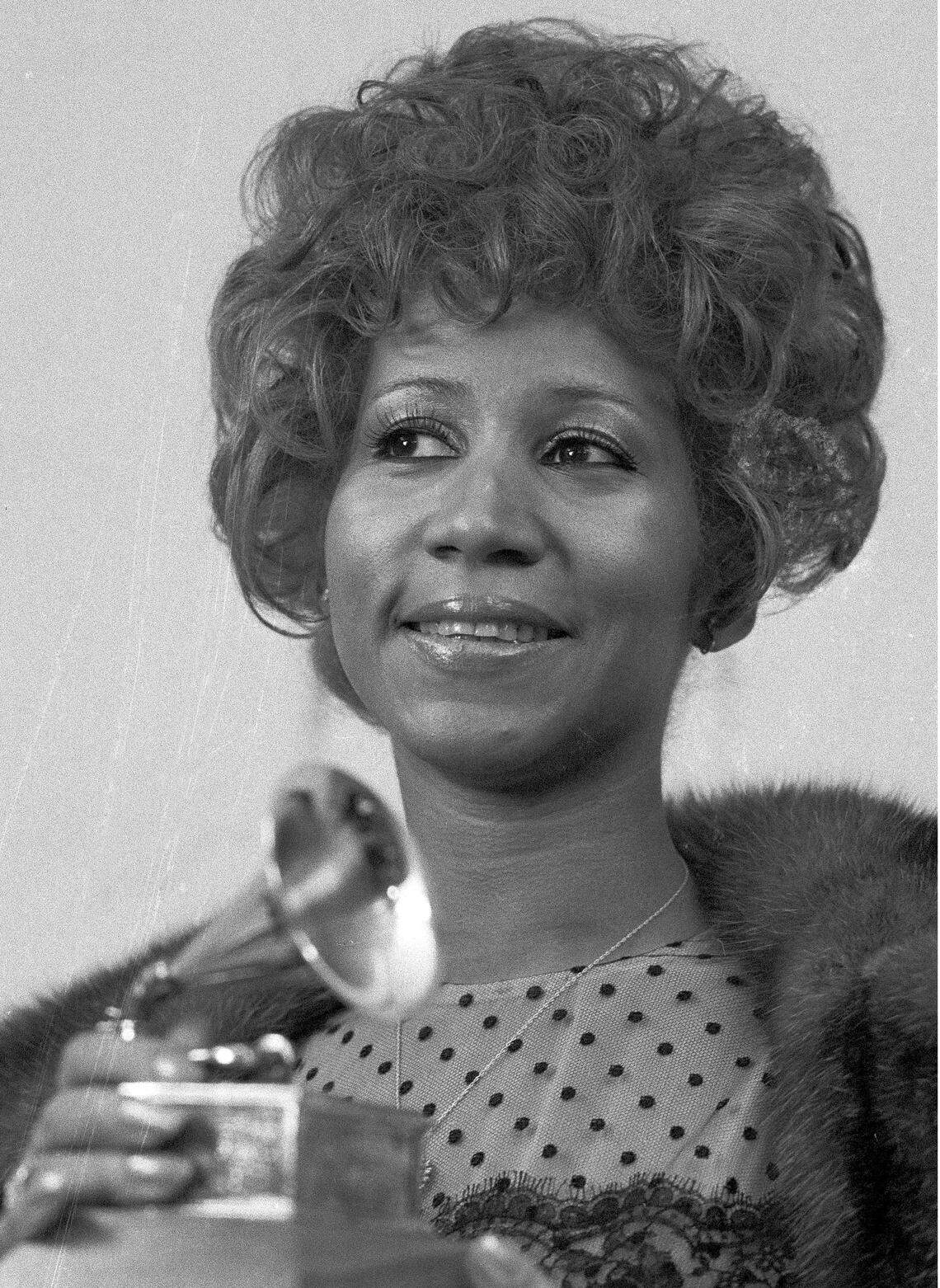
Aretha Franklin, who died Thursday, is remembered locally for two concerts at the Durham Performing Arts Center in recent years.
But the Queen of Soul performed in Raleigh a half-century ago, and the promoter’s son remembers it was a milestone for his father to bring one of the hottest acts around to North Carolina.
“It was well-attended, one of the highlights of my father’s career,” said Joe Winters Jr., who is now 73 and lives in Raleigh, in a phone interview after Franklin’s death.
His late father, Joe Winters Sr., was one of the top promoters on the R&B circuit, bringing acts to Raleigh like Count Basie, Cab Calloway and James Brown.
And then there was Franklin, who performed around 1969 at the Dorton Arena at the State Fairgrounds — which had a capacity of 8,000 then. (The year is approximate because the venue’s records don’t go back that far, said Sarah Ray, NC State Fair public information officer.)
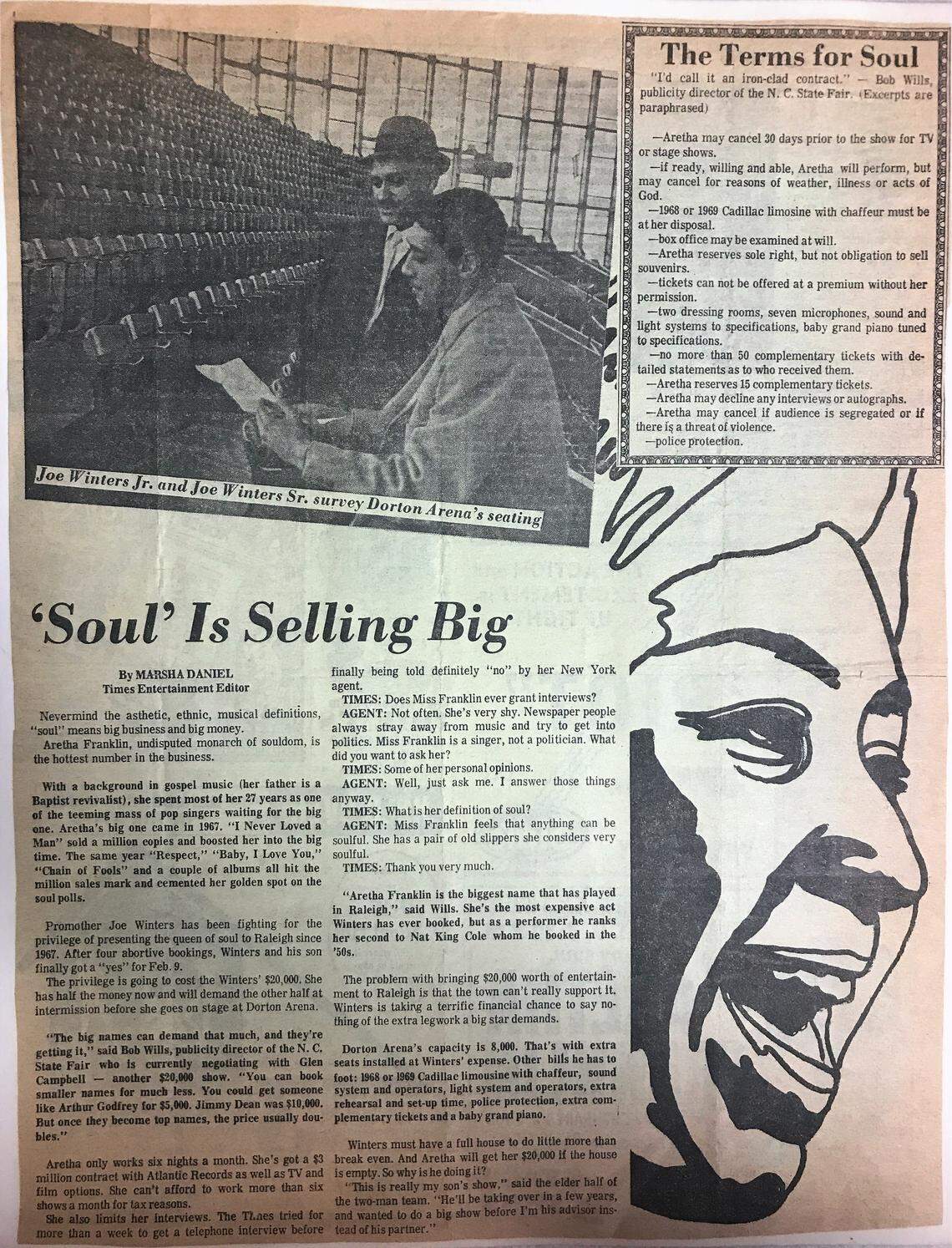
Luring Franklin, described by The Raleigh Times newspaper as “the undisputed monarch of souldom,” was a coup for a variety of reasons.
“Aretha Franklin is the biggest name that has played in Raleigh,” said Bob Wills, the NC State Fairs’ publicity director, in a Raleigh Times article that previewed Franklin’s concert.
The article goes on:
“Promoter Joe Winters has been fighting for the privilege of presenting the queen of soul to Raleigh since 1967. After four abortive bookings, Winters and his son finally got a ‘yes’ for Feb. 9.
“The privilege is going to cost the Winters $20,000. (Franklin) has half the money now and will demand the other half at intermission before she goes onstage at Dorton Arena. ... She’s the most expensive act Winters has ever booked.”
Winters Jr. remembers the show originally was scheduled for NC State’s Reynolds Coliseum.
“But something happened. She had an accident, broke her leg and we had to get a date later,” he said.
“And of course, the price went up,” he added with a laugh. “From $5,000 to $20,000. That’s when ‘Respect’ came out and it skyrocketed.”
After inflation, that $20,000 would come to $140,000 in 2018 dollars, according to an online inflation calculator. And while the article goes on to say that promoter Winters would be lucky to break even, his son remembers that they did all right.
“We made some money, but not as much as if we’d had that $5,000 contract,” he said.
The number of attempts to book her isn’t far from her two-for-seven batting average for Triangle bookings between 2005 and 2016; she played at DPAC in 2012 and 2016, both rescheduled shows.
The Raleigh Times story focused almost exclusively on the monetary aspect of the show, including Franklin’s contractual demand that the promoter provide a “1968 or 1969 Cadillac” limousine (with chauffeur). Winters’ memory of Franklin, however, was that she was far from a diva.
“She was a very nice person,” he said. “Soft-spoken and outstanding and nice to deal with. A nice caring person.”
Winters Jr. chose not to join concert business, though his father certainly had been successful.
“Most of his shows were at Raleigh Memorial Auditorium, and James Brown would always come through,” Winters said. “He never did lose any money with James Brown.”
Winters Sr. was 93 when he died in 2005.
But the concert business started changing about the time Franklin came to Raleigh.
“We had a few more shows after that,” Winters said. “At one point, performers started demanding a lot of things like food and alcohol. But we couldn’t supply alcohol. Aretha didn’t ask, but there were certainly some who wanted more amenities. So I got out of the business. After college, I ended up with the federal government.”
This story was originally published August 17, 2018 at 7:47 PM with the headline "Bringing Aretha Franklin to perform in Raleigh in the late ’60s was a pretty big deal."