
Special Forces ‘icon’ who survived a Nazi concentration camp in WWII dies at 83
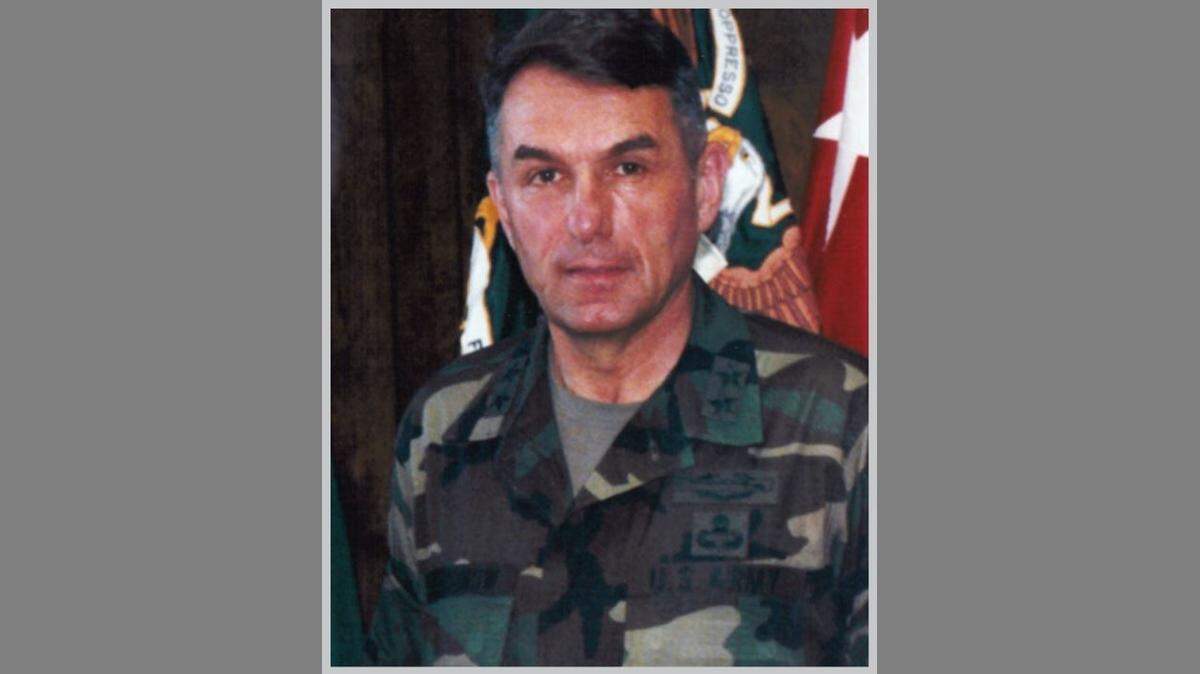
The man who would go on to become an icon for U.S. Army Special Forces and lead American forces in Berlin as the Berlin Wall came down also spent three years as a child in a Nazi concentration camp. Maj. Gen. Sidney Shachnow died Friday at his home in Southern Pines, North Carolina. He was 83.
Bob Charest, who served twice under Shachnow, told the Fayetteville Observer that Shachnow would be remembered as a great leader in U.S. Special Forces.
“He stood out throughout his career,” Charest told the Observer. “He is quite an icon among Special Forces troops.”
The Observer described Shachnow as “a legendary Special Forces officer.” He spent 39 years in the military, including 32 years as part of the Green Berets, according to the U.S. Army Special Operations Command.
Shachnow was born in Lithuania in 1934. When he was six years old, he was imprisoned in a Nazi concentration camp for three years, according to the Army, and was liberated by the Soviet army. He made his way to Europe with his family, according to an interview he gave to the Jewish Post, and emigrated to the United States in 1950.
He joined the Green Berets in 1962 and served two tours in Vietnam, according to the Army. He later commanded American forces in Berlin. He was there when the Berlin Wall came down.
In a 1992 article in the New York Times described how Shachnow went from an immigrant in Salem, Massachusetts to becoming a Special Forces commander: “There he finished high school and fell in love with an American girl. Since neither family approved of the match, he joined the Army so he could leave town and marry her. He became a Green Beret commander in Vietnam, later led American forces in Berlin and is now a major general at Fort Bragg.”
He told the Fayetteville Observer: “Here it is the very capital of fascism and the Third Reich. The very buildings and streets where they were goose-stepping and heil-Hitlering and the very system that put me in the camp and killed many people.”
He continued, the newspaper reports, “Here we are 40 some-odd years later, and I come back to be commander of American forces in that city and a Jew on top of that … It sort of adds insult to injury, doesn’t it?″
In a separate 2012 interview, he told the Jewish Post about one memorable time in Berlin: “At a dinner with my Russian counterpart and senior KGB officers they were laughing. When I asked them why, they replied, ‘Here you are, a Jew. You were liberated by us, the Russians. Now you are defending the Germans who had incarcerated you and committed atrocities against your people while you are getting ready to fight us, your new enemy.’”
Shachnow returned to the United States in 1991 to take command of the Special Warfare Center. He retired in 1994 and published his best-selling biography Hope and Honor: A Memoir of a Soldier’s Courage and Survival.
Shachnow is survived by his wife Arlene, four daughters and many grandchildren. There will be a memorial service for Shachnow Oct. 13 at 3 p.m. at the Boles Funeral Home in Southern Pines, North Carolina.
Charles Duncan: 843-626-0301, @duncanreporting
This story was originally published October 3, 2018 at 10:54 AM.