Business leaders seeing talent gap want to fund more computer science teachers in NC
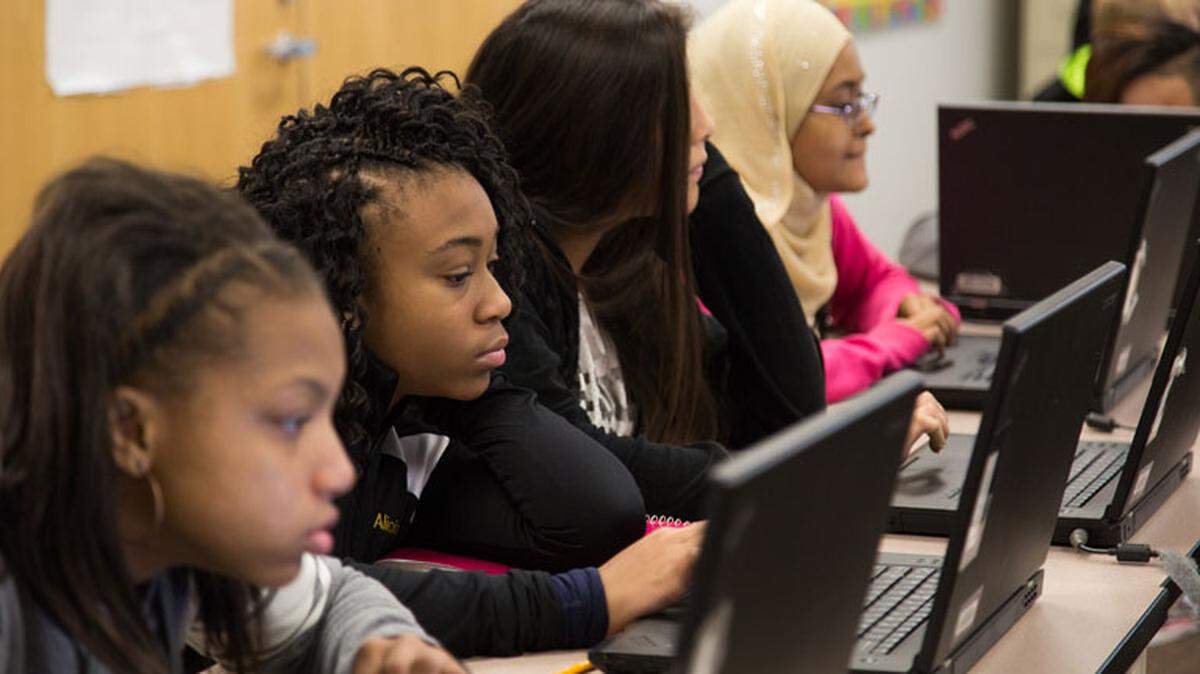
Last year, more than 140,000 information and technology jobs were posted across North Carolina, a 27% jump from the year prior, according to figures from the N.C. Technology Association.
And that growth isn’t expected to stop.
But business leaders worry that North Carolina could hit a wall when it comes to supplying talent for these jobs, becoming too dependent on importing labor from other states, and excluding kids born here, especially in rural areas, from the economic prosperity they bring.
A new consortium of business leaders and nonprofit organizations is aiming to fix that gap. The group, called CS4NC (“computer science for North Carolina”), hopes to fund training for more than 3,000 North Carolina teachers so that every middle school and high school in the state has a computer science class
State government wants to achieve that as well, but at current funding levels not enough teachers would receive the necessary training until the 2030s, said Dave Frye, senior director for computer science initiatives at the Friday Institute. By raising $5 million, CS4NC thinks it could train 3,000 teachers by the year 2023. A 2018 Department of Public Instruction report to the N.C. General Assembly said the state should aim for 500 trained computer science teachers by at least 2021-2022.
Tom Looney, a former Lenovo executive spearheading the effort to raise the money, said many counties in North Carolina have schools that don’t offer any computer science training. That’s a problem, he said, because early exposure to things like coding and web design can have huge ripple effects for a young person.
Students who begin dabbling in coding in middle school might develop an interest that leads them to studying computer science in college. And because they already had some experience, those first computer science courses might be less difficult for them.
Currently, the students who enter college with that experience tend to be affluent and white. Minority students often have less exposure to those opportunities, and that needs to change, Looney said. North Carolina’s tech industry currently lags behind the national average when it comes to diversity, The News & Observer previously reported.
In 2015, just around 2,300 North Carolinians completed an associate or bachelor’s degree in computer science and fewer than 6,000 K-12 students enrolled in a computer science course in 2016, according to figures cited by Gov. Roy Cooper.
.jpg "Lucy Tom (2).jpg")
“We have got to do something to inspire more children around the state in tech because what happens is students don’t get inspired [to study computer science] until they are in college,” Looney said in an interview. “By then many are too far behind, so they can’t pick it up and only the best and brightest get through the curriculum.”
All of that leads to a winnowing of potential students with the skills to fill the thousands of IT jobs created in places like Raleigh, Durham and Charlotte, which have become some of the hottest job markets in the country. If the state doesn’t provide an expanding workforce pipeline, Looney added, those jobs are going to move elsewhere.
“You are always going to have inbound migration from other states,” he said, “but we are not giving students the best opportunity to chase a better life.”
Empowering students
Carl Ryden often wonders how his life would have turned out if his mother hadn’t given him a Commodor computer in 1980.
Growing up in Dudley, a small eastern North Carolina town just south of Goldsboro in Wayne County, there weren’t many career opportunities. He was growing bored with school and had received 20 days of in-school suspension by the eighth grade.
He was not on the path to being a dropout, he recalls, but he certainly wasn’t on a track to fulfill his potential. If not for an interest in computer science and one particular math teacher who really engaged him, he would never have found the motivation to apply himself in school.
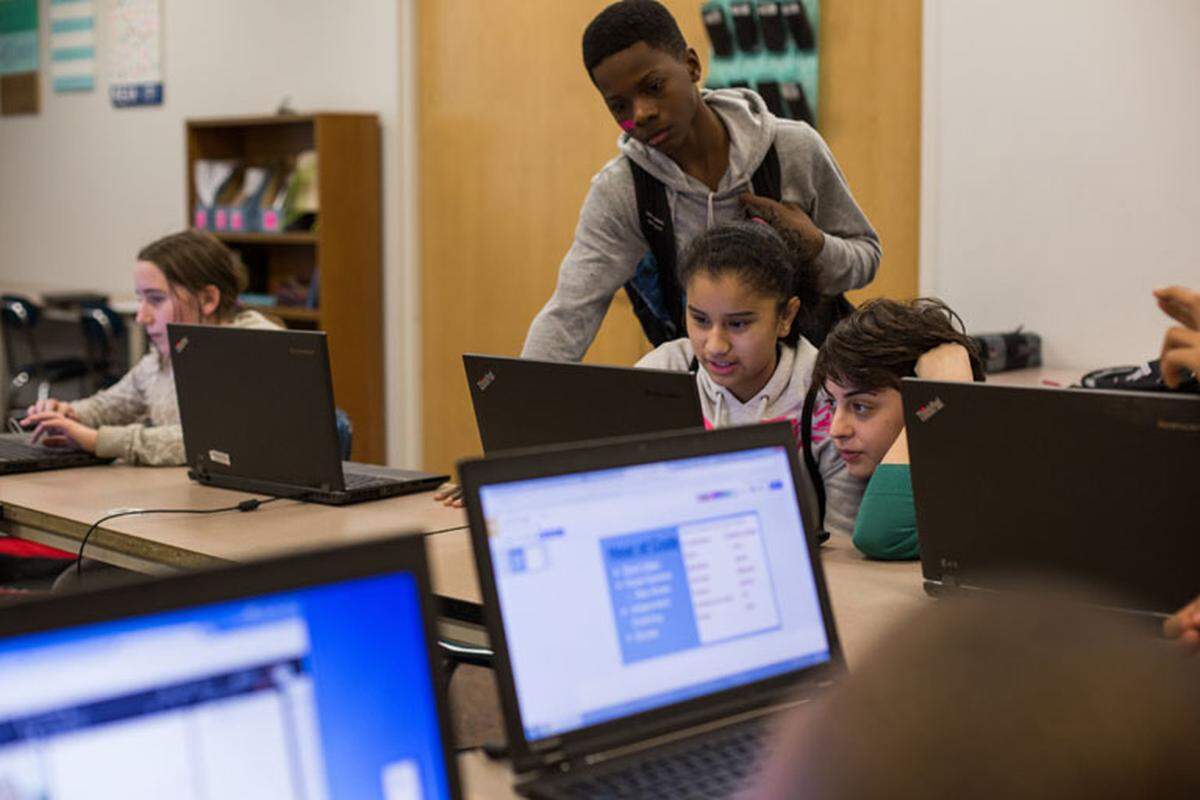
“Computers were empowering because you could create something that was valuable in the world,” he said. “I was getting stuff published in computer magazines even though I was in-school suspension.”
That led to a coveted spot at the North Carolina School of Science and Math and eventually a degree from North Carolina State University. From there, he began working in the tech industry and became an entrepreneur. Last year, Ryden sold his company, a financial technology startup called PrecisionLender, for more than $500 million.
He thinks there could be many more versions of himself floating through the North Carolina school system just waiting for one computer science course to ignite a passion for something.
“Ultimately, CS4NC can help say to kids anywhere in North Carolina that they can achieve things like this,” Ryden said. “This is big for underrepresented kids — both socioeconomically, gender and racially. If the first time they are exposed to [computer science] and everyone looks different from them it sends the opposite message — that people like you don’t do this.”
An economic gift
On a recent Saturday, teachers from across North Carolina gathered at the Friday Institute on N.C. State’s Centennial Campus. This is where the state and CS4NC hope to train thousands of teachers in how to teach a computer science elective course.
Around 425 teachers have gone through the course, which meets several times over the course of the year and is run in partnership with the nonprofit Code.org.
Sabrina Lynn King-Bowen is one of those teachers. She traveled to Raleigh from Ocracoke in Hyde County, where she is an instructional technology facilitator. As a former math teacher, she believes computer science courses improve problem solving skills for students.
“Computer science goes hand in hand with mathematics,” she said. “It is building the critical thinking skills we need and the problem-solving skills that students are lacking within our mathematics classroom.”

But she emphasizes that computer science could also be a pathway for her students to more prosperous lives. Many of her students are the children of Hispanic workers employed in the island’s tourist economy, which was devastated by Hurricane Dorian last year.
“I hope these students go on a track in computer science because of the economic gift it is going to provide to them,” King-Bowen said. “You could live on Ocracoke and work remotely” with a computer science job.
Lt. Gov. Dan Forest, a proponent of CS4NC, said boosting computer science courses in rural areas could lead to more economic development. Many of the students may go on to create their own businesses or be more likely to take remote jobs for tech companies.
But he hopes that businesses outside of rural North Carolina will contribute to CS4NC because they also stand to benefit from the program’s fruits.
“They’re the ones that benefit,” he said in an interview. “There is no doubt that they would much rather hire somebody from their community than have to try to get somebody from another country ... or try to move somebody here from Silicon Valley.”
“Developing the pipeline,” he said, “is equally as beneficial for them as it is for the students.”
This story was produced with financial support from a coalition of partners led by Innovate Raleigh as part of an independent journalism fellowship program. The N&O maintains full editorial control of the work. Learn more; go to bit.ly/newsinnovate
This story was originally published January 15, 2020 at 1:18 PM with the headline "Business leaders seeing talent gap want to fund more computer science teachers in NC."