Strange orbs floating over Southeast aren’t UFOs. Here’s how they help deliver internet
They’re not floating jellyfish, mysterious UFOs or a motley crew of Goodyear blimps.
No, that bevy of balloons dotting flight-tracking maps 60,000 feet above the Carolinas is actually “beaming the internet,” according to The New York Times.
The balloons — chartered by Google-backed Loon — provide internet in the form of cellular data to rural areas where the connection is often spotty, if not nonexistent. A fleet of the balloons were released over Kenya on Tuesday, The Times reported. At least four additional balloons were also spotted bobbing from Virginia down through the Carolinas and into Georgia and Alabama.
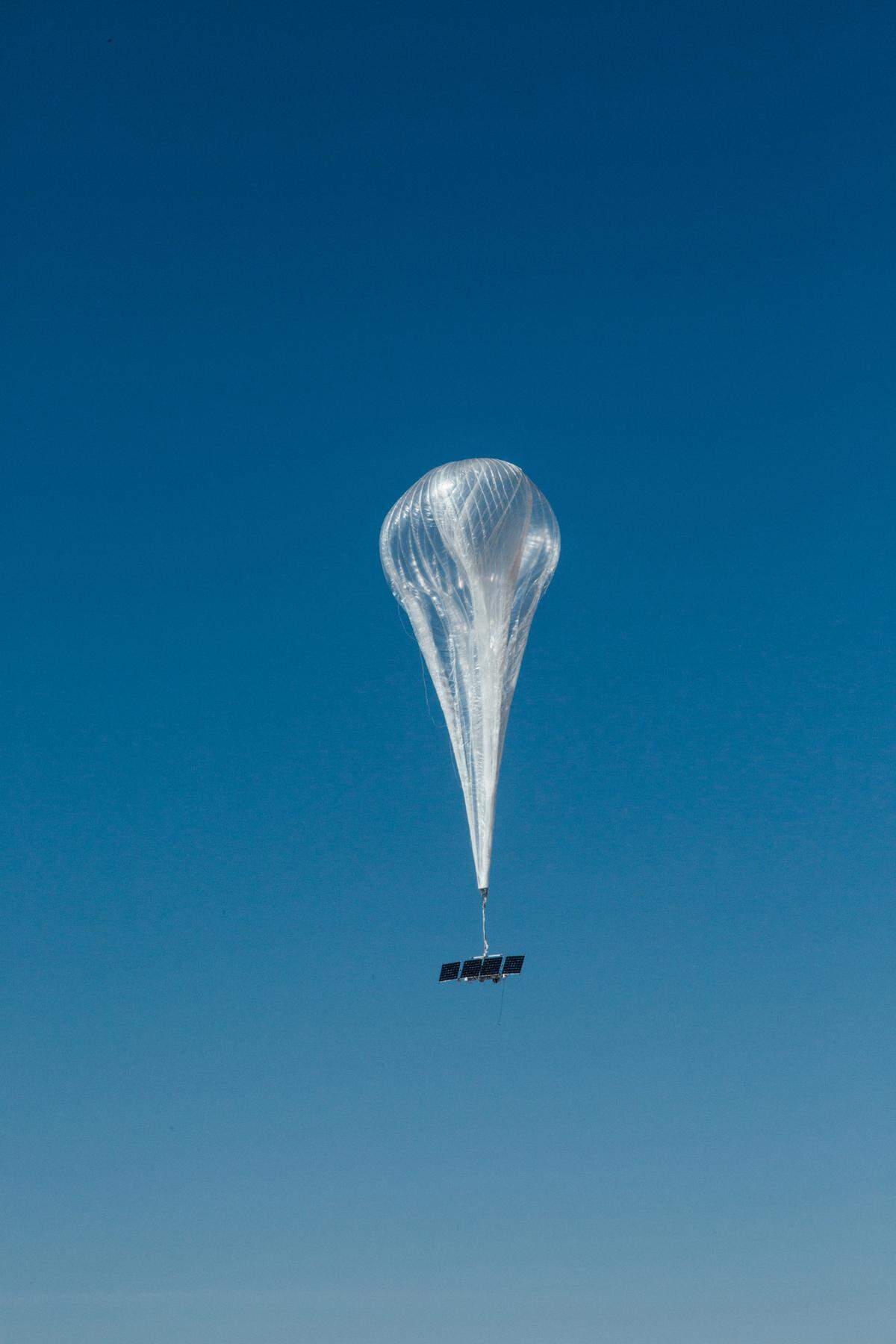
California-based Loon is a subsidiary of Alphabet Inc. that aims to expand internet access across the globe. The first Loon balloon that launched in 2011 was made out of a weather balloon and “off-the-shelf radio parts,” according to its website.
A sheep farmer in New Zealand became the first person to connect to one of its internet balloons in 2013, and the company went public with the idea shortly thereafter — “which helps to explain some UFO sightings that were reported after testing around the world,” Loon quips on its website.
The so-called Wi-Fi balloons have since been used to deliver internet to communities in Peru and Puerto Rico after natural disasters. Prior to its launch in Kenya on Tuesday, The New York Times reported Loon has launched at least 35 balloons over the last several months.
Though not an internet service provider, Loon describes the balloons as “essentially floating cell towers.”
“Customers will not necessarily know they are connected to a Loon balloon, aside from the fact that they may receive a signal in a location where one did not previously exist,” the website states. “A customer needs to have a SIM card of the mobile network operator partnering with Loon and an LTE-enabled smartphone.”
The balloons are about “the size of tennis courts” and are “powered by solar panels” on the ground, according to The Times.

With a floating altitude between 60,000 and 75,000 feet, Loon says there’s no risk of the balloons running into airplanes — which fly between 31,000 and 38,000 feet, Time reported. According to Loon’s website, the balloons fly internationally, provide roughly 50 square miles of ground coverage and can serve thousands of subscribers.
They can also occasionally be spotted from the ground.
“In certain weather conditions it may be possible to see a Loon balloon from the ground as a small, white dot in the sky,” Loon’s website states. “Most of the time they will be very difficult to see without magnification.”
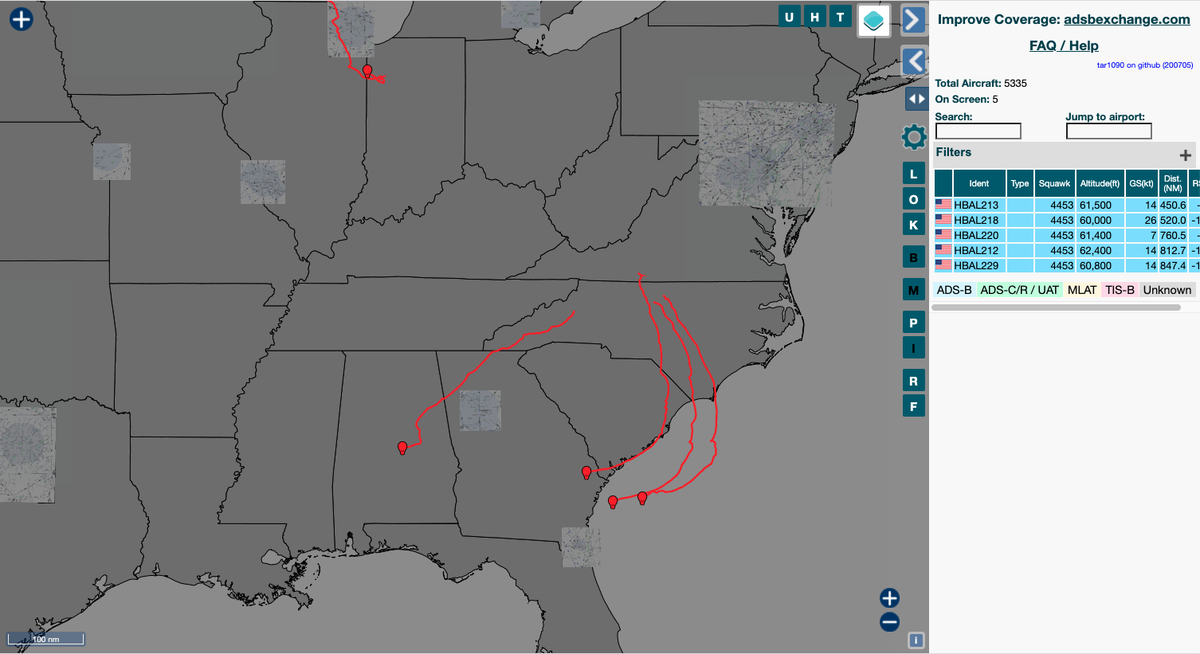
Flight tracking software known as ADS-B Exchange charts the balloons’ location just like airplanes.
“The easiest way to find a Loon balloon is to just look for the balloon icon on the map,” FlightRadar24 reported in 2016. “You’re most likely to see a Loon balloon over the equator. To search directly for a Loon balloon, use callsign ‘HBAL.’”
Five balloons with that call sign were spotted in the U.S. on Tuesday, four of which had been tracked over much of the Southeast.
More information on the science behind the Wi-Fi balloons can be found on Loon’s website.
This story was originally published July 7, 2020 at 7:10 PM.