Feeling nostalgic? Graduate Hotel in Chapel Hill has UNC flair, Michael Jordan ‘dorm room’
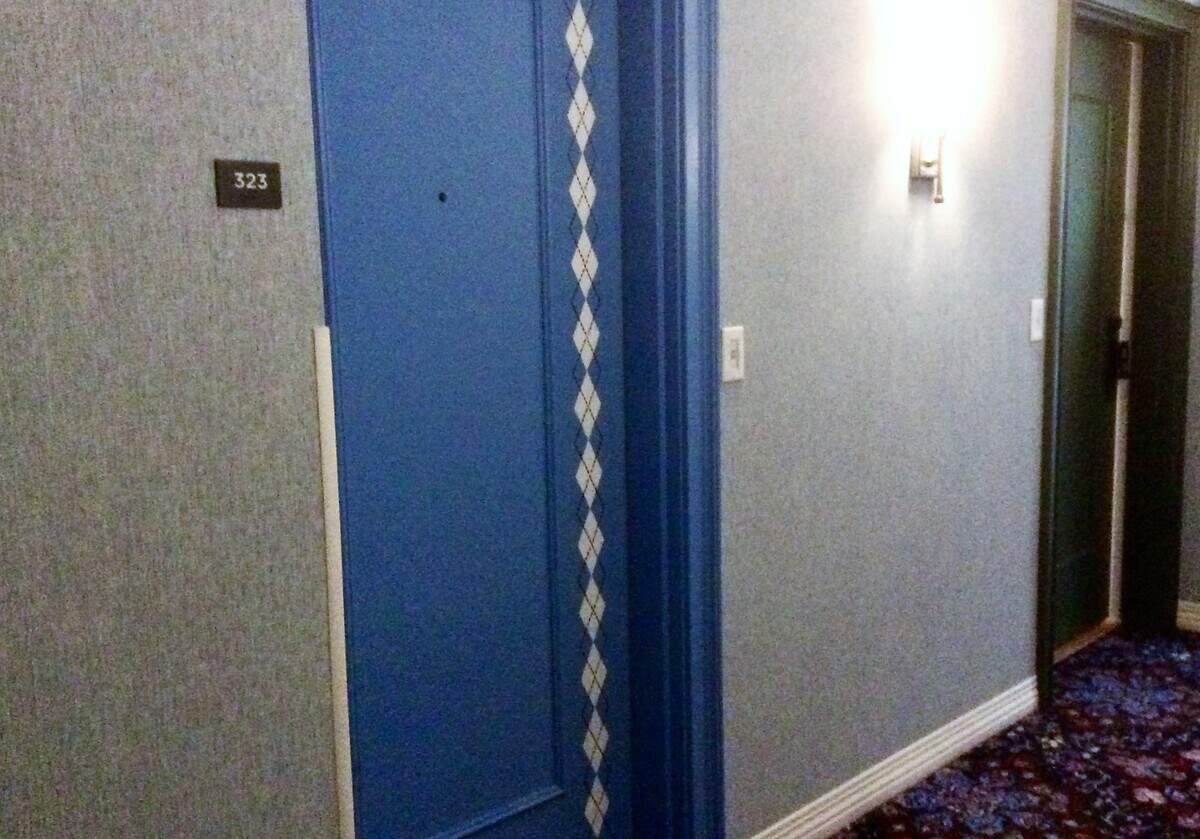
Behind the door of Room 323 of the Graduate Chapel Hill hotel, you can kick back on a twin bed, play tunes on a vintage tape deck and dream of college basketball glory surrounded by 1980s posters on a “cinderblock” wall.
Just don’t trip over the size 12 1/2 low tops on the floor — replicas of the Nike “Legend “ sneakers that UNC and NBA great Michael Jordan wore for a 1983 Sports Illustrated photo shoot in his nearly identical Granville Towers dorm.
A check that Jordan cashed after winning a $5 bet on a game of pool is on display in the hotel lobby, near a mural of his student ID card.
“We could plaster (Michael Jordan) everywhere obviously, but it’s such a fun and unique way to celebrate who he was and his contributions to the school,” said David Rochefort, president of Graduate Hotels.
The Graduate, at 311 W. Franklin St., opened Monday with a new name and owner. Outside, it’s still The Franklin — a downtown landmark since 2009 — but inside now offers a take on college nostalgia, Ivy League furnishings and natural elements from across the state.
The hotel is giving away $23 nights in 23 rooms in honor of Jordan, who wore the No. 23 jersey for the Tar Heels and the Chicago Bulls. Graduate Chapel Hill is the company’s 23rd hotel.
The hotel is “pretty booked up” for its opening week, timed to coincide with UNC students’ return to campus, general manager Wes Rowe said in an interview with The News & Observer.
And while COVID-19 has ravaged tourism, putting hotel employees on furlough and closing restaurants, “I know a lot of hotels around here did stay open all throughout (the shutdown),” Rowe said. “We feel like it’s still a good time” to open.
The transformation was nearing completion Friday.
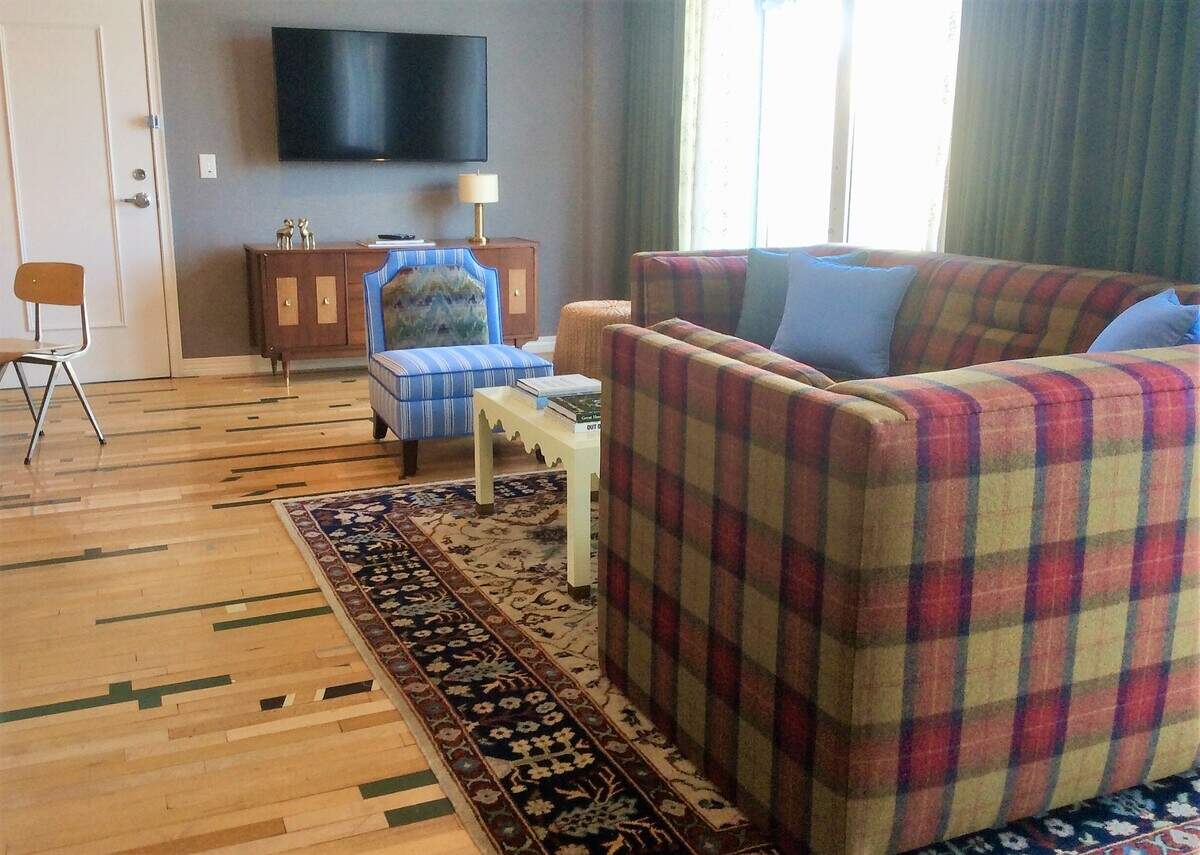
A midsize replica of the Wright brothers’ plane hangs from the lobby’s Carolina blue ceiling. And the upholstery — stately plaid and leather — seems less formal alongside an electronic scoreboard-style lobby desk memorializing Jordan’s game-winning jump shot in the 1982 NCAA Championship.
North Carolina — from the mountains to the coast — is reflected in framed tulip poplar leaves mounted on bentwood chairs and ocean-inspired art. Guest rooms sport custom-made Old Well lamps, oak leaf sconces, reclaimed gym floors and ram-embossed furniture.
Other features, from the backboard-inspired headboards to the carpeted basketball court atrium, with stuffed basketballs for guests to shoot hoops, make it clear The Graduate is not afraid to turn up the volume on novelty.
Still to come is the Trophy Room, a bar and dining room with Franklin Street-facing windows and patio seating.

Hotel expansion, COVID-19 cleaning
Adventurous Journeys Capital Partners bought the 69-room hotel from Chapel Hill-based Wintergreen Hospitality for $20.6 million last year. They weren’t looking to sell The Franklin, Wintergreen President Jay Patel said, but AJ Capital made an enticing offer.
“It was a hard one for us, because we were so sentimentally attached to the community, and when you spend 10 years trying to build a brand, build a community, it’s really hard,” he said.
The Patel family has taken the lessons learned at The Franklin to Fairfax, Virginia, where Wintergreen bought a Hilton Garden Inn, and to Charlotte, where a new hotel is planned for the Plaza Midway neighborhood, he said. They still own the parking lot behind The Graduate, where plans for an eight-story apartment building are on hold while they re-examine their options, Patel said.
AJ Capital has rapidly expanded the Graduate Hotels brand since 2014 with a focus on college towns and, after Chapel Hill, could open 11 more hotels, including in Cambridge and Oxford, England, Rowe said.
After a long COVID-19 spring, their hotels are reopening with a commitment to cleanliness and a partnership with Proctor & Gamble and the Cleveland Clinic, Rochefort said.
The Graduate Cares system includes contact-free check-ins, regular sanitation of room keys and spaces, and guest wellness kits with masks and hand sanitizer. Rooms sit vacant for a full day between guests, and staff is checked daily for fever and other symptoms.
Hotel employee layoffs, furloughs
Orange County hotels have invested over $2 million in cleaning supplies and disinfection technology, including electrostatic devices that positively charge disinfectant sprays so they stick better to surfaces, said Laurie Paolicelli, executive director of the Chapel Hill/Orange County Visitors Bureau.
It’s a national trend, with STR, a global hospitality data group, reporting that full-service hotels have seen a 20.5% increase in cleaning supplies and labor expenses, or about $11 more per night than they were paying for each occupied room last year.
Those expenses come at a time of record losses and staffing cuts for hotels. Orange and Durham counties lost 13,700 leisure and hospitality jobs in April, or 51.5%, according to the N.C. Department of Commerce report, which does not include a specific category for hotels. In May and June, the report shows the counties regained 4,400 jobs.
Roughly a dozen Orange County hotels furloughed at least half their staff, Paolicelli said. A handful of other hotels were closed for redevelopment or renovations.
State labor reports show the overall unemployment rate in Orange, Durham and Wake counties hovered around 7% in June, as leisure and hospitality businesses, including hotels and restaurants, started to recover.
The Raleigh metro area report, which includes Wake, Franklin and Johnston counties, showed a loss of 44,800 leisure and hospitality jobs, or 61.5%, in April. The report showed 15,400 jobs were added back in May and June.
Falling revenues nationwide
Hotels nationwide have lost more than $40 billion since mid-February, according to the American Hotel and Lodging Association. Its July survey found 87% of the more than 1,200 hotels that responded have laid off or furloughed staff.
About a third of those hotels have not brought back staff yet, the survey found, while another third have rehired half their full-time staff. More than half of the 600 hotel owners that responded are at risk of foreclosure, it found.
April’s $400,000 hit was “just disastrous” for The Siena Hotel in Chapel Hill, which could earn less than $2 million this year, or roughly a third of its typical revenues, General Manager Anthony Carey said. The federal Paycheck Protection Program kept most employees at full pay for eight weeks, while new safety standards were implemented.
“Before that, our market and our hotel was just exploding with business. January, February were phenomenal months. The area hotels — all of us on our monthly calls — were all doing really well,” Carey said.
Occupancy rates also fell in April, the Orange County visitors bureau reported. Just over 38% of rooms were occupied in the first six months of 2020, compared with 68.1% in the first six months of 2019.
By May — typically one of Chapel Hill’s busiest months, thanks to graduation and spring weddings — hotel rooms were booked for 77% fewer nights than in May 2019, data showed. The average daily room rate had fallen from $150 to less than $100 a night.
Safety, economic stability
It could be a year before Orange County’s hotels are profitable again, Paolicelli said, while larger markets are looking at 2025. There are positive signs for local hotels, including the return of weddings, she said.
“In many ways, (because of) the fact that we have about 1,300 hotel rooms and a university that’s still sought after and a climate that people still want in a state that people still want, it seems like we’re sustaining, but I don’t know that anyone is still budgeting for more than 90 days right now,” Paolicelli said.
She noted that most hotels continue to ride a fine line between profitability and safety.
“There isn’t this sense of urgency to jumpstart an economy when it’s still illegal for more than 10 people to gather indoors, so we’re not marketing heavily and … even if we had a zillion dollars to market, if the consumer confidence isn’t there, why market?” Paolicelli said.
Hotels, restaurants and the arts made up about 11% of Orange County jobs in 2019, with 8,208 people employed, U.S. Census data showed. The visitors bureau reported an economic impact of $208 million for the county, and a total payroll of $41.91 million. Hotels generated roughly $1.6 million in occupancy taxes.
Orange County’s travel industry was largely driven by weddings — at 43% of the total visitor market — and business conferences and meetings, which made up 33%, the visitors bureau reported.
Monday was a “very good” day for food service at the Crossroads Chapel Hill restaurant, located in the Carolina Inn, said General Manager Mark Sherburne. UNC students started moving back to Chapel Hill and into their residence halls this week. Breakfast and lunch in the hotel dining room were steady, and there were 60 reservations for dinner, he said.
The Carolina Inn, on the edge of UNC ‘s campus, has rehired 70 of the 217 employees furloughed this spring, and they hope to bring back more as demand increases.
Continued federal support for businesses and a coronavirus vaccine are key to a hospitality industry rebound, Carey said. The Graduate is a unique addition to Chapel Hill’s growing hospitality market, he said.
“That’s what I love about Chapel Hill hotels,” Carey said. “We are all different, and we are fortunate enough to be able to give the traveler all these great options based on their lifestyle or what they want to experience in Chapel Hill.”
This story was originally published August 6, 2020 at 8:19 AM with the headline "Feeling nostalgic? Graduate Hotel in Chapel Hill has UNC flair, Michael Jordan ‘dorm room’."