
Two quakes recorded in east Tennessee, one near Cades Cove in Great Smoky Mountains
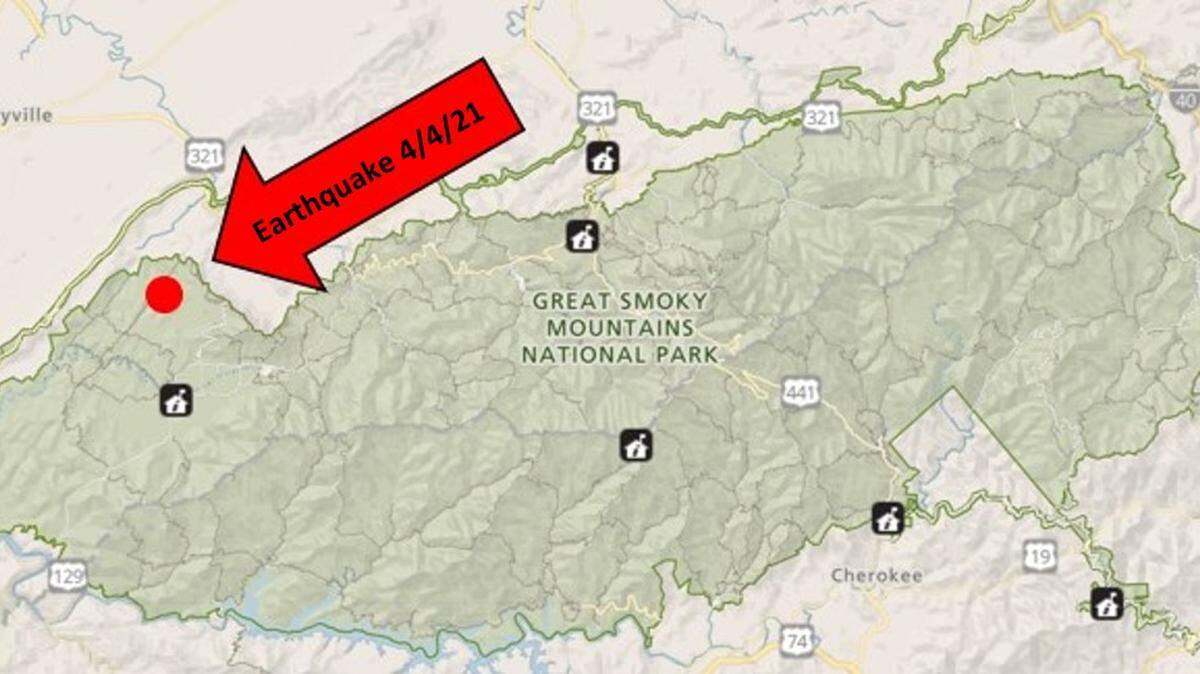
Two earthquakes were reported within about 26 miles of each other Sunday in the Tennessee mountains, one near the popular Cades Cove site inside Great Smoky Mountains National Park.
Both were mild, with the strongest being a 2.0 magnitude just before 8 p.m. in the national park. The other, about two hours earlier, was a 1.4 magnitude quake that occurred to the northwest, near the town of Friendsville, the U.S. Geological Survey said.
No one reported feeling the quakes to the USGS. “Typically, people report feeling earthquakes larger than about magnitude 3.0,” the USGS says.
East Tennessee is among the most active regions in the Southeast when it comes to earthquakes, with 5 reported in the past 30 days, according to the USGS. The strongest was a 2.5 magnitude northeast of East Brainerd on March 14, the USGS says.
“Of the 20 recorded earthquakes detected within (Great Smoky Mountains National Park) boundaries since record keeping began, none have caused detectable damage,” the park officials said Monday on Facebook.
“The highest recorded magnitude quake in the park (a 3.2 on the Richter scale) occurred in 1979 in the western section,” park officials said.
Sunday’s quake near Cades Cove was centered about 8 miles deep and “did not cause any damage to park facilities or impacts to visitors,” the National Park Service said. Cades Cove valley is among the most visited parts in the national park, due to its easy accessibility and numerous historic sites.
Rocks in the park show evidence of seismic upheaval dating back 310 million years, when “the eastern edge of the North American tectonic plate collided with the African tectonic plate” to create a giant landmass known as the Pangaea “super continent,” according to the park service.
Limestone found in Cades Cove contains fossils dating back 450 million years, the park says.
This story was originally published April 5, 2021 at 2:36 PM.