
Black, Latino NC workers had to play ‘Russian Roulette’ during COVID. The toll was steep.
For Rigoberto Cabrera Lopez and his family, working from home during the COVID-19 pandemic wasn’t an option.
All labored in close quarters in meat processing plants east of Fayetteville, where coronavirus outbreaks began to pop up early last year. Cabrera Lopez continued to chop pork, though, even in late April 2020 after a coworker fell ill with what appeared to be COVID-19, his wife, Tomasa Cabrera, said.
Cabrera Lopez died on May 5, within a week of getting sick. He was 48.
“I didn’t think that this would happen, since most people get sick, and not to the point of dying, like my husband did,” Cabrera told a reporter in Spanish. “I thought he would recover, but he didn’t.”
Cabrera Lopez was an indigenous Guatemalan who loved to fish, crack jokes and spend time outdoors. He was among COVID-19’s first victims in North Carolina.
By year’s end, thousands more would die, many of them lower-income Black and Latino workers whose jobs prevented them from staying home or even protecting themselves at work.
According to the state’s 2020 mortality file — a dataset built from official death certificates — more than 8,300 North Carolinians died of COVID-19 last year.
For this story, McClatchy North Carolina analyzed the death records of working-age coronavirus victims — those between 19 and 65. Reporters reviewed the occupations and industries of those workers — about 1,100 records in all.
A picture emerged. Like Cabrera Lopez, those who died often had low-paying jobs in essential industries, such as food processing, food service, health care, construction and transportation. And like Cabrera Lopez, a high percentage were Black or Latino, the data show.
McClatchy’s analysis, the first of its kind in North Carolina, offers evidence that may help explain why COVID-19 killed so many blue-collar Black and Latino workers.
Workplace safety advocates say the findings also raise questions about whether industry leaders and state Department of Labor officials did enough to protect vulnerable people unable to work from home or keep distance from others on the job.
“We have an opportunity now, with these data, to really think about these issues,” said Giselle Corbie-Smith, director of the UNC Center for Healthy Equity Research and medical professor at the school. “This pandemic has revealed how important our work environments are.”
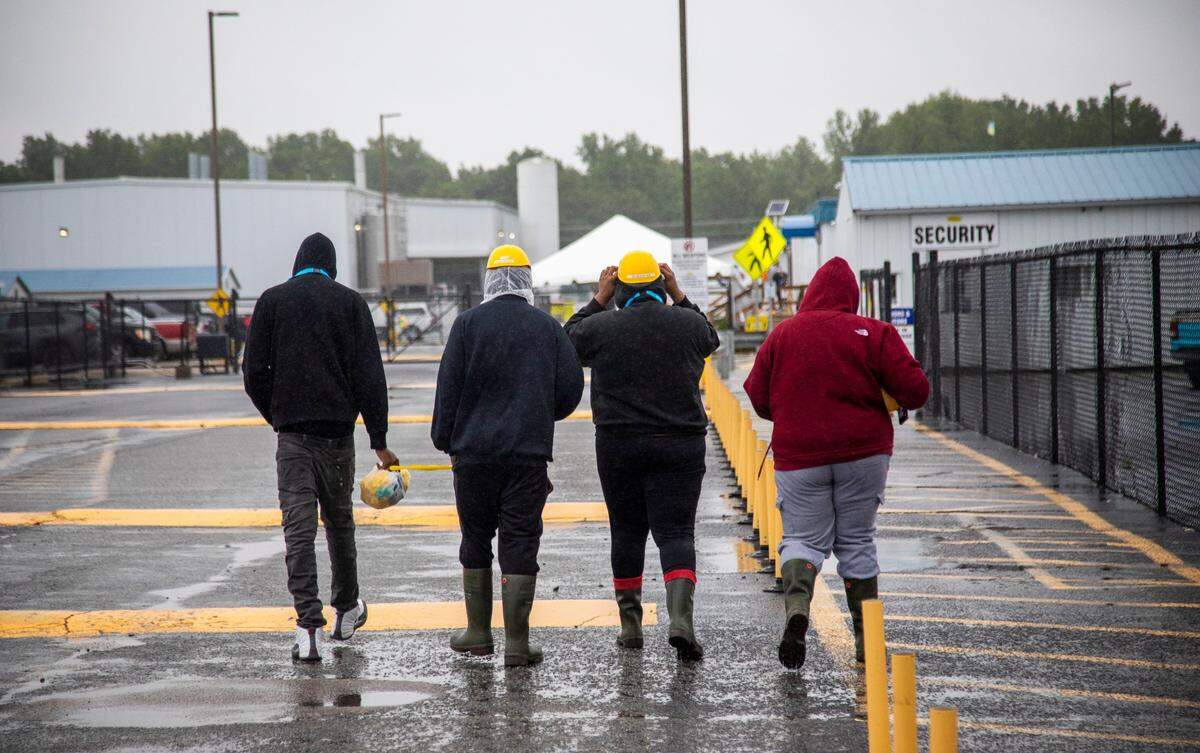
Devastating disparities
According to the U.S. Bureau of Labor Statistics, 20% of Black and 16% of Latino employees were able to work from home last year — much less than the 30% of white employees who made the transition.
The racial breakdown of essential workers is mirrored by the racial breakdown of COVID-19’s victims, the McClatchy North Carolina’s data analysis found.
Black people make up 22% of North Carolina’s working-age population yet accounted for 36% of COVID-19 deaths in that age group last year, data show. Hispanic people comprise 9.5% of that group, yet accounted for 17% of these deaths.
“These were the workers who kept our country running,” Corbie-Smith said. “Thank God for them.”
In many of the blue-collar industries where the coronavirus toll was highest, the proportion of deaths among minorities was even more stark. Black and Latino workers made up 87% of people described as food production workers among those who died; 67% of food service workers; 58% of construction workers; and 44% of healthcare workers, according to the analysis of North Carolina death records.
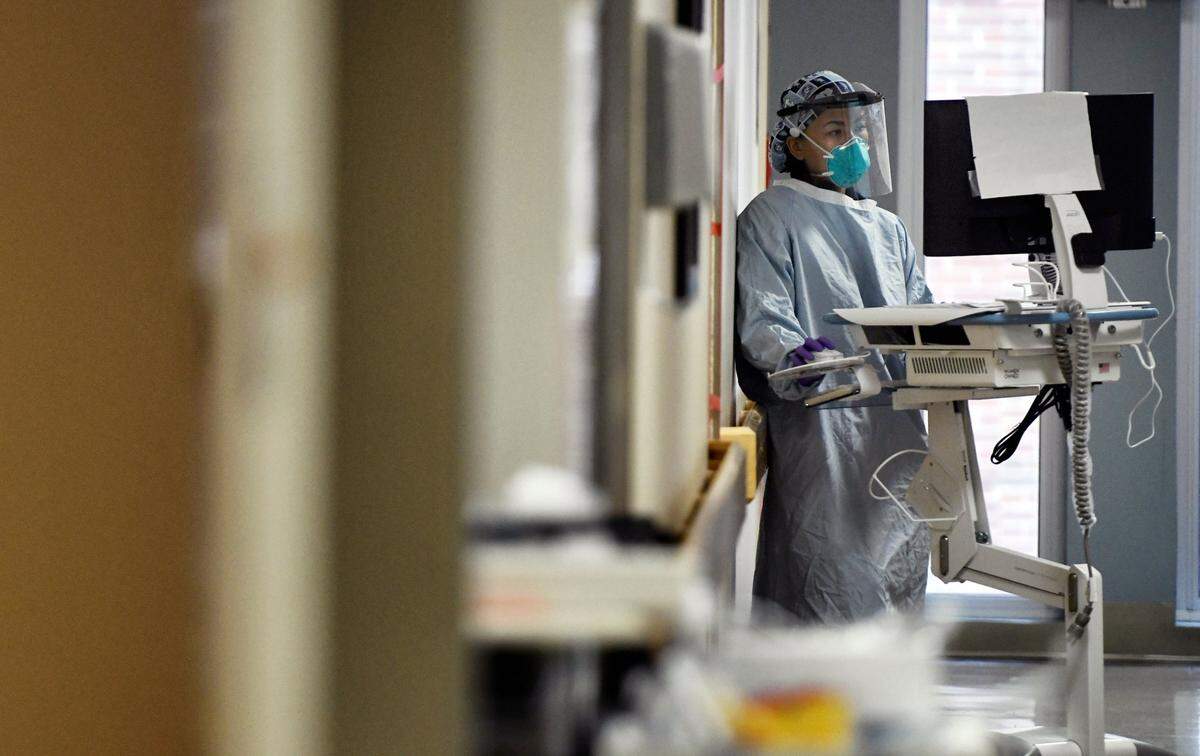
More than 60 nurses and nursing assistants died last year, according to the data.
“We are the ones spending the most time with (COVID-19) patients,” said Dennis Taylor, president of the North Carolina Nurses Association, which represents about 8,000 registered nurses across the state.
Eric Winston, a 41-year-old cook from Durham who supports his mother and three children, said he was worried about the risks for months before protective vaccines were available.
But he couldn’t afford to stay home.
“You’re playing Russian Roulette,” he said. “But during a pandemic, bills don’t stop coming.”
The pandemic was also hard on teachers, drivers, manufacturing workers and prison staff. At least 18 people identified as correctional officers died from COVID-19 last year, and most of them were Black, McClatchy’s analysis found.
Precisely how many of those workers caught the virus at their jobs is unknowable.
But Ana Pardo, co-director of the Workers’ Rights Project at the North Carolina Justice Center, said the findings confirm “a lot of what’s been heavy on my heart the last year.”
“We knew that this was going to be bad for low-income workers, and especially for low-income workers who are people of color,” Pardo said. “It’s not surprising, but it’s devastating.”
Why were Black and Latino workers so vulnerable?
Experts interviewed about the findings laid out a host of reasons for the disproportionately high numbers of deaths among Black and Latino working-age residents.
Black and Latino people were more likely to wind up in the types of essential jobs — such as meat processing — where employees toiled shoulder to shoulder, sometimes spreading the virus to coworkers.
Meatpacking plants, like the one Cabrera Lopez worked at, were the state’s main source of fatal workplace exposures, a report from the N.C. Department of Health and Human Services shows. At least 23 workers at meatpacking plants got the virus while working and died.
Bob Ford, executive director of the North Carolina Poultry Federation, a trade group that represents the state’s leading poultry companies, acknowledged that “when you’re in that kind of workplace, the damn virus is going to spread.”
Still, he said, most poultry companies did all they could to keep workers safe. Many upgraded their ventilation systems, suspended plastic sheets between workstations, required more social distancing in cafeterias and took the temperatures of workers before letting them into the plants each day.
“We’ve used all the resources we can because you can’t run a plant without people,” he said. “Plants really spent a lot of money trying to keep that (virus) under control.”
Many workers in other types of jobs deemed essential said they lived in fear.
Sherita McCullers, 59, has driven a bus in Raleigh for 27 years. McCullers estimated she gave rides to 200 to 250 people a day during the pandemic last year.
She worried that she might catch the virus like her younger brother, who was hospitalized for more than two months and is now on dialysis.
“I would sit in the parking lot crying, ‘Lord protect me. Please protect me,’ ” she said, noting that she didn’t always feel safe.
According to a spokeswoman for Raleigh, city officials began having passengers use the buses’ rear door on March 23 of last year. A week later, the city provided drivers N95 masks, she said.
There was little protection for Eshawney Gaston, 23, of Durham — not when she had to bathe patients when she worked as a nurse’s aide at a home health facility and not when she walked into homes trying to sell vacuums.
Gaston said she tested positive for COVID-19 after a driver for the vacuum business contracted the coronavirus. Gaston never developed severe symptoms or transmitted the virus to family members, she said.
Like others, McCullers and Gaston said they had to go to work to pay bills.
Some employers didn’t pay people who stayed home sick, said Jose Hernandez-Paris, executive director of the Latin American Coalition.
So when workers began feeling the symptoms common to COVID-19, they faced a difficult decision: Stay home without pay, or go to work so they could support their families.
“With many vulnerable people in our state, the COVID crisis pushed people into a situation where they had to make impossible choices,” said Pardo, from the Workers’ Rights Project. “Literally, life or death. Safety versus having housing or keeping the lights on.”
And when Black and Latino workers got sick, it was harder for many of them to get healthcare. According to a 2019 study by the N.C. Justice Center, less than 10% of white North Carolinians lack health insurance, while 11% of Black residents and 30% of Latino residents were uninsured.
On top of that, Black and Latino workers are more likely to live with chronic health conditions — such as diabetes — that make them more vulnerable to death or serious illness when exposed to the coronavirus, said Andrea Steege, a National Institute for Occupational Safety and Health research epidemiologist.
Did NC fail its workers?
One of the agencies tasked with protecting workers from COVID-19 is the state’s Occupational Safety and Health Division, commonly called N.C. OSHA.
Since the pandemic began, OSHA officials have investigated and closed more than 2,000 COVID-19-related complaints against North Carolina businesses, data show.
From the start, complaints about a lack of protective equipment, social distancing and a push to keep symptomatic workers on the job poured in. Seventy-three against post offices across the state. Sixty-eight against doctors’ offices. And 47 against poultry processing plants like the one Cabrera Lopez’s wife worked at.
A worker at one Guilford County meatpacking plant complained in May 2020 that “employees are encouraged to come into work while being symptomatic.”
At one Union County construction company, meanwhile, a worker in October complained that “employees have been told to continue working when having COVID-19, unless they feel too sick.”
Andre Barnett, a United Food and Commercial Workers union representative for the Smithfield Packing Company plant in Tar Heel, N.C., praised plant officials for the measures they took to keep employees healthy.
The pork producers allowed CDC officials to tour the plant, socially distanced workers when possible, provided masks and tested workers on site. Employees who tested positive for COVID-19 were quarantined with pay, Barnett said.
“If you were able to walk into the plant and see all the measures they put up, you’d say, ‘What else could they do — shut the plant down?’” Barnett said.
Unreported COVID deaths?
According to the May 2021 report from N.C. DHHS, 38 people died after being exposed at work to the virus that causes COVID-19.
But that figure only included deaths within clusters — known outbreaks of at least five people in the same location during a 14-day period.
Matthew Johnson, an assistant professor of public policy and economics at Duke University, said work-related COVID-19 deaths in the state are “undoubtedly higher.”
But linking COVID-19 deaths to the workplace is difficult, especially because N.C. OSHA was understaffed and ill-equipped to respond to the pandemic, he said.
Neither state nor federal OSHA put standards in place requiring employers to protect workers from the coronavirus in 2020, he said. That made it hard for the agency to take action against employers who failed to provide workers with personal protective equipment, require social distancing and take other preventative measures.
“OSHA during the pandemic was under-resourced, and the leadership was not putting teeth behind it,” Johnson said.
Last year, a coalition of advocacy groups petitioned the North Carolina’s Department of Labor to require that businesses provide masks, hand sanitizer, ventilation, regular cleaning and health screening, among other protective measures during the pandemic.
Fourteen states had already adopted such rules, the groups said.
But state Department of Labor officials, under then-commissioner Cherie Berry, rejected the request.
In a letter responding to the petition, she said COVID-19 was everywhere and creating new rules “will not eradicate the virus, and it will not eliminate the fear of employees of contracting COVID-19.”
“For our labor commissioner at the time to say COVID was not a workplace safety issue was mind-blowing,” said MaryBe McMillan, president of the N.C. State AFL-CIO, one of the groups who petitioned the state. “Many of these industries — food service, poultry processing – these were already industries where working people were exploited long before the pandemic. That’s why we really needed that standard – to hold those companies accountable.”
Following the state’s refusal, the groups sued the state. Their lawsuit is pending.
A spokeswoman for Josh Dobson, the current labor commissioner, said Dobson would not comment on the actions of the last administration.
But Dobson wants to work with employees, business owners and federal officials on new COVID-19 safety rules that OSHA might adopt, spokeswoman Jennifer Haigwood wrote in an email.
‘I didn’t have time to cry’
Cabrera Lopez, a father of three, worked as a meat cutter for Villari Foods in Duplin County, where his daughter, Elsa, also worked.
But by late April, his entire family was sick, according to his wife, a sanitation worker at the Butterball turkey plant in Mount Olive.
“I got sick after my dad came home one day because he was the contagious one,” Elsa Cabrera, 29, said in Spanish. “The workers didn’t have masks. There weren’t even (sneeze guards) at the tables, there wasn’t any hand sanitizer, nothing.”
Family members, who speak the Mayan language of Mam primarily and Spanish second, knew little about how to treat virus symptoms or where to get tested.
“We knew about the virus then but didn’t think it was that contagious,” Elsa Cabrera said. “The bosses should have known it was serious because they’re the ones in charge, but they didn’t say anything.”
Elsa Cabrera described how workers would sit together in the cafeteria for lunch breaks. Her father ate next to another worker who got sick and later died from what she suspects was COVID-19.
Disposable masks weren’t distributed to workers until April 30, the last day her husband worked, Tomasa Cabrera said.
“My husband was already sick,” she said. “It was too late.”
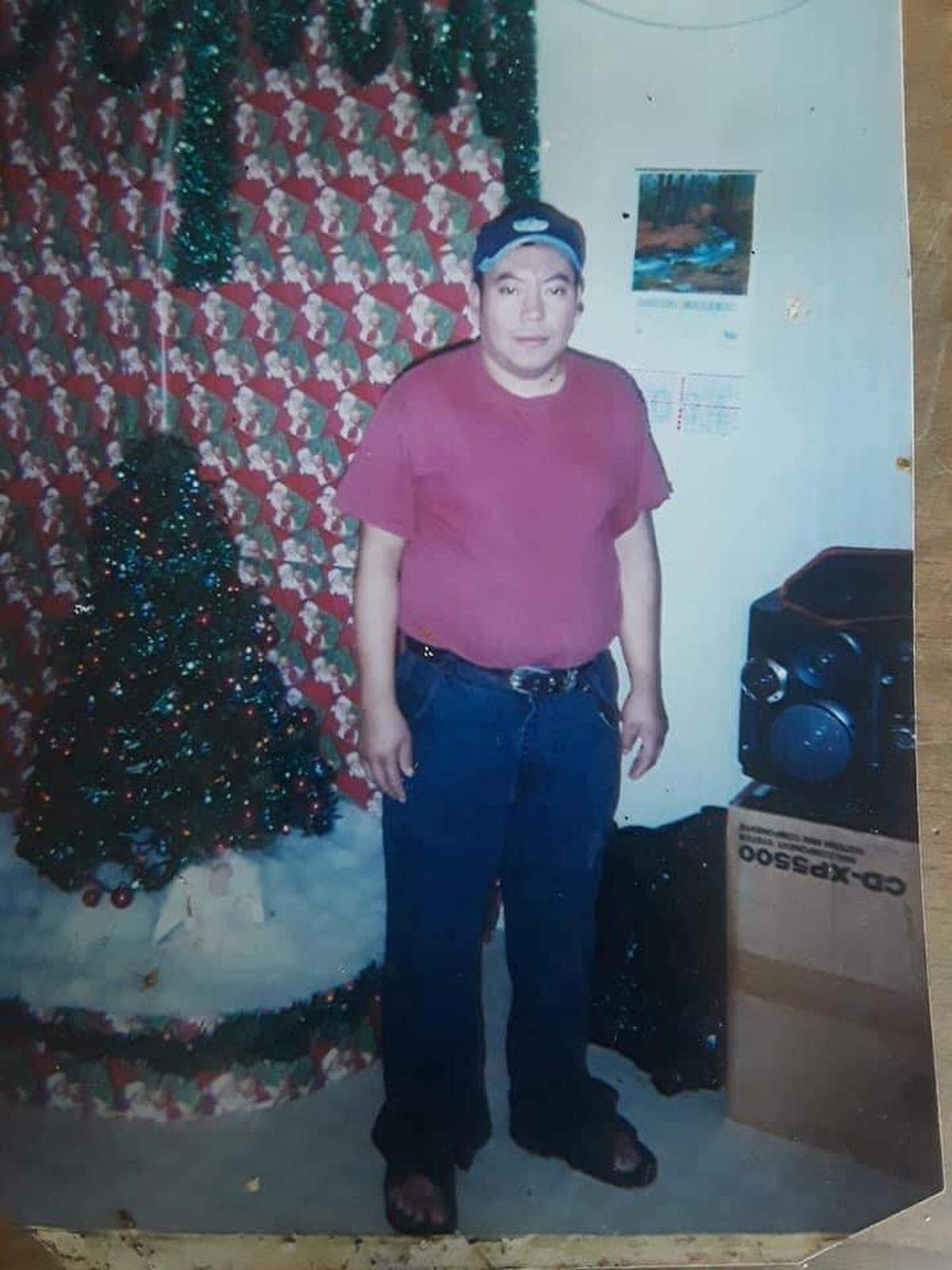
Cabrera Lopez developed dry coughs, shortness of breath and a fever that progressively got worse.
Tomasa Cabrera said she believed she could treat the sickness with hydration, hot tea and rest. But she finally called an ambulance on May 5 to hospitalize her husband.
Paramedics told her it was too late, that Cabrera Lopez had died from COVID-19, she said.
Officials for Villari Foods did not respond to requests for comment.
The family arranged to have Cabrera Lopez’s body sent to be buried in Guatemala. His death certificate is not in the North Carolina data because it was filed in Virginia.
His wife did not attend the funeral. She, too, was gravely ill with COVID-19.
“I didn’t have time to cry since I thought I was dying,” she said.
Since then, however, Cabrera has had plenty of time to cry.
“I think of him every night, and every moment,” she said.
This story was originally published June 9, 2021 at 6:00 AM.

.JPG)