
Johnston County turkey flock first to catch highly contagious avian flu in NC
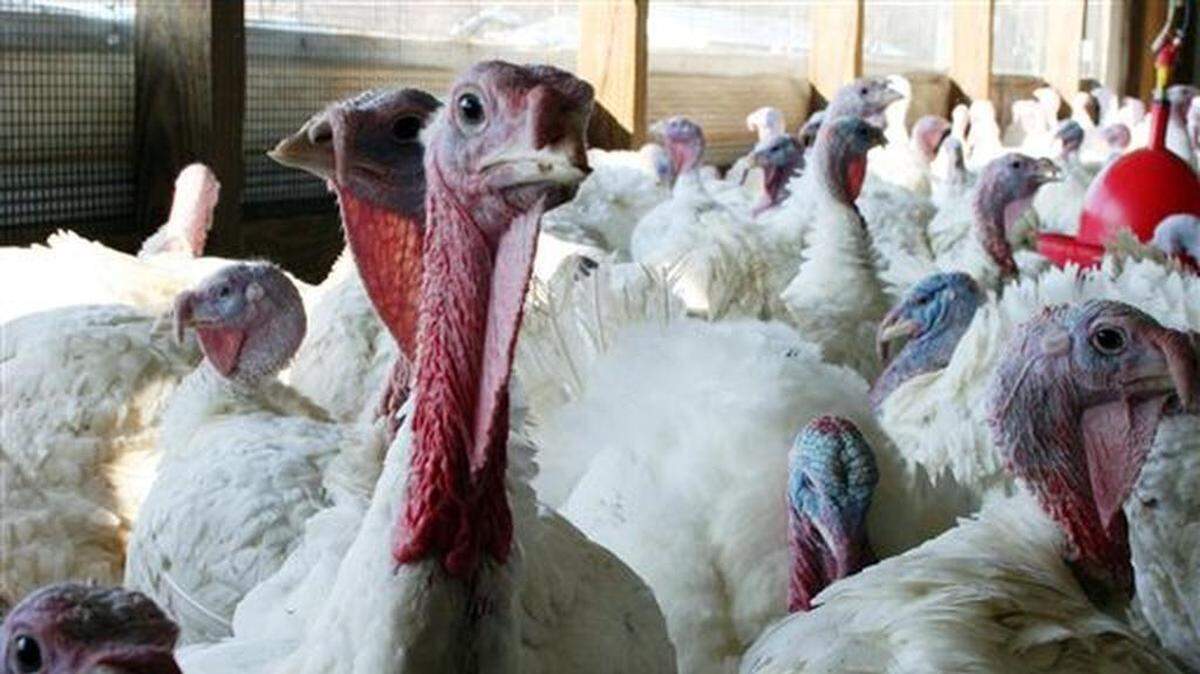
North Carolina agricultural officials have found a highly contagious avian flu in a Johnston County commercial turkey operation, they announced Wednesday.
The positive test marks the first time this avian flu has been found in the state’s widespread poultry industry, officials from the N.C. Department of Agriculture said in a release.
“I’ve been worried about this for a couple months now, since I’ve first started hearing about outbreaks,” said Kemp Burdette, Cape Fear Riverkeeper. “It looks like it’s here now.”
State officials said the 32,100-bird flock has been killed and is composting on the site to prevent additional spread. Mike Martin, North Carolina’s state veterinarian, said in a statement that the state and industry are “actively testing” flocks in a 6.2-mile radius around the farm, an area that encompasses all of Johnston and parts of Sampson and Wayne counties.
Heather Overton, a spokeswoman for the state Department of Agriculture, said the Johnston County turkey operation had eight barns. Operators noticed a slight increase in bird deaths in a single barn, Overton said, leading to the testing.
The birds were killed, Overton said, by filling the barn with foam.
Overton declined to disclose the exact location of the poultry farm with the positive test, citing N.C. General Statute 106-24.1, which makes medical information collected by farm owners confidential unless the state veterinarian deems disclosure necessary to stop the spread of disease.
“There’s no plans to do that at this point,” Overton said.
Additional testing around the Johnston County farm is ongoing. Overton said no nearby flocks have tested positive so far. The first round of additional testing must happen within 48 hours of a reported positive and then weekly after that.
Overton declined to say how many additional farms have been tested.
If done correctly, composting the birds onsite, might be the safest option, said Larry Baldwin, North Carolina CAFO coordinator for the Waterkeeper Alliance, a nonprofit group. But, he added, composting — rather than incinerating or burying the turkeys — runs the risk of other animals eating the carcasses, picking up the virus and spreading it.
Composting also runs the risk of flooding local waterways with bacteria or nutrients if it rains on the birds, said Jill Howell, Pamlico-Tar Riverkeeper. Excessive nutrients, such as nitrogen and phosphorous, can cause fish kills and algae blooms.
The composting process is the same that the Department of Agriculture deploys when chickens and hogs die in floodwaters during hurricanes, Overton said. By reaching high enough temperatures, she added, the virus is killed.
North Carolina’s poultry and egg industry is the nation’s most valuable, accounting for $4.19 billion in sales in 2020, according to the U.S. Department of Agriculture. That includes the sale of 961.3 million broiler chickens and 31 million turkeys.
“The threat of high path avian influenza is statewide. Our poultry population is at high risk,” Martin said in a statement.
Nationwide, the quick-spreading bird flu has been found at 48 commercial poultry operations across 13 states.
North Carolina poultry farmers have adopted measures like limiting visits to their barns, The Charlotte Observer has previously reported. Those measures include sanitizing equipment with increased frequency and requiring workers to wear extra footwear or change clothing when moving among barns.
Those steps have been taken to prevent the virus from spreading via bird droppings, The Observer reported.
“We’ve been on heightened alert since January,” Overton said.
The positive sample was tested at North Carolina’s Veterinary Diagnostic Lab in Raleigh before being confirmed at the U.S. Department of Agriculture’s National Veterinary Services Lab in Ames, Iowa.
State agriculture officials are continuing to investigate how bird flu entered the Johnston County turkey operation.
Burdette, said the virus can spread via feed trucks that travel from farm to farm, wild animals, such as rodents or vultures, or even through the air, where farms are close together.
“I think it’s a very, very big deal,” Burdette said. “It has the potential to have huge, huge impacts on North Carolina’s environment. It’s going to have huge impacts on the industry, of course.”
The U.S. Centers for Disease Control and Prevention says the flu poses a low risk to people, with no human cases reported. But the virus can spread rapidly among birds, especially flocks of poultry.
According to the U.S. Department of Agriculture, 144 wild birds found in North Carolina have tested positive for the bird flu. Many of those were killed by hunters in coastal areas, but recent cases have included a red-shouldered hawk found dead in Wake County and a bald eagle found dead in Davidson County.
The N.C. Wildlife Resources Commission previously reported that waterfowl like ducks and geese can carry the flu without showing symptoms. But raptors that prey on waterfowl or scavengers that eat their carcasses are susceptible to the illness.
Symptoms of highly pathogenic avian Influenza among birds include reduced energy or decreased activity; twisting of the head and neck; lower egg production or misshapen eggs; purple discoloration of the wattles, comb and legs; and difficulty breathing.
If “birds are sick or dying,” the state agricultural department urges owners to report it to their local veterinarian. Bird owners can also call the N.C. Department of Agriculture and Consumer Services Veterinary Division at 919-707-3250 or the N.C. Veterinary Diagnostic Laboratory System at 919-733-3986.
This story was originally published March 30, 2022 at 3:05 PM with the headline "Johnston County turkey flock first to catch highly contagious avian flu in NC."