Rip current risks higher at NC beaches as Tropical Storm Alex churns in Atlantic
Tropical Storm Alex could make swimming conditions dangerous at North Carolina’s beaches.
Alex is the first named storm of Atlantic hurricane season, which began June 1. It strengthened into a tropical storm early Sunday, June 5, after bringing heavy rain, flooding and strong winds to parts of Florida, The Associated Press reported. Tropical storms have wind speeds between 39 and 73 mph.
As of 2 p.m. June 5, Alex was located about 475 miles west-southwest of Bermuda with maximum sustained wind speeds of 65 mph, according to the National Hurricane Center. It’s moving east-northeast at 23 mph and is expected to bring tropical storm conditions to Bermuda late June 5 or early Monday, June 6.
Forecasters said in the 2 p.m. update that a “hurricane hunter aircraft” reported the storm had strengthened since the 11 a.m. update.
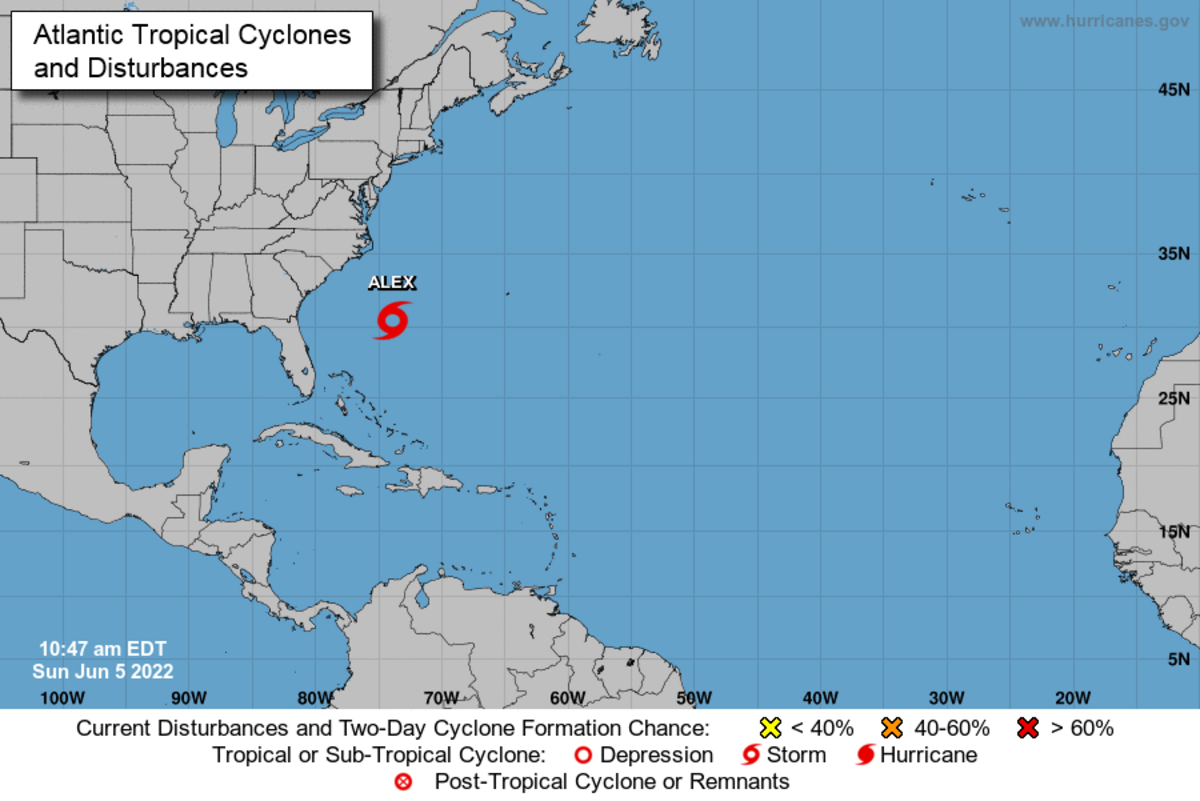
Forecast for North Carolina beaches
The storm is expected to bring dangerous surf conditions and increased rip current risks to the coast.
The National Weather Service’s Wilmington office, which covers southeastern North Carolina, tweeted June 5 that Alex “will churn up the Atlantic Ocean resulting with increasing surf the next 2 days that will favor an elevated rip current threat across all beaches.”
Parts of the coast are under a moderate rip current risk on June 5, and some areas will be under a high risk on Monday, June 6, the NWS said. The risk is expected to start “slowly de-escalating by the mid to late week period.”
A moderate risk means conditions are “favorable for the development of life threatening rip currents” while a high risk means conditions “will likely support the development of life threatening rip currents.”
“Tropical Storm Alex will remain well offshore as it moves farther out to sea passing Bermuda Monday, but could strengthen local rip currents in the surf zone the next few days as SE swell builds,” the NWS said.
The weather service’s Newport/Morehead office, which covers Eastern North Carolina, including parts of the state’s Outer Banks, said on Twitter that there is an increased risk of rip currents on June 5 “due to the combination of strong winds and arriving swell from Tropical Storm Alex.”
Multiple areas are under a high risk of rip currents, meaning “everyone should stay out of the water.”
“Rip currents will be strongest late in the day. Please heed the warnings of lifeguards and beach flags,” the office wrote on Twitter.
The increased risk of rip currents is expected to continue “for the next few days” in the area, the NWS said.
Much of the North Carolina coast is also under a small craft advisory. Forecasters say “inexperienced mariners, especially those operating smaller vessels, should avoid navigating in hazardous conditions.”
Rip current safety
Rip currents are “channelized currents of water flowing away from shore,” according to the NWS.
“Rip current speeds vary,” the NWS said. “Average speeds are 1-2 feet per second, but they have been measured as fast as 8 feet per second — faster than an Olympic swimmer!”
While they can pull swimmers away from shore, they will not pull them under the water.
If caught in a rip current, do not try to swim against it, the NWS said.
Instead, stay calm and try to swim parallel to the shore until you are out of the rip current, then “follow breaking waves back to shore at an angle,” the National Oceanic and Atmospheric Administration said.
“You may be able to escape by floating or treading water if the current circulates back toward shore,” the weather service said. “If you feel you will be unable to reach shore, draw attention to yourself. If you need help, yell and wave for assistance.”
If you see someone caught in a rip current, get help from a lifeguard or call 911, direct the swimmer to follow the shoreline to escape the current and throw them a flotation device if possible, the NWS said.
But don’t enter the water without a flotation device, the NWS said, as “many people have died trying to rescue rip current victims.”
This story was originally published June 5, 2022 at 11:33 AM with the headline "Rip current risks higher at NC beaches as Tropical Storm Alex churns in Atlantic."