With NC abortion law in mind, Walmart puts new limits on dispensing miscarriage drug
Aiming to comply with this state’s abortion law, Walmart pharmacies are wrongly limiting women’s access to a drug prescribed after miscarriages, North Carolina doctors say.
While the drug misoprostol can be used with another medication to induce abortions, it’s also essential for managing a number of unrelated health conditions, including miscarriages.
Pharmacists with the giant retail company in recent weeks have either declined to dispense misoprostol or delayed filling the prescriptions until they confirmed it would not be used for an abortion, said Dr. Jenna Beckham, a WakeMed OB-GYN.
In each case, the doctor said, the medication was prescribed to patients who recently had a miscarriage.
With this new practice, Walmart may be misinterpreting state law, according to two North Carolina legal experts, including the executive director of the state’s pharmacy board.
Some OB-GYNs say the double checking is hindering women’s access to health care, even though North Carolina’s abortion laws did not change after the Supreme Court’s Roe v. Wade reversal in June.
”This creates unnecessary barriers for patients seeking care for the management of miscarriages,” said Beckham, the Wake Med physician.

Why the change?
Through phone calls with more than 20 Walmart pharmacists in North Carolina, the News & Observer learned that an Aug. 1 company memo told pharmacists to dispense misoprostol only if the prescription has a diagnosis code that confirms it was not ordered for an abortion.
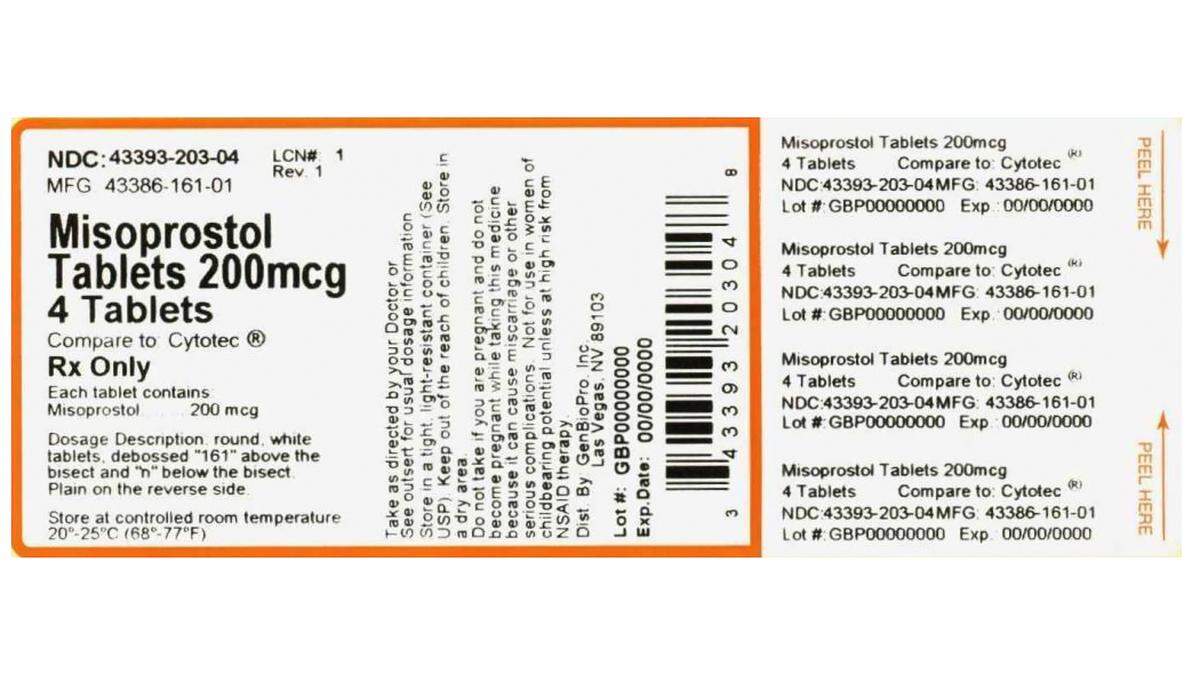
If the drug was prescribed to induce an abortion, they were told to fill it only if a doctor accompanied a patient to the pharmacy.
The new policy is intended to bring Walmart pharmacies in line with a 2013 North Carolina law, a Walmart spokesman said in an email. The law requires prescribing doctors to be with their patients when “the first drug or chemical is administered” during a medication-induced abortion.
But Jay Campbell, executive director of the North Carolina Board of Pharmacy, said he doesn’t interpret the law Walmart cites as applying to pharmacies.
The statute requires doctors to be present while the medication is “administered” not when it is “dispensed,” a crucial legal difference given that pharmacists do not administer drugs like misoprostol, he said.
“There’s no state statute of which I am aware that would prevent a pharmacy in North Carolina from dispensing misoprostol,” he said.
Walmart’s corporate headquarters based in Arkansas did not respond to a request for a copy of the memo or to questions about the company’s interpretation of state law.
Susanna Birdsong, legal council for Planned Parenthood South Atlantic, said there are few, if any situations, in which this law would ever impact a misoprostol prescription at Walmart.
She said there are two situations in which a doctor would send a misoprostol prescription to a retail pharmacy such as Walmart, which operates 192 stores in this state.
First, a doctor has already administered the first drugs needed for a medication abortion in-person — as is legally required — and is prescribing misoprostol as a second medication in the treatment. North Carolina law allows that.
The second and far more likely situation is that a doctor is prescribing misoprostol for something unrelated to abortion.
Traumatic and stigmatizing
For more than 10 years, Dr. Beverly Gray, a Duke OB-GYN, has prescribed misoprostol for a wide range of diagnoses without issue.
Misoprostol can be used to make an IUD insertion less painful, decrease the risk of stomach ulcers, and in some cases, relieve arthritis symptoms.
Most commonly, though, it’s used to help patients quickly pass leftover fetal tissue after a miscarriage.
In the last month, Gray said pharmacists questioning her prescriptions — none of which were for an abortion — became a regular occurrence.
“The fact that this is a new thing in our state doesn’t really make logical sense,” Beckham said.
Several patients told Gray pharmacists wouldn’t fill their prescription until they “talked to a doctor more about it”.
One of Gray’s patients was prescribed misoprostol for an “incomplete abortion,” a term doctors sometimes use to describe a miscarriage.
“She gets to the pharmacist, and they told her they won’t fill her medication because she’s having an abortion,” Gray said. “As you might imagine, this is traumatic and stigmatizing for patients already experiencing a pregnancy loss.”
The doctors said they felt that pharmacies were overstepping by asking them to divulge their patients’ diagnoses.
Penny Shelton, executive director for the North Carolina Association of Pharmacists, said diagnosis codes are not required on prescriptions and pharmacists would typically only ask for a patient’s condition to help them better explain the medication.
Worse, they felt it stigmatized women who were trying to access a legal and common medication.
“The fact that they have to question the indication for the use is overreach,” Beckham said. “They don’t really question that about any other medication.”
Preventing a non-issue?
During a medication abortion, doctors most commonly prescribe a series of two medications: one pill of mifepristone followed by four pills of misoprostol.
North Carolina state law requires prescribing doctors to be with their patients when “the first drug or chemical is administered”. For nearly a decade, the state’s OB-GYNs have complied with this law, administering pills of mifepristone in a clinic and then sending misoprostol home with patients to take on their own, said a spokesperson for Planned Parenthood North Atlantic.
Walmart’s new policy is set up to prevent an extraordinarily unlikely situation in which a physician prescribed misoprostol alone to induce an abortion, which is neither an FDA-approved method for medication abortion nor a typical off-label use, several doctors told the N&O.
“That is not the evidence-based protocol that any provider in North Carolina uses,” Gray said.
Beckham said she doesn’t even know of any provider in the Triangle who prescribes abortion medications to retail pharmacies like Walmart. If the medication is being used to induce an abortion, a provider will typically dispense both mifepristone and misoprostol to patients at the hospital or clinic, she said.
“I think it’s fair to say that pharmacies are guarding against something that doesn’t generally occur,” Beckman said.
Campbell, the state Board of Pharmacy attorney, had more sympathy for Walmart, as it tries to comply with so many state laws, including North Carolina’s 2013 legislation.
“I could certainly see where a business — particularly a large one — that’s trying to figure out how to comply with 50 different state statutes, could look at that and have some concern,” he said.
Teddy Rosenbluth covers science for The News & Observer in a position funded by Duke Health and the Burroughs Wellcome Fund. The N&O maintains full editorial control of the work
This story was originally published September 20, 2022 at 9:34 AM with the headline "With NC abortion law in mind, Walmart puts new limits on dispensing miscarriage drug."