A museum ‘of our time’: The NC Museum of Art unveils new works and a new approach
When the N.C. Museum of Art reopens this weekend, people will find the light-filled space of the West Building as they remember it.
To the right, Patrick Dougherty’s sculpture of branches and twigs still lines the wall of the cafe space, while to the left, down the long corridor, you can see the Auguste Rodin bronzes and the sculpture garden beyond.
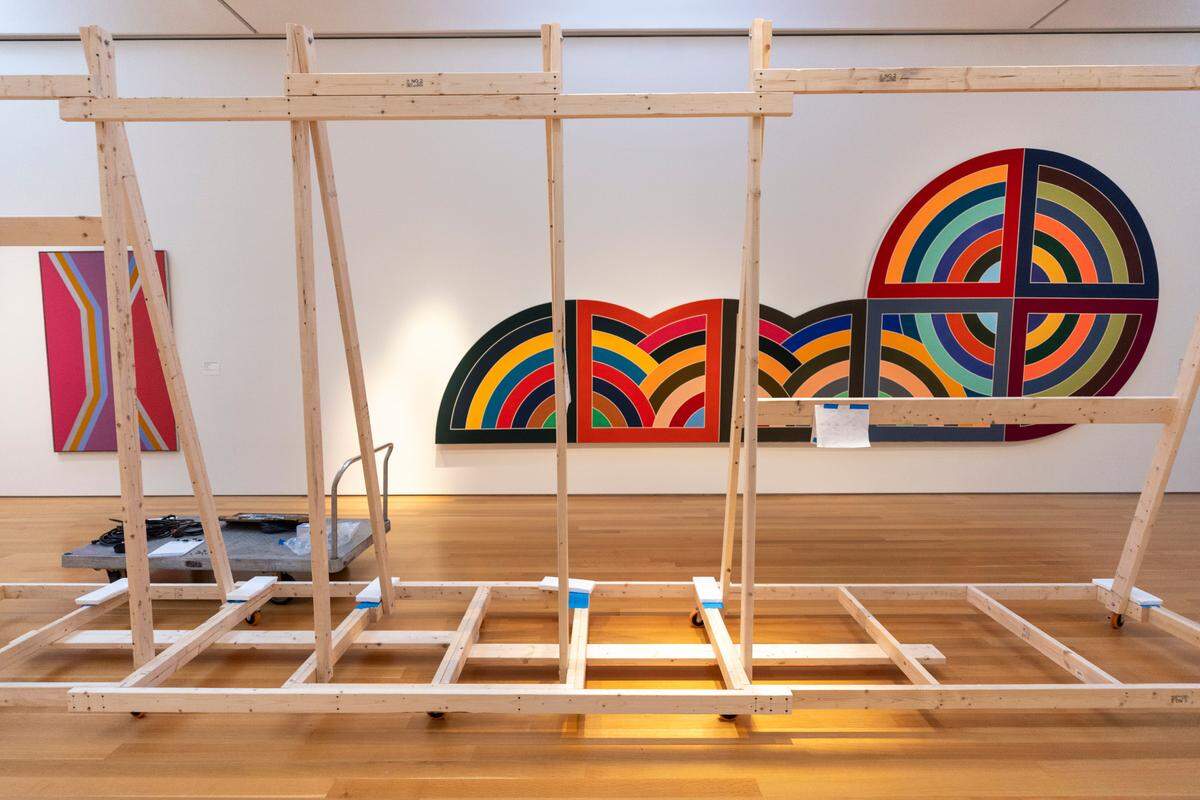
From there, longtime visitors may be a bit disoriented. Since the museum closed the West Building May 29, nearly every piece has been rearranged and reorganized. Where once there were 800 objects on view, there are now 1,000, with 100 brought out of storage and 100 more on loan from museums across North Carolina and around the world.
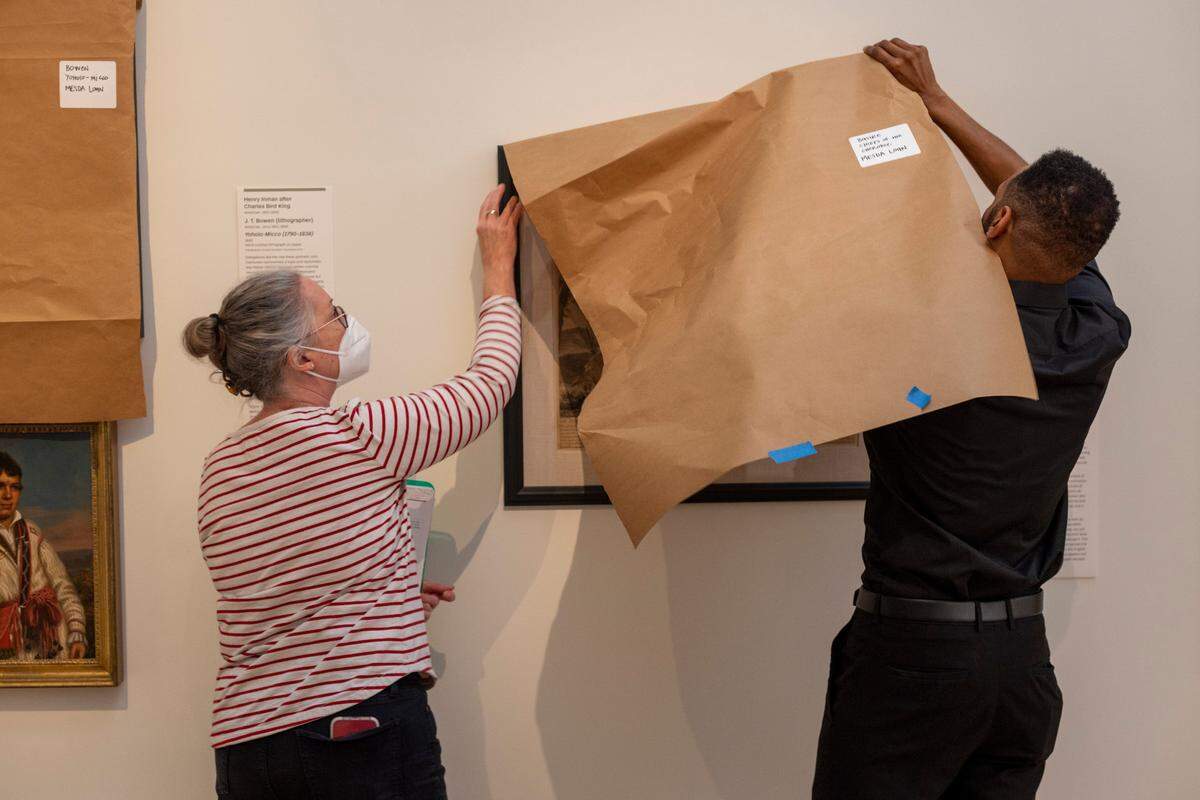
It’s all part of an effort to change not only what art is presented but how it’s displayed. Curators are trying to broaden the stories art tells by the way they pair or juxtapose different pieces and by providing more historical and cultural context. They’ve also increased diversity, with more work by women and artists of color.
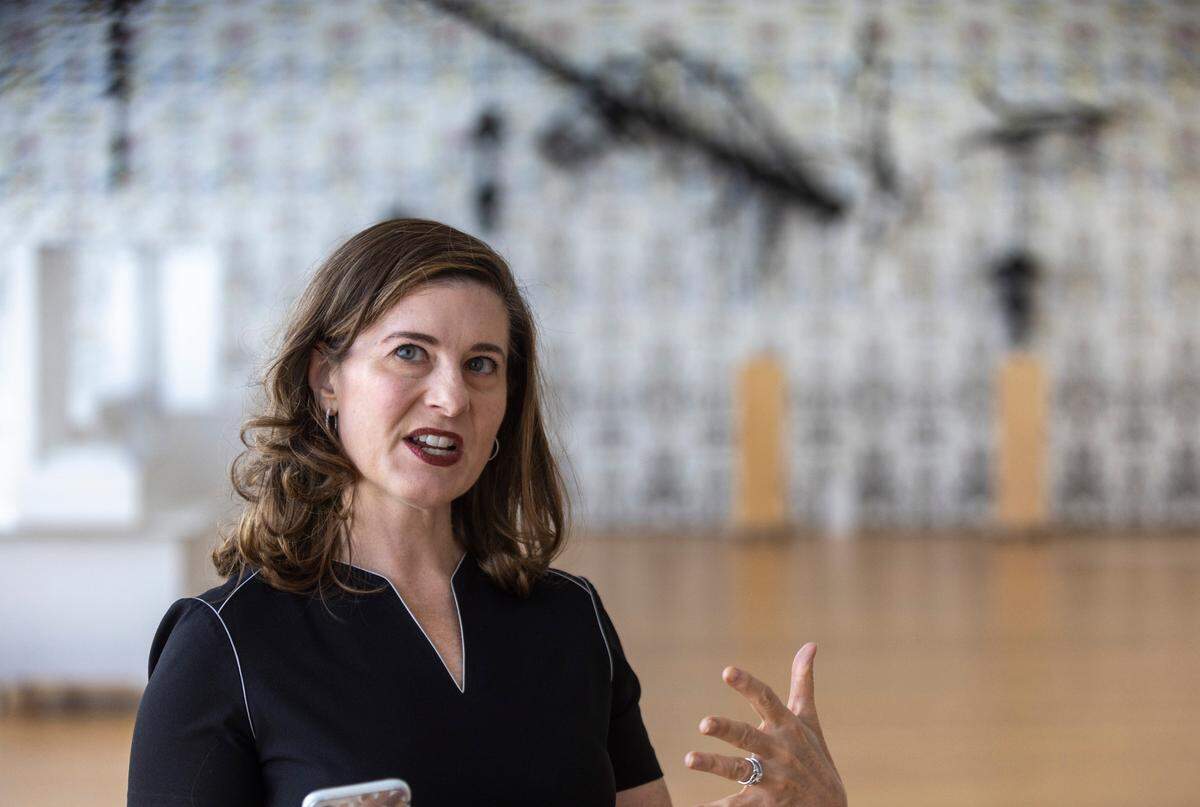
The museum is moving away from the traditional story of art as a progression of work by masters — almost always white men — from the ancient world through the Renaissance and the impressionist period to modern art, said Valerie Hillings, the museum’s director. Other museums around the country are doing the same, Hillings said, striving to become museums “of our time” and not locked into the way things have always been done.
“We’ve got a crucifixion from Ethiopia, and its inscription is in Arabic,” Hillings said. “It’s so interesting to remind ourselves of things that we assumed to be true because that’s how we’ve seen it through given objects or given stories. And yet they’re much more nuanced and complicated.”
The museum will unveil its new approach the weekend of Oct. 7 to 9 with a series of free events, including tours, workshops and a music festival.
Many elements of the old museum remain. Art is still often organized by geography and time, such as ancient Egypt, the Italian Renaissance or the Dutch and Flemish art of the 17th century.
Hillings said her first assignment to curators was to list 10 pieces in their galleries that should always be on display, because they’re important or because people simply love them. They include a Claude Monet painting of the Normandy coast at sunset; El Anatsui’s wall sculpture made of mostly discarded metal objects; and “The Puritan,” a striding, cloaked figure with a Bible in one hand and a walking stick in the other by sculptor Augustus Saint-Gaudens.
“People might think that a lot more of the artworks were changed than were,” Hillings says, “but in fact they will find their favorites.”
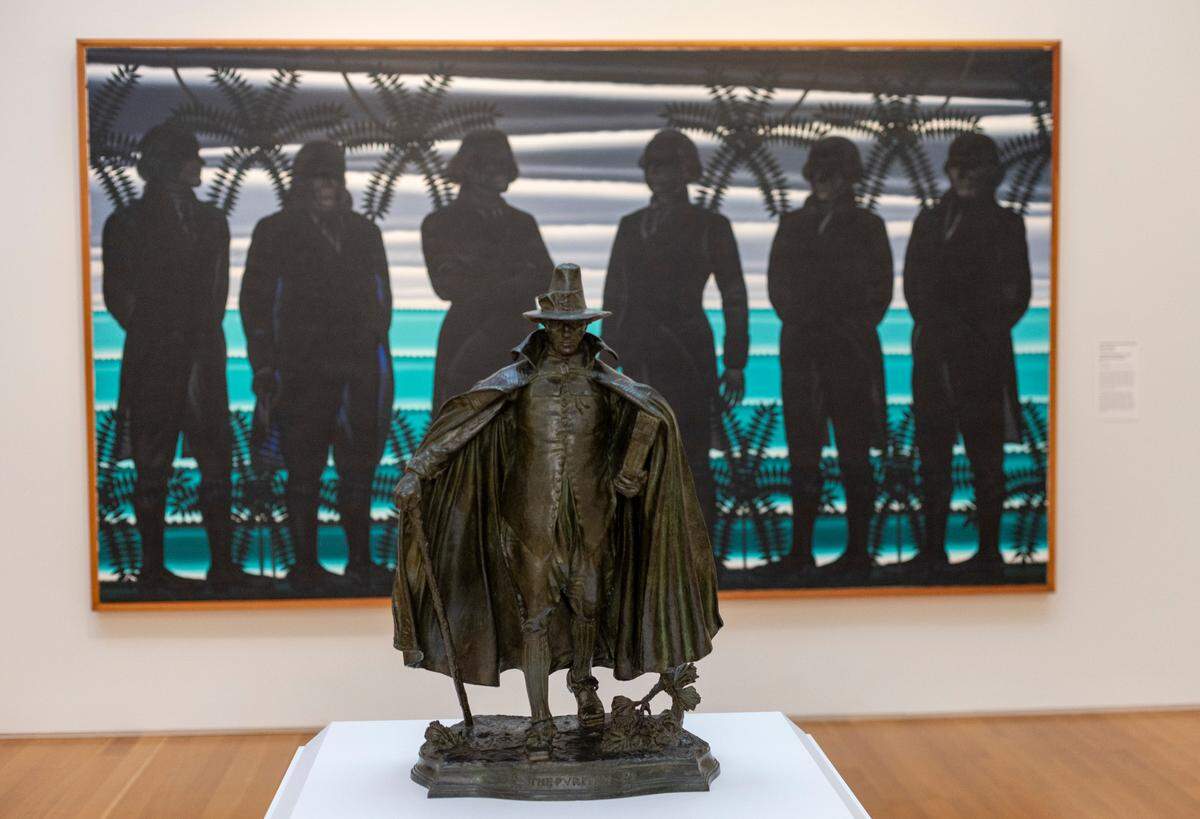
But within those galleries are pairings meant to get people thinking. Near Albert Bierstadt’s painting of Bridal Veil Falls in Yosemite Valley in the 1870s now hangs a parody painted in 2012 by Canadian First Nations artist Kent Monkman. It shows a group of white men dressed as Indians on horseback, corralling a herd of buffalo into a sculpture by Richard Serra in front of the same waterfall. (Yes, it’s a bit surreal.)
Some of the messages may be subtle among the new arrangements. Next to a portrait of a Dutch prince involved with the Dutch East and West India companies now hangs “Landscape in Brazil,” painted by Frans Jansz Post in the 1660s, pointing to the colonization and slave trading that made Dutch wealth and its “Golden Age” of art possible.
Hillings acknowledges that someone simply strolling through a gallery may not see those connections or context right off.
“I think you’re going to have to read some of the wall text to get it,” she said. “Or look at the label and say, why is this painting from today sitting in the middle of these 19th century paintings? It’s going to take some level of curiosity. It’s going to invite that, I hope.”
Themed galleries broaden art conversations
The museum also hopes to expand the narratives around art through five new galleries based on themes that stress diversity and connections across cultures. They are:
▪ Made in the Americas: A gallery that places American art next to ancient American art from throughout the hemisphere, showing how international travel and exchanges have influenced art produced in the United States.
▪ The Africa We Ought to Know: Combines the Egyptian and African collections to tell a more complete story of art on the continent. The gallery includes interactive maps showing trade routes and various African kingdoms throughout history.
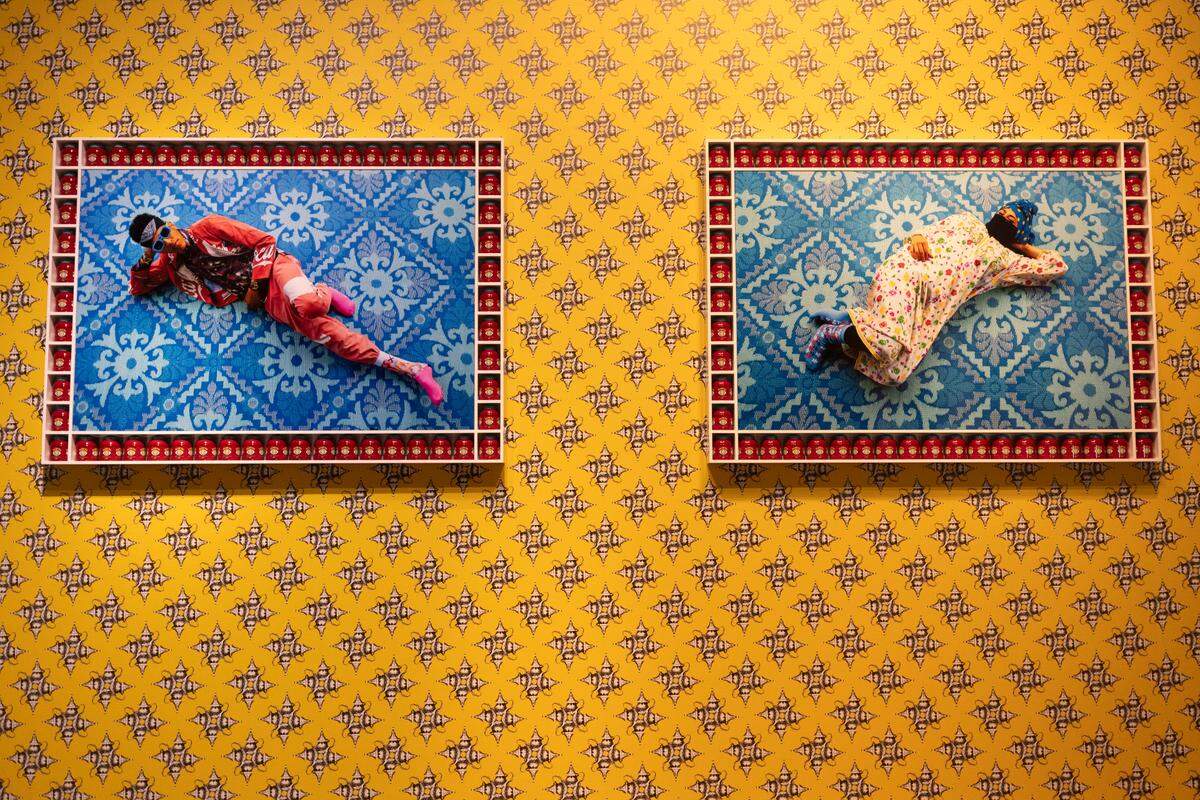
▪ Portraits and Power: A new gallery in the East Building that juxtaposes historic and contemporary portraits to show the power they convey. One example: an early 18th century painting of the French child king Louis XV next to one painted in 2005 of a young Black man with sports logos on his shirt and hat.
▪ Art Conservation: A rotating exhibit showing how a particular piece of art was restored or conserved. First up is the work done to repair Chris Drury’s “Cloud Chamber for the Trees and Sky,” the round stone building with the wood roof in the museum park that functions as a camera obscura.
▪ Art Includes: A gallery of visual art mixed with complementary art forms, including music, dance, video, theater and poetry. The museum wanted to bring the art created in its theaters and other spaces into the gallery, said Moses Alexander Greene, director of performing arts and film.
Video and interactive media will be found throughout the museum. A video, made with the N.C. Zoo and projected at a child’s height, features animals found in some of the ancient American art nearby, while a video quiz game for families shows how objects in 17th century European paintings were only available because of travel and trade.
“We want to make sure youth and young people understand that this museum is theirs, too,” Greene said. “It’s not that you reach a certain age and you get a chance to come.”
Surprises throughout the museum
Perhaps the most striking use of technology is new digital labels. The 15 interactive video screens, found in five different parts of the museum, allow viewers to click on a work that’s in front of them and read more, in English and Spanish.
Viewers can also magnify digital images of each work, seeing details they can’t from a distance. Felicia Ingram, the museum’s manager of interpretation, accessibility and diversity, demonstrated on one of her favorite paintings, zooming in on the pulp of a sliced orange in “Still Life with Fruit, Honeycomb and Knives” by Robert Spear Dunning.
“These images are absolutely stunning,” Ingram said. “Just the details in some of these paintings are phenomenal.”
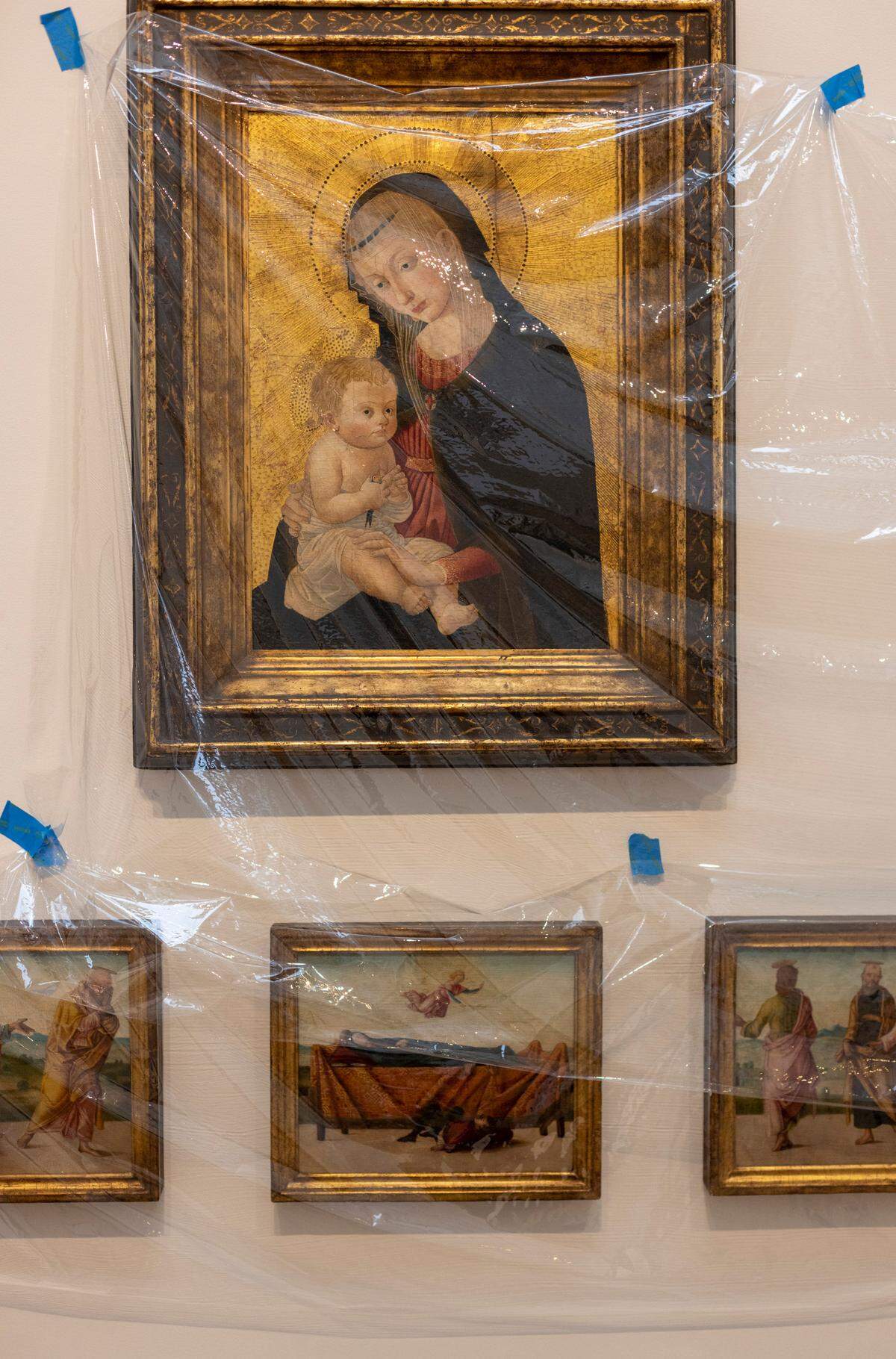
Visitors will find other surprises in the museum. They include what curators call the Madonna Wall, which gathers several images of Madonna and child from around the museum in one place, to show how different artists chose to depict them.
And some regular museum-goers may notice new, unexpected colors painted on some of the previously stark white walls. Since the West Building opened in 2010, its walls have been white, in keeping with a modern thinking that white walls are neutral and allow each work of art speak for itself.
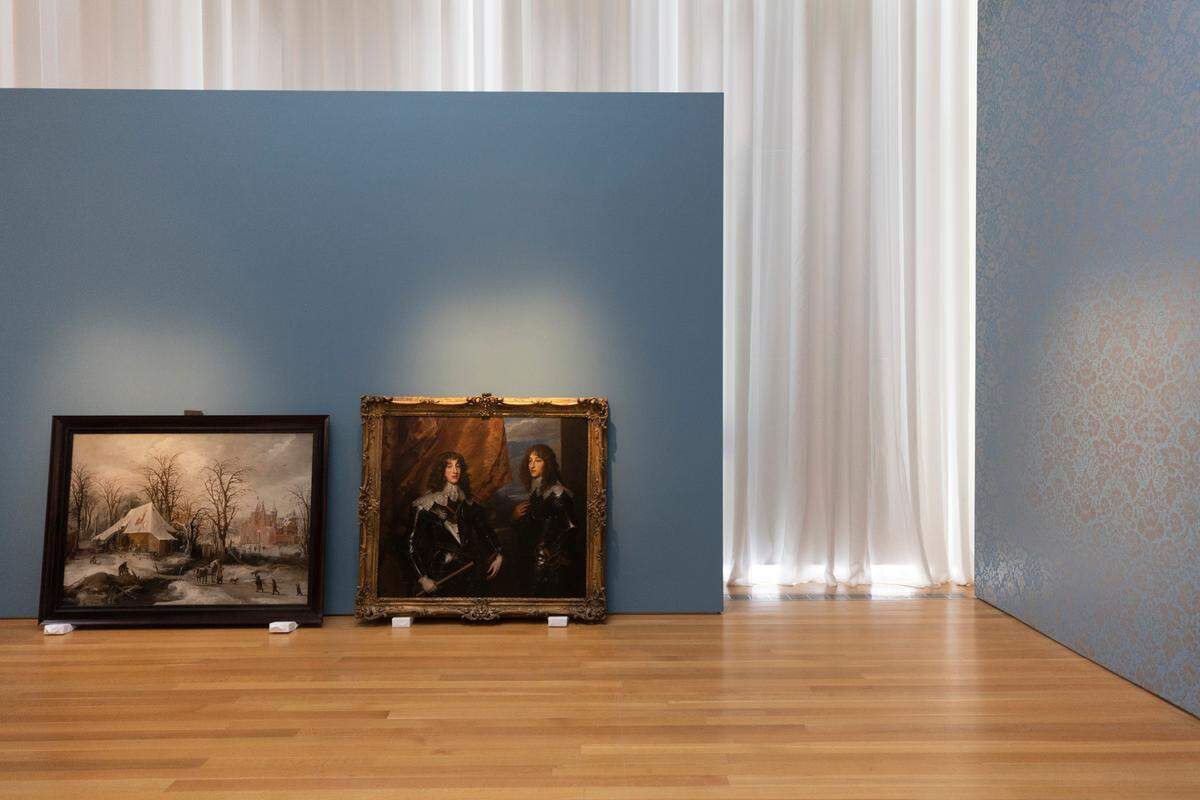
But some art was made for colored walls. That includes The Peruzzi Altarpiece, created by Giotto di Bondone for a church in Italy in about 1310. The walls of the church would have been an earthy stone color, though precisely what isn’t known.
So museum staff experimented, placing the piece in front of different colors, with different effects. Brown paints complemented St. Francis, but “were terrible for the St. Johns,” the Baptist and the Evangelist, said Hillings.
“Boy, did we have a long debate about what color the paint would be,” she said. “We started talking about what could be a color that would feel like you were looking at it in that chapel. And it also has this incredible ability to pull out colors in the work. I started seeing colors I had not previously seen.”
They settled on a gray stone color called “Victorian garden.”
Loaned art found throughout the museum
The N.C. Museum of Art’s roots go back to the 1920s, when a private group, the N.C. State Art Society, formed to build support for a state art museum and began acquiring paintings and putting on exhibitions. The General Assembly got behind the project in 1947 when it set aside $1 million to buy art.
The museum, now part of the state Department of Natural and Cultural Resources, has about 4,000 pieces in what it has begun calling “The People’s Collection.” About three-quarters are in storage at any one time, though many of those are photographs and other printed material that can’t be on view for too long without degrading their quality, Hillings said.
In addition to about 100 items brought out of storage, the museum has borrowed about 100 more, something it plans to do more aggressively to fill holes in its collections and tell stories more completely. The Brazil landscape painting in the Dutch gallery is on loan from the Rijksmuseum in Amsterdam, while the Monkman painting of the Yosemite waterfall is from the Denver Art Museum.
“Why not borrow from other museums and let them help us tell the stories, fix some of our stories and add to some of our stories in ways we’d never be able to do in the short run?” Hillings said.
Other practical considerations factor into the museum’s curatorial decisions. Just inside the front door, the suspended sculpture made of thin aluminum, nylon and carbon fiber by Argentinian artist Tomás Saraceno is beautiful but also light enough to hang from a ceiling that can’t hold much weight.
Uniting the African and Egyptian collections was another challenge. African art had been in the museum’s original East Building, where there’s more room and less light that could damage some of the pieces. Bringing those objects into the West Building has meant working to dampen some of the natural light.
Meanwhile, in place of African art, the museum moved its contemporary art collection into the East Building, where it turns out the darkness suits it just fine, Hillings said.
For all the thought and effort that went into the reinstallation, it’s not a finished product, Hillings said, and never will be.
“This is a launch point for wanting to continuously rethink the collection, what stories we’re telling, which artists we’re showing, how we’re doing it, what kind of interpretation,” she said. “I would call it a test run.”
This story was originally published October 4, 2022 at 6:00 AM with the headline "A museum ‘of our time’: The NC Museum of Art unveils new works and a new approach."