
Toxic invasive tree frog hitched ride in car traveling from Florida to North Carolina
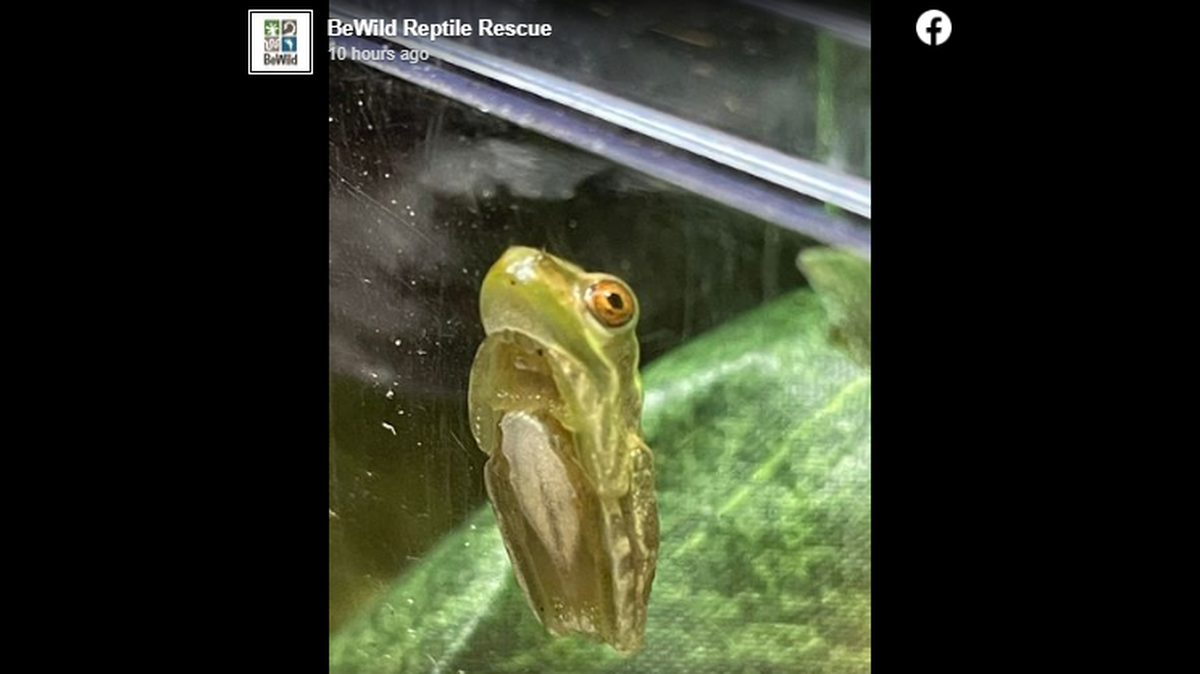
An exotic frog believed to be both toxic and invasive was found inside someone’s car in North Carolina, according to BeWild Reptile Rescue in Durham.
The agency reported the unusual discovery in an Oct. 17 Facebook post and noted the frog was contained before it could escape into the wild.
“This tiny froglet was found hitchhiking in someone’s car who had come up from Florida,” the nonprofit wrote.
“Unfortunately it looks like he’s a Cuban tree frog, which is an invasive and restricted species in North Carolina. ... Cuban tree frogs are also very toxic so they pose a danger to pets in the wild.”
The driver, who wishes to remain anonymous, was returning from a job in North Fort Myers, Florida, which is about 800 miles from Durham.
She discovered “the little stowaway” in the car Monday, Oct. 18, while passing through South Carolina. “I had just gotten back on the road after the night’s pit stop and he started hopping around on my dash!” she wrote on Facebook.
BeWild officials reported the frog to the N.C. Wildlife Resources Commission and say they have applied for an “educational permit” to spare the frog from being euthanized.
“Right now he only weighs about a third of a gram!” BeWild officials said. “Full grown frogs can be 5-6 (inches) long, so they’re definitely a bigger species and often prey on our native tree frog species.”
Cuban tree frogs were “first recorded in Miami in 1952” and have since spread north to central Florida, according to the Florida Fish and Wildlife Conservation Commission.
They are a loud, large, primarily forest-dwelling animal, and experts believe they spread to Florida via plant shipments from the West Indies.
“Noxious skin secretions may make it unpalatable to many (frog-eating) birds and snakes, such as the American crow and black racer,” the commission reports.
The mucus secreted by the frogs can also irritate humans’ “eyes and nose, cause allergy-like symptoms, and even trigger asthma attacks,” the University of Florida reports.
BeWild Reptile Rescue says the frog, which they named Turnip, is being kept from human contact “in a temporary enclosure” and special food (pinhead crickets) is being ordered to feed it.
“Hopefully this little frog can help us teach about invasive species while remaining safely in captivity!” the agency said.
“Turnip is one lucky frog! It’s amazing that (the driver) was able to spot such a tiny little froglet and was even willing to drive him to us! We’re more than happy to provide him with a good forever home.”
This story was originally published October 18, 2022 at 11:52 AM with the headline "Toxic invasive tree frog hitched ride in car traveling from Florida to North Carolina."