Air quality warnings from Western NC wildfires: What to do — or not do — to be safe outdoors
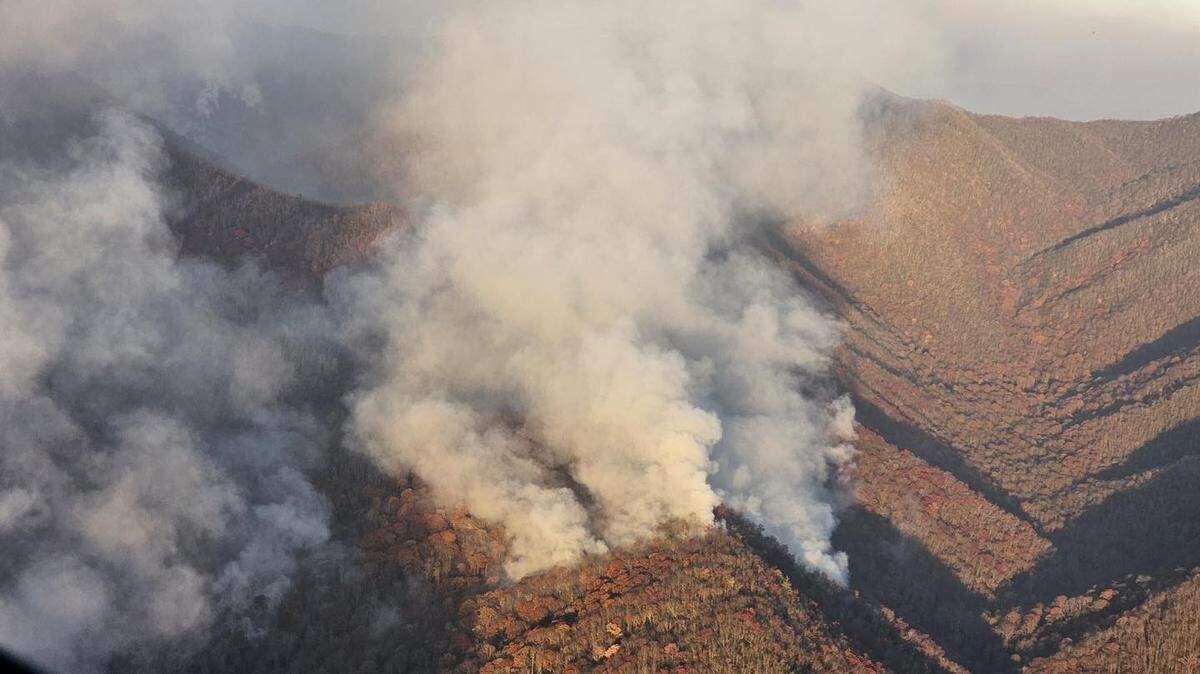
A wildfire that’s been a headache for firefighters in Western North Carolina for more than a week now is affecting air quality across the state.
Where is the fire?
The Collett Ridge Fire started Oct. 23 with a lightning strike on top of Collett Ridge in the Nantahala National Forest south of the town of Andrews.
Because of dry conditions from lack of rainfall, an abundance of fuel, the remoteness of the location and the mountainous terrain that makes it difficult to reach the area with heavy equipment, the fire had spread to 4,372 acres as of Thursday morning.
The area where the fire is burning is about 340 miles west-southwest of Raleigh.
What’s the effect on air quality?
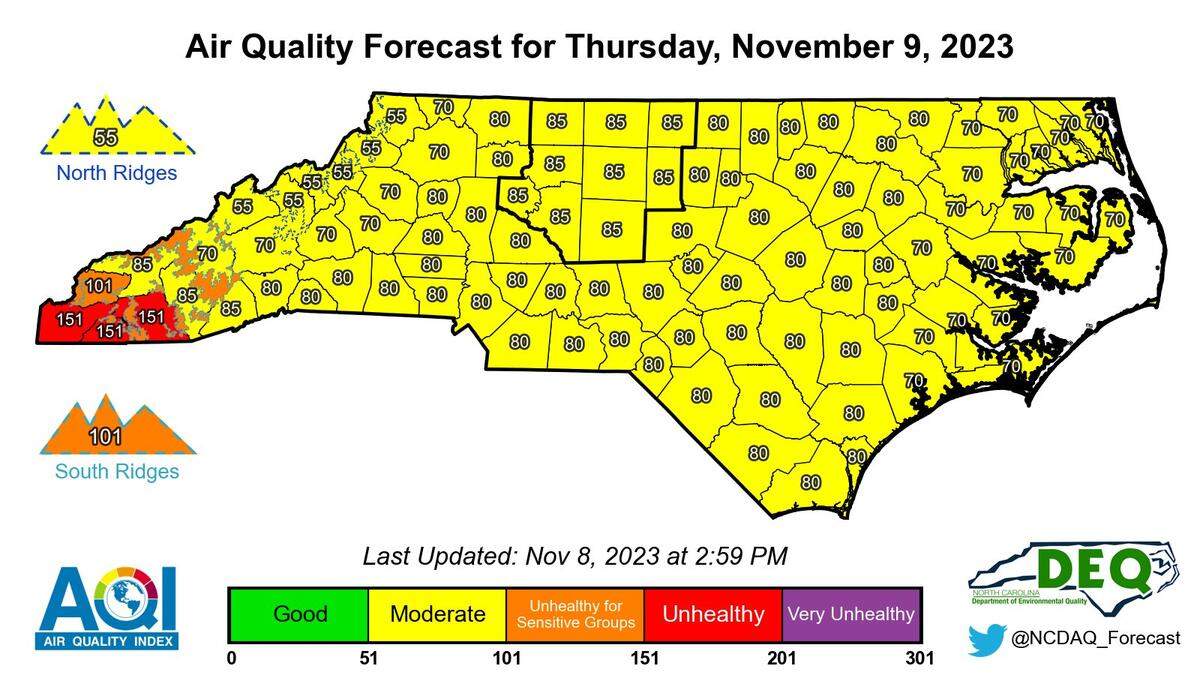
In the extreme southwest corner of the state, closest to the fire, the N.C. Division of Air Quality has forecast Code Red conditions for Thursday in Cherokee, Clay and Macon counties. Graham County is expected to see Code Orange conditions through the day, along with portions of seven neighboring counties.
Who should be concerned about air quality?
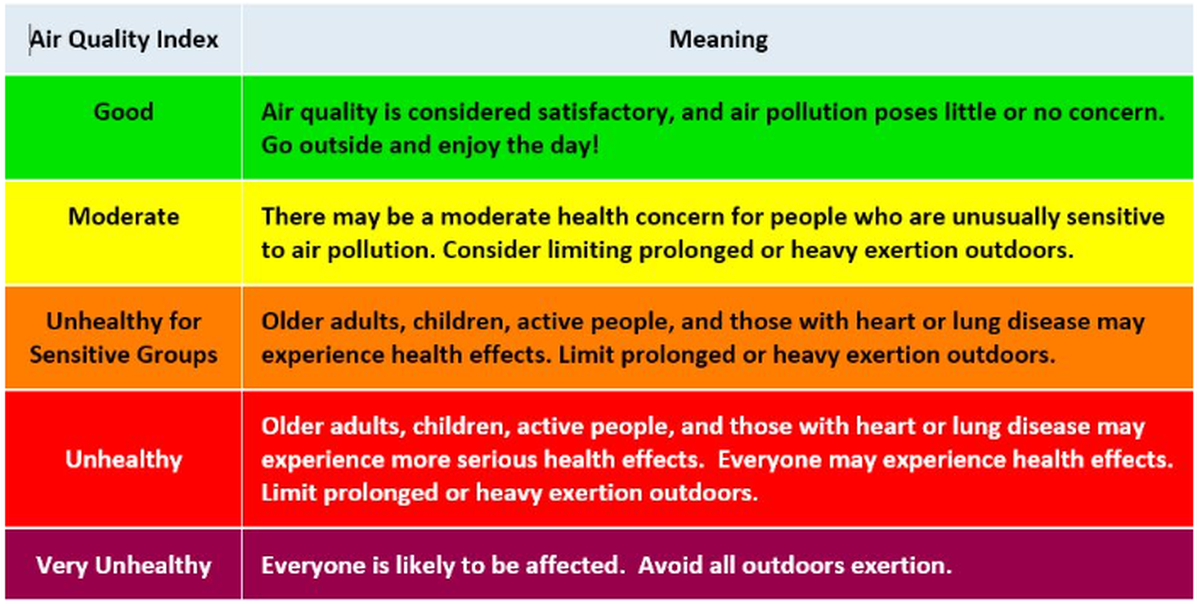
Code Red means the air quality is unhealthy for everyone; in this case, because of particulates from the fire.
If you’re in an area with Code Red conditions, the state says you should consider limiting heavy or prolonged exertion outdoors.
Anyone sensitive to air pollution, including those with asthma and other breathing disorders, should avoid any outdoor exertion.
Under Code Orange, people sensitive to air pollution should limit their time outdoors.
If you are in one of the following categories, you should avoid time outside (or take precautions while outside, if it’s necessary to go out) during severe air quality warning periods:
- Those 65 or older
- Infants and young children
- Those who are asthmatic or have other respiratory illness
- Those who have diabetes or have other cardiovascular diseases
Beyond the extreme western part of the state, all the rest of North Carolina is forecast to have Code Yellow air quality on Thursday.
Code Yellow means the air quality is acceptable but may pose a risk for those who are unusually sensitive to air pollution.
When will the air quality improve?
As of Thursday, the Collett Ridge Fire was just 5% contained, though 156 people were working to control it. Crews have been working with a bulldozer and hand tools to create fire breaks and have been burning fuel ahead of the fire to try to prevent its spread. During the day, tankers are dropping water on the blaze.
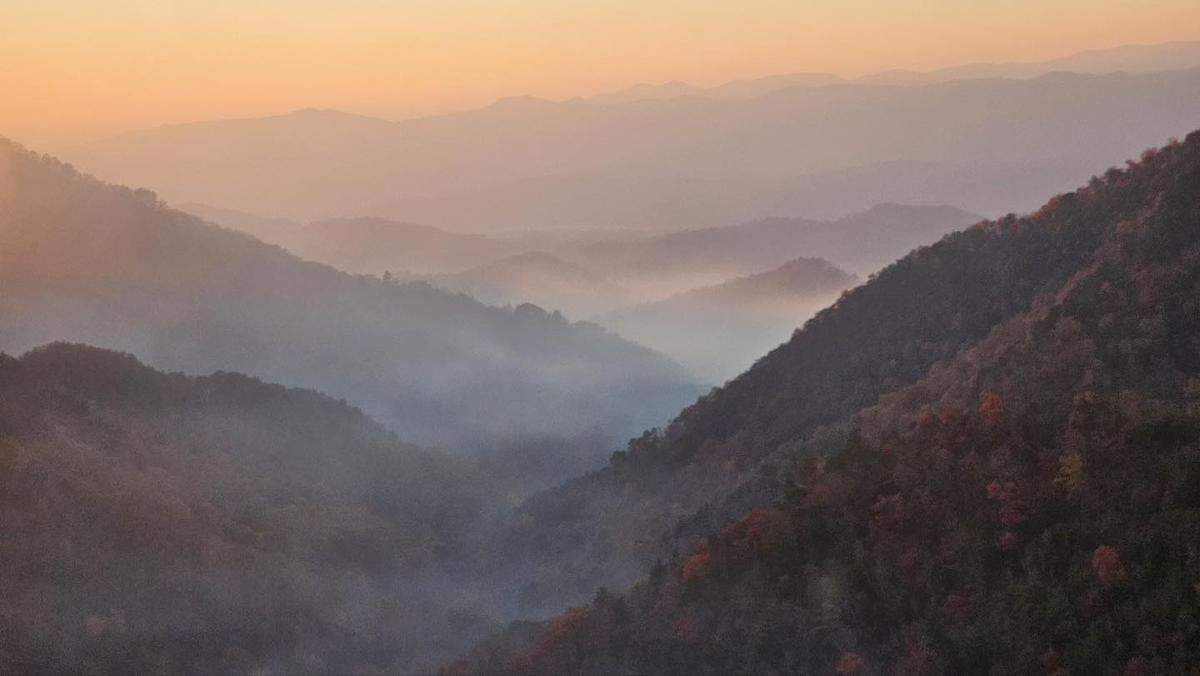
The U.S. Forest Service said that while humidity had increased, the fire is expected to continue to spread Thursday because of high temperatures in the 70s, continued dry conditions and winds of 4 mph to 8 mph with gusts up to 15 mph. As a result, air quality will continue to be Code Yellow in most of the state Friday.
However, light rain is forecast for Western North Carolina on Friday with high temperatures in the low 60s, which should help firefighters working to stop the blaze.
Air quality conditions are expected to be Code Green — meaning the air is good and poses little or no risk — across most of the state Saturday. A few counties closest to the fire likely still will have Code Yellow conditions forecasters said.
An explanation of air quality codes
Air quality forecasts are often reported using the AQI, which stands for Air Quality Index. There are six of these, and they’re represented by color. The best is green, and the worst is maroon.
Here’s what all six of them mean:
- Code Green: Air quality is satisfactory, and air pollution poses little or no risk.
- Code Yellow: Air quality is acceptable. However, there may be a risk for some people, particularly those who are unusually sensitive to air pollution.
- Code Orange: Members of sensitive groups may experience health effects. The general public is less likely to be affected.
- Code Red: Some members of the general public may experience health effects. Members of sensitive groups may experience more serious health effects.
- Code Purple: Health alert: The risk of health effects is increased for everyone.
- Code Maroon: Health warning of emergency conditions. Everyone is more likely to be affected.
Source: airquality.climate.ncsu.edu/education
This story was originally published November 9, 2023 at 1:43 PM with the headline "Air quality warnings from Western NC wildfires: What to do — or not do — to be safe outdoors."