
Wild horses are eating trees on NC’s Outer Banks? It’s not what it seems, experts say
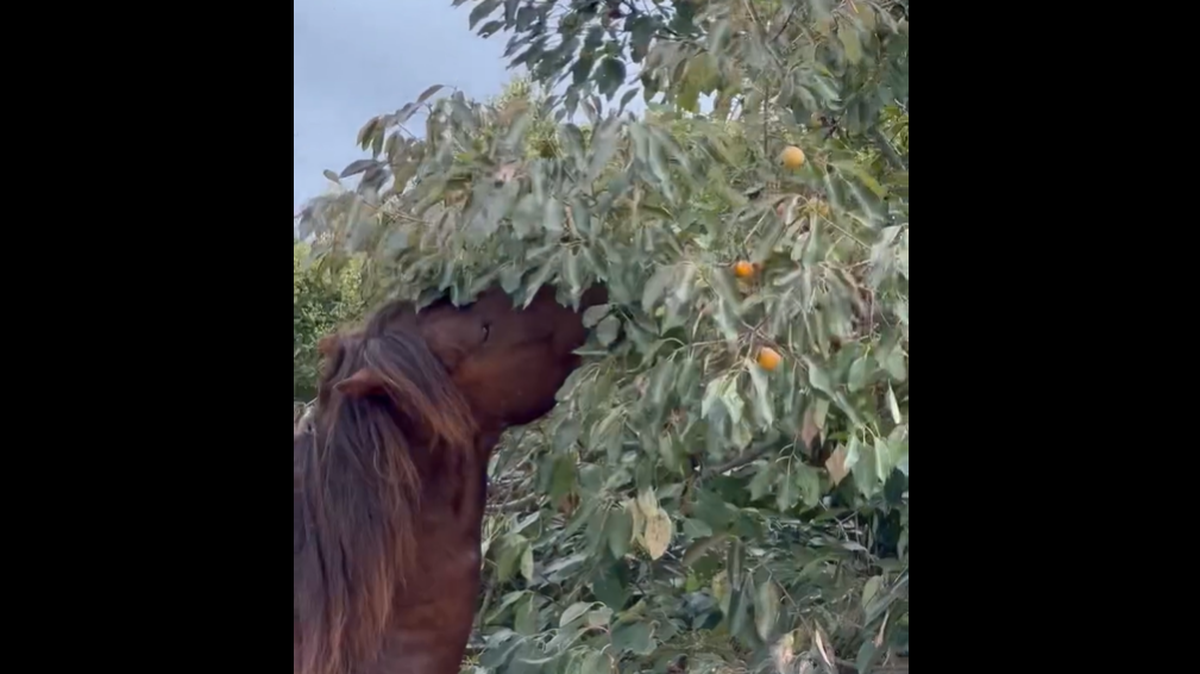
The wild horses on North Carolina’s Outer Banks have been seen chewing on trees in a phenomenon that has nothing to do with a food shortage on the barrier islands.
It’s persimmon season, according to the Corolla Wild Horse Fund.
“Persimmon trees are native to our area and this is the time of year when the fruit is ripe and sweet,” the fund wrote in a Sept. 30 Facebook post.
“You’ll often see the wild Bankers eating them right out of the trees. ... Great example of seasonal foraging!”
Video shared by the fund shows horses will linger under persimmon trees for extended periods, pressing their noses into the branches and chewing at the dangling clusters of fruit.
The trees are found all over the islands, including in yards. Ripe persimmons are orange and “sticky sweet” when ripe, “but very astringent if unripe,” according to Will Cook, a plant ecology researcher at Duke University.
The seasonal feast provides a glimpse of how the horses managed to survived in forbidding turf after being introduced to the islands by Spanish explorers in the 1500s, historians say.
Their island diet eventually evolved to a combination of “sea oats, coastal grasses, acorns, persimmons, and other area vegetation,” Outerbanks.com reports.
The nonprofit Corolla Wild Horse Fund tends a herd of around 100 wild horses on the northern end of the Outer Banks, including capturing injured and sick horses for medical care. It operates a horse farm for animals that can’t be returned to the wild.
The Outer Banks is among the few regions in the state that did not endure severe flooding related to Tropical Storm Helene the last week of September, officials say.
This story was originally published October 2, 2024 at 7:34 AM with the headline "Wild horses are eating trees on NC’s Outer Banks? It’s not what it seems, experts say."